
Every winter, as temperatures drop and snow covers the ground, many people wonder: How do birds keep warm in winter? Seeing a tiny sparrow or a plump chickadee in the biting cold feels almost like magic. They have no coats, no fires, and no hot meals waiting indoors. Yet, these resilient creatures survive – and even thrive – in weather that makes most mammals shiver. Their secret is not a single trick, but a set of clever adaptations and behaviors developed over millions of years.
Understanding how birds stay warm during the harshest months reveals the wonders of nature’s design. It also explains why you still hear bird songs on frosty mornings and see flocks darting through icy winds. In this article, you’ll discover every key strategy birds use to survive winter, from their special feathers to smart group tactics.
Along the way, you’ll learn facts that may surprise you, practical tips if you enjoy birdwatching, and some common myths people believe. Let’s look inside the world of birds and see how they turn the coldest days into a season of survival.
The Role Of Feathers: Nature’s Best Insulation
Feathers are not just for flying or looking pretty. They are birds’ most important tool for thermal insulation. In winter, feathers work like a high-tech winter jacket, keeping body heat in and cold air out.
There are two main types of feathers:
- Contour feathers: These are the outer feathers you see. They overlap like shingles on a roof, blocking wind and water.
- Down feathers: These soft, fluffy feathers sit underneath. Down traps tiny pockets of air close to the bird’s skin. This air gets warmed by the bird’s body heat and acts as insulation.
In some species, like the Willow Ptarmigan and Common Eider, the down layer is especially thick. These birds can survive in Arctic temperatures as low as -40°C (-40°F).
Birds also have a special way to control their feathers. They can fluff them up to create more air pockets, making their insulation even better. If you see a bird that looks extra “puffy” on a cold day, it is using this trick to stay warm.
A less obvious fact: Many birds replace old feathers before winter in a process called molting. This ensures their “coat” is in top shape just when they need it most.
Body Heat Management: Staying Warm From Within
Birds are warm-blooded, meaning they keep their body temperature constant, even if the outside temperature changes. Most birds have a normal body temperature of about 40-44°C (104-111°F), much higher than humans.
How Do They Manage This In Freezing Weather?
- High metabolism: Birds eat a lot of food relative to their size. This food fuels a fast metabolism, creating lots of internal heat.
- Shivering: Like humans, birds shiver to warm up. Their muscles contract quickly, making heat without much movement.
- Reducing heat loss: Birds have a special blood flow system in their legs called counter-current heat exchange. Warm blood going to the feet heats up the cold blood returning to the body. This clever trick means their feet lose less heat, even if they stand on ice.
Some smaller birds, like chickadees and hummingbirds, use a method called torpor. This is a short, deep sleep where their body temperature drops, and their metabolism slows down overnight. Torpor saves energy but comes with risks, so birds use it only when truly needed.
Roosting: Finding Safe, Warm Places To Sleep
Where a bird sleeps can make a big difference in how much heat it loses. Birds use several strategies to find or create warm roosts on cold nights.
- Dense shrubs and evergreen trees: These plants block wind and trap heat. Birds like sparrows and finches burrow deep into branches to stay out of the wind.
- Tree cavities and nest boxes: Woodpeckers, nuthatches, and some owls use holes in trees. These spaces are much warmer than the open air.
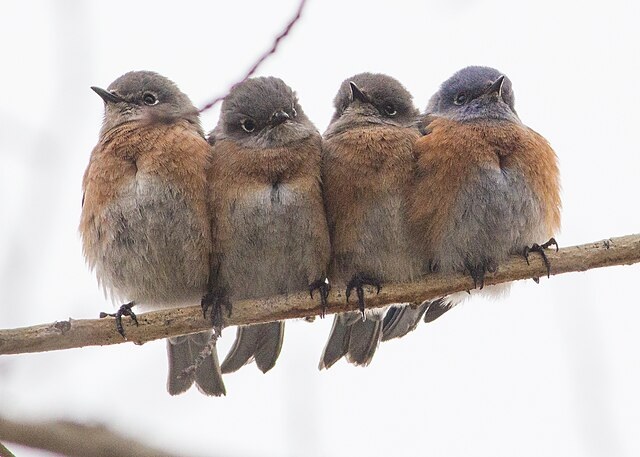
- Roosting in groups: Some species, like bluebirds and starlings, huddle together in a line or ball to share body heat. In extreme cold, dozens or even hundreds of birds may squeeze into one roost.
A surprising example: The Long-tailed Tit of Europe sometimes loses up to 50% of its body weight overnight if it roosts alone, but survives easily when huddling with others.
Birds often choose roosts with southern exposure or near buildings for a little extra warmth from the sun or shelter.
Food: The Fuel For Warmth
No matter how good their feathers are, birds need energy to create heat. Winter is a time of high-calorie demand and low food supply. Birds solve this by changing their diets and foraging behaviors.
- Switching foods: Many birds eat more fatty foods in winter, such as seeds, nuts, and suet. These foods provide slow-burning energy.
- Caching: Some birds, like chickadees, nuthatches, and jays, store food in autumn. They hide seeds or nuts in tree bark, soil, or crevices, then return to eat them during winter.
- Feeding at dawn and dusk: Birds often eat heavily at first light and before dark. This helps them build up energy reserves to survive the coldest parts of night.
A little-known fact: In freezing weather, a chickadee may eat up to 60% of its body weight in food each day. That’s like a human eating 50-60 pounds of food daily just to stay warm.
Physical Adaptations Beyond Feathers
Feathers are not the only adaptation birds use to survive winter. Some birds have unique body parts or behaviors that help them cope with cold.
- Fat storage: Birds build up fat reserves before and during winter. This fat acts as both insulation and energy storage.
- Specialized feet: Many birds’ legs and feet are covered in scales with few nerves and blood vessels, reducing heat loss.
- Shorter exposed parts: Birds living in cold areas often have smaller bills, legs, and tails to reduce the amount of body surface exposed to cold (a rule known as Allen’s Rule).
For example, the Snow Bunting has extra feathering on its legs and toes, while the Ptarmigan grows feathers even on its feet, making “feather boots” for walking on snow.
Behavioral Strategies: How Birds Outsmart Winter
Birds are not just passive victims of the weather. They have many clever behaviors that help them survive cold spells.
- Sunbathing: Birds often face the sun and spread their feathers to absorb heat. Even in winter, sunlight can raise their body temperature several degrees.
- Wind sheltering: Birds pick spots shielded from the wind, like the leeward side of a tree or a stone wall.
- Tucking and perching: Many birds tuck one leg up into their body feathers while standing, reducing heat loss through their bare legs. Some even perch with both legs hidden and their bills under a wing.
A surprising behavior: Crows and ravens sometimes slide down snowy hillsides, not just for fun but to save energy when moving between feeding spots.
Migration: The Ultimate Escape From Cold
Not all birds try to survive the cold. Many simply migrate to warmer areas when winter approaches. Migration is a massive energy investment, but it allows birds to avoid the toughest winter challenges.
- Long-distance migrants: Swallows, warblers, and many shorebirds fly thousands of miles to Central or South America.
- Short-distance migrants: Some birds only move a few hundred miles to lower elevations or southern regions.
- Partial migration: In some species, only part of the population migrates, while others stay behind. American robins are an example.
Migration is not risk-free. Birds face dangers from storms, predators, and exhaustion. But for many, it is the best way to ensure survival and return north in spring for breeding.
Comparing Winter Survival: Arctic Vs. Temperate Birds
Birds living in different climates have evolved special strategies. Here is a comparison of how Arctic and temperate birds deal with winter:
| Feature | Arctic Birds | Temperate Birds |
|---|---|---|
| Feather Thickness | Very thick, extra down | Moderate, some down |
| Fat Reserves | High, built before winter | Medium, built as needed |
| Behavior | Huddle, burrow, minimal activity | Forage, sunbathe, occasional group roosting |
| Migration | Most leave for winter | Some migrate, others stay |
As you can see, Arctic birds must use every trick in the book, while temperate birds can sometimes get by with less extreme measures.
The Importance Of Water And How Birds Prevent Freezing
Water is critical for birds, even in winter. They need it for drinking and to keep their feathers clean (for better insulation). But most water sources freeze.
Birds have several ways to find and use water:
- Eating snow and ice: Birds peck at snow or ice for moisture, but this cools them down, so they do it sparingly.
- Finding open water: Some birds visit streams, springs, or areas with moving water that doesn’t freeze.
- Bathing quickly: In winter, birds bathe very fast and fluff their feathers right after to dry off quickly.
A little-known strategy: Some birds, like crows and gulls, break thin ice with their beaks or feet to get a drink.
For birdwatchers, providing a heated birdbath in winter can be a lifesaver for many species.
How Birds Handle Extreme Cold Waves
During sudden cold snaps or blizzards, birds face their biggest survival test. Here’s what happens:
- They reduce activity: Birds stay as still as possible, conserving energy.
- Group huddling increases: More species join group roosts, even those that usually sleep alone.
- Extra fat burning: Birds burn through fat reserves rapidly. If the cold lasts too long, starvation becomes a risk.
Research shows that during a severe cold wave, up to 30% of small songbirds may die if they cannot find enough food or shelter.
One adaptation seen in the Golden-crowned Kinglet is the ability to survive temperatures down to -40°C by huddling in groups of three or four, even though each bird weighs less than a nickel.

Urban Birds: Adapting To City Winters
City birds face unique challenges and opportunities in winter. Cities are often a few degrees warmer than the countryside (the urban heat island effect), but food can be both more available (bird feeders, garbage) and more risky (pollution, cats).
Urban birds adapt by:
- Using buildings for shelter: Pigeons, sparrows, and starlings roost under eaves, bridges, or inside vents.
- Taking advantage of artificial light: Some birds extend their feeding hours thanks to streetlights.
- Eating human food: While not always healthy, city birds often eat bread, fries, and other leftovers for calories.
However, city life has dangers too. Salted roads can harm birds’ feet, and window collisions increase in winter.
A non-obvious insight: Some urban birds, like House Sparrows, now rely so much on human food that they struggle to survive in the wild.
The Science Of Bird Survival: Research And Surprises
Modern science has revealed much about how birds survive winter, often with surprising results.
- Tracking body temperature: Scientists use tiny sensors to see how birds’ temperatures change during cold nights. Many birds allow their temperature to drop slightly to save energy, but not as much as in true hibernation.
- Studying migration with GPS: Tracking devices have shown that some birds travel up to 15,000 km (9,300 miles) each migration season.
- Discovering new behaviors: Field cameras have recorded communal roosts of hundreds of wrens or titmice, sometimes with birds from different species huddling together.
One study found that birds visiting feeders in winter have a survival rate up to 50% higher than those that do not. This highlights the real impact people can have by providing food and water.
What You Can Do: Helping Birds Stay Warm
If you enjoy birds and want to support them in winter, there are several effective ways to help:
- Provide food: Offer high-energy foods like black oil sunflower seed, suet, peanuts, and mealworms. Refill feeders regularly.
- Offer water: Use a heated birdbath or change water often to prevent freezing.
- Create shelter: Plant evergreen shrubs, leave brush piles, or put up nest boxes for roosting.
- Avoid harmful chemicals: Salt and deicers can harm birds’ feet and feathers. Use sand instead.
- Keep cats indoors: Predators are a major winter threat, especially near feeders.
A practical tip: Place feeders and water close to trees or shrubs so birds can escape quickly from predators.
Myths And Misunderstandings About Winter Birds
There are several common myths about how birds survive cold weather. Let’s clear up a few:
- Myth 1: Birds’ feet freeze to metal perches. Not true. Birds’ feet are adapted to cold, and their blood circulation prevents freezing.
- Myth 2: If you start feeding birds, you must feed them all winter. Helpful, but not critical. Birds can find natural food if a feeder is empty for a few days.
- Myth 3: Birds sleep in nests all winter. Most don’t. Nests are for raising young; in winter, birds use roosts, cavities, or shrubs.
Understanding the real science behind bird survival helps us avoid mistakes and appreciate their resilience.
Famous Winter Survivors: Species With Special Adaptations
Let’s look at a few remarkable birds known for their winter endurance:
| Bird | Adaptation | Region |
|---|---|---|
| Willow Ptarmigan | Feathered feet, color-changing plumage | Arctic, Boreal forests |
| Black-capped Chickadee | Torpor, food caching, group roosting | North America |
| Common Redpoll | High fat diet, feather pouches for seed storage | Northern Europe, Asia, North America |
| Snowy Owl | Thick down, large size, low activity in cold | Arctic tundra |
| European Robin | Territorial winter behavior, varied diet | Europe |
Each of these birds demonstrates a different survival strategy, from feathered legs to special food storage techniques.
Frequently Asked Questions
How Do Birds Not Freeze Their Feet Standing On Snow Or Ice?
Birds use counter-current heat exchange in their legs. Warm blood flowing from the body heats the cooler blood returning from the feet, so very little heat is lost and their feet rarely freeze.
Do All Birds Migrate To Avoid Winter?
No. Many birds, especially larger ones like crows, woodpeckers, and pigeons, stay in their home ranges all year. Some only move short distances, while others are true long-distance migrants.
What Should I Feed Birds In Winter To Help Them Stay Warm?
High-energy foods work best. Offer black oil sunflower seeds, suet cakes, peanuts, and mealworms. Avoid salty or processed foods like bread.
Why Do Birds Look Fluffier In Winter?
Birds fluff up their feathers to trap more air, which creates better insulation. This “puffy” look is a sign they are keeping warm.
Is It Okay For Birds To Eat Snow For Water?
Birds can eat snow, but it uses up energy to melt it inside their bodies. Providing liquid water is better for their survival in winter.
Birds’ ability to keep warm in winter is a blend of physical adaptations, clever behaviors, and sometimes a little help from humans. By understanding these strategies, we can better appreciate their resilience and even play a part in helping them through the toughest season. For deeper research on bird winter adaptations, the Wikipedia: Bird article offers more detail. Watching birds survive—and even thrive—on the coldest days is a reminder of nature’s resourcefulness and the hidden wonders all around us.