Are Fpv Cameras Used Only For Drones?
FPV cameras have changed how we see the world—literally. Many people think of FPV cameras and imagine drones racing through the air or capturing stunning aerial views. It’s true: drones and FPV (First Person View) cameras go hand in hand. But is that the whole story? Are FPV cameras used only for drones, or do they have lives outside the sky?
Today, the answer is more exciting than ever. FPV cameras are popping up in all sorts of places—sometimes where you’d least expect. This article explores where FPV cameras are used, why, and what makes them so versatile. If you’re curious about technology, video, or just love to see the world from a new angle, you’ll want to keep reading.
What Is An Fpv Camera?
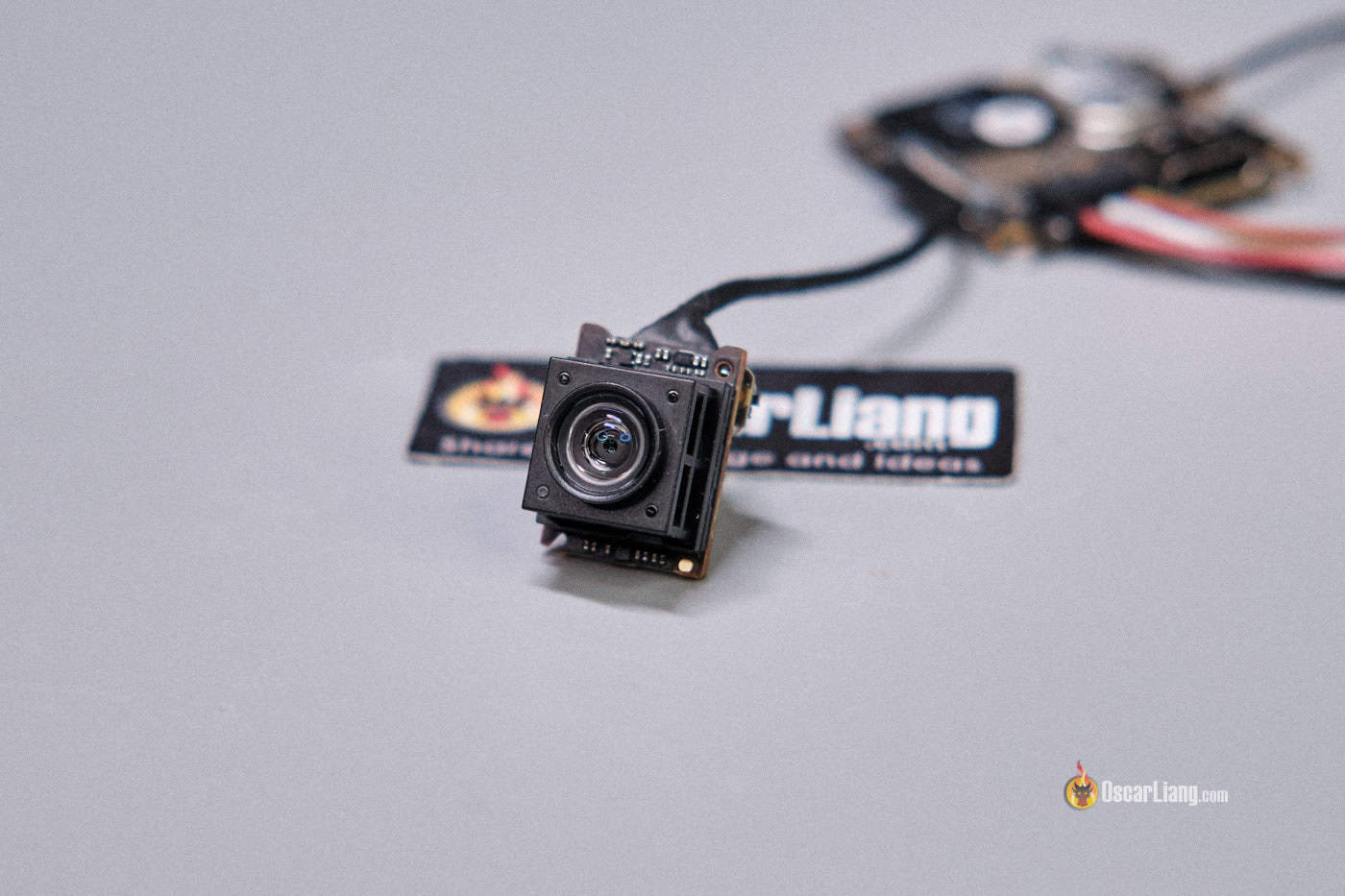
FPV stands for First Person View. An FPV camera is a small video camera that sends live video to a screen, goggles, or headset. This lets you see what the camera sees in real time, as if you were “inside” the camera’s position.
Most FPV cameras are compact, lightweight, and designed for quick response. They use analog or digital transmission, depending on the system. The key feature is low latency—meaning there’s very little delay between what happens in front of the camera and what you see on your display. That’s why they’re used for fast-moving action.
Fpv Cameras Vs. Regular Cameras
Not all cameras are FPV cameras. Here’s how they compare:
| Feature | FPV Camera | Regular Camera |
|---|---|---|
| Live Video Transmission | Yes (real-time) | Sometimes (with delay) |
| Low Latency | Very low (essential for control) | Varies, often higher |
| Size & Weight | Small and lightweight | Varies (can be large) |
| Purpose | Live piloting/viewing | Recording, photography |
The main difference is that FPV cameras prioritize live, real-time viewing, while regular cameras focus on recording or capturing high-quality images.
Why Are Fpv Cameras Linked To Drones?
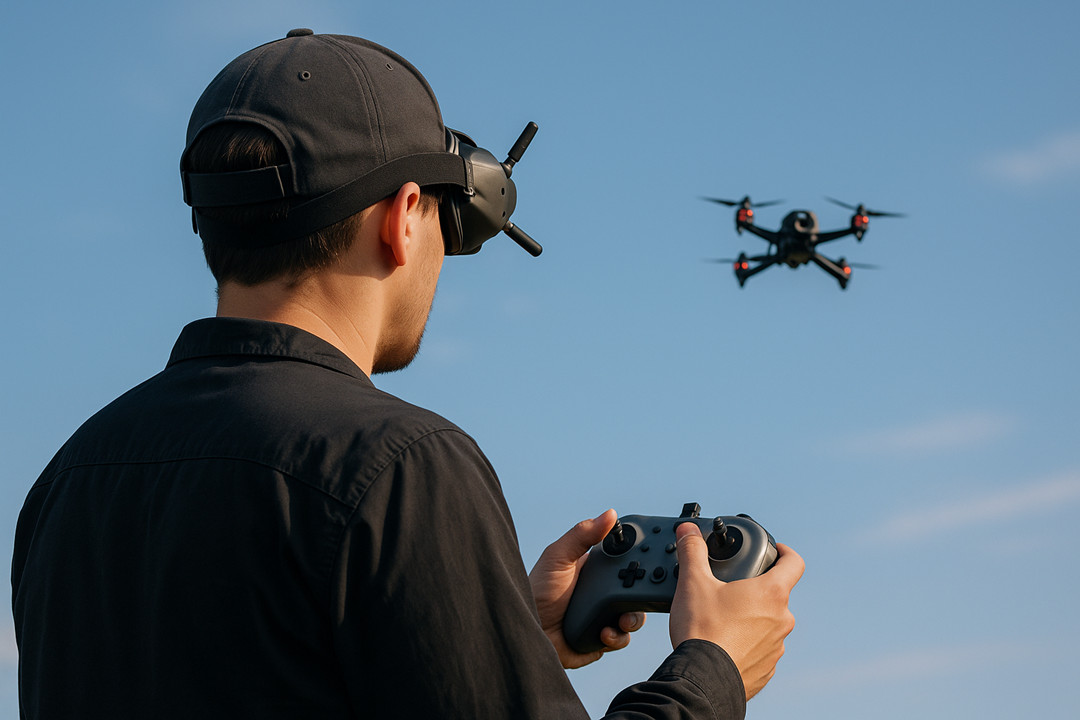
The popularity of FPV drones explains why so many people connect FPV cameras with drones. Pilots use these cameras to “see” from the drone’s point of view and fly as if they’re in the cockpit.
Drone Racing And Aerial Filming
FPV drone racing has become a global sport. Pilots use goggles to control their drones through tight courses at speeds over 60 mph (100 km/h). Without an FPV camera, this would be impossible.
Aerial filmmakers also use FPV cameras for creative shots—flying close to objects, weaving through trees, or following fast-moving subjects. The live view makes these dynamic moves possible.
Types Of Fpv Drones
FPV cameras are used in several types of drones:
- Racing drones – Built for speed and agility.
- Cinematic drones – Focused on smooth, creative shots.
- Freestyle drones – Designed for tricks and acrobatics.
- Toy drones – Simple drones for learning and fun.
Each type relies on real-time video to give the pilot control.

Beyond Drones: Other Uses For Fpv Cameras
So, are FPV cameras used only for drones? The answer is no. Their unique ability to stream live video makes them useful in many other areas.
1. Rc Cars And Trucks
FPV cameras are often mounted on remote-controlled (RC) cars, trucks, and buggies. This lets drivers navigate tough courses, explore new terrain, or race with a “driver’s seat” view.
- Rock crawlers: FPV cameras help drivers see obstacles and pick the best path.
- Racing: FPV adds excitement to RC car racing by putting you “in” the car.
2. Rc Boats And Submarines
FPV cameras are used on RC boats and underwater vehicles. This lets operators:
- Navigate rivers, lakes, or even swimming pools.
- Explore underwater environments with live feeds.
- Check for obstacles below the water’s surface.
3. Robotics And Rovers
In robotics, FPV cameras give operators a first-person perspective for controlling robots and rovers, especially in tricky environments.
- Search and rescue: Robots with FPV cameras can enter dangerous places, sending live video to rescuers.
- Exploration rovers: Used for science, FPV helps operators see and control rovers in caves, tunnels, or harsh terrain.
4. Industrial Inspections
Some companies use FPV cameras for inspecting hard-to-reach places:
- Inside pipes and ducts
- On tall structures or towers
- In machinery where direct human access is dangerous
The real-time video feed helps spot problems quickly.
5. Security And Surveillance
FPV cameras are also found in mobile security robots and surveillance systems. Operators can drive or steer the camera remotely, seeing what’s happening right now from the camera’s point of view.
6. Law Enforcement And Military
FPV technology is adapted for remote vehicles in law enforcement and the military:
- Bomb disposal robots
- Remote-controlled vehicles for surveillance
- Reconnaissance in dangerous areas
The live view is essential for safety and accuracy.
7. Wildlife And Science
Scientists use FPV cameras in animal research and nature filming:
- Mounting small FPV cameras on animals (e.g., birds or marine creatures) to study behavior
- Sending rovers into sensitive habitats to observe without disturbing wildlife
This approach offers a unique perspective that’s hard to get otherwise.
8. Extreme Sports
FPV cameras can be attached to skateboards, bikes, helmets, or even model airplanes. Athletes and hobbyists use them to:
- Record stunts from a new angle
- Practice safely by seeing obstacles ahead
- Share a “rider’s view” with fans
9. Education And Training
Some schools and training programs use FPV cameras for remote learning and robotics competitions. Students learn about engineering, technology, and teamwork by building and controlling FPV-equipped vehicles.
10. Entertainment And Gaming
FPV technology is used in live-action games and VR experiences. Players control vehicles or avatars from a first-person view, making the experience more immersive.
Key Fpv Camera Features For Different Applications
FPV cameras come in many shapes and sizes. The right camera depends on how you plan to use it. Here’s a quick overview:
| Application | Important Features | Typical Camera Specs |
|---|---|---|
| Drone Racing | Low latency, light weight | 700-1200 TVL, CMOS sensor |
| RC Cars/Boats | Durability, wide field of view | 600-1000 TVL, waterproof case |
| Industrial Inspection | High resolution, night vision | 1080p+, IR capability |
| Security/Surveillance | Remote pan/tilt, long range | HD, wireless control |
| Science/Wildlife | Small size, rugged | Miniaturized, custom design |
TVL stands for “TV lines,” a measure of analog camera resolution.
Common Myths About Fpv Cameras
Many people have the wrong idea about FPV cameras. Let’s clear up some common myths:
- Myth: FPV cameras are only for flying drones.
- Fact: They’re used on land, water, underground, and more.
- Myth: FPV cameras are the same as GoPros or action cameras.
- Fact: Action cameras are for recording high-quality video; FPV cameras focus on real-time viewing.
- Myth: Only experts can use FPV cameras.
- Fact: Many beginner-friendly FPV kits are available for RC cars, boats, and even simple robots.
- Myth: FPV cameras always require expensive equipment.
- Fact: Prices range from under $20 for basic analog FPV cameras to several hundred dollars for advanced digital systems.
Real-world Examples Of Fpv Cameras Beyond Drones
FPV cameras are quietly working in many fields. Here are a few real-world examples:
- Fire departments use FPV-equipped robots to enter burning buildings and search for survivors without risking lives.
- Utility companies use FPV inspection bots to check inside water pipes and electrical lines.
- In a 2022 study, researchers mounted FPV cameras on sea turtles to observe feeding habits, collecting over 100 hours of unique footage.
- Wildlife filmmakers attached FPV cameras to model birds to capture rare “in-flight” perspectives for documentaries.
These stories show how FPV technology reaches far beyond the sky.
How Fpv Cameras Differ In Non-drone Uses
Using FPV cameras on the ground or underwater brings new challenges:
- Vibration: RC cars and boats create more vibration than drones, so cameras need extra stabilization.
- Signal obstacles: Underground or underwater, video signals can be weak. Sometimes, special antennas or wired connections are used.
- Lighting: Industrial and scientific applications often need night vision or infrared features, which most drone FPV cameras do not have.
For these reasons, FPV cameras are often customized for their specific job.
What Makes Fpv Cameras So Versatile?
FPV cameras are popular in so many areas because they offer:
- Live, immersive views: You see from the camera’s point of view, in real time.
- Small size and weight: Easy to mount almost anywhere.
- Low power use: Can run on batteries for hours.
- Affordable options: Entry-level systems are not expensive.
Another big reason is modularity. FPV cameras often use standard connectors and can be swapped between vehicles or projects with little effort.
How To Choose An Fpv Camera For Non-drone Use
If you want to use an FPV camera for RC cars, robotics, or another application, here’s what to consider:
- Latency: The lower the better, especially if you need fast reactions.
- Resolution: Higher resolution gives a clearer view but can increase cost and power use.
- Field of View: A wider angle helps you see more, but may distort the image.
- Durability: Will the camera face dust, water, or impacts?
- Power Source: Check voltage and battery compatibility.
- Transmission Range: Make sure the video signal covers your whole course or work area.
- Mounting Options: Will you need special brackets or cases?
FPV camera reviews and user forums are good places to compare models for your specific need.
Fpv Camera Market Trends And Future Uses
The FPV camera market is growing fast. According to a 2023 report, the global FPV market is expected to reach over $1.2 billion by 2027, with strong demand in robotics, inspection, and sports.
Emerging trends include:
- Digital FPV systems: Better image quality and longer range.
- AI-assisted FPV: Cameras that can track objects or avoid obstacles automatically.
- Miniaturization: Even smaller and lighter cameras for use on insects or tiny robots.
- VR integration: Combining FPV with virtual reality for immersive remote work or play.
These trends mean that FPV cameras will keep finding new uses—many outside the world of drones.
Comparing Fpv Camera Uses: Drones Vs. Other Applications
To highlight the differences and similarities, see the comparison below:
| Aspect | Drones | Other FPV Uses |
|---|---|---|
| Main Purpose | Piloting, aerial filming | Navigation, inspection, research |
| Environment | Sky/air | Land, water, underground |
| Challenges | Wind, sun glare | Vibration, signal loss, darkness |
| Common Users | Hobbyists, filmmakers, racers | Engineers, scientists, security |
| Camera Features | Lightweight, low latency | Durable, waterproof, night vision |
Two Non-obvious Insights Beginners Miss
- Signal Quality Varies by Environment: FPV camera performance depends heavily on where you use them. Trees, walls, and water can block signals much more than open air. For non-drone uses, you may need special antennas or even wired video links.
- Recording vs. Viewing: Many FPV cameras do not record video onboard; they only send live video. If you want to keep footage, you might need to add a separate DVR (Digital Video Recorder) or use a hybrid camera.
Common Mistakes When Using Fpv Cameras Outside Drones
- Ignoring interference: Many users forget that Wi-Fi networks, metal structures, or even other FPV systems can cause video dropouts.
- Underestimating power needs: Non-drone applications often need longer battery life, especially for ground robots or inspection tools.
- Overlooking mounting: A camera mount that works on a drone may not fit your RC car or robot. Always check before buying.
Final Thoughts
FPV cameras are not just for drones—they are everywhere, from RC cars to underwater robots, from industrial sites to wildlife research. Their real-time, immersive view opens up new ways to explore, learn, and work. As technology improves, even more creative uses will appear. If you’re interested in FPV technology, don’t limit yourself to the skies—the ground, water, and even underground are full of possibilities.
For more on the history and development of FPV technology, check out this detailed overview from Wikipedia.
Frequently Asked Questions
What Does Fpv Stand For, And Why Is It Important?
FPV means First Person View. It’s important because it lets you see from the camera’s perspective in real time, which is crucial for controlling vehicles or exploring areas you can’t reach directly.
Can I Use An Fpv Camera On An Rc Car?
Yes, many people use FPV cameras on RC cars and trucks. You can drive from the “driver’s seat” view, making the experience more fun and realistic. Just make sure the camera is mounted securely and protected from dust and impacts.
Do Fpv Cameras Record Video?
Most basic FPV cameras only send live video; they do not record. If you want to save footage, look for a camera with a built-in DVR or connect a separate recording device to your receiver.
What Are The Main Challenges Of Using Fpv Cameras On The Ground Or Water?
Signal loss is more common due to obstacles like walls or water. Vibration from vehicles can also affect image quality. You may need a stabilized mount or special antennas for reliable performance.
Are Fpv Cameras Expensive?
FPV cameras come in a wide price range. Basic analog cameras can cost less than $20, while advanced digital systems with HD quality can be several hundred dollars. Choose a camera based on your needs and budget.