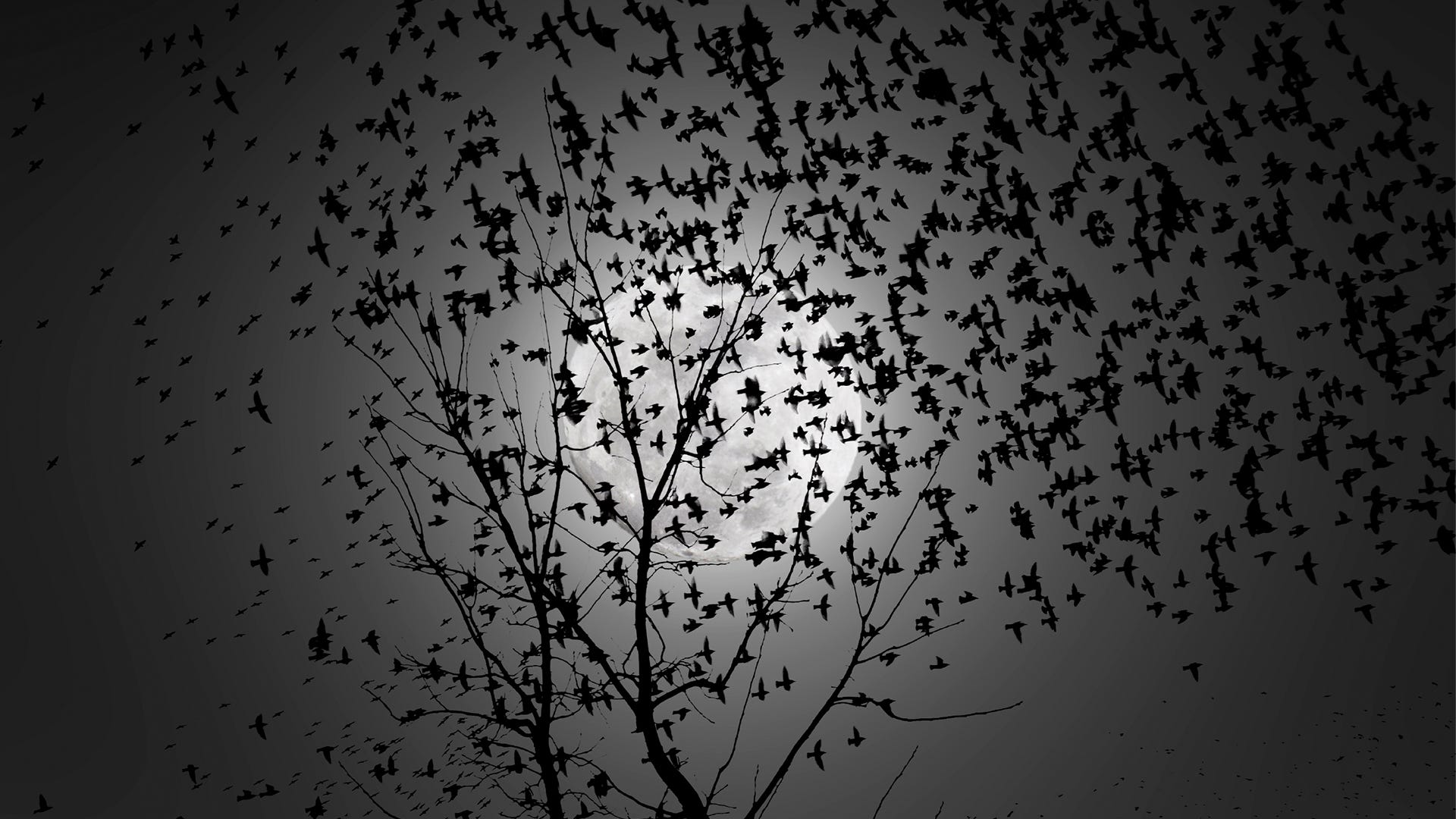
Every year, the night sky becomes a secret highway for millions of birds. While most people sleep, these travelers journey across oceans, deserts, and continents. If you’ve ever wondered, “Why do birds migrate at night? ” you’re not alone. The answer goes deeper than just avoiding the heat of the day.
Night migration is a smart, complex strategy shaped by evolution, physics, and the daily rhythms of nature. Understanding this behavior gives us a window into the remarkable lives of birds, and reveals how they’ve adapted to survive in a changing world.
The Basics Of Bird Migration
Bird migration is one of nature’s greatest events. Many species travel thousands of kilometers between their breeding and wintering grounds. But migration is risky and exhausting. Birds must time their journey to match food supplies, weather, and daylight. If they get it wrong, they may not survive.
There are two main types of migration timing: diurnal (daytime) and nocturnal (nighttime). Songbirds, for example, mostly migrate at night, while larger birds like hawks and cranes travel during the day. But why would so many birds choose the darkness?
Advantages Of Night Migration
Cooler Temperatures
Flying is hard work. Birds generate a lot of heat, especially during long flights. At night, air temperatures are lower. This helps birds avoid overheating and reduces the amount of water they lose through breathing and sweating (yes, birds sweat a little). Cooler air means less stress on their bodies, so they can travel farther before needing a break.
Calmer Air And Less Turbulence
During the day, the sun heats the ground, creating thermals—rising columns of warm air. While some large birds use thermals to soar, small birds find them difficult to handle. Night air is usually more stable and less turbulent. This makes flying smoother and saves energy, as birds spend less effort fighting the wind.
Lower Risk Of Predators
Many bird predators, like hawks and falcons, hunt by day. By flying at night, birds avoid these threats. This is especially important for small songbirds that are easy prey. Night migration gives them a safer window to travel, increasing their chances of survival.
Using The Stars To Navigate
Birds are expert navigators. At night, they use the stars as a map. Research shows that some birds learn the patterns of the night sky as chicks. They combine this with other cues like the Earth’s magnetic field and the moon to find their way. The clear night sky is a powerful tool for orientation, especially when crossing open oceans or deserts where landmarks are few.
Saving Daylight For Feeding
Migrating birds need a lot of energy. By flying at night, they can spend the daylight hours feeding and resting. This dual schedule lets them refuel efficiently. Some birds almost double their body weight before migration, then burn off fat reserves during flight. Daytime feeding is critical, so nighttime travel is the best use of their time.
The Science Behind Nocturnal Migration
Sensory Adaptations
Birds that migrate at night have unique adaptations. Their eyes are more sensitive to low light, allowing them to see obstacles and other birds. Many species also have specialized brain cells for processing visual cues from the sky. Their ears can pick up subtle changes in wind and sound, helping them stay on course.
Energy Use And Physiology
Flying at night changes how a bird’s body works. Lower temperatures mean they use less energy for cooling. Studies show nocturnal migrants have slower heart rates and burn fuel more efficiently. They also adjust their sleep patterns, taking short naps during the day to recover.
Detecting The Earth’s Magnetic Field
Some birds have a special protein called cryptochrome in their eyes. This lets them “see” the Earth’s magnetic field as a visual pattern. Combined with starlight, it’s an effective navigation tool. This ability is so precise that birds can correct their course even in poor weather or unfamiliar areas.
Which Birds Migrate At Night?
Not all birds travel after dark. Here’s a look at some common nocturnal migrants:
- Songbirds (Passerines): Includes warblers, thrushes, sparrows, and flycatchers. Most travel at night.
- Cuckoos: These shy birds also move under cover of darkness.
- Swifts and Swallows: Some species mix day and night travel.
- Shorebirds: Many sandpipers and plovers migrate at night, especially over long distances.
- Waterfowl: Ducks and geese mostly migrate by day but may fly at night over large bodies of water.
Why do some birds switch between day and night? The answer depends on size, flying style, diet, and risk of predation.
Table: Typical Migration Patterns
| Bird Group | Day Migration | Night Migration |
|---|---|---|
| Songbirds | Rare | Common |
| Raptors (hawks, eagles) | Common | Rare |
| Shorebirds | Some | Some |
| Waterfowl | Common | Some |
How Do Birds Find Their Way At Night?
Star Navigation
Birds can recognize the north-south axis by watching the rotation of the stars around the North Star (Polaris). Experiments with captive birds in planetariums show they become confused if the stars are hidden or rearranged.
Moon And Landmarks
On clear nights, birds use the moon’s position as a guide. Over land, they may also use rivers, coastlines, and mountains, even in low light. Urban light pollution can sometimes confuse them, leading to window strikes or wrong turns.
Magnetic Compass
The Earth’s magnetic field gives birds a reliable compass, even in total darkness. Some species can sense both the direction and the strength of the field, helping them stay on track for thousands of kilometers.
Table: Navigation Cues Used By Birds
| Cue | Day | Night |
|---|---|---|
| Stars | No | Yes |
| Sun | Yes | No |
| Magnetic Field | Yes | Yes |
| Landmarks | Yes | Sometimes |
| Polarized Light | Yes | Sometimes (moonlight) |
Risks And Challenges Of Night Migration
While night migration has many benefits, it’s not without problems.
Weather Hazards
Fog, storms, and strong winds can make night travel dangerous. Birds may be blown off course or forced to land in unfamiliar places. Sudden weather changes are harder to detect at night, so birds rely on instinct and experience.
Light Pollution
Artificial lights from cities, oil rigs, and ships attract migrating birds. This can lead to fatal window collisions, exhaustion, or even death. Light pollution is a growing threat as cities spread and become brighter.
Obstacles
Tall buildings, radio towers, and wind turbines pose special risks. Birds may not see these hazards in time to avoid them. Conservation groups now work to dim lights and mark obstacles to help migrating birds.
Table: Main Dangers For Nocturnal Migrants
| Danger | Description |
|---|---|
| Storms | Can blow birds off course or force emergency landings. |
| Light Pollution | Confuses navigation, increases risk of fatal collisions. |
| Buildings/Towers | Hard to see at night; major source of mortality. |
| Exhaustion | Lack of rest or food may lead to collapse. |
How Scientists Study Night Migration
Radar And Tracking Devices
Modern technology has transformed bird migration research. Weather radar can detect flocks as they move through the night sky. Small tracking devices, like geolocators and GPS tags, record the exact routes and stopovers of individual birds.
Acoustic Monitoring
Some birds call as they migrate. Scientists use microphones to record these flight calls, helping estimate the number and species passing overhead. This method reveals migration “hotspots” and timing.
Citizen Science
Ordinary people also help. Projects like eBird and bird banding stations collect data from thousands of volunteers. This crowd-sourced approach gives a fuller picture of migration patterns.
Surprising Discoveries
Recent studies have uncovered non-obvious facts:
- Some birds fly non-stop for days, covering up to 11,000 km without resting.
- Small birds may climb to 3,000 meters (10,000 feet) at night to find favorable winds.
- Young birds often migrate alone, relying on built-in instincts rather than following adults.
Evolutionary Reasons For Night Migration
Birds didn’t always migrate at night. Over time, those that did had higher survival rates. This “natural selection” favored traits like night vision, star navigation, and efficient flight.
Competition And Resource Use
If all birds migrated by day, food sources at stopover sites would be overwhelmed. Night migration spreads out the demand, reducing competition and helping more birds survive.
Avoiding Heat Stress
Tropical and desert routes can be deadly in the daytime sun. Night travel avoids dangerous overheating and water loss, especially for small birds with thin feathers.
Predator-prey Dynamics
As some birds shifted to night travel, daytime predators saw less food. This reduced pressure on prey, allowing both groups to find their own niche.
Migration Timing And Triggers
Birds don’t just decide to migrate on a whim. Their bodies respond to a mix of internal clocks and external cues:
- Day length: As days get shorter or longer, hormones signal it’s time to go.
- Temperature: Sudden cold snaps can trigger departure.
- Food supply: Falling insect numbers or ripening fruit may start migration.
- Genetics: Young birds raised in captivity still show strong migratory restlessness at night—an inherited trait.
Experienced birds may adjust their schedule based on weather forecasts, wind direction, or recent success.
Common Misconceptions About Night Migration
Many people believe all birds migrate during the day, or that night migration is rare. In fact, the majority of North America’s land birds travel at night.
Another myth is that birds get lost easily at night. While some do, their combined use of stars, magnetic fields, and mental maps makes them impressive travelers.
Not all night migration is silent, either. On clear nights in spring and fall, you might hear high-pitched flight calls overhead—a reminder of the journey happening above.

How Humans Can Help Nocturnal Migrants
Our modern world has made migration harder. But people can reduce the dangers:
- Turn off lights: Especially during peak migration seasons in spring and fall.
- Make windows bird-safe: Use decals, screens, or patterns to prevent collisions.
- Support habitat conservation: Protect stopover sites and food sources.
- Join citizen science projects: Submit your bird sightings to help researchers.
- Spread awareness: Teach others about the importance of night migration.
For those interested, the National Audubon Society offers more details on safe migration practices.
Remarkable Journeys: Examples From The Field
The Blackpoll Warbler is a small songbird that breeds in North America and winters in South America. Each fall, it makes a non-stop flight of up to 3,000 km over the Atlantic Ocean—almost entirely at night. Scientists found that these birds double their weight before departure, then burn their fat reserves with amazing efficiency.
The Bar-tailed Godwit holds the record for the longest non-stop flight: over 11,000 km from Alaska to New Zealand in 9 days. Most of this journey is at night, taking advantage of favorable winds and cooler temperatures.
Urban birdwatchers in New York City sometimes witness “fallouts” when bad weather forces thousands of tired migrants to land in city parks at dawn. These events show both the risks and resilience of night-traveling birds.
The Future Of Night Migration
Climate change is shifting migration schedules. Warmer nights, earlier springs, and changing wind patterns affect when and how birds travel. Some species now leave earlier or later than before, or change their routes to avoid new dangers.
Satellite tracking and artificial intelligence will make it easier to monitor migration in real time. This data helps scientists protect critical habitats and forecast threats like storms or light pollution.
But the basic reasons birds migrate at night—safety, efficiency, and survival—are likely to endure. As long as the stars shine, birds will continue their ancient journeys across the night sky.
Frequently Asked Questions
Why Don’t All Birds Migrate At Night?
Not all birds are built for night travel. Larger species like hawks and eagles rely on rising warm air (thermals) that only form during the day. Others may need to see food or landmarks, which is easier in daylight. Each species adapts to what suits its size, diet, and lifestyle.
How Do Birds Sleep If They Migrate At Night?
Birds that travel at night take short naps or “micro-sleeps” during the day. Some can even sleep with one half of their brain at a time, keeping the other half awake to watch for danger. This split-sleep strategy helps them rest without losing awareness.
Do Birds Get Lost During Night Migration?
Most birds are excellent navigators, using stars, the Earth’s magnetic field, and mental maps. However, bad weather, bright city lights, or fatigue can cause some to stray off course. Usually, their natural instincts help them correct mistakes and find the right path.
What Are The Biggest Threats To Night-migrating Birds?
The main dangers are light pollution, tall buildings, storms, and exhaustion. Artificial lights can confuse birds, leading to fatal collisions. Conservation efforts focus on turning off lights and making buildings safer during migration seasons.
Can I See Or Hear Birds Migrating At Night?
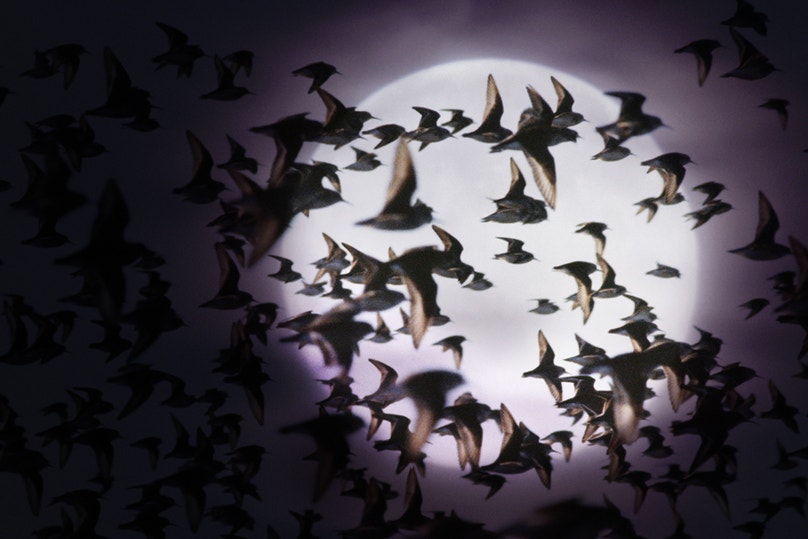
Yes! On quiet, clear nights in spring or fall, you might hear soft, high-pitched calls overhead. With binoculars or a simple radar app, you can sometimes see flocks crossing the moon. Local birdwatching groups often share tips for spotting these night travelers.
Bird migration at night remains one of nature’s most inspiring mysteries. Each year, the sky fills with silent travelers on a journey guided by instinct, stars, and the promise of survival. By understanding why birds migrate at night, we gain new respect for their resilience—and see our world through their eyes.