Why Do Birds Have Different Beak Shapes?
Birds are some of the most diverse animals on Earth. One of the first things you notice when you look at different birds is their beaks. Why do birds have such a variety of beak shapes? Some are long and thin, some are strong and curved, and others are short and thick.
The answer is not just about looks—beak shape is a powerful example of how birds survive in their environment. Every beak tells a story about food, habitat, and even the way a bird lives its life.
In this article, you’ll discover how beak shapes connect to a bird’s lifestyle, diet, and survival strategies. We’ll look at the science behind beak evolution, see real examples, and find out why a hummingbird’s beak is so different from a hawk’s.
Even small changes in a beak can make a big difference. By the end, you’ll see that every beak is a tool, shaped by millions of years of nature’s experiments.
The Main Function Of A Bird’s Beak
Every bird uses its beak every day. Beaks are not just for eating; they are multi-purpose tools. Birds use their beaks to gather food, build nests, clean themselves, and sometimes even fight or attract mates. But the main reason for the different shapes is the type of food the bird eats.
A bird’s beak acts like a custom-made tool. Just as a chef uses different knives for different tasks, birds have beaks designed for their main food. For example, a woodpecker’s strong, chisel-like beak helps it dig into wood for insects.
A duck’s flat beak filters plants and tiny animals from water.
Many people think beak shape is only for eating, but that’s not the whole story. Some birds use their beaks for digging, breaking seeds, or even as a weapon. The beak is also important for controlling temperature—some birds release heat through their beaks.
How Evolution Shapes Bird Beaks
Natural selection is the main reason why birds have different beak shapes. Over time, birds with beaks best suited for their environment survive and have more babies. These babies inherit the same beak shape, and the process continues. This is called adaptation.
A famous example is Darwin’s finches on the Galápagos Islands. Charles Darwin noticed that finches on different islands had different beak shapes, depending on the available food. Some finches had strong, thick beaks for cracking seeds, while others had slender beaks for eating insects or nectar. This was early proof that beaks change with the environment.
But adaptation is not always about food. Beaks can also change because of weather, nesting habits, or even competition with other birds. Sometimes, two birds compete for the same food, so one species evolves a different beak shape to eat something else.
Types Of Bird Beaks And Their Functions
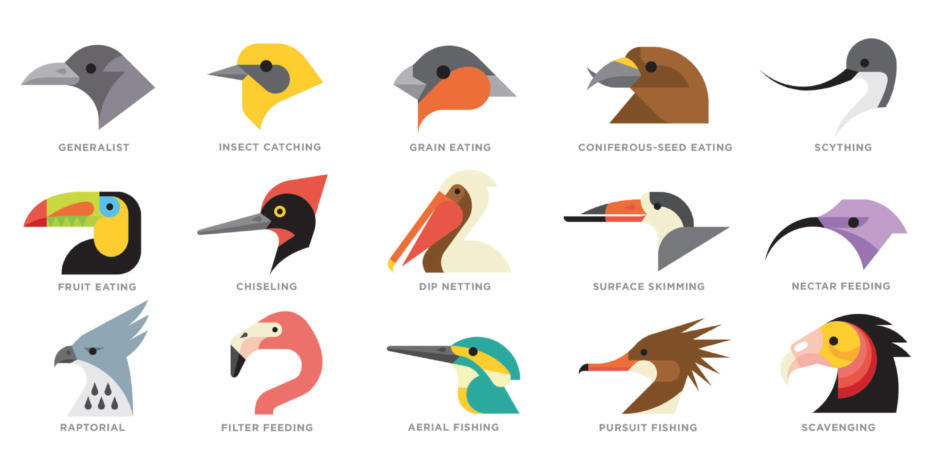
There are many types of bird beaks. Here are some of the main shapes and what they are used for:
1. Cone-shaped Beaks
These beaks are short, thick, and strong. You often see them on finches and sparrows. Their shape is perfect for cracking open hard seeds. Birds with cone-shaped beaks are common in gardens and fields.
2. Hooked Beaks
Raptors like eagles, hawks, and owls have strong, curved beaks. The hook at the end helps them tear meat. This beak shape is essential for birds that hunt and eat animals.
3. Long, Thin Beaks
Birds like hummingbirds and some shorebirds have long, slender beaks. Hummingbirds use their beaks to reach nectar deep inside flowers. Shorebirds use their beaks to probe for insects and worms in mud or sand.
4. Chisel-shaped Beaks
Woodpeckers have strong, pointed beaks that act like chisels. They use them to dig into tree bark to find insects. This beak must be tough to withstand constant pecking.
5. Flat, Broad Beaks
Ducks and some other water birds have flat, wide beaks. These beaks are good for filtering food from water. The edges often have small comb-like structures called lamellae to help trap tiny plants and animals.
6. Crossed Beaks
The crossbill has a unique beak where the upper and lower parts cross over. This helps the bird pry open pine cones to get seeds. It’s a rare and specialized shape.
7. Spear-like Beaks
Herons, kingfishers, and some other birds have long, sharp beaks that look like spears. These birds use their beaks to catch fish and other slippery prey.
8. Short, Stout Beaks
Parrots and some fruit-eating birds have strong, curved beaks. These beaks help them crack nuts and seeds, and even climb.
9. Wide, Gaping Beaks
Swallows and nightjars have wide mouths, not just beaks. They catch insects in flight by opening their mouths wide.
10. Specialized Beaks
Some birds have beaks that are hard to classify. For example, the flamingo’s beak is bent and used for filtering food from mud. The pelican has a huge pouch for scooping fish.
How Beak Shape Matches Food Type: Examples
Let’s look at how beak shape matches food type in real birds. This table compares a few common birds and their beaks:
| Bird Species | Beak Shape | Main Food | Beak Function |
|---|---|---|---|
| American Goldfinch | Cone-shaped | Seeds | Cracks seeds easily |
| Bald Eagle | Hooked | Meat | Tears flesh from prey |
| Hummingbird | Long, thin | Nectar | Reaches deep into flowers |
| Mallard Duck | Flat, broad | Plants, insects | Filters food from water |
| Woodpecker | Chisel-shaped | Insects | Pierces tree bark |
Notice how each beak is made for a specific job. If a finch had a hummingbird’s beak, it could not crack seeds. If a hawk had a duck’s beak, it could not catch prey. Each beak is a perfect fit for the bird’s main food.

More Than Food: Other Uses For Beaks
Eating is not the only reason birds have special beaks. Here are other ways birds use their beaks:
- Building Nests: Many birds use their beaks to gather and arrange twigs, leaves, and other materials. The shape and strength of the beak can make nest building easier.
- Cleaning (Preening): Birds use their beaks to clean their feathers. This keeps them waterproof and in good condition.
- Defense and Competition: Some birds use their beaks to fight off rivals or defend their territory. For example, swans and geese can deliver painful bites.
- Attracting Mates: In a few species, beaks are brightly colored or make special sounds to attract a mate.
- Carrying Objects: Parrots use their strong beaks to carry food and even climb trees.
A non-obvious insight is that some birds use their beaks to sense the environment. For example, the kiwi from New Zealand has nostrils at the tip of its beak to smell worms underground. This is very rare among birds.
Beak Evolution And Environmental Changes
Birds don’t choose their beak shape. Instead, the environment slowly shapes their beaks through evolution. When the environment changes, birds must adapt or risk extinction. A classic real-world example comes from the study of Darwin’s finches.
On the Galápagos Islands, scientists noticed that finches’ beak sizes changed during droughts. In dry years, only hard seeds were available, so finches with bigger, stronger beaks survived. When rains returned and soft seeds grew, finches with smaller, thinner beaks did better.
These changes could be measured in just a few generations—a clear case of natural selection in action.
Another important point is that beak shape can change quickly if the environment changes. This is why introduced species or climate change can cause problems for birds. If their food changes, their beak might not be the right tool anymore.
Comparing Bird Beaks To Tools
Beaks work like tools. Here’s a simple comparison to help you visualize:
| Beak Shape | Common Tool | Main Use |
|---|---|---|
| Chisel-shaped | Chisel or drill | Making holes, digging |
| Hooked | Knife | Cutting meat |
| Cone-shaped | Nutcracker | Cracking seeds |
| Flat, broad | Strainer | Filtering food |
| Long, thin | Straw or tweezers | Extracting nectar or insects |
This comparison helps show why beak shape is so important. The wrong tool makes a job difficult or impossible.
Beak Development In Young Birds
Many people wonder if young birds are born with the same beak shape as adults. The answer is yes, but there are some differences. Nestlings (baby birds) have softer beaks that harden as they grow. The final shape develops with age and is ready when the bird leaves the nest.
In some species, the beak color changes as the bird matures. For example, young blackbirds have yellowish beaks that turn black as they become adults. This can help parents recognize their young.
A non-obvious detail is that some chicks have a special “egg tooth” on their beak, which helps them break out of the egg. This tiny bump falls off soon after hatching.
The Role Of Beaks In Bird Communication
Birds communicate in many ways, and beaks sometimes play a part. Some birds use their beaks to make sounds, like the stork’s bill-clattering. Others use their beak color as a signal. For instance, the bright bill of the Atlantic puffin becomes much duller after breeding season.
In some species, beak clicking or drumming is a sign of aggression or a courtship display. These behaviors show that the beak is more than just a feeding tool—it’s also used to send messages.
Beak Problems And How Birds Adapt
Beaks can break, get diseases, or grow abnormally. Birds with damaged beaks can have trouble eating or cleaning themselves. In the wild, these birds often don’t survive long.
However, some birds can adapt to minor injuries. For example, crows are known to use sticks as tools if their beaks are damaged. Some parrots with deformed beaks can still eat by using their feet to help.
Beak deformities are becoming more common in some areas, possibly due to pollution or disease. Scientists are still studying the reasons.
How Scientists Study Beak Evolution
Researchers use many methods to study beak shapes and their evolution. These include:
- Measuring beak size and shape in thousands of birds
- Watching birds feed in the wild
- Using DNA to find genes related to beak development
- Creating computer models to predict how beaks evolve
One famous study involved scanning the beaks of finches with 3D imaging to see tiny differences. These studies help explain how small changes can lead to new species over time.
Human Impact On Bird Beaks
Humans affect birds in many ways. When we change habitats, introduce new plants, or bring in non-native species, we can indirectly change the food available. This sometimes leads to changes in beak shape.
For example, in urban areas, crows and pigeons eat human food like bread and chips. These foods are very different from their natural diet, but these birds are generalists and can adapt. Other species are not so lucky. Birds that need a specific food may decline if their food disappears.
Another example is the use of bird feeders. In the UK, scientists found that garden birds developed longer beaks over time, possibly to reach food in deeper feeders. This shows that even small human actions can influence evolution.
Interesting And Surprising Beak Facts
- The shoebill from Africa has a beak shaped like a shoe, perfect for catching large fish.
- The spoonbill has a flat, spoon-shaped beak for sweeping through mud.
- Some birds, like the skimmer, have a lower beak longer than the upper one. They use this to skim over water and catch fish.
- The largest beak compared to body size is found in the toucan. Its beak looks heavy but is actually very light and helps control body temperature.
- Flamingos eat with their heads upside down, using their unique beaks to filter food from muddy water.
How Climate Change May Affect Beak Evolution
Climate change is altering habitats and food availability. As temperatures and rainfall patterns shift, some plants and animals disappear or move to new areas. This can force birds to change their diet or move as well.
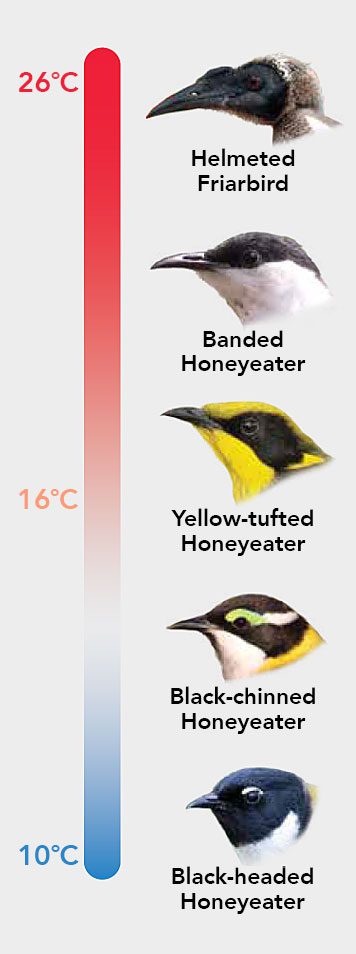
There is evidence that some birds are evolving longer or shorter beaks in response to new climates. For example, Australian parrots have shown changes in beak size over recent decades, possibly to help with heat regulation.
Birds with flexible diets and beak shapes are more likely to survive these changes. Birds with highly specialized beaks may be at higher risk.
Famous Studies On Beak Evolution
The most famous study is that of Darwin’s finches. Scientists Peter and Rosemary Grant spent over 40 years observing finches on the Galápagos Islands. They found that beak shape and size changed with the food supply during droughts and wet years. Their work is considered some of the best evidence for natural selection in action.
Another famous study looked at the Hawaiian honeycreepers. These birds evolved many different beak shapes after arriving on the islands. Today, you can find honeycreepers with beaks like pliers, straws, or even sickles, each matched to a special food.
For more on Darwin’s finches, see this Wikipedia article.
Comparing Beak Adaptations In Different Habitats
Birds live in many environments, from forests to deserts to icy tundra. The type of habitat often decides what kind of beak works best.
| Habitat | Typical Beak Shape | Example Bird | Adaptation Purpose |
|---|---|---|---|
| Forest | Chisel-shaped, cone-shaped | Woodpecker, finch | Digging in bark, cracking seeds |
| Wetlands | Flat, broad | Duck | Filtering food from water |
| Grasslands | Strong, thick | Sparrow | Eating hard seeds |
| Coastal | Spear-like, hooked | Heron, gull | Catching fish, tearing prey |
| Desert | Small, pointed | Lark | Eating small insects, conserving water |
This comparison shows that the environment and available food push beak evolution in different directions.
Common Myths About Bird Beaks
Some people believe that birds can change their beak shape during their lifetime. This is not true. Beak shape is mostly genetic, passed down from parents. While beaks can grow, break, or get worn down, their overall shape does not change after the bird matures.
Another myth is that big beaks always mean strong birds. In fact, some birds like the toucan have big beaks that are quite light and mostly for show or temperature control.
A third myth is that all birds with similar beaks are closely related. Sometimes, unrelated birds develop similar beaks because they eat the same food. This is called convergent evolution.
Frequently Asked Questions
Why Do Some Birds Have Colorful Beaks?
Bright beak colors are often used to attract mates or show off health and strength. For example, the male puffin’s bright orange beak becomes dull after breeding season. In some species, a colorful beak can also warn rivals or predators.
Can A Bird Survive With A Broken Beak?
It depends on the damage. If the break is small, some birds can adapt. For example, parrots use their feet to help eat. But a badly broken beak can make eating or preening impossible, and many birds will not survive in the wild.
How Fast Can Beak Shape Change In A Bird Population?
Beak shape can change in just a few generations if the environment changes quickly. This was seen in Darwin’s finches, where droughts caused rapid evolution of beak size and strength.
Are There Birds With No Beaks?
All living birds have beaks. However, some ancient birds and their dinosaur relatives had teeth instead of beaks. Today, the beak is a key feature of all bird species.
Do Beaks Keep Growing Like Human Fingernails?
Yes, a bird’s beak grows throughout its life, much like fingernails. Birds keep their beaks the right shape and length by rubbing (wearing down) against hard objects or while feeding.
Bird beaks are more than just a mouth—they are tools shaped by millions of years of change. Each beak is a story of survival, adaptation, and sometimes, amazing creativity by nature. The next time you see a bird, take a closer look at its beak.
You might just see evolution in action.