
What comes to your mind when you think of speed in the animal kingdom? Many people imagine a cheetah racing across the plains. But in the world of birds, the story is even more impressive. Some birds can dive from the sky faster than any animal can run.
Others can fly long distances at surprising speeds. The question, “What is the fastest bird in the world? ” opens a door to a world of amazing facts, records, and some misunderstandings too. This article will guide you through the details, clearing up myths and showing you why these birds are so special.
Understanding Bird Speed: Not As Simple As It Sounds
When people ask about the fastest bird, they often mean the fastest in the air. But bird speed can mean different things:
- Level flight speed: How fast a bird flies in a straight line, without diving.
- Diving speed (also called stoop): How fast a bird goes when it dives toward the ground.
- Endurance speed: The pace a bird keeps over long distances during migration.
Each type of speed tells a different story. If you just want to know the fastest animal ever recorded, the answer is clear. But if you want to know more about bird speed in general, there are many fascinating details to explore.
The Fastest Bird In The World: Peregrine Falcon
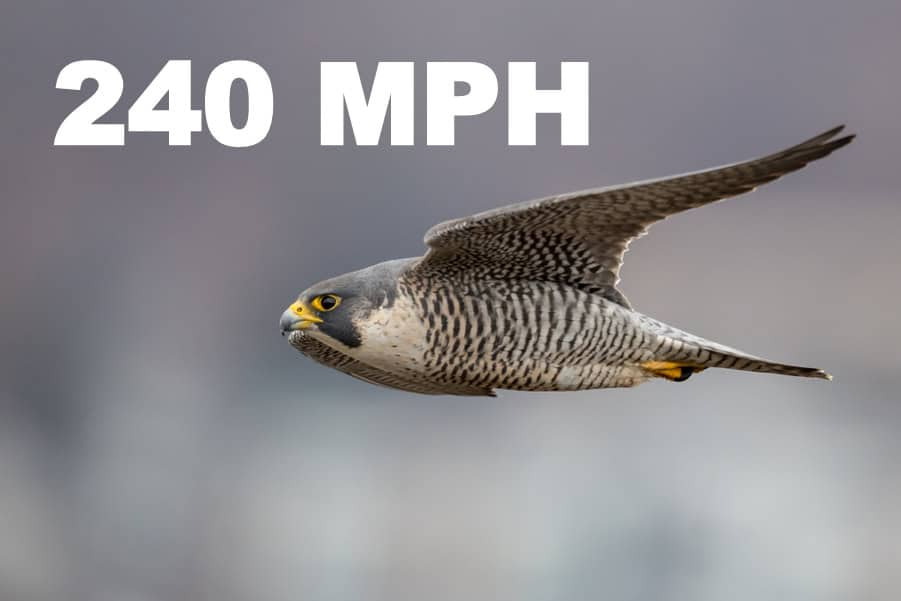
The peregrine falcon is the fastest bird — and in fact, the fastest animal — on Earth. But there’s a detail: its record speed comes during a dive.
Peregrine Falcon’s Record-breaking Dive
When hunting, the peregrine falcon goes into a steep dive called a stoop. With its wings tucked, it points its body toward its prey and lets gravity do the work. During this dive, it can reach speeds up to 389 km/h (242 mph). No other animal comes close to this speed, not even a cheetah or the fastest fish.
This breathtaking speed was measured by scientists using modern equipment, including high-speed cameras and radar. The falcon’s body is made for speed: pointed wings, a strong chest, and a special nose shape that helps it breathe at high velocity.
Why The Peregrine Isn’t The Fastest In Level Flight
Here’s something beginners often miss: the peregrine falcon is not the fastest bird in level, straight flight. Its amazing record is only possible when it dives. In level flight, other birds can go faster.
Fastest Birds In Level Flight
To understand which bird is truly fastest in straight, level flight, let’s look at the evidence.
Common Swift
The common swift holds the record for fastest level flight. It can reach up to 111.6 km/h (69.3 mph) in level flight. Swifts spend almost their entire lives in the air, eating, sleeping, and even mating while flying. Their slim, curved wings help them slice through the air with little drag.
Other Fast Level Flyers
Some birds, especially waterfowl, are also fast in level flight. Ducks, for example, often surprise people with their speed.
Here’s a comparison of the top birds measured in level flight:
| Bird Species | Max Level Flight Speed (km/h) | Notable Fact |
|---|---|---|
| Common Swift | 111.6 | Fastest level flight among birds |
| Grey-headed Albatross | 127 | Measured with tailwind during migration |
| Spur-winged Goose | 142 | Sometimes reported as fastest level flier, but data debated |
| Red-breasted Merganser | 129 | Strong, fast flier among waterfowl |
| Canvasback Duck | 112 | High-speed straight flight |
Note: Some records, like the Spur-winged Goose, are debated. The most reliable, widely accepted record for level flight is the common swift.
How Birds Achieve Such High Speeds
Birds are built for flight, but not all are built for speed. The fastest birds share key traits:
- Streamlined body shape: Reduces drag.
- Long, pointed wings: Make cutting through air easier.
- Strong chest muscles: Power rapid wingbeats.
- Lightweight bones: Lower body weight without losing strength.
The peregrine falcon has extra adaptations. Its nostrils have baffles (small cones) that slow air, so it can breathe at high speed. The falcon’s eyes have a special eyelid to protect them from wind and dust.
Diving Vs. Level Flight: Why Does It Matter?
Most headlines say the peregrine falcon is the fastest bird. That’s true, but only when diving. In regular, level flight, it is not as fast as some other birds.
This difference matters because:
- Diving speed is helped by gravity.
- Level flight uses only the bird’s muscle power and wing shape.
So, if you want to know which bird can move fastest under its own power, look at level flight. If you want the fastest animal in any situation, the peregrine is the winner.
Other Birds Known For Speed
While the peregrine falcon and common swift get most of the attention, many other birds deserve mention. Let’s look at some other speedy flyers.
Frigatebirds
Frigatebirds are champions of gliding. They do not reach the top speeds of falcons, but they can soar for weeks above the ocean. Their wingspan is the largest compared to their body weight, helping them ride air currents with little effort.
Golden Eagle
The golden eagle is another fast raptor, reaching up to 320 km/h (200 mph) in a dive. It uses this speed to surprise prey, often coming from above.
White-throated Needletail
The white-throated needletail (also called spine-tailed swift) is sometimes listed as the fastest bird in level flight, with reports up to 169 km/h (105 mph). However, these numbers are not well documented. Most experts give the record to the common swift.
Gyrfalcon
Gyrfalcons are the largest falcons and can reach up to 209 km/h (130 mph) during a dive. They are powerful hunters, chasing prey over open ground.
Mallard Duck
Mallard ducks might not look like speedsters, but in straight flight, they can reach 89 km/h (55 mph). Their quick getaways help them escape predators.
Comparing Fastest Birds: Dive Vs. Level Flight
To help you see the difference between diving speed and level flight speed, here’s a table:
| Bird | Dive Speed (km/h) | Level Flight Speed (km/h) |
|---|---|---|
| Peregrine Falcon | 389 | 90 |
| Golden Eagle | 320 | 120 |
| Gyrfalcon | 209 | 80 |
| Common Swift | – | 112 |
| Red-breasted Merganser | – | 129 |
Notice that the highest speeds come from diving, not level flight.
The Science Behind Bird Speed
Bird speed is not just about muscle. It’s about physics, biology, and even weather.
Gravity’s Role In Diving
During a dive, gravity pulls the bird down, adding to its speed. The bird tucks its wings to reduce drag and aims its body straight down. This is why diving speeds are so much higher than level flight.
Air Resistance
The faster a bird goes, the more air pushes against it. Birds have smooth feathers and pointed shapes to cut through this resistance. Some birds, like the peregrine, have special nostrils to help them breathe at high speed.
Muscle Power And Endurance
Muscle is important for flapping flight. Birds like swifts and ducks have strong chest muscles for long, fast flights. They also have a high metabolism to keep muscles working.
Wing Shape
Wing shape affects speed. Long, narrow wings (like those of a swift) are good for fast, straight flight. Short, rounded wings (like a sparrow) are better for quick turns, not speed.
Migration And Speed: Not Just About Sprints
Some birds are not the fastest in a sprint, but they are unbeatable in endurance. They fly long distances at steady, high speeds.
Bar-tailed Godwit
The bar-tailed godwit is famous for flying over 12,000 km (7,500 miles) non-stop during migration. It flies at about 55 km/h (34 mph) for days at a time, crossing oceans without landing. This is an example of endurance speed.
Arctic Tern
The arctic tern makes the longest migration of any animal, traveling from the Arctic to Antarctica and back each year. While not the fastest, it covers up to 70,000 km (43,000 miles) per year.
Speed Myths And Misunderstandings
The bird world is full of myths about speed. Some websites claim certain birds are much faster than they really are. Why do these myths spread?
- Some old speed tests were not accurate.
- Sometimes, birds were measured with a tailwind (wind at their back), making them seem faster.
- Some speeds are guessed, not measured.
For example, the claim that the white-throated needletail flies at 170 km/h is not well supported by science. The best evidence points to the common swift as the fastest in level flight.

Why Speed Matters In Bird Life
Speed is not just for show. It helps birds survive and succeed:
- Catching prey: Fast dives help falcons and eagles surprise their targets.
- Escaping predators: Fast flyers can get away from danger.
- Long migrations: High speed helps some birds cover large distances quickly.
But speed comes with trade-offs. Fast birds often have less maneuverability or stamina. Swifts, for example, can fly fast but not turn sharply.
How Scientists Measure Bird Speed
Modern technology helps us measure bird speed accurately:
- Radar guns: Like those used for cars, these track birds from the ground.
- High-speed cameras: Capture birds in motion, frame by frame.
- GPS trackers: Tiny devices attached to birds, showing real-time speed and location.
- Wind tunnel tests: Birds fly in a controlled space, and sensors record their speed.
These methods are much more accurate than guesses or old-fashioned timing.
The Fastest Bird In Urban Environments
Peregrine falcons are not just fast — they are also adaptable. Many now live in cities, nesting on tall buildings and hunting pigeons. Urban falcons use their diving speed to catch prey in tight spaces, sometimes even faster than in the wild because city structures act like cliffs.
Evolutionary Reasons For Speed
Birds did not become fast for fun. Over millions of years, speed has helped certain species survive:
- Falcons evolved speed to catch other birds in mid-air.
- Swifts and swallows evolved speed to chase insects and avoid hawks.
- Waterfowl evolved speed to escape land and water predators.
But not all birds need to be fast. Some, like owls, are built for silent flight instead.
The Role Of Feathers In Speed
Feathers are more than decoration. They help birds stay streamlined and reduce drag. Fast birds have stiff, smooth feathers that do not flap in the wind. Some, like the peregrine, have extra feathers near the nostrils to block dust during dives.
Two Surprising Insights About Bird Speed
- Speed and vision go together: The fastest birds have some of the sharpest vision in nature. Peregrines can spot prey from over 3 kilometers away, helping them aim during high-speed dives. Most beginners focus on wings but ignore the importance of eyesight.
- Speed is risky: High-speed dives can injure birds if they hit something or misjudge their aim. Peregrines and eagles practice their stoops as juveniles to learn control before hunting at full speed.
How Humans Compare
For context, the fastest human, Usain Bolt, reached about 44.7 km/h (27.8 mph). That’s less than half the speed of a common swift in level flight, and a tiny fraction of a diving peregrine. Even Olympic cyclists and Formula 1 cars are slower than a stooping falcon.
Conservation And Speed: Why It Matters
Many of the fastest birds once faced extinction. The peregrine falcon, for example, nearly disappeared due to pesticides (like DDT) in the mid-20th century. Conservation efforts and banning harmful chemicals helped them recover in many areas.
Today, fast birds need:
- Safe nesting places (cliffs or tall buildings)
- Clean air and water
- Healthy populations of prey
Protecting these birds means protecting the ecosystems that support them.
Speed Records: How They’re Set And Broken
Bird speed records are not set every day. They require special equipment, skilled scientists, and sometimes luck. A bird must be trained or coaxed to perform at top speed, and the equipment must be in the right place to measure it.
Record attempts often use falconers, who work with trained birds. Sometimes, wild birds are tracked during migration or hunting. As technology improves, we may discover new speed champions or set new records.
For more details on bird speed and record holders, you can visit the Wikipedia page on fastest birds.
Frequently Asked Questions
What Is The Fastest Bird In The World?
The peregrine falcon is the fastest bird in the world when diving, reaching speeds up to 389 km/h (242 mph). In level flight, the common swift holds the record at about 112 km/h (69.3 mph).
How Do Scientists Measure Bird Speed?
Scientists use radar guns, high-speed cameras, GPS trackers, and sometimes wind tunnels to measure how fast birds fly. These tools give accurate results, unlike old methods that relied on guessing or watching from the ground.
Can Any Bird Fly Faster Than A Cheetah Runs?
Yes. The common swift can fly faster in the air than a cheetah can run on land. The fastest cheetah runs about 104 km/h (65 mph), while the swift can fly at 112 km/h (69.3 mph).
Why Do Some Birds Dive Faster Than They Fly Straight?
Diving birds use gravity to increase their speed. By folding their wings and aiming straight down, birds like the peregrine falcon can reach much higher speeds than in level flight, where only muscle power is used.
Do Urban Environments Affect Bird Speed?
Urban areas can provide high nesting spots for birds like peregrine falcons, allowing them to dive from tall buildings and reach high speeds while hunting city prey such as pigeons.
Bird speed is a story of evolution, physics, and survival. Whether you’re watching a falcon dive or a swift race across the sky, you’re seeing one of nature’s most impressive achievements. The next time someone asks about the fastest bird, you’ll know the answer and the fascinating science behind it.