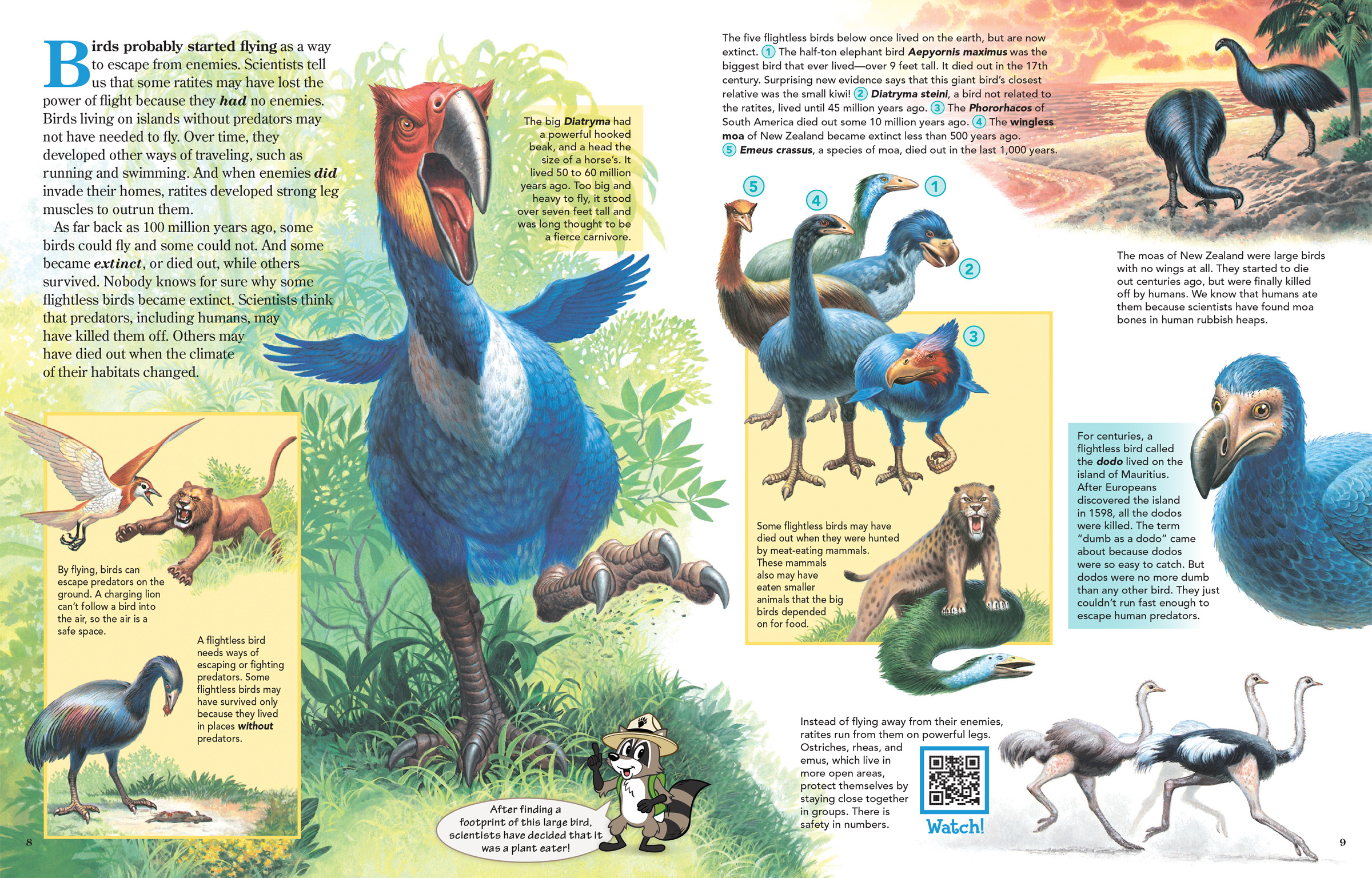
Many people think of birds as animals that can fly. We see sparrows, pigeons, and eagles soaring in the sky, moving from tree to tree, or even migrating thousands of miles. But not all birds can fly. In fact, some of the world’s most famous birds, like ostriches and penguins, never leave the ground or water.
This can feel confusing. Birds have wings—so why can’t they use them to fly?
The answer is more interesting and complex than you might guess. Some birds lost the ability to fly over millions of years. Others never needed to fly in the first place. The reasons are linked to evolution, anatomy, environment, and survival.
If you look closer, you’ll see that flightless birds have special strengths and have adapted in surprising ways.
In this article, you’ll discover why some birds can’t fly, how their bodies are different, the history behind their evolution, and what this means for their lives today. You’ll also learn about famous flightless birds, their habitats, and the challenges they face.
By the end, you’ll see that being grounded doesn’t always mean being weak or unsuccessful.
What Makes A Bird Able To Fly?
Before exploring why some birds can’t fly, it helps to understand how birds fly in the first place. Flight in birds relies on a combination of body features and behaviors.
Key features for flight:
- Strong breast muscles: These power the wings during flapping.
- Lightweight bones: Many birds have hollow bones that reduce their weight.
- Feather structure: Feathers are strong but light, designed to catch air and create lift.
- Wing shape: The curve of a wing (airfoil) helps push air down and lift the bird up.
- Keen balance: Birds must control their body position in the air.
When these features are present and developed, a bird can usually fly. But if one or more are missing, flight becomes difficult or impossible.
The Science Behind Flightlessness
Some birds have lost the ability to fly. This didn’t happen by accident. Over millions of years, certain birds evolved to fit their environments. In many cases, flight was no longer necessary—or even helpful.
Evolutionary Reasons
Flight is energy-intensive. It takes a lot of food and effort to stay in the air. In some environments, flight is not needed for survival. For example, on islands with few predators, birds could safely live and find food on the ground.
Over time, these birds adapted. Their wings became smaller, their bodies heavier, and their muscles changed.
Key evolutionary reasons for flightlessness:
- No natural predators: Birds on isolated islands, like the dodo, didn’t need to escape by flying.
- Abundant ground food: If all food is on the ground, flying isn’t helpful.
- Energy savings: Not flying saves calories, which is important for survival.
- Specialization: Some birds adapted to swim (like penguins) or run (like ostriches) instead.
This process is called evolutionary trade-off. Birds gave up flying but became better at other skills.
Anatomy Of Flightless Birds
Flightless birds, or ratites and penguins, have bodies built for other tasks.
Key anatomical differences:
- Heavier bodies: Their bones are often solid, not hollow.
- Small wings: Wings are reduced and can’t support flight.
- Strong legs: Many have powerful legs for running or swimming.
- Reduced breastbone keel: The keel is where flying muscles attach. In flightless birds, it is small or missing.
- Different feather types: Some, like penguins, have stiff, waterproof feathers for swimming.
Common Flightless Bird Families
Most flightless birds fall into a few groups:
- Ratites: Includes ostriches, emus, cassowaries, rheas, and kiwis.
- Penguins: Adapted for swimming instead of flying.
- Steamer ducks: Some can fly, some can’t.
- Flightless rails: Many species on islands.
Not all flightless birds are closely related. Flightlessness evolved independently many times.
Famous Flightless Birds
Let’s look at some of the world’s most well-known flightless birds and what makes them unique.
Ostrich
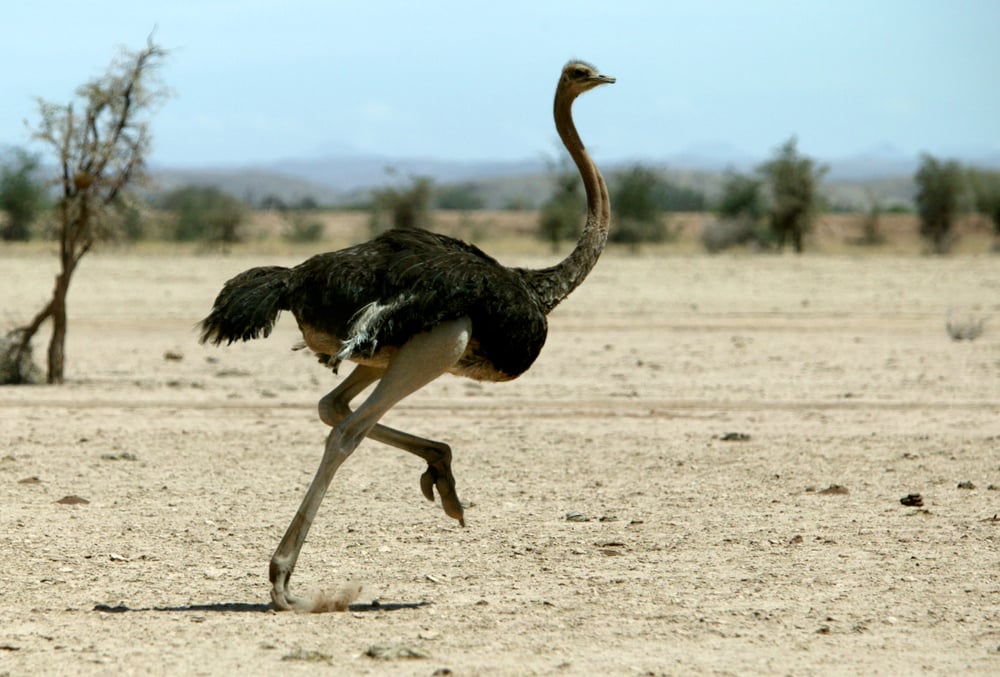
The ostrich is the world’s largest bird. Native to Africa, it can reach up to 2.7 meters tall (almost 9 feet) and weigh 150 kg (330 lbs). Ostriches have strong, muscular legs and can run at speeds up to 70 km/h (43 mph). Their wings are small and useless for flying, but they help with balance and courtship displays.
Ostriches have lost the need for flight because their size and speed protect them from most predators. Their powerful legs can deliver deadly kicks.
Emu
The emu is Australia’s largest bird, standing up to 1.9 meters tall (6.2 feet). Emus have long, strong legs built for running long distances. They can travel over 50 km (31 miles) in a day. Like ostriches, their wings are tiny and hidden under their feathers.
Emus are adapted to Australia’s open grasslands and forests, where running is more useful than flying.
Penguin
Penguins are found in the Southern Hemisphere, mainly Antarctica. They are the only flightless birds that have adapted to swimming instead of running. Their wings have become flippers, perfect for moving through water. Penguins can swim at speeds up to 15 km/h (9 mph) and dive hundreds of meters deep.
On land, penguins walk with a waddle, but in the water, they are fast and agile hunters.
Kiwi
The kiwi is a small, flightless bird from New Zealand. Kiwis are about the size of a chicken and have long beaks for finding insects and worms in the soil. Their wings are tiny and hidden under their fur-like feathers.
Kiwis evolved without flight because New Zealand had no native land mammals to hunt them—until humans arrived.
Cassowary
Cassowaries live in Australia and New Guinea. They can weigh up to 58 kg (128 lbs) and reach 1.8 meters (6 feet) tall. Cassowaries are famous for their bright blue skin and helmet-like crests. They have powerful legs and can run fast and jump high.
Cassowaries are shy but can be dangerous if threatened, using their strong legs and sharp claws to defend themselves.
Rhea
Rheas are native to South America. They look like smaller ostriches and can run up to 60 km/h (37 mph). Their wings are bigger than those of most flightless birds, but still too small for flight. Rheas use their wings for balance when running.
Rheas live in open grasslands, where they feed on plants and insects.
Kakapo
The kakapo is a large, nocturnal parrot from New Zealand. It is the world’s only flightless parrot. Kakapos are heavy (up to 4 kg or 8.8 lbs) and have short wings. They are excellent climbers and use their wings for balance while climbing trees.
Kakapos are critically endangered, with fewer than 250 individuals left.
Flightless Cormorant
The flightless cormorant lives only on the Galápagos Islands. Unlike other cormorants, its wings are short and weak. It swims and dives for fish, using its powerful legs and webbed feet.
This bird evolved flightlessness on an island with few land predators.
Dodo (extinct)
The dodo was a flightless bird from Mauritius. It became extinct in the late 1600s due to hunting and introduced animals. Dodos had large, heavy bodies and small wings. They lived on the ground, feeding on fruits and seeds.
The dodo is a symbol of how flightless birds can be vulnerable to new predators.
Why Flight Was Lost: The Role Of Environment
Birds didn’t lose the ability to fly for no reason. Their habitats and lifestyles shaped this change.
Islands And Isolation
Many flightless birds evolved on islands. With few or no predators, there was no need for flight to escape danger. Islands also have limited space and resources, so smaller territories suited ground-dwelling birds.
Examples include the dodo, kakapo, and various flightless rails.
Predation
Where predators are few, flightless birds can thrive. But when new predators arrive—like humans, rats, or cats—flightless birds are at risk.
Food Sources
If food is easy to find on the ground or in water, birds may lose the need to fly. Penguins are a great example. They became expert swimmers because their food—fish and krill—is in the ocean.
Climate And Weather
In cold environments, flying may not be helpful. Penguins, for instance, have adapted to survive freezing temperatures. Their body fat and dense feathers keep them warm in icy waters.
How Flightless Birds Survive
Without flight, birds face different challenges. But they also develop unique strengths.
Speed And Strength
Ostriches and emus are built for running. Their powerful legs let them escape danger quickly. In some cases, their speed is better than flying for short distances.
Camouflage And Hiding
Some flightless birds, like the kiwi and kakapo, use camouflage to hide from predators. Their feathers blend in with the forest floor.
Nesting Habits
Ground-nesting can be risky, but flightless birds often lay large, camouflaged eggs. Some, like ostriches, use group nesting to protect their young.
Social Behaviors
Many flightless birds live in groups, which helps protect against predators. Penguins huddle for warmth, while ostriches and rheas form large flocks.
Comparison: Flying Birds Vs. Flightless Birds
To see the key differences, here’s a side-by-side look at flying and flightless birds.
| Feature | Flying Birds | Flightless Birds |
|---|---|---|
| Bone Structure | Hollow, lightweight | Solid, heavier |
| Wing Size | Large, strong | Small, reduced |
| Keel (breastbone) | Well-developed | Small or absent |
| Leg Strength | Moderate | Very strong |
| Habitat | Wide range | Mainly ground or water |
Flightlessness In Numbers
Flightlessness is not rare. Scientists estimate there are about 60 species of flightless birds alive today. Most are found in the Southern Hemisphere.
Here’s a look at the number of living species among the main flightless bird families:
| Group | Number of Species | Main Locations |
|---|---|---|
| Ostriches | 2 | Africa |
| Emus | 1 | Australia |
| Cassowaries | 3 | Australia, New Guinea |
| Rheas | 2 | South America |
| Kiwis | 5 | New Zealand |
| Penguins | 18 | Southern Hemisphere |
| Flightless Rails | 25+ | Islands worldwide |
The Costs And Risks Of Flightlessness
Losing the ability to fly can be dangerous. Many flightless birds are now extinct or endangered.
Extinction
Humans have caused the extinction of many flightless birds, especially on islands. The dodo, great auk, and several species of moa disappeared soon after people arrived.
Main causes of extinction:
- Hunting: Flightless birds are easy to catch.
- Introduced animals: Dogs, cats, and rats prey on eggs and chicks.
- Habitat loss: Clearing land destroys nesting areas.
Endangerment
Many flightless birds are still at risk. The kakapo and some rails are critically endangered. Conservation efforts are needed to protect them.
Non-obvious Insight: The “island Rule”
On islands, animals often become either much larger or much smaller than their relatives elsewhere. This is called the island rule. For birds, it often means becoming bigger and losing flight. That’s because big size helps them compete for food and avoid predators, if there are any.
How Flightless Birds Help Science
Flightless birds are not just interesting; they are important to science.
Living Fossils
Some flightless birds, like the kiwi and cassowary, are considered living fossils. Their ancestors split from other birds millions of years ago. Studying them helps us understand bird evolution.
Evolution In Action
Flightless birds show how quickly evolution can change animals. For example, some flightless rails evolved flightlessness in just a few thousand years after reaching new islands.
Non-obvious Insight: Genetics Of Flightlessness
Recent studies show that flightless birds often lose the same genes that flying birds use to build strong wing muscles. This means flightlessness can evolve in similar ways, even in unrelated bird groups.
Human Impact And Conservation
Human activity has been both a threat and a help to flightless birds.
Threats
- Hunting and poaching: Easy targets for food or trophies.
- Habitat destruction: Urban development and farming destroy nesting sites.
- Invasive species: Animals brought by humans often eat eggs and chicks.
Conservation Success Stories
Some flightless birds have been saved by strong conservation efforts.
- Kakapo: Intensive breeding and predator control have increased numbers from just 50 to over 200.
- Flightless rails: Predator-free islands are being created to protect them.
What You Can Do
- Support wildlife organizations.
- Learn about local birdlife and share your knowledge.
- Avoid disturbing nesting areas when visiting natural habitats.
Flightless Birds: Masters Of Their Own Worlds
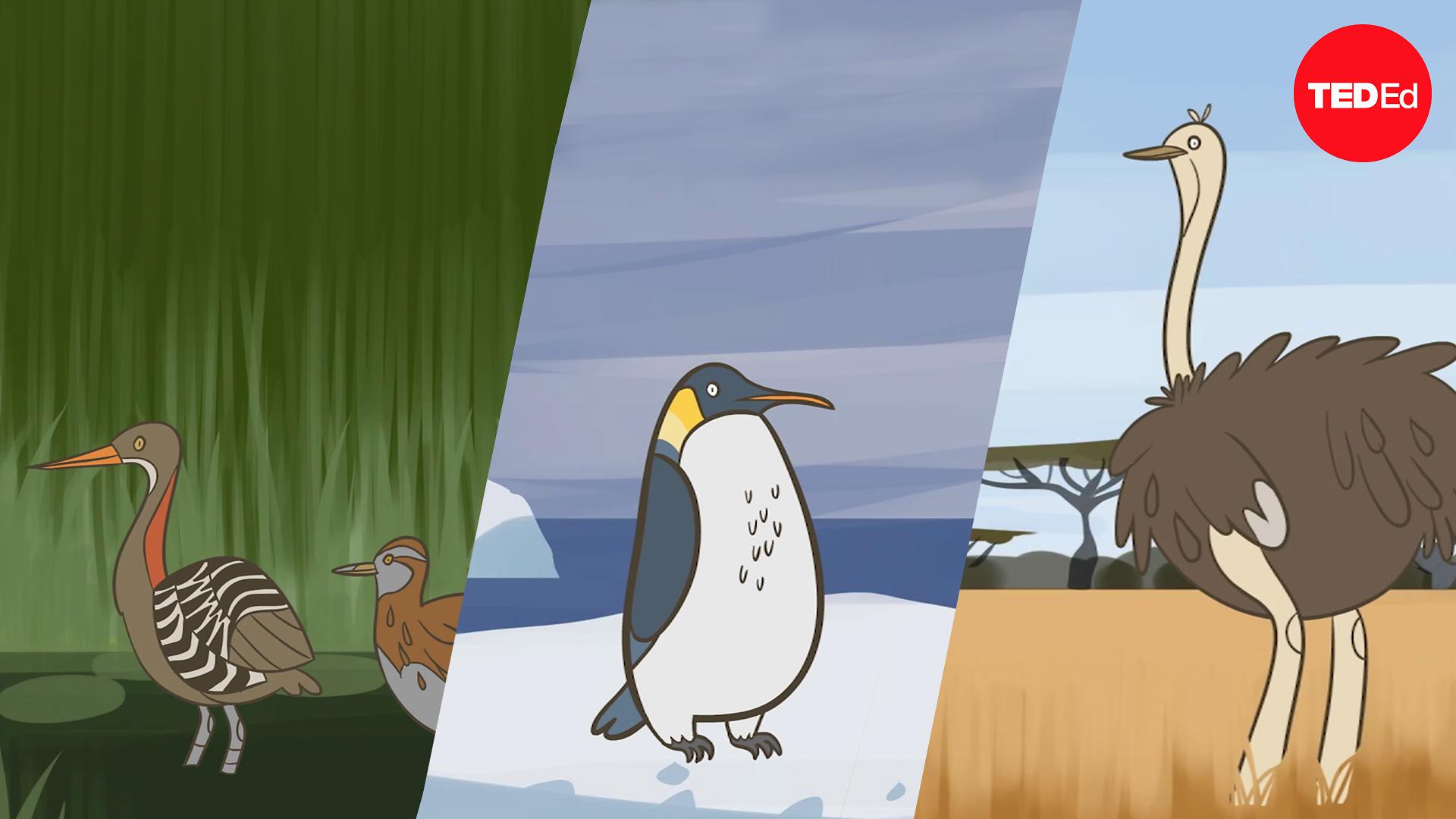
Although they can’t fly, flightless birds are not failures of evolution. They are successful in their own ways—fast runners, skilled swimmers, or careful hiders. Their bodies are designed for their needs, not just for the sky.
The next time you see a penguin swim or an ostrich run, remember: they are doing exactly what nature designed them to do.
For a deeper look at flightless birds and their evolution, you can read this article from Wikipedia.
Frequently Asked Questions
Why Do Some Birds Have Wings If They Can’t Fly?
Wings are not only for flying. In flightless birds, wings help with balance, mating displays, swimming (as in penguins), or even climbing (like the kakapo). They are often smaller and shaped differently than flying birds’ wings.
Are All Birds Born Able To Fly?
No, not all birds can fly, even from birth. Some, like ostriches and kiwis, never develop the muscles or wing size needed for flight. Others, like songbirds, learn to fly as they grow.
Can Flightless Birds Ever Fly Again Through Evolution?
It is extremely rare. Once a bird species loses the ability to fly, the changes to their bodies and DNA are often permanent. Evolution could, in theory, reverse this, but it would take millions of years and special conditions.
What Is The Largest Flightless Bird Ever?
The largest known flightless bird was the elephant bird from Madagascar. It stood up to 3 meters (almost 10 feet) tall and weighed up to 500 kg (1,100 lbs). Sadly, it went extinct about 1,000 years ago.
How Can I Help Protect Flightless Birds?
You can help by supporting conservation groups, learning about these birds, and spreading awareness. If you live near their habitats, keep pets indoors and avoid disturbing nesting sites.
Flightless birds remind us that nature finds many ways to adapt. Their stories are not just about loss, but about strength, survival, and the incredible variety of life on Earth.