Birds have fascinated humans for centuries. Their songs, colors, and incredible journeys across continents inspire curiosity and wonder. But how do scientists learn where birds go, how long they live, and what challenges they face? One of the most important tools for studying these mysteries is bird banding. If you have ever wondered how researchers track wild birds, understand migration, or even help protect endangered species, bird banding is at the heart of these efforts.
Bird banding is not just putting a small ring on a bird’s leg. It is a detailed scientific process with a long history and many benefits. This article explores every part of bird banding—how it works, why it matters, who does it, and even the debates around it.
Whether you are a bird lover, a student, or just curious about wildlife research, you will find clear, in-depth answers here.
What Is Bird Banding?
At its simplest, bird banding is the practice of attaching a small, uniquely numbered ring or band to the leg of a wild bird. These bands are usually made of lightweight metal or plastic and do not harm the bird. Each band has a unique code, like a license plate, so researchers can identify that individual bird if it is seen or caught again.
The main goal is to study the lives of wild birds. Banding helps scientists track where birds travel, how long they live, how many young they produce, and even how healthy populations are. For example, if a banded bird is found thousands of kilometers from where it was banded, scientists learn about its migration route.
If the bird is found years later, they learn about its lifespan.
But banding is about more than just tracking. It helps answer big questions: Are bird populations growing or shrinking? Do birds return to the same place each year? What dangers do they face? The answers help with bird conservation and guide efforts to protect habitats.
The History Of Bird Banding
Bird banding has a long, interesting history. The idea of marking birds is ancient—records show falconers in Europe used rings on hunting birds hundreds of years ago. However, modern scientific banding began in the early 19th and 20th centuries.
In 1899, Danish schoolteacher Hans Christian Cornelius Mortensen began marking starlings with aluminum rings. His system of using numbered bands and recording data became the model for bird banding worldwide. Soon, scientists in other countries adopted the practice.
The United States started organized bird banding in 1902. Today, the Bird Banding Laboratory at the U.S. Geological Survey manages all official banding in North America. Similar programs exist in Europe, Asia, Australia, and Africa. More than 100 million birds have been banded in the U.S. and Canada alone.
Banding has also played a role in important discoveries. For example, in 1911, a banded sandpiper was found thousands of kilometers from where it was first banded, proving that birds migrate over huge distances. Before banding, people did not believe birds could travel so far.
How Bird Banding Works
Step 1: Capturing The Bird
Birds are caught carefully to avoid harm. The most common method is using mist nets—fine mesh nets stretched between poles. Birds fly into the nets, become gently trapped, and are quickly removed by trained handlers. Other methods include funnel traps, walk-in traps, and nest box checks for species like bluebirds and owls.
Step 2: Banding And Data Collection
Once a bird is caught, the bander records important details:
- Species
- Age (if possible)
- Sex (if possible)
- Body measurements (wing length, weight)
- Condition (health, fat levels)
- Location and date
The bander then places a small metal or plastic band around the bird’s leg. The band is checked to ensure it fits snugly but does not harm or bother the bird.
Step 3: Release And Recapture
After banding, the bird is released back into the wild. It continues its life as normal. If the bird is caught again—by researchers or found dead—the band number is reported. These reports, called recoveries or recaptures, are sent to national banding offices. Each recovery adds valuable data to the bird’s life story.
Example: A Warbler’s Journey
Imagine a Blackpoll Warbler is banded in Alaska in spring. Months later, a birdwatcher in Brazil finds the same bird and reports the band number. Scientists now know the warbler traveled over 7,000 km—a journey across continents. This data helps map migration routes and spot important stopover sites.
Types Of Bird Bands And Markers
Not all bird bands are the same. The type used depends on the bird’s size, species, and research goals.
- Metal Bands: Most common. Lightweight, with a unique number and contact info for reporting. Used on all sizes, from hummingbirds to eagles.
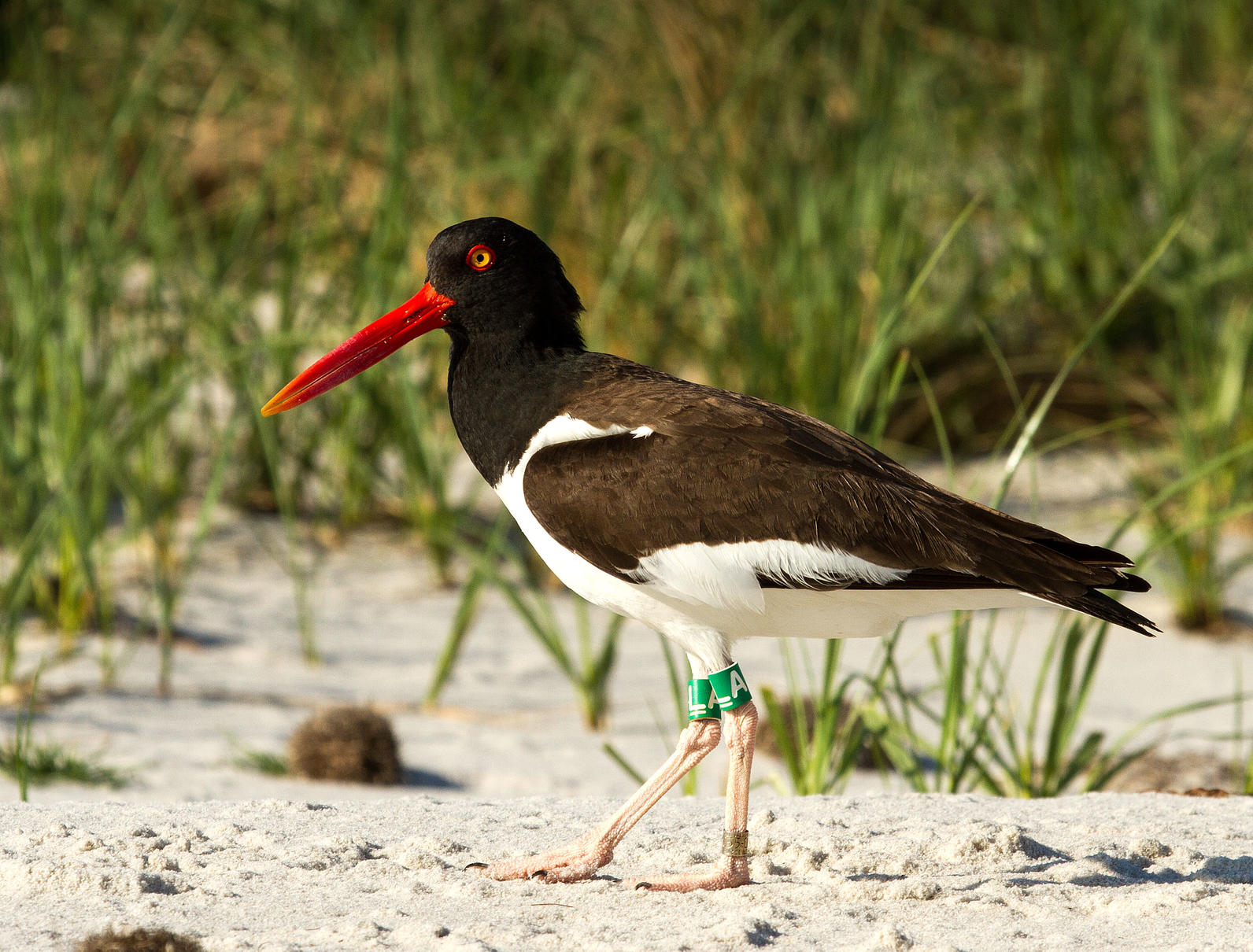
- Colored Plastic Bands: Help identify birds from a distance. For example, a red band means a bird came from a certain study area.
- Flags and Tags: Used for shorebirds and waterbirds. Tall flags or tags on the leg or wing are visible with binoculars.
- Radio and GPS Transmitters: Some studies need detailed tracking. Tiny transmitters, attached like a backpack, send signals so researchers can follow every move. These are more expensive and used for larger birds.
- PIT Tags: Passive Integrated Transponders are tiny chips under the skin, scanned like a pet’s microchip. Useful for research at nest sites or feeders.
Each band or marker must be light and safe. A good rule is the band should weigh less than 1% of the bird’s body weight. Using the wrong size or heavy bands can harm the bird, so careful training and checking are essential.

Why Is Bird Banding Important?
Bird banding is more than just science for its own sake. It has real-world benefits for birds, ecosystems, and even humans.
1. Tracking Migration
Banding shows exactly where birds travel. For example, the Arctic Tern migrates from the Arctic to Antarctica—a round-trip of over 70,000 km each year. Band recoveries reveal these incredible journeys, helping protect key stopover sites.
2. Studying Lifespans
Many birds live longer than people think. For example, a banded Laysan Albatross named Wisdom is over 70 years old and still breeding. Knowing how long birds live helps with population studies.
3. Monitoring Populations
Banding helps track if a species is increasing, stable, or in decline. For example, repeated banding at the same site can show if fewer birds return each year, signaling a problem.
4. Understanding Behavior
Some birds return to the same place to nest each year, called site fidelity. Banding shows which birds are faithful to their home territory and which wander.
5. Disease And Health Studies
Banding allows researchers to monitor diseases like avian flu or West Nile virus. If sick birds are found, scientists can track how diseases spread.
6. Conservation And Policy
Data from banding guides conservation plans. If banded birds are killed by wind turbines, for example, authorities may move the turbines. If a rare bird is found in a new area, that habitat can be protected.
Who Does Bird Banding?
Bird banding is carried out by trained and licensed individuals. In most countries, you cannot band birds without special permission, because the process requires skill and care.
Professional Researchers
Scientists and wildlife biologists use banding for research on migration, breeding, and survival. They often work for universities, government agencies, or conservation groups.
Citizen Scientists
Many bird banding projects involve volunteers. These citizen scientists help set up nets, record data, and release birds. In North America, many bird observatories welcome volunteer help. Training is always required.
Bird Banding Organizations
There are official bodies that manage bird banding:
- North America: U.S. Geological Survey Bird Banding Laboratory, Canadian Wildlife Service
- Europe: European Union for Bird Ringing (EURING)
- Australia: Australian Bird and Bat Banding Scheme
- Africa: South African Bird Ringing Unit
Each organization keeps a database of banded birds and recoveries. This helps coordinate research and avoid duplicate efforts.
Bird Banding Around The World
Bird banding is a global effort. Here are some examples from different continents:
North America
Over 100 million birds have been banded since 1902. The continent is a leader in migration research, with hundreds of banding stations from Alaska to Mexico. Projects include the MAPS Program (Monitoring Avian Productivity and Survivorship) and studies on species like the Whooping Crane.
Europe
Banding is coordinated by EURING, with over 7 million birds banded each year. Migratory birds crossing the Mediterranean are a major focus. Scientists study the effects of climate change on migration and breeding.
Australia
The Australian Bird and Bat Banding Scheme tracks unique species like parrots and shorebirds. Banding helps protect endangered birds like the Orange-bellied Parrot.
Africa
Africa is a migration crossroads. Banding shows how European and Asian birds use African habitats. Projects include the study of declining Eurasian Hoopoe populations.
Asia
Countries like Japan, India, and China have growing banding programs. Banding helps track endangered species like the Spoon-billed Sandpiper.
Bird Banding Data: How It Is Used
The information collected from bird banding supports many types of research and conservation.
| Application | How Banding Helps | Example |
|---|---|---|
| Migration Mapping | Shows routes and stopovers | Red Knot migration from Arctic to South America |
| Population Trends | Tracks survival and breeding | Decline in North American grassland birds |
| Longevity Studies | Reveals maximum ages | Albatross living over 70 years |
| Disease Monitoring | Follows spread of illness | West Nile virus patterns in crows |
| Conservation Policy | Guides habitat protection | Setting aside wetlands for shorebirds |
Each recovery or resighting adds to our understanding. Some banded birds are found decades later, giving rare insight into long-term changes.
How Bird Banding Data Is Shared
Banding data is valuable only if it is shared and used. When someone finds a banded bird, they report the number and location to the national banding office. The office checks its database and tells the finder about the bird’s history.
At the same time, the researcher who originally banded the bird gets the new information.
Many countries share banding data with international groups. For example, the African-Eurasian Migratory Waterbird Agreement helps coordinate research across continents.
Some data is public, while sensitive information (like nest sites of rare birds) is kept private to prevent disturbance. Scientists can request data for research, but must follow ethical rules.
| Region | Banding Authority | Estimated Birds Banded Annually |
|---|---|---|
| North America | USGS, CWS | 1.2 Million |
| Europe | EURING | 7 Million |
| Australia | ABBBS | 250,000 |
| Africa | SAFRING | 120,000 |
| Asia | Regional Agencies | Unknown (growing) |
Safety And Ethics In Bird Banding
Bird banding must be done with care and respect for the animal. There are strict rules and training for all banders.
Safety First
A key principle is do no harm. Bands must fit perfectly. Birds are handled gently and released quickly. If a bird seems stressed, it is released right away, even if data is incomplete.
Banders use special tools to measure and apply bands. They must know how to hold different species safely. For example, hummingbirds are very fragile and require extra care.
Permits And Training
You cannot just start banding birds in your backyard. In most countries, you need a permit, which requires training and experience. Permits are controlled by government agencies to protect wildlife.
Ethics
Banding is not just about science. It is about respect for living creatures. Banders follow codes of conduct and review their methods regularly. They also report injuries or accidental deaths, which are rare but taken seriously.
Limitations And Criticism Of Bird Banding
Bird banding is a powerful tool, but it is not perfect. There are challenges and debates in the bird science community.
1. Stress To Birds
Even with care, being caught and handled is stressful for birds. Some species are more sensitive than others. The risk is balanced against the value of the data collected. Ethical banders minimize stress and avoid unnecessary handling.
2. Band Loss And Damage
Sometimes bands fall off or injure the bird if not fitted correctly. Modern bands are much safer than those used decades ago, but mistakes can happen. Regular checks and improvements are important.
3. Data Gaps
Most banded birds are never seen again. Recoveries are rare—often less than 1% of all birds banded. This means data can be patchy, and large sample sizes are needed for good results.
4. Alternatives To Banding
New technology, like geolocators and satellite transmitters, allows more detailed tracking without recapture. However, these devices are expensive and only suitable for larger birds.
5. Public Concerns
Some people worry about animal welfare. Education and transparency help explain why banding is done and how it benefits conservation.
Non-obvious Insights About Bird Banding
Most beginners think banding is mainly about migration. In reality, some of the most valuable data comes from local birds that never leave a small area. For example, banding backyard chickadees reveals family structures, territory sizes, and even how birds survive harsh winters.
Another hidden value is that long-term banding at one site (sometimes for decades) shows how climate change affects birds. For example, some species now arrive weeks earlier in spring than they did 30 years ago. This information is only available thanks to patient, repeated banding.
How To Get Involved In Bird Banding
If you are interested in bird banding, there are ways to help, even if you are not a scientist.
- Volunteer at a Banding Station: Many observatories welcome helpers for tasks like recording data or releasing birds.
- Report Banded Birds: If you find a bird with a band (alive or dead), report it to your national banding office. In the U.S., visit USGS Bird Banding Lab.
- Support Conservation Groups: Donations and membership help fund banding and research.
- Learn More: Attend bird walks, join bird clubs, or take online courses about bird research and conservation.
Frequently Asked Questions
What Should I Do If I Find A Banded Bird?
If you find a live or dead bird with a band, note the band number, where and when you found it, and report this to your country’s bird banding office. In the U. S. , use the USGS Bird Banding Lab website.
Do not try to catch or handle wild birds yourself if you are not trained.
Does Bird Banding Hurt The Bird?
When done correctly by trained people, bird banding does not hurt the bird. Bands are lightweight and sized for each species. Birds are released quickly to reduce stress. However, there is always some risk, and responsible banders work to keep this as low as possible.
Can Bird Banding Help Endangered Species?
Yes. Banding is very important for tracking endangered birds. For example, banding California Condors helps scientists monitor survival, find nests, and detect threats. This information guides conservation actions and can help save species from extinction.
How Long Do Bird Bands Last?
Metal bands can last for the bird’s entire life, especially those made from stainless steel or aluminum. Some colored plastic bands fade or break after a few years. For long-lived birds like albatrosses, bands are checked and replaced if necessary.
Is Bird Banding Legal For Anyone To Do?
No. In most countries, only licensed and trained people can band birds. Permits are needed to ensure animal welfare and scientific value. If you are interested, you can volunteer with a local banding project and receive training.
Bird banding is a fascinating mix of science, adventure, and conservation. It connects people and nature, showing how a tiny metal ring can unlock the secrets of migration, survival, and change. With careful work and respect, banding continues to reveal the hidden lives of birds, helping protect them for generations to come.