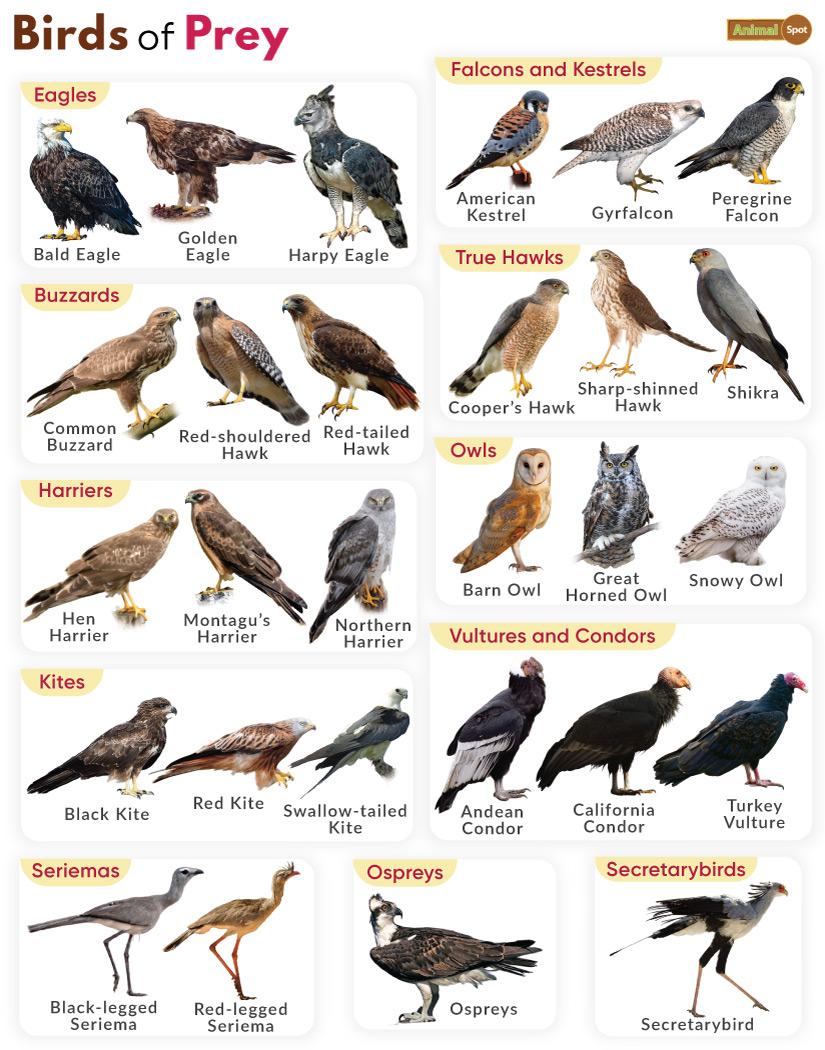
Birds of prey are some of the most fascinating and powerful creatures in the animal world. Their sharp eyesight, strong talons, and hooked beaks make them skilled hunters. For thousands of years, people have admired these birds for their beauty, intelligence, and role in nature.
But what exactly are birds of prey? How do they live, hunt, and survive? And why are they so important for the environment?
This article will take you deep into the world of birds of prey. You will learn how to identify them, understand the main groups, and discover their special adaptations. We will also look at their role in different cultures, their conservation status, and what you can do to help protect these majestic animals.
By the end, you will have a full picture of what makes a bird of prey unique.
Defining Birds Of Prey
The term bird of prey refers to birds that hunt and feed on other animals. They use sharp talons to catch their food and a strong, hooked beak to tear it apart. These birds are also known as raptors, which comes from the Latin word “rapere,” meaning to seize or take by force.
Birds of prey are not a single group with one ancestor. Instead, several types of birds have evolved to become hunters. This means that not all birds that eat meat are closely related, but they share similar hunting tools and behaviors.
For example, owls and eagles are both raptors, but they belong to different families.
Key Characteristics
What sets birds of prey apart from other birds? Here are the main features:
- Keen eyesight: Their vision is often several times better than humans. This helps them spot prey from great distances.
- Strong talons: These claws are powerful and curved, perfect for gripping and killing.
- Hooked beaks: The beak shape helps them tear meat from their catch.
- Carnivorous diet: Most eat other animals, such as mammals, birds, reptiles, or fish.
Not every bird with sharp claws is a raptor. Some birds, like crows or storks, may eat meat but do not have all the special features of true birds of prey.
Main Groups Of Birds Of Prey
Birds of prey are divided into a few main groups. Each group has its own unique members and characteristics. Let’s look at the most important families.
Eagles
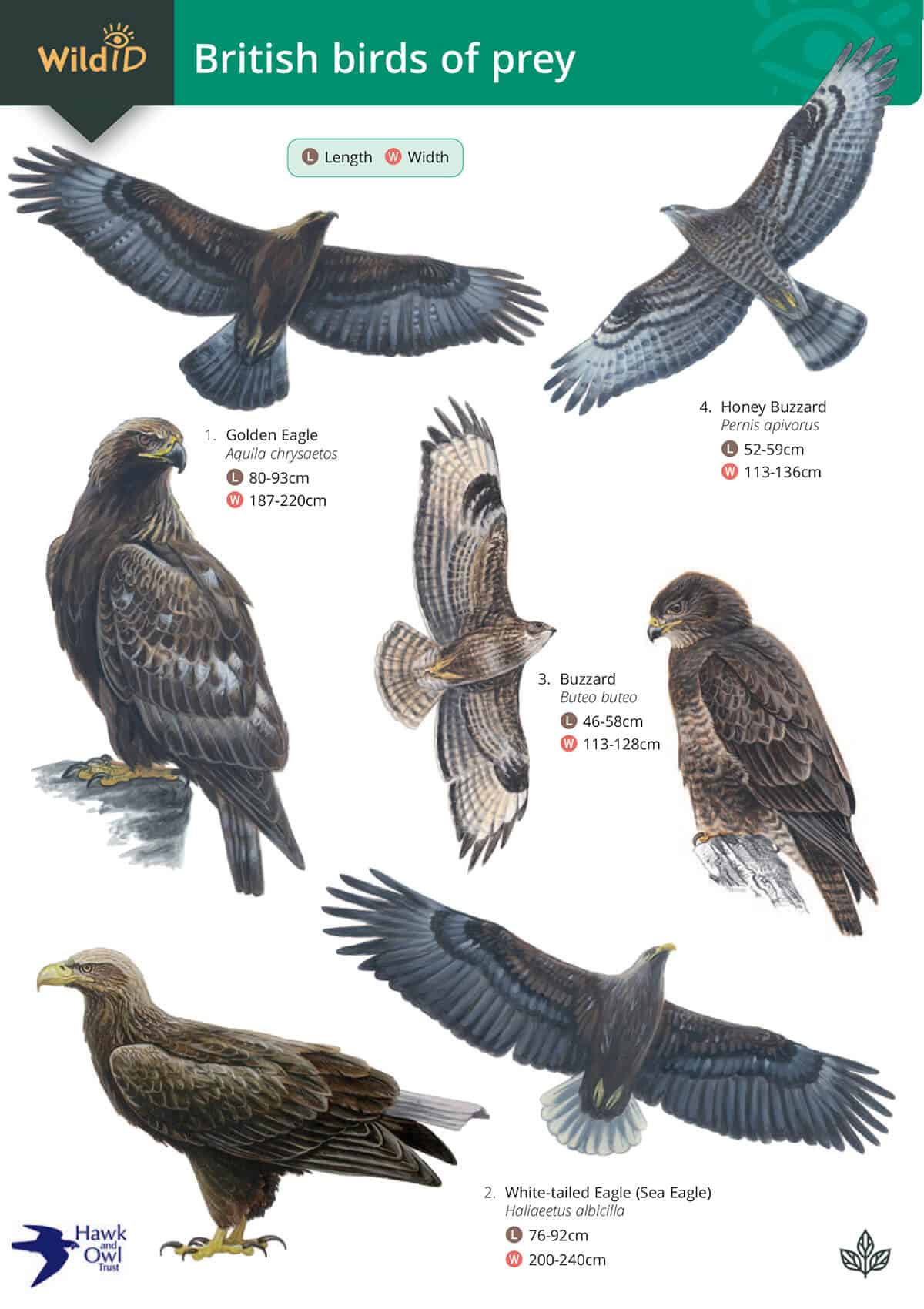
Eagles are large, powerful raptors known for their size and strength. They often hunt medium to large animals, including fish, birds, and mammals. The bald eagle and golden eagle are famous examples.
Eagles are found on every continent except Antarctica. They build huge nests, sometimes over two meters wide, and can live up to 30 years in the wild.
Hawks
The term hawk covers many medium-sized birds of prey. They are known for their agility and speed. Hawks usually hunt smaller birds, rodents, and reptiles. There are two main groups of hawks:
- Accipiters: Forest hunters with short, rounded wings.
- Buteos: Open-land hunters with broad wings, like the red-tailed hawk.
Falcons
Falcons are built for speed. They have long, pointed wings and a slim body. The peregrine falcon is the fastest animal on Earth, reaching speeds over 300 km/h (186 mph) in a dive.
Falcons kill prey with their beak, not their feet, which is unusual among raptors. They have a special “tooth” on their beak to quickly dispatch their catch.
Owls
Owls are mostly nocturnal hunters. Their large eyes and facial disks help them see and hear in the dark. Unlike other birds of prey, their feathers are soft-edged for silent flight.
Owls come in many sizes, from the tiny elf owl to the large Eurasian eagle-owl. They eat insects, small mammals, birds, and sometimes fish.
Vultures
Vultures are scavengers. While they have strong beaks and talons, they usually eat animals that are already dead. They play a key role in cleaning up the environment.
There are two main groups:
- Old World vultures: Found in Europe, Africa, and Asia.
- New World vultures: Found in the Americas, including the turkey vulture and Andean condor.
Ospreys
The osprey is a unique bird of prey that eats almost only fish. It has long wings, a white head, and spiky feet for gripping slippery prey. Ospreys are found near lakes, rivers, and coasts worldwide.
Harriers
Harriers hunt by flying low over grasslands or marshes. They have long wings and tails, and a facial disk similar to owls. The northern harrier is a common example in North America and Europe.
How Birds Of Prey Hunt
Hunting is at the heart of what makes a bird of prey special. Each group has its own techniques, but some strategies are common.
Sight And Vision
Most raptors have binocular vision—both eyes face forward. This gives them depth perception, which is critical for hunting. Some, like the eagle, can spot a rabbit from over a mile away.
Owls, though, rely more on hearing. Their ears are set at different heights on their head, letting them locate prey even in total darkness.
Hunting Methods
- Soaring and Spotting: Eagles and vultures soar high, scanning the ground for movement.
- Pursuit: Falcons chase prey in the air, using speed and agility.
- Ambush: Hawks often sit and wait, then dart out to grab prey.
- Low Flight: Harriers glide low over fields, surprising small animals.
- Night Hunting: Owls use their silent flight to sneak up on sleeping prey.
Kills And Feeding
Once a bird of prey catches its meal, it uses its talons to kill or hold it. The beak tears the food into pieces. Some, like falcons, use their beak to break the neck of smaller birds.
An interesting detail: Most birds of prey cannot chew. Food is swallowed in chunks. Indigestible parts, like bones and fur, are coughed up later as pellets.
Adaptations For Survival
Birds of prey have evolved many physical and behavioral adaptations that make them top hunters.
Physical Adaptations
- Eyesight: Some raptors see ultraviolet light, letting them track urine trails of small mammals.
- Talons: The size and shape match their prey—owls have long talons for gripping, while falcons have sharp, thin claws for speed.
- Beak: Strong and hooked for tearing flesh.
- Feathers: Owls have soft edges for silent flight; falcons have stiff feathers for speed.
Behavioral Adaptations
- Migration: Many birds of prey migrate long distances to find food and suitable nesting sites.
- Territoriality: Most raptors defend large hunting areas to reduce competition.
- Nesting: Some use old nests of other birds; others build their own in high trees, cliffs, or even on tall buildings in cities.
Non-obvious Insights
Many people think all birds of prey are at the top of the food chain. In reality, young raptors often fall prey to other animals, including larger birds, snakes, and even raccoons. Also, not all raptors are strictly carnivorous; some, like the palm-nut vulture, eat fruit.
Birds Of Prey Around The World
Birds of prey live on every continent except Antarctica. Their diversity is impressive. Let’s look at some examples from different regions.
North America
- Bald eagle: National symbol of the United States; mostly found near lakes and rivers.
- Red-tailed hawk: Common in open areas and along highways.
- Great horned owl: Large, powerful, and adaptable to many habitats.
Europe
- Golden eagle: Seen in mountains and open country.
- Eurasian sparrowhawk: Small, agile, hunts in forests.
- Barn owl: Widespread and known for its heart-shaped face.
Africa
- African fish eagle: Hunts along rivers and lakes.
- Secretary bird: Hunts on foot, eating snakes and insects.
- Lappet-faced vulture: One of the largest vultures, key for cleaning up carcasses.
Asia
- Harpy eagle: Found in tropical forests; one of the largest and most powerful raptors.
- Crested serpent eagle: Prefers forests and feeds mainly on snakes.
- Eurasian eagle-owl: Large and widespread across Eurasia.
Australia
- Wedge-tailed eagle: Largest bird of prey in Australia, found in open country.
- Black kite: Common around cities and farmlands.
South America
- Andean condor: World’s largest flying bird by wingspan, found in the Andes.
- King vulture: Known for its colorful head and scavenging habits.
Birds Of Prey In Numbers
Here’s a simple comparison of some of the largest and fastest birds of prey:
| Species | Wingspan (meters) | Max Speed (km/h) | Notable Feature |
|---|---|---|---|
| Andean condor | 3.3 | 56 | Largest wingspan |
| Peregrine falcon | 1.1 | 389 | Fastest dive |
| Golden eagle | 2.3 | 320 | Powerful hunter |
| Bald eagle | 2.4 | 160 | Strong fisherman |
| Harpy eagle | 2.2 | 80 | Heavy build |
Life Cycle And Reproduction
The life cycle of birds of prey is both fascinating and complex. Most raptors invest a lot of time and care in raising their young.
Courtship And Mating
Many species perform aerial displays during courtship. Eagles may lock talons and cartwheel through the sky. Owls call to each other with special songs.
Nesting
Nests are usually built in high, safe places—tall trees, cliffs, or even on human structures. Some raptors use the same nest for years, adding new material each season.
Eggs And Chicks
- Most raptors lay 1–4 eggs per year.
- The eggs are incubated for 30–45 days, depending on the species.
- The female usually does most of the incubating, while the male provides food.
Growth
Chicks hatch blind and helpless. Both parents feed them. After a few weeks, the young birds grow feathers and begin to explore the nest.
The time until young birds fly (fledge) varies:
- Small falcons: 3–4 weeks
- Eagles: 10–12 weeks
After fledging, parents may continue to feed their young for weeks or months.
Survival
Life is tough for young birds of prey. Up to 70% die before their first birthday due to starvation, disease, or predation. Those that survive can live many years—some eagles over 30 years in the wild.
Birds Of Prey In Human Culture
Raptors have always had a special place in human history and culture. They appear in myths, legends, and national symbols.
Symbolism
- The eagle represents strength, courage, and freedom in many cultures.
- Owls are often seen as symbols of wisdom, but in some places, they are linked to death or bad luck.
- Falcons were seen as royal birds in ancient Egypt.
Falconry
Falconry is the art of training birds of prey to hunt with humans. It began more than 4,000 years ago in the Middle East and Asia. Today, it is practiced worldwide, both as a sport and a way to learn about raptors.
Conservation Awareness
Birds of prey are often used as “indicator species. ” Their presence or absence shows the health of the environment. Protecting them helps protect many other species as well.
Threats And Conservation
Despite their strength, many birds of prey face serious threats. Some are endangered or even close to extinction.
Main Threats
- Habitat loss: Clearing forests and draining wetlands destroys nesting and hunting grounds.
- Poisoning: Pesticides like DDT once caused eggshell thinning and population crashes.
- Hunting and trapping: Some people still shoot or capture raptors illegally.
- Collisions: Power lines, wind turbines, and cars kill many birds each year.
- Climate change: Alters habitat and food availability.
Conservation Successes
The story of the bald eagle shows that conservation works. In the 1960s, there were fewer than 500 pairs in the lower 48 U.S. states. After banning DDT and protecting habitats, numbers have recovered to over 70,000 today.
How Can You Help?
- Support local and international conservation groups.
- Avoid using harmful chemicals in your yard or farm.
- Report injured or orphaned birds to wildlife centers.
- Learn and share information about raptors.

Birds Of Prey Vs. Other Birds
It’s easy to confuse birds of prey with other large birds. Here’s a quick comparison:
| Feature | Birds of Prey | Other Large Birds (e.g., Herons, Storks) |
|---|---|---|
| Diet | Mainly meat (animals) | Fish, insects, plants |
| Talons | Strong, curved | Straight, less powerful |
| Beak | Hooked | Straight or pointed |
| Hunting method | Active pursuit, ambush | Wading, probing |
This shows why not all big birds are raptors. The special tools and behaviors of birds of prey set them apart.
Non-obvious Insights About Birds Of Prey
Many people believe birds of prey only live in wild, untouched places. In fact, some raptors, like the peregrine falcon, now nest in cities on tall buildings, adapting to urban life. Pigeons and other city birds become their prey.
Another surprising fact is that not all birds of prey are solitary. Some, like vultures and black kites, form large groups when food is available. This social behavior helps them find and share resources.
Watching Birds Of Prey
Birdwatching is a popular hobby, and raptors are a favorite for many. Here’s how to get the most from your experience:
- Bring binoculars or a spotting scope.
- Visit open areas, wetlands, or cliffs for the best views.
- Watch for hunting behavior, not just perched birds.
- Look for migration hotspots, where hundreds of raptors may pass in a single day.
Remember, never disturb nests or get too close to young birds. Respect their space to keep them safe.
Frequently Asked Questions
What Is The Difference Between A Hawk And An Eagle?
Eagles are generally larger, with broader wings and more powerful talons than hawks. Eagles often hunt larger prey and build bigger nests. Hawks are more agile and often hunt in forests or open fields.
Why Are Birds Of Prey Important For The Environment?
Birds of prey control populations of rodents, insects, and other animals. This keeps the ecosystem balanced. By removing sick or weak animals, they also help prevent the spread of disease.
How Can You Tell A Bird Of Prey From Other Birds?
Look for hooked beaks, strong talons, and forward-facing eyes. Most raptors fly with broad wings and soar or glide more than other birds. Their hunting behavior is also a clue.
Are All Birds Of Prey Endangered?
Not all, but many face threats. Some, like the bald eagle, have recovered, while others, such as the Philippine eagle, are still endangered. Conservation efforts are vital for their survival.
Where Can I Learn More About Birds Of Prey?
You can visit nature centers, read field guides, or explore trusted sites like the Wikipedia page on birds of prey for more information.
Birds of prey are more than just powerful hunters. They are a key part of the natural world, inspiring awe and respect in all who see them. By understanding and protecting these birds, we also protect the ecosystems they help balance.
Whether you are a birdwatcher, a student, or just curious, there is always more to discover about these amazing raptors.