Why Do Birds Flock Together?
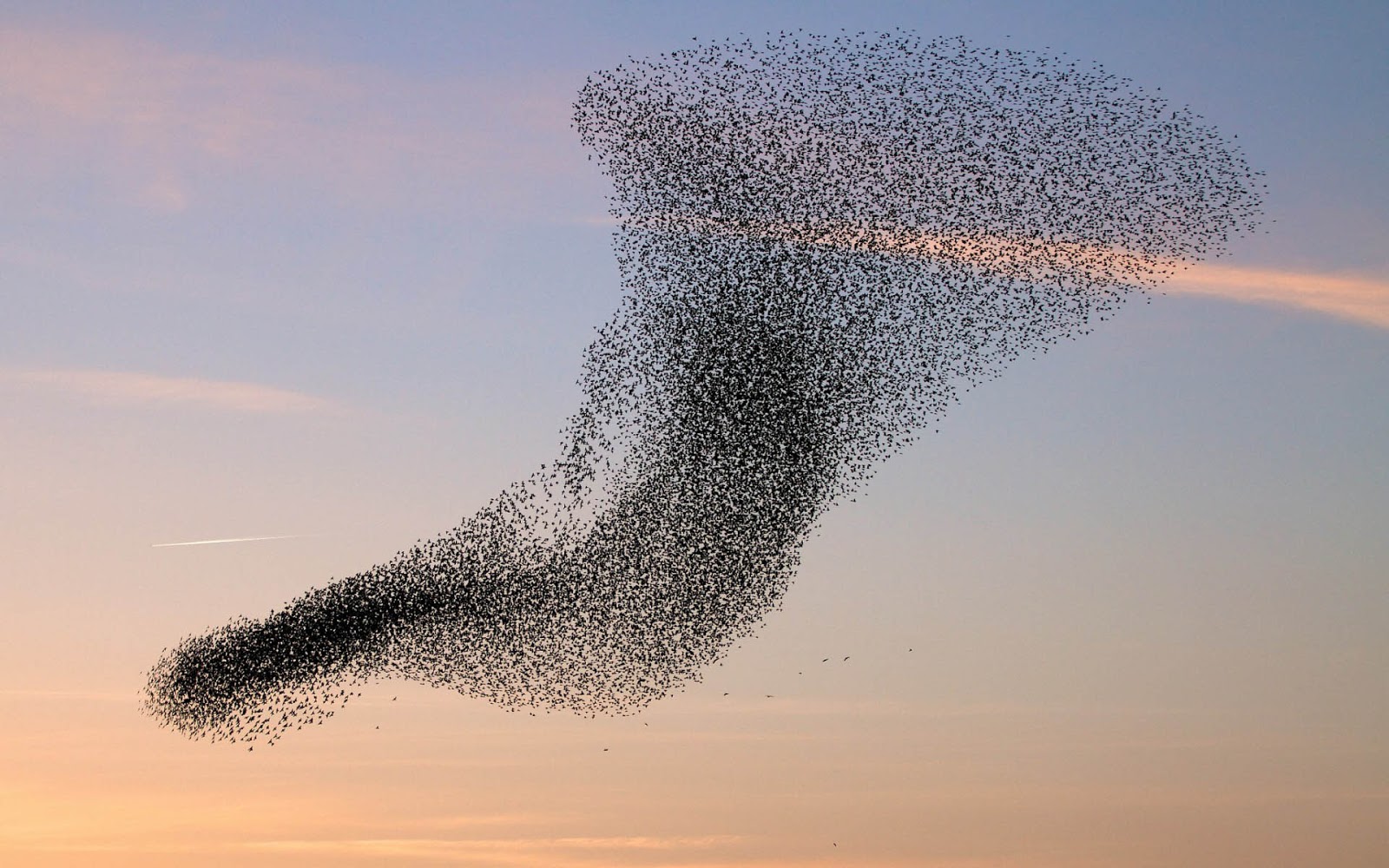
If you have ever stopped to watch a group of birds moving as one, you know how beautiful and mysterious it can be. Maybe you noticed a swarm of starlings creating twisting shapes in the sky. Or perhaps you saw a large group of sparrows feeding together on the ground. Many people wonder: why do birds flock together? The answer is both simple and complex. Birds flock for survival, safety, efficiency, and even to help each other learn. But there is so much more behind this natural behavior.
Bird flocks have fascinated scientists and nature lovers for centuries. Flocking is not just a random gathering. It is a highly organized behavior that has evolved over millions of years. Each bird in a flock plays a role, and the group benefits in many ways.
In this article, we will explore the reasons birds flock, how they do it, and what we can learn from their behavior. You will discover surprising facts, examples, and even what makes flocking risky at times. Let’s dive into the world of bird flocks and see why these gatherings are so important in nature.
The Basics Of Flocking Behavior
Birds flock together for many reasons, but the main ones are protection, foraging efficiency, and social interaction. Flocking is not just for one species; hundreds of different birds—from small finches to large geese—form flocks in different ways.
A flock is simply a group of birds moving or feeding together. Some flocks are small, with just a few birds. Others, like starling murmurations, can have thousands or even millions of individuals. Flocking is most common in songbirds, waterfowl, shorebirds, and some raptors.
Not all bird groups are called flocks. For example, a group of crows is often called a “murder,” and geese in flight are a “gaggle” or “skein. ” However, the basic reasons for coming together are similar.
How Flocking Differs By Species
Not every bird species flocks in the same way. Some, like the European starling, create tightly coordinated groups that move in perfect harmony. Others, like pigeons, form loose, unstructured groups. The size, shape, and behavior of the flock depend on the bird species, their environment, and the time of year.
The Science Behind The Movement
Scientists study bird flocks to understand how so many individuals can move together without colliding. They use high-speed cameras and computer models to track each bird’s position. Birds follow a few simple rules: stay close to your neighbors, match their direction, and avoid collisions. These rules allow large flocks to turn and twist in the air as if they were a single organism.
Protection From Predators
One of the strongest reasons birds flock together is for safety. Being in a group helps each bird reduce its chance of being caught by a predator.
The “many Eyes” Effect
When birds flock, there are more eyes to spot danger. If a hawk or falcon approaches, at least one bird in the flock is likely to see it and sound the alarm. This early warning system helps the whole group react quickly.
Confusing Predators
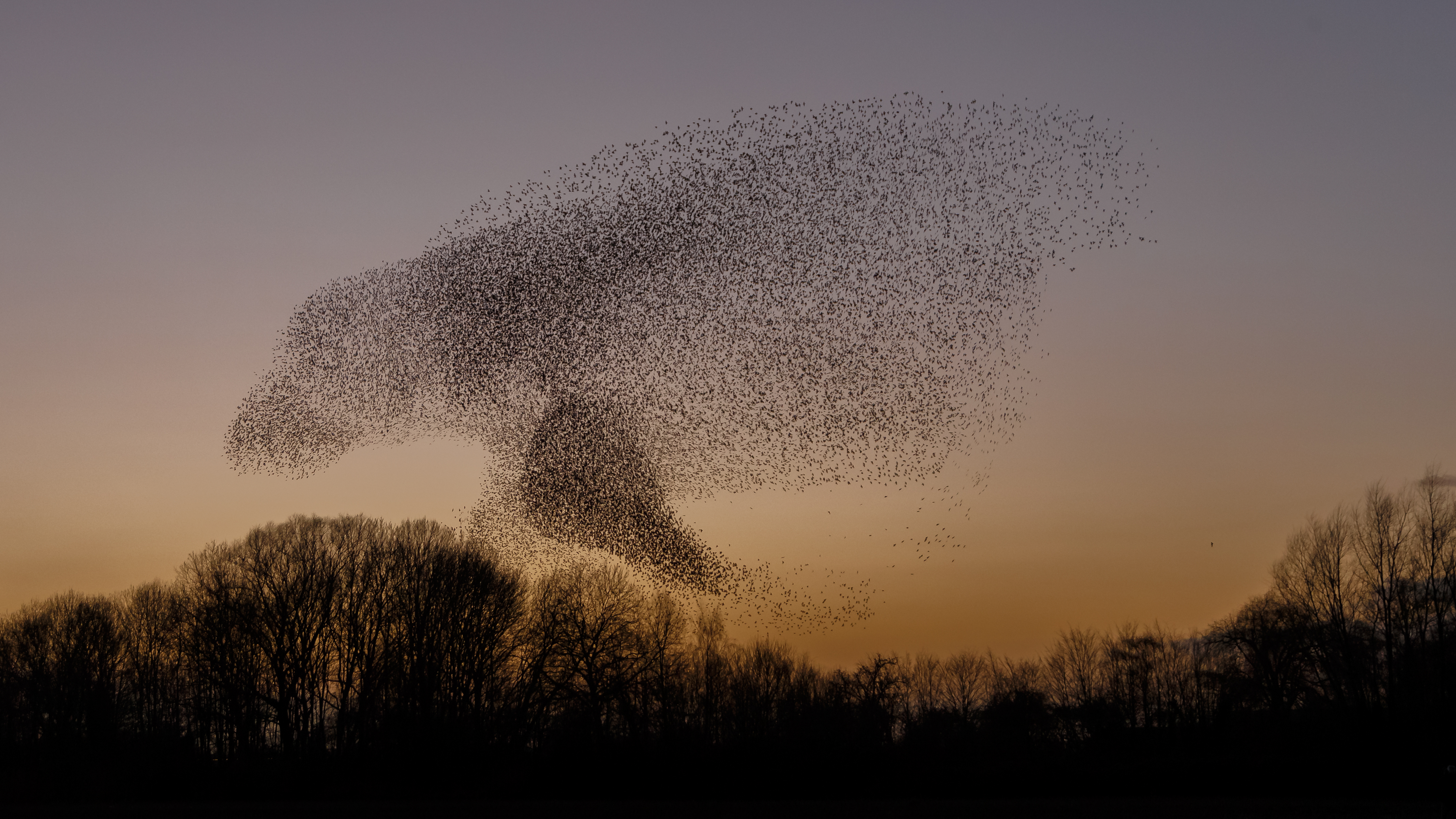
Large flocks can confuse or overwhelm predators. When hundreds of birds twist and turn together, it is hard for a predator to focus on just one target. This is known as the confusion effect. Scientists have shown that hawks are less successful when attacking large flocks than when attacking single birds.
Examples In Nature
- Starlings: Their famous “murmurations” are thought to protect against falcons.
- Shorebirds: On beaches, flocks of sandpipers and plovers take off together when a threat appears.
- Pigeons: City pigeons fly in flocks to avoid urban predators like hawks.
Safety In Numbers
There is also the dilution effect. In a large group, the chance that any one bird will be caught is smaller. For example, in a flock of 100, each bird has only a 1% chance of being the one targeted.
Finding Food More Efficiently
Flocking also helps birds find and use food resources. Many birds that eat seeds, fruits, or insects form flocks while foraging.
Sharing Information
Birds in a flock can share information about food sources. If one bird finds a patch of seeds, others quickly join. This is especially useful in winter, when food is scarce.
Covering More Ground
A group of birds can search a larger area than a single bird. For example, flocks of chickadees and titmice move through forests together, checking each tree for insects. This increases their chances of finding enough to eat.
Reducing Time In Danger
When birds feed together, each one can spend less time watching for predators and more time eating. This is because others are keeping watch. Studies show that flocking birds spend more time feeding than those alone.
Example: Mixed-species Flocks
Some birds join flocks with different species. In South American forests, flocks may include over 20 species, each using a different feeding style. This reduces competition and helps everyone find food.
Migration And Navigation
Flocking is a key part of bird migration. Some of the most impressive flocks in the world form during long journeys between breeding and wintering grounds.
Saving Energy In Flight
Large birds like geese, swans, and pelicans fly in V-shaped formations. This shape helps each bird save energy. The bird in front creates an air current that lifts the birds behind. By taking turns in the lead, all birds can travel farther with less effort.
Here is a simple comparison of how different formations affect energy use:
| Formation Type | Energy Saved (%) | Example Species |
|---|---|---|
| V-formation | 10-20% | Geese, Pelicans |
| Linear line | 5-10% | Ducks, Cormorants |
| Random flock | Minimal | Starlings, Sparrows |
Navigating Together
Flocking helps birds navigate. Young or inexperienced birds can follow older, more experienced ones. This increases the chances that everyone finds the right path. For example, young cranes learn migration routes by following adults.
Avoiding Getting Lost
A single bird is more likely to get lost or blown off course. In a flock, birds can adjust their route together if the wind changes or if bad weather appears.
Social Learning And Communication
Flocks are also important for learning and communication. Birds are social animals. By being in a group, they can teach and learn from each other.
Learning From Others
Young birds watch older birds to learn where to find food, how to avoid danger, and even how to sing the right songs. For example, young crows learn to use tools and solve problems by watching adults in the flock.
Sharing News
Birds use calls, songs, and body language to share information in a flock. If a bird finds a new food source or spots a predator, it can alert the whole group. This fast communication helps everyone respond quickly.
Developing Social Bonds
Flocking is not just practical. It helps birds build social bonds. Many species, like parrots and crows, form lifelong friendships and alliances within their flocks.
Mating And Breeding Advantages
Flocking can also help birds find mates and raise their young more successfully.
Finding A Mate
In some species, males gather in flocks to display for females. This is called a lek. The best singers or dancers attract the most attention. Females can watch many males at once and choose the best partner.
Cooperative Breeding
Some birds, like the Florida scrub-jay, form family flocks where young birds help their parents raise new chicks. This cooperative breeding increases the chances that the chicks survive.
Protecting Nests
Flocks can drive away predators from nesting areas. Colonial birds, like gulls and terns, nest in huge groups. If a predator comes near, dozens or hundreds of adults will attack and chase it away.

Reducing Aggression And Competition
Being in a flock can lower the risk of fights and reduce competition for resources.
Establishing Hierarchies
Inside a flock, birds develop a pecking order. This is a social ranking that helps each bird know its place. Once the hierarchy is set, there are fewer fights over food or mates.
Avoiding Crowding
Some flocks spread out over a wide area while feeding. This reduces competition because each bird has enough space. Mixed-species flocks also avoid competition by using different feeding spots.
Sharing Roosting Sites
At night, many birds gather in communal roosts. These can be large trees, reed beds, or even buildings. Sharing a roost helps birds stay warm and safe.
Risks And Costs Of Flocking
Flocking is not always safe or helpful. There are risks and costs that birds must balance.
Disease Spread
Large groups can spread diseases more easily. Parasites and viruses move quickly in a crowded flock. For example, outbreaks of avian influenza often start in flocks.
Attracting Predators
Big flocks are easier to spot. While they confuse predators up close, they also draw attention from far away. Sometimes, being in a group can actually increase the risk of attack.
Increased Competition
In a big flock, food can run out quickly. Some birds may not get enough to eat. Dominant birds may chase weaker ones away from the best spots.
Accidental Collisions
When birds move in tight flocks, there is a risk of collision. This can cause injury, especially in poor weather or crowded spaces. For example, some birds die when flocks hit windows or power lines.
Flocking In Urban Vs. Wild Environments
The way birds flock changes depending on where they live.
Urban Flocks
In cities, birds like pigeons and sparrows form flocks to find food and avoid cars and people. Urban flocks are often smaller and less organized than those in the wild.
Wild Flocks
In wild areas, flocks can be much larger and more coordinated. For example, snow geese form flocks of tens of thousands during migration. These wild flocks often follow ancient routes and use traditional feeding sites.
Adapting To Change
Birds are quick learners. Some have changed their flocking habits as cities grow. For example, crows have learned to roost together on city buildings to stay warm at night.
Famous Flocking Events Around The World
Some bird flocks are so impressive that they attract tourists and scientists.
Starling Murmurations In Europe
Each year, millions of starlings gather in the skies over Rome, England, and Denmark. Their swirling shapes, called murmurations, are a top wildlife spectacle.
Snow Goose Migrations In North America
In spring and fall, snow geese form flocks that can fill the sky for miles. They stop to rest in wetlands across the United States, creating a breathtaking sight.
Red-billed Quelea Flocks In Africa
The red-billed quelea of Africa forms the largest flocks of any bird species. Sometimes, over two million birds gather in one group, turning the sky dark.
Parrot Roosts In Australia
At dusk, thousands of cockatoos and parrots gather in Australian cities. Their loud calls and bright colors are impossible to miss.
How Scientists Study Bird Flocking
Understanding flocking helps scientists learn about animal behavior, evolution, and even how robots or drones might work together.
Tracking Individual Birds
Scientists use colored bands, tiny GPS trackers, and even computer vision to follow birds in a flock. This helps them see how each bird moves and interacts.
Computer Simulations
By creating computer models, researchers can test different rules for flocking. These models have helped explain how birds avoid collisions and make fast group decisions.
Citizen Science Projects
Ordinary people help study flocks by reporting bird sightings and taking photos. Projects like eBird have collected millions of flock observations from around the world.
Here is a comparison of methods used to study flocking:
| Method | Strengths | Limitations |
|---|---|---|
| GPS Tagging | Precise movement data | Works best for large birds |
| Video Analysis | Tracks many birds at once | Needs clear views, hard for dense flocks |
| Citizen Science | Large-scale data, many locations | Less control over quality |
Surprising Insights: What Most People Miss
While the basic reasons for flocking are well-known, there are some insights that many beginners miss.
- Leadership is Shared: In many flocks, there is no single leader. Birds take turns leading, especially during migration. This sharing helps avoid exhaustion.
- Mathematical Beauty: The way birds flock follows mathematical rules. Their patterns can be predicted using algorithms. This has inspired computer scientists and even artists.
- Learning Is Not Just for Young: Adult birds also learn from each other in a flock. They can pick up new feeding techniques or routes.
- Not All Flocks Are Equal: The benefits and risks of flocking change depending on the environment, time of year, and the health of the birds.
- Flocking May Change with Climate: As climate change shifts food sources and migration timing, flocks may become smaller, larger, or move to new places. This is a current area of research.
What Humans Can Learn From Bird Flocks
Bird flocking has inspired many ideas in science and engineering.
- Swarm Robotics: Engineers design drones that move together like a flock of birds. This helps drones avoid obstacles and complete tasks as a group.
- Traffic Flow: Studying bird flocks helps city planners design better traffic systems, where cars can move smoothly in groups.
- Business and Teamwork: Flocking shows how groups can work together without needing one strong leader. Sharing information quickly and adapting to change are key lessons.
For a deeper dive into the science behind bird flocking, you can visit this Wikipedia page on flocking behavior.
Frequently Asked Questions
Why Do Some Birds Flock While Others Are Solitary?
Some bird species are naturally social and evolved to flock for safety, feeding, or migration. Others, like hawks or owls, are solitary hunters that rely on stealth and do not benefit from group living.
How Do Birds Avoid Crashing Into Each Other In A Flock?
Birds follow simple rules: keep a certain distance, match speed and direction, and react quickly to neighbors. Their sharp eyesight and fast reflexes also help prevent collisions.
Do All Birds Migrate In Flocks?
No, not all birds migrate in flocks. Some, like swans and geese, travel in large groups, while others, like robins, may migrate alone or in small groups.
Can Flocking Behavior Change Over Time?
Yes, flocking can change as birds adapt to new threats, food sources, or environments. Urban birds, for example, may form smaller flocks or change their timing.
Is Flocking Behavior Seen In Animals Other Than Birds?
Yes, many animals flock, herd, or school. Fish form schools, mammals like wildebeest form herds, and insects like locusts swarm. The reasons—safety, finding food, and social learning—are similar.
Birds flock together for many reasons: safety, food, learning, and travel. This simple act is one of nature’s most complex and beautiful patterns. Whether you watch a small group of sparrows or a sky full of starlings, you are seeing a behavior that has helped birds survive for millions of years. Next time you see a flock, remember there is a world of science, teamwork, and learning behind their graceful movements.