
Birds in flight often amaze us. They twist, turn, and swoop through the sky, sometimes at high speed and in large flocks, rarely colliding with each other or obstacles. How do they avoid crashing while flying? This question is not just interesting for bird watchers—it also inspires scientists, engineers, and even airplane designers.
Understanding the secrets behind birds’ aerial agility can teach us about nature’s own navigation systems and might help us build better flying robots and safer aircraft.
In this article, you’ll discover the main strategies birds use to prevent collisions, the senses they rely on, and how flock behavior helps. We’ll explore both what happens in a single bird’s brain and what goes on in a flock.
You’ll find out about the role of vision, hearing, and even touch. We’ll also look at how different environments, like forests, cities, and open skies, affect how birds navigate safely. Along the way, you’ll see real-life examples, data, and comparisons to help you grasp this remarkable natural skill.
By the end, you’ll understand why birds almost never crash, even in complicated situations.
Birds’ Main Senses For Collision Avoidance
Birds, like humans, have several senses. But when it comes to avoiding collisions, some are more important than others. Let’s look at the key senses birds use and how each one helps.
Vision: The Primary Sense
Almost all birds rely mostly on vision to avoid obstacles. Birds have some of the sharpest eyesight in the animal kingdom. Many species can see in color, and some can even detect ultraviolet light, which humans cannot. This helps them spot small objects and movements quickly. For example, a hawk can see a mouse from hundreds of meters away.
Birds’ eyes are often on the sides of their heads, giving them a wide field of view—sometimes nearly 360 degrees. This panoramic vision means they can spot threats or other birds approaching from behind or the side. Fast-flying birds, like swifts or falcons, have eyes more toward the front, which gives them better depth perception for high-speed chases and sudden turns.
Some birds, such as owls, have a special area in the eye called the fovea, which is extremely sharp. This allows them to judge distances with great accuracy, which is crucial when diving toward prey or through a crowded forest.
Hearing: Detecting The Environment
While vision is key, hearing also plays a role. Birds can hear higher and lower frequencies than humans. They use sounds to detect other birds, predators, or obstacles, especially in low light or dense forests. For example, pigeons can detect infrasound, which helps them sense distant storms or large objects.
Some birds, like owls, have specially shaped faces that direct sound toward their ears. This helps them locate prey or obstacles even in complete darkness.
Touch And Airflow
Birds feel changes in the air with their feathers. Sensory feathers on their wings and heads can detect tiny shifts in air pressure and wind direction. This feedback tells them if something is nearby, like another bird or a tree branch. These instant signals help them adjust their wing positions and avoid crashes.
Smell And Other Senses
Most birds do not rely much on smell to avoid collisions, though some, like vultures, use it to find food. Taste is not important for navigation. Vision, hearing, and touch are the main senses for safe flight.
The Role Of Brain Processing And Reaction Speed
It’s not enough just to see or hear obstacles—the bird’s brain must process this information quickly. Birds have fast reflexes. For example, a pigeon’s reaction time to visual threats is about 50 milliseconds, which is faster than most mammals.
Their brains are wired for rapid decision-making. The part of the brain called the optic tectum quickly interprets what the eyes see, helping birds choose the safest path in real time. This is especially important when flying at high speed or with many other birds.
Some birds can even plan their flight paths seconds in advance, predicting where other birds or obstacles will be. This predictive ability helps them avoid mid-air collisions, even in complicated situations.

Flock Behavior: Safety In Numbers
Birds flying in groups use special strategies to avoid crashing into each other. This is called flock dynamics. Scientists have studied large flocks of starlings, geese, and pigeons to understand the rules behind their smooth movement.
Simple Rules For Complex Movement
Researchers found that birds in a flock follow a few basic rules:
- Separation: Don’t get too close to neighbors.
- Alignment: Match the direction and speed of nearby birds.
- Cohesion: Stay close to the group.
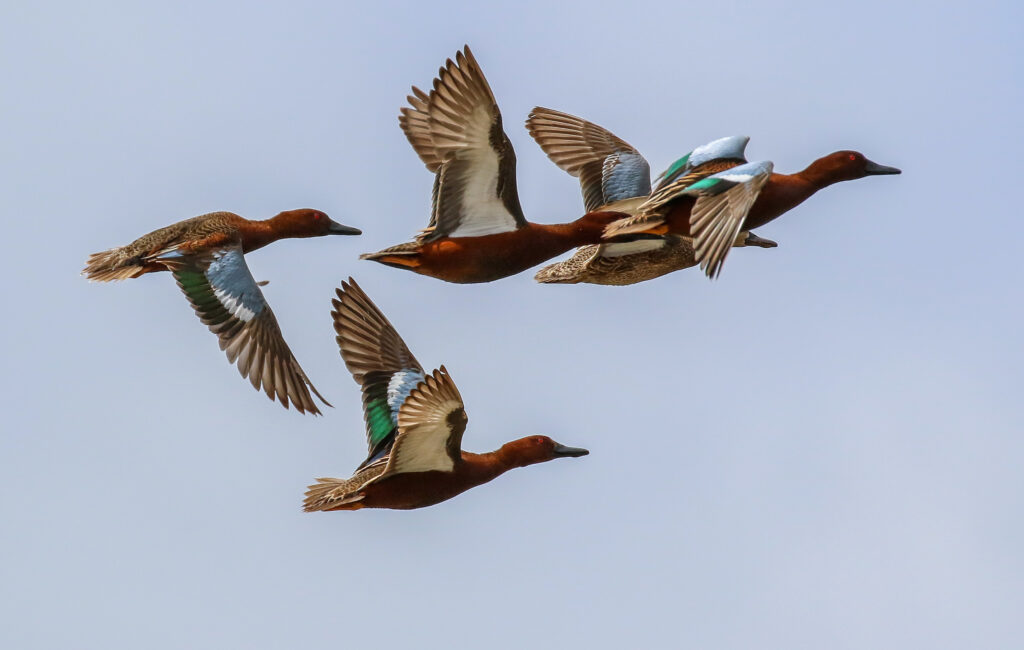
These rules are simple, but when every bird follows them, the whole flock moves as one. This allows thousands of birds to turn, dive, and climb together without collisions.
How Many Neighbors Do Birds Track?
Birds do not track every other bird in a large flock. Instead, they focus on a small number—usually their nearest 6 or 7 neighbors. This makes the task manageable. If one bird turns or slows down, its neighbors copy, and the signal passes quickly through the flock.
Flock Shape And Speed
The shape of the flock also helps. For example, geese often fly in a V-formation. This gives each bird a clear view and avoids crowding. In denser flocks, like starling murmurations, birds keep just enough space to stretch their wings without touching others.
Data Comparison: Solo Vs. Flock Flight
Here’s how reaction time and avoidance strategies differ for solo and flock flight:
| Flight Situation | Average Reaction Time | Primary Avoidance Method |
|---|---|---|
| Solo Bird | 50-100 ms | Vision, reflex |
| Small Flock (10-50 birds) | 70-120 ms | Neighbor tracking, visual cues |
| Large Flock (>1000 birds) | 100-200 ms | Collective movement, wave signals |
Navigating Different Environments
Birds fly in many habitats—from open sky to dense forests to busy cities. Each setting requires different strategies to avoid collisions.
Open Skies
In open areas, like over lakes or fields, birds can see far and have more time to react. Most collisions are rare here, except during poor weather or migrations when many birds are traveling together.
Forests And Dense Vegetation
Flying through forests is much harder. Birds like woodpeckers and warblers have excellent depth perception and can judge gaps between branches with high accuracy. Their wings are often shorter, allowing quick turns. They fly at slower speeds and use their vision to pick safe paths.
Some birds even memorize the layout of their territory to avoid obstacles. Studies show that birds can learn and remember safe flight corridors, returning to the same routes each day.
Urban Areas
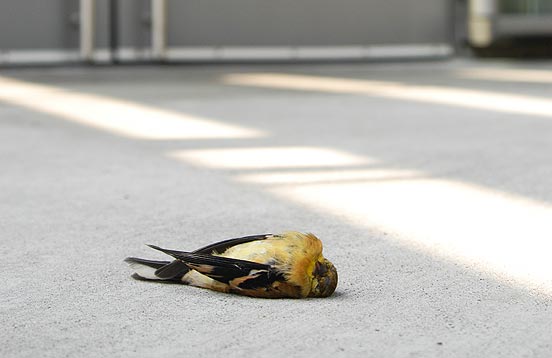
Cities are full of glass, wires, and buildings. Urban birds, like pigeons and swifts, learn to recognize windows and walls. Still, collisions with glass are a major problem. It’s estimated that up to one billion birds die each year in the U.S. alone from window collisions.
Some cities use special window markings or UV-reflective stickers to help birds see glass. Urban birds also change their flight times, avoiding busy hours when more people and cars are around.
Comparative Table: Bird Collision Rates By Environment
Here’s a comparison of bird collision risks in different environments:
| Environment | Collision Risk | Main Hazards |
|---|---|---|
| Open Sky | Low | Other birds (during migration), raptors |
| Forest | Medium | Branches, dense vegetation |
| Urban | High | Glass windows, wires, vehicles |
Flight Mechanics: How Birds Change Direction
Birds’ bodies are built for quick changes of direction. They use their wings, tails, and even their whole bodies to avoid crashes.
Wing And Tail Movements
Birds can adjust the angle and shape of their wings mid-flight. Spreading the wings wide helps them slow down. Tucking them in lets them turn fast, like a fighter jet. The tail acts as a rudder, helping with sharp turns or sudden stops.
For example, swallows chasing insects can make rapid twists and turns in less than a second. Hummingbirds can hover and fly backward, giving them more choices when avoiding obstacles.
Speed Control
Birds do not always fly at top speed. When flying through tight spaces, they slow down, which gives them more time to react. In open space, they can fly faster because there are fewer obstacles.
Comparing Bird And Human Flight Response
Let’s compare how birds and humans avoid obstacles while moving fast:
| Species | Reaction Time | Average Flight/Movement Speed | Success Rate (Obstacle Avoidance) |
|---|---|---|---|
| Pigeon | 50 ms | 60 km/h | 98% |
| Starling (flock) | 80 ms | 75 km/h | 99% |
| Human (running) | 200 ms | 20 km/h | 90% |
As you can see, birds react much faster than humans and have a higher success rate in avoiding obstacles, even at higher speeds.
Communication And Warning Signals
Birds often use calls, wing sounds, or body language to warn each other of danger. For example, geese honk to signal turns in flight. Some birds flash the white underside of their tails as a visual warning.
In flocking species, these signals help the group react as one. If a predator approaches, one bird’s alarm can cause the whole flock to turn or dive in less than a second. These quick signals are a big part of why birds rarely crash into each other.
The Role Of Learning And Memory
Birds are not just born with the ability to avoid collisions—they also learn from experience. Young birds practice flying under the guidance of adults. They start with short flights in safe areas, slowly building skill.
Memory is also important. Birds remember dangerous places, like a window or a cat’s hiding spot, and avoid them in the future. Some birds even recognize human faces and cars, learning which ones are safe to be near.
Experienced birds are better at judging speed and distance, which reduces their chance of crashing. This is why young birds have more accidents, especially during their first migrations.
How Weather And Light Affect Collision Risk
Bad weather and low light make flying harder. Rain, fog, and snow reduce visibility. Strong winds can blow birds off course. At night, birds rely more on hearing and memory.
Migrating birds, which often travel at night, sometimes get disoriented by city lights. This can lead to more window collisions or crashes into tall buildings. Conservationists now use special lighting to help guide birds safely.
During storms, some birds land and wait for better weather. Others fly lower or slower to avoid accidents.
Common Mistakes And Dangers Birds Face
Despite their skills, birds do make mistakes. Here are some common risks:
- Glass Windows: Birds can’t see clear glass and often try to fly through reflections.
- Power Lines: Thin wires are hard to spot, especially at dusk or dawn.
- Tall Buildings: Skyscrapers can block migration routes.
- Vehicles: Fast-moving cars and planes pose a real danger, especially near airports.
- Predators: Sudden attacks can cause birds to panic and lose control.
Awareness of these dangers helps people design safer buildings and protect bird populations.
What Can Humans Learn From Birds’ Collision Avoidance?
Scientists and engineers study birds to design better drones and airplanes. For example, some new drones use cameras and algorithms based on birds’ vision and flocking rules. Air traffic controllers look at how starlings communicate to improve how planes move in busy airspace.
One non-obvious insight is that birds avoid tracking too many neighbors at once. This “rule of seven” makes group movement efficient and fast. Another is that birds rely more on sudden changes in airflow than most humans realize. This subtle sense is hard to copy in machines but is key to birds’ agility.
For more on how bird behavior inspires technology, see this Wikipedia page about biomimicry.
Surprising Insights Most People Miss
- Birds’ eyes can process images faster than humans—up to 100 frames per second—giving them a slow-motion view of the world. This helps them react before a collision happens.
- Not all birds are equally skilled. Species that live in forests or cities are much better at obstacle avoidance than birds from open areas. Young and migrating birds are most at risk.
Frequently Asked Questions
How Do Birds Avoid Hitting Each Other In Large Flocks?
Birds follow simple rules: keep a safe distance from neighbors, match their direction, and stay in the group. Each bird tracks only a few neighbors, not the whole flock. This keeps the flock moving smoothly and prevents crashes.
Why Do Birds Sometimes Hit Windows If Their Vision Is So Good?
Glass is invisible to birds. Reflections of sky or trees confuse them, so they think they can fly through. Special window stickers or patterns can help birds see the glass and avoid it.
Can Weather Conditions Make Collisions More Likely?
Yes. Fog, rain, and snow reduce how far birds can see. Strong winds or storms can push birds off their normal routes, increasing the risk of hitting obstacles.
Do All Birds Use The Same Strategies To Avoid Collisions?
No. Forest birds use sharper turns and slower flight, while open-country birds rely on speed and wide vision. Flocking birds follow group rules, while solitary birds depend more on their own senses.
How Do Scientists Study Bird Collision Avoidance?
Researchers use high-speed cameras, GPS trackers, and even computer models to watch how birds move and react. They study flocks in the wild and run experiments in labs to understand the rules birds use.
Birds’ ability to avoid collisions is a mix of sharp senses, quick brains, group behavior, and learned skills. Their methods are so effective that engineers now copy them for new technologies. Understanding how birds fly safely helps us protect them—and maybe ourselves—better in the future.