
Birds have fascinated humans for centuries. Their ability to fly is often seen as magical or mysterious. But behind every swoop, glide, and flap, there is a world of science and adaptation. How do birds fly? What makes their bodies so special, and how do they use air to move in ways we can only dream about?
This article will take you step by step through the secrets of bird flight, from their unique bodies to the physics of the sky. You’ll discover the hidden details that even many adults miss, and you’ll come away understanding flight in a way that makes watching birds feel even more amazing.
The Unique Body Structure Of Birds
Birds are not just animals with wings. Their whole bodies are shaped by millions of years of evolution for one main purpose: flight. Let’s look at the most important parts of their bodies.
Lightweight Skeleton
Bird bones are not like ours. They are hollow and filled with air spaces. This makes them strong but very light. The main bones for flying, like the humerus and femur, have thick walls for strength, but most of the inside is empty. In some birds, these air spaces connect to their breathing system, making their bodies even lighter.
But don’t think these bones are weak. Bird bones are actually denser than mammal bones, so they do not break easily. This is a detail that surprises many people. Lightweight does not mean fragile.
Muscles For Flight
The biggest and most powerful muscle in a bird is the pectoralis. This muscle pulls the wings down with each flap. Underneath it is a smaller muscle called the supracoracoideus, which helps lift the wing back up. Both muscles are attached to a large, flat bone called the keel or sternum. Only birds that fly have a big keel. Birds that don’t fly, like ostriches, have a much smaller one.
A fun fact: in chickens and other birds we eat, the “breast meat” is actually the pectoralis muscle.
Feathers: More Than Decoration
Feathers are a bird’s most unique feature. They do not just keep birds warm—they are also perfect for flight. The main types of feathers on the wings are called remiges. These are stiff and help to push against the air. Tail feathers, or rectrices, help with steering and balance.
Feathers are also designed to lock together with tiny hooks, making the wing smooth and strong, but easy to repair if damaged. This is why you often see birds “preening,” or cleaning their feathers.
Streamlined Shape
Birds have a streamlined (aerodynamic) body. Their heads are small, their necks are flexible, and their bodies are shaped like a teardrop. This shape helps air flow smoothly over them, reducing drag (air resistance) and making it easier to move forward.
Special Adaptations
Some birds have extra adaptations. For example, swifts have very long, narrow wings for fast flying, while owls have soft feathers that make their flight silent. Penguins have wings shaped like flippers for swimming, not flying. Each bird is a little different, but all these features are connected to the needs of their lives.
The Science Of Lift: How Wings Work
You cannot understand how birds fly without knowing about lift. Lift is the force that pushes a bird up into the air. It is made by the shape and movement of the wings.
The Airfoil Shape
A bird’s wing is not flat. It is curved on top and flatter on the bottom. This shape is called an airfoil. When a bird moves forward, air goes faster over the top of the wing and slower underneath. Fast air has lower pressure, so the higher pressure under the wing pushes it up. This is lift.
This is the same idea used by airplanes, but birds have much more flexible wings.
Angle Of Attack
The angle of attack is the tilt of the wing compared to the airflow. If the bird tilts its wing up a little, it gets more lift. If it tilts too much, the air cannot flow smoothly, and the bird loses lift—this is called a stall.
Birds constantly change their angle of attack during flight. They do this with tiny muscles in their wings and by changing how they hold their bodies.
Flapping And Gliding
Birds can make lift in two main ways:
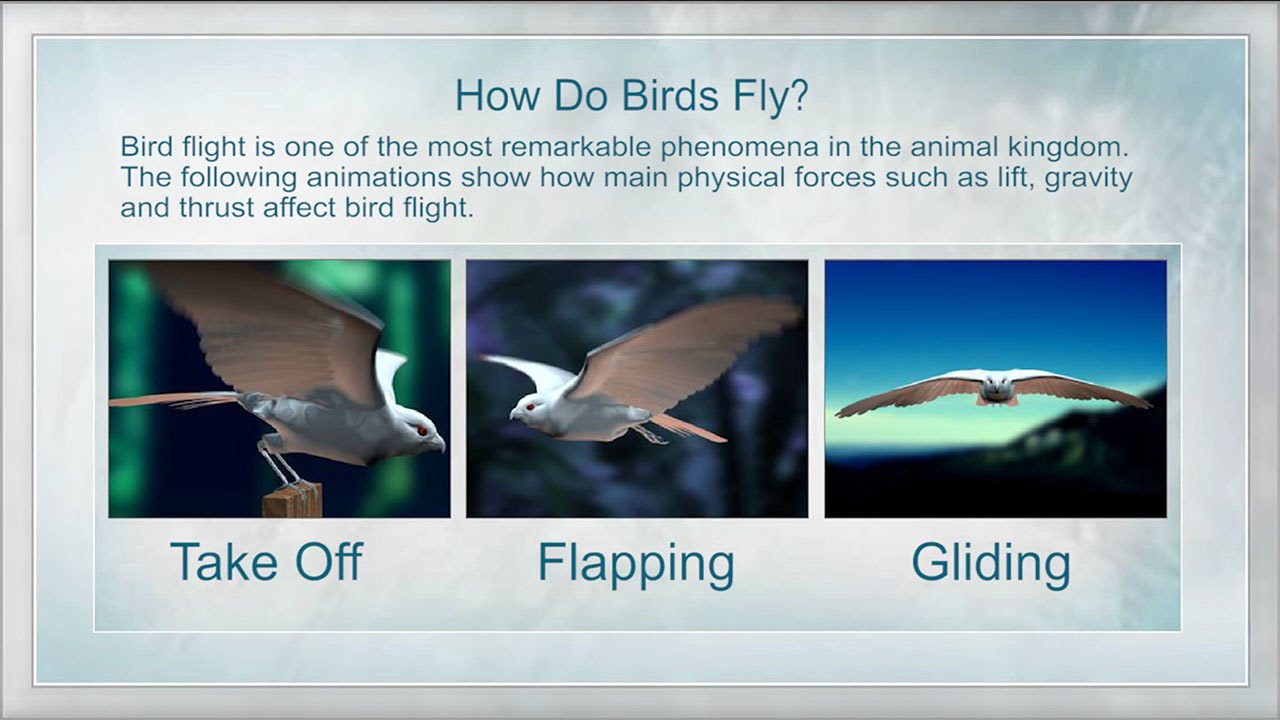
- Flapping: The wings move up and down, pushing air down and back. This gives both lift (upward) and thrust (forward).
- Gliding: The wings stay still, and the bird uses air currents and its speed to stay up.
Some birds, like hummingbirds, flap their wings in a special way that lets them hover in place. Others, like eagles, glide for long distances without flapping much at all.
Wing Loading And Aspect Ratio
Not all wings are the same. Two important ideas are:
- Wing loading: This is the weight of the bird divided by the area of its wings. Birds with low wing loading (big wings for their weight) can fly slowly and glide easily. Birds with high wing loading must fly fast.
- Aspect ratio: This is the length of the wing compared to its width. Long, narrow wings (high aspect ratio) are good for fast, efficient flight. Short, wide wings are good for quick turns.
Here’s a quick comparison of wing types:
| Bird | Wing Shape | Flight Style | Example Use |
|---|---|---|---|
| Albatross | Long & narrow | Soaring/gliding | Long ocean flights |
| Sparrow | Short & rounded | Quick, agile | Forest maneuvering |
| Hawk | Broad & slightly rounded | Soaring & diving | Hunting prey |
The Role Of Tail Feathers
Tail feathers help with steering and braking. When a bird lands, it spreads its tail wide to slow down. When it turns, the tail helps balance and direct the movement. Some birds, like swallows, have forked tails for even better control.
The Physics Of Flight: Forces At Work
Flying is about more than just wings. Four main forces must be in balance for a bird to fly well.
- Lift: The upward force created by the wings.
- Weight: The downward pull of gravity on the bird.
- Thrust: The forward push, usually made by flapping the wings.
- Drag: The resistance of air as the bird moves forward.
For a bird to rise, lift must be greater than weight. To stay in the air, lift and weight must be equal. To speed up, thrust must be greater than drag.
Here’s how these forces interact:
| Force | Direction | Main Source | Effect |
|---|---|---|---|
| Lift | Upward | Wings (airfoil shape) | Keeps bird in air |
| Weight | Downward | Body mass | Pulls bird down |
| Thrust | Forward | Flapping wings | Moves bird ahead |
| Drag | Backward | Air resistance | Slows bird down |
How Birds Control These Forces
Birds control lift by changing the shape and angle of their wings. They use their muscles to flap harder or softer. They change thrust by flapping faster or slower, and they reduce drag by folding their wings close to their bodies when diving.
Energy Use And Efficiency
Flying uses a lot of energy. Small birds may use up to 30 times more energy flying than resting. That’s why they eat so much and so often. Large birds, especially those that soar, save energy by riding air currents.
Some birds have special ways to be efficient. For example, geese fly in a “V” shape so each bird can use the air pushed up by the bird in front. This can save up to 20% of their energy during long migrations.
Types Of Bird Flight
Not all birds fly the same way. The style of flight depends on the bird’s shape, size, and the environment.
Flapping Flight
This is the most common. The bird moves its wings up and down to create both lift and thrust. Small birds, like sparrows and finches, use quick flapping to move between branches. Larger birds, like crows and pigeons, use slower, deeper wing beats.
Flapping takes a lot of energy, so most birds only do it when they must.
Gliding And Soaring
Some birds can travel long distances without flapping. They use the energy of the wind or rising air (called thermals) to stay up. Eagles, vultures, and albatrosses are masters of this. By stretching their wings wide and catching air, they can travel for hours with almost no energy.
A key insight: young birds must learn how to find these rising air currents. It’s not just instinct—it’s a skill developed over time.
Hovering
Hummingbirds are famous for this. They flap their wings in a figure-eight pattern, creating lift on both the upstroke and downstroke. This lets them stay in one place, even while drinking nectar. Very few birds can hover for long, because it uses a huge amount of energy.
Diving And Stooping
Some birds, like falcons, can dive at speeds over 320 km/h (200 mph). They fold their wings close to their bodies to cut through the air, and spread them again to slow down and catch prey. This is the fastest movement in the animal kingdom.
Takeoff And Landing
Getting off the ground is not easy. Small birds can jump and flap quickly. Large birds need a runway—a long, flat area to run and build up speed before they lift off. Swans and geese need a long stretch of water to get airborne.
Landing is just as tricky. Birds must slow down, spread their wings and tails, and find the right moment to put their feet down. Mistiming can lead to crashes.
How Birds Steer And Maneuver
Flight is not just about going straight. Birds must be able to turn, stop, rise, and dive. Their bodies have many tools for steering.
Flexible Wings
Birds can spread or fold their wings, changing the amount of lift and drag. They can even twist their wingtips to control their movement. This is called wing morphing and is one reason why birds are more agile than airplanes.
Tail Movements
The tail acts like a rudder on a boat. By moving it left or right, up or down, birds can change direction fast. Swallows and terns use their forked tails to make sharp turns while hunting insects.
Head And Neck Movements
Surprisingly, birds also use their head and neck to help steer. By shifting their weight, they can change their center of gravity and adjust their flight path.
Feet And Legs
In some birds, especially those that catch prey, the feet help with landing and grabbing. Hawks and owls spread their feet wide just before they land.
The Role Of The Respiratory And Circulatory Systems
Flying takes a lot of oxygen. Birds have special systems to get enough air and carry it to their muscles.
Air Sacs And Lungs
Birds breathe differently from mammals. They have air sacs connected to their lungs. When a bird breathes in, air goes into the sacs and then through the lungs in one direction. This means they always have fresh oxygen, even when breathing out.
This system is much more efficient than in mammals, where air moves in and out the same way.
Powerful Heart
Birds have a large, strong heart. Their heart beats fast—sometimes over 1000 beats per minute in small birds. This pumps oxygen-rich blood to the muscles quickly.
High Body Temperature
Birds have a higher body temperature than most animals (about 40-42°C or 104-107°F). This helps their muscles work better but also means they need to eat often to keep up their energy.

Migration: Long-distance Flight
Some birds travel thousands of kilometers each year to find food and breeding places. This is called migration. How do they manage such long flights?
Preparation
Before migration, birds eat a lot and build up fat—sometimes doubling their weight. This fat is burned for energy during the trip.
Navigation
Birds use the sun, stars, magnetic fields, and even smells to find their way. This ability is still being studied, but it is clear that birds are excellent navigators.
Flying In Groups
Many migratory birds fly in groups or formations, like the V-shape. This helps save energy and makes long flights possible. Young birds learn the route from older birds.
Rest Stops
Birds cannot fly non-stop forever. They stop along the way to rest and eat. Some, like the bar-tailed godwit, can fly for over 11,000 km without stopping—the longest nonstop flight of any bird.
Flightless Birds: Why Can’t Some Birds Fly?
Not all birds can fly. Ostriches, emus, penguins, and a few others have lost the ability. Why?
Evolution And Environment
Flight takes energy. If birds live where there are no predators or where food is easy to find on the ground, flying may not be necessary. Over time, their wings become smaller and their bodies heavier. In some islands, birds became flightless because there were no animals to hunt them.
Special Adaptations
Flightless birds often have strong legs for running or swimming. Penguins use their wings as flippers, and ostriches can run over 70 km/h.
It’s not a weakness—it’s just a different way to survive.
Surprising Facts About Bird Flight
Even if you know a lot, there are always things about bird flight that surprise people. Here are a few:
- The wandering albatross can fly more than 10,000 km without landing.
- The bee hummingbird (the world’s smallest bird) can flap its wings up to 80 times per second.
- Swifts can stay in the air for up to 10 months without landing—eating, sleeping, and even mating while flying.
- Some birds, like the common swift, can sleep with one half of their brain at a time, so they don’t fall while flying.
- The bar-headed goose can fly over the Himalayas at heights above 8,000 meters (26,000 feet), where the air is very thin.
The Human Connection: What We’ve Learned From Birds
Humans have always wanted to fly. For thousands of years, we studied birds to understand their secrets. The first airplanes were designed using the airfoil shape of bird wings.
Today, scientists are still learning from birds. Engineers build drones and robots that copy the flexible wings and efficient flight of birds. Studying birds is helping us create better flying machines and even new materials.
If you want to learn more about the connection between bird flight and human invention, check out this article on bird flight.

Frequently Asked Questions
What Is The Main Reason Birds Can Fly But Humans Cannot?
The main reason is body structure. Birds have lightweight bones, strong flight muscles, and wings with the right shape. Humans are much heavier and do not have wings, so we cannot create enough lift to fly without machines.
How Do Baby Birds Learn To Fly?
Most baby birds practice by flapping their wings and jumping from low branches or the nest. Parents may encourage them by calling from nearby. Over time, they build muscle and learn to balance and steer.
Why Do Some Birds Fly In A V-formation?
Flying in a V-formation helps birds save energy. Each bird flies in the rising air created by the bird in front, which reduces wind resistance. This teamwork lets them travel longer distances during migration.
Can All Birds Fly The Same Way?
No, different birds have different flight styles. Hummingbirds can hover, eagles soar for hours, and penguins swim instead of flying. The style depends on the bird’s wings, size, and environment.
How Fast Can The Fastest Bird Fly?
The peregrine falcon is the fastest bird. When diving, it can reach speeds over 320 km/h (200 mph). In level flight, the fastest bird is the common swift, which can fly up to 112 km/h (70 mph).
Bird flight is one of nature’s greatest wonders. Next time you see a bird in the sky, you’ll know there’s a world of science and history behind every flap of its wings.