Every day, millions of people look up to the sky and see birds flying, singing, or hopping from branch to branch. But few stop to ask a simple question: what do birds eat? The answer is more complex than you might think. Birds are one of the most diverse groups of animals on Earth. From tiny hummingbirds to powerful eagles, their diets are as varied as their shapes and colors. Understanding what birds eat helps us care for them in our gardens, protect wild habitats, and even make sense of their fascinating behaviors.
This article will explore everything you need to know about bird diets. You will learn about the different kinds of foods birds eat, how their bodies are adapted for their favorite meals, and how diet changes with the seasons and environment.
You will also discover what to feed birds if you want to attract them to your backyard, and what foods you should never offer. If you have ever wondered why a parrot likes seeds or why a robin hunts for worms, you are in the right place.
The Main Types Of Bird Diets
Birds eat an incredible range of foods, but their diets can be grouped into a few main categories. Understanding these categories makes it easier to see why some birds visit your feeder while others never do.
1. Insectivores
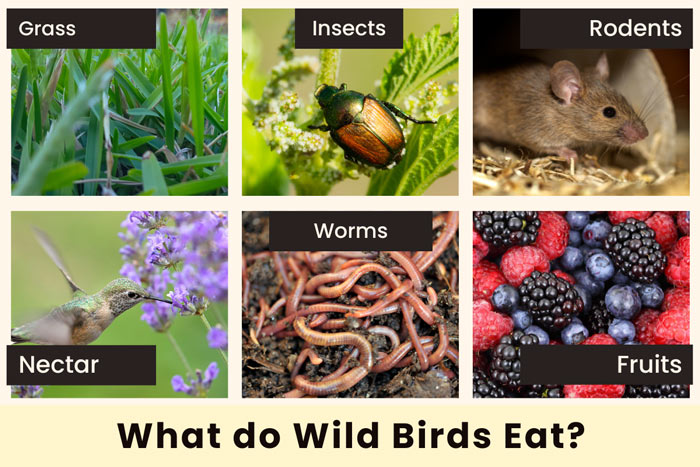
Insectivorous birds feed mainly on insects, spiders, and other small invertebrates. These birds are nature’s pest controllers. Examples include warblers, flycatchers, and swallows. Insects provide high protein and essential nutrients, which are especially important during the breeding season.
Insect-eating birds often have slender, pointed beaks designed to catch and grab fast-moving prey. Swallows, for example, catch insects in flight with their wide mouths, while robins pull worms from the ground. Insects are rich in protein, making them perfect for growing chicks.
2. Granivores
Granivores eat seeds and grains. Sparrows, finches, and pigeons are common examples. Seeds provide energy-rich food, and birds that eat seeds usually have strong, thick beaks for cracking open tough shells.
Many seed-eating birds have a favorite type of seed. For instance, goldfinches love thistle seeds, while cardinals prefer sunflower seeds. Their digestive systems are adapted to handle hard food, sometimes with a muscular organ called a gizzard that grinds seeds down.
3. Frugivores
Frugivorous birds focus mainly on fruit. Toucans, hornbills, orioles, and many tropical birds eat fruit as their primary food. Fruits are high in sugar and vitamins. These birds often have strong, curved beaks for plucking and peeling fruit.
Fruit-eating birds play a vital role in spreading seeds. As they digest the fruit, they excrete seeds far from the parent plant, helping forests grow and spread.
4. Nectarivores
Nectarivores are birds that drink nectar from flowers. The most famous are hummingbirds, but sunbirds, honeyeaters, and some parrots also fit this category. Nectar is a sugary liquid produced by flowers, providing quick energy.
Nectar-feeding birds have long, slender beaks and sometimes special tongues to reach deep into flowers. They pollinate plants as they feed, making them important for ecosystems.
5. Carnivores
Some birds are carnivores, eating other animals. This group includes birds of prey like eagles, hawks, falcons, and owls. They eat mammals, reptiles, fish, or other birds. Carnivorous birds have strong, hooked beaks and sharp talons for catching and killing prey.
Their eyesight is excellent, and their digestive systems can handle meat, bones, and fur. Owls, for example, often regurgitate pellets with the indigestible parts of their meals.
6. Omnivores
Many birds are omnivores, eating both plants and animals. Crows, ravens, magpies, and gulls are good examples. Omnivorous birds are very adaptable and can change their diet based on what is available.
This flexibility helps them live in many environments, from cities to forests. Omnivores might eat insects, seeds, fruit, garbage, or even small animals.
Examples Of Bird Diets By Species
To understand what birds eat, it helps to look at real examples. Here is a closer look at the diets of some well-known birds.
American Robin
The American robin is a classic example of a bird with a mixed diet. In spring and summer, robins eat mostly insects and earthworms. In fall and winter, when insects are scarce, they switch to berries and fruit.
House Sparrow
House sparrows are granivores. They love seeds from grasses and weeds, but in cities, they eat crumbs, bread, and even insects. Their strong beaks let them crack open tough seeds.
Hummingbird
A hummingbird’s diet is mostly nectar, but they also eat small insects and spiders for protein. Without enough insects, hummingbirds cannot survive, especially when raising young.
Bald Eagle
The bald eagle is a carnivore, mainly eating fish. Eagles catch fish with their strong talons, but will also eat birds, mammals, or carrion when fish are not available.
European Starling
European starlings are omnivores. They eat insects, seeds, fruit, and even garbage in cities. Their ability to eat almost anything helps them survive in many places.
Parrot
Most parrots are frugivores and granivores, eating seeds, nuts, fruit, and buds. Some species, like the Kea, will eat insects or even small animals.
Great Blue Heron
The great blue heron is a carnivore, hunting fish, frogs, and small mammals in shallow water. Herons use their long beaks to spear prey.
How Birds’ Beaks And Bodies Match Their Food
Birds’ bodies are perfectly designed for their diets. Their beaks, tongues, feet, and even digestive systems are adapted to their favorite foods.
Beak Shapes
The shape of a bird’s beak reveals a lot about its diet:
- Short, thick beaks: Good for cracking seeds (finches, sparrows)
- Long, slender beaks: Perfect for probing flowers for nectar (hummingbirds)
- Hooked beaks: Used for tearing meat (hawks, owls)
- Wide, flat beaks: Designed to scoop or filter food from water (ducks)
Feet And Claws
- Strong, curved talons: Used by birds of prey to catch and kill animals.
- Webbed feet: Help ducks and geese swim and find food in water.
- Perching feet: Allow songbirds to grip branches while eating seeds or fruit.
Digestive System
Birds that eat hard food, like seeds, often have a gizzard. This muscular organ grinds up tough food, sometimes with help from swallowed stones. Birds that eat soft food, like nectar or meat, have simpler digestive systems.
Seasonal Changes In Bird Diets
Bird diets can change with the seasons. Insects are not always available, and some fruits or seeds only ripen at certain times of year.
- Spring and Summer: Many birds eat more insects to feed their chicks. Protein is vital for growth.
- Autumn: Fruit and seeds become important as birds build up fat for migration or winter.
- Winter: In cold climates, insects disappear. Birds may rely on seeds, nuts, or berries. Some birds, like finches, stay all winter because they can eat seeds.
This ability to change diet is key for survival. If a bird cannot switch foods, it may not make it through tough times.

Bird Diets In Different Habitats
Where a bird lives affects what it eats. Birds living in forests, grasslands, wetlands, or cities have different food choices.
Forests
Many forest birds eat insects, fruit, and seeds. Woodpeckers find insects under bark, while thrushes eat berries and worms. In tropical forests, fruit-eating birds are common.
Grasslands
Birds in grasslands often eat seeds, insects, and small animals. Meadowlarks and larks eat insects in summer and seeds in winter. Raptors hunt rodents and snakes.
Wetlands
Wetland birds like ducks, herons, and kingfishers eat fish, aquatic insects, and plants. Their beaks are adapted for probing mud or catching slippery prey.
Urban Areas
City birds are often omnivores. Pigeons, starlings, and crows eat almost anything, including human food. Urban parks attract birds that can adapt to new foods.
Deserts
Desert birds must cope with scarce water and food. They eat seeds, insects, and sometimes nectar. Some, like the roadrunner, hunt lizards and snakes.
What To Feed Wild Birds In Your Garden
Feeding wild birds is a popular hobby. But what should you offer to help birds and attract more species?
Safe Foods For Birds
- Seeds: Sunflower seeds, millet, nyjer, and safflower attract finches, sparrows, and chickadees.
- Peanuts: Loved by woodpeckers, nuthatches, and jays. Always offer unsalted, unroasted peanuts.
- Suet: Fat blocks are great in winter for woodpeckers and nuthatches.
- Fruit: Apples, oranges, and grapes attract robins, orioles, and waxwings.
- Mealworms: High-protein food for bluebirds and robins.
- Nectar: For hummingbirds, offer a sugar water mix (no red dye).
Foods To Avoid
Some foods are dangerous for birds:
- Bread: Low in nutrients, can fill birds without giving energy.
- Milk: Birds cannot digest lactose.
- Salted or flavored foods: Can harm or kill birds.
- Raw rice: Myth says it explodes in birds’ stomachs, but it can cause digestive problems.
- Chocolate, avocado, caffeine: Toxic for birds.
Feeding Tips
- Clean feeders regularly to prevent disease.
- Offer a variety of foods to attract different species.
- Place feeders near cover, but not too close to windows.
Common Mistakes
- Using moldy or spoiled food can make birds sick.
- Not cleaning feeders leads to disease outbreaks.
- Feeding only bread or junk food can cause malnutrition.
How Birds Find And Digest Their Food
Birds use many strategies to locate and handle their meals.
Foraging Techniques
- Probing: Birds like woodpeckers and sandpipers probe bark or mud for hidden prey.
- Hawking: Flycatchers catch insects in mid-air.
- Gleaning: Warblers pick insects from leaves.
- Diving: Kingfishers dive into water for fish.
- Scavenging: Vultures and crows eat dead animals.
Digestion
Birds have a fast metabolism. Food travels quickly from the mouth to the crop (storage pouch), then to the stomach and gizzard. Enzymes and strong muscles help break down food. Some birds, like owls, cough up pellets of bones and fur.
Special Diets: Unique Bird Feeding Behaviors
Some birds have fascinating and unique diets:
- Crossbills have twisted beaks for prying open pine cones.
- Honeyguides in Africa eat wax from bee hives.
- Hoatzin chicks eat mostly leaves and ferment them like cows.
- Oystercatchers use strong beaks to open shellfish.
- Flamingos filter tiny shrimp and algae from water, which gives them their pink color.
These examples show how evolution shapes diet and feeding habits.
How Climate Change And Human Activity Affect Bird Diets
Modern challenges are changing what birds eat. Climate change shifts the timing of insect hatches and fruit ripening. This can cause birds to miss their main food sources during migration or breeding.
Urbanization replaces natural food with human garbage. Some birds adapt, but others cannot find enough healthy food. Pesticides also reduce insect populations, harming insect-eating birds.
Bird-friendly gardening and reducing pesticide use can help birds find the food they need.
Bird Diets And Migration
Migration is a huge challenge for birds. They need extra energy for long flights, so diet changes are common.
- Before migration, birds eat as much as possible, often doubling their weight.
- Many switch to high-fat foods, like berries and seeds.
- Some species depend on stopover sites with rich food supplies.
A lack of food along migration routes can cause birds to die before reaching their destination.
Comparing Bird Diets: Data Tables
Understanding bird diets is easier with comparisons. Here are two tables to illustrate the variety in bird diets and their adaptations.
| Bird Species | Main Diet | Beak Shape | Habitat |
|---|---|---|---|
| American Goldfinch | Seeds | Short, conical | Open fields, gardens |
| Barn Swallow | Flying insects | Wide, flat | Farmland, wetlands |
| Bald Eagle | Fish, meat | Strong, hooked | Near water |
| Ruby-throated Hummingbird | Nectar, insects | Long, slender | Woodlands, gardens |
| House Sparrow | Seeds, scraps | Short, thick | Cities, villages |
Now, let’s compare how different diet types provide energy and nutrients:
| Diet Type | Main Nutrients | Energy Level | Example Birds |
|---|---|---|---|
| Insectivorous | Protein, fat | High (for growth) | Warbler, Swallow |
| Granivorous | Carbohydrates, fat | Moderate to high | Finch, Sparrow |
| Frugivorous | Sugar, vitamins | High (quick energy) | Oriole, Toucan |
| Carnivorous | Protein, fat | Very high | Hawk, Owl |
| Nectarivorous | Sugar | Very high (short bursts) | Hummingbird, Sunbird |
| Omnivorous | Varied | Flexible | Crow, Gull |
Surprising Insights About Bird Diets
Most people believe birds always stick to one type of food, but in reality, many birds change diets based on need and opportunity. Even strict seed-eaters will eat insects when raising chicks because protein is vital for young birds. Another non-obvious fact is that some birds use tools to access food.
For example, woodpecker finches in the Galápagos use sticks to poke insects out of holes.
A second insight: food availability can directly change a bird’s body. In years with little fruit, some finches grow longer beaks to reach other food sources. This shows how diet and evolution are closely connected.
The Role Of Birds In Nature’s Food Web
Birds are not just eaters—they are also prey and pollinators. By eating insects, birds control pests that could damage crops and forests. Fruit-eating birds spread seeds and help grow forests. Nectar-eaters pollinate flowers, supporting plant reproduction.
Some birds, like vultures, clean up dead animals, preventing the spread of disease. This shows that bird diets are important not only for birds, but for entire ecosystems.
How To Observe Bird Diets In The Wild
If you want to learn what birds eat, watching them is the best way. Take binoculars and a notebook. Notice what birds pick up, how they handle it, and where they feed.
- Look for robins pulling worms from the ground after rain.
- Watch woodpeckers pecking bark for insects.
- Observe crows searching garbage for scraps.
- Notice hummingbirds visiting flowers or feeders.
Recording your observations helps you notice patterns and learn about local bird diets.

Frequently Asked Questions
What Do Baby Birds Eat?
Baby birds, or nestlings, usually eat high-protein foods like insects or caterpillars. Even seed-eating parents feed their chicks insects, which are easier to digest and rich in nutrients needed for growth.
Can Birds Eat Rice Or Bread?
Small amounts of uncooked rice are not dangerous, but it is not a good food for birds. Bread offers little nutrition and can cause health problems if it replaces natural food. It is better to offer seeds, fruit, or mealworms.
Why Do Some Birds Eat Only One Type Of Food?
Some birds are specialists and have evolved to eat only one kind of food. For example, hummingbirds are adapted for nectar, while oystercatchers eat shellfish. Specializing can help avoid competition, but makes birds vulnerable if their food disappears.
How Can I Attract Different Birds To My Feeder?
Offer a variety of foods: black oil sunflower seeds for finches and cardinals, nyjer for goldfinches, suet for woodpeckers, and fruit for orioles. Use different feeders and keep food fresh. Provide water and shelter to make your garden more attractive.
Where Can I Learn More About Bird Diets?
A great resource is the Cornell Lab of Ornithology at All About Birds, which offers in-depth guides on bird species and their diets.
Birds remind us how rich and complex nature is. Their diets link them to every part of the ecosystem—from the tiniest insects to the tallest trees. By understanding what birds eat, you can help protect them, enjoy their presence, and see the world through their eyes.
Whether you are a backyard birdwatcher or a nature lover, what you offer birds—and what you learn from them—makes a difference.