
A small bird sits quietly on the edge of your garden, its feathers a little messy, wings half-open. It does not fly away, even as you come close. You wonder—Is it hurt, or is it just learning to live on its own? This is a common scene around spring and early summer in many parts of the world. The bird you see is likely a fledgling. Understanding what a fledgling bird is, how it behaves, and what it needs is important for anyone who loves nature or wants to help wildlife. Many people think fledglings are abandoned or in danger, but the truth is more interesting and often misunderstood.
This article explores every detail about fledgling birds. You’ll learn how to recognize them, how they fit into the life cycle of birds, and why they sometimes seem helpless. We’ll clear up common myths, share data from bird experts, and give practical advice on what you should do (and not do) if you find one.
Whether you are a birdwatcher, a curious parent, or just want to help your local wildlife, this guide is for you.
What Exactly Is A Fledgling Bird?
A fledgling is a young bird that has grown enough to leave the nest but is not fully independent yet. This stage comes after the bird is a nestling (when it lives in the nest and cannot move much) and before it becomes a juvenile (when it can survive on its own). Fledglings are in a transition period. They have most of their feathers, can hop or flutter, and sometimes make short flights. However, they are still learning how to find food, avoid danger, and fly well.
It is important to know that fledglings are not babies in the nest, but they are not adults either. Think of them like teenagers: old enough to leave home, but not ready for everything life can throw at them.
Key Features Of Fledglings
- Mostly feathered: They have more feathers than nestlings, but they might still have some soft, downy feathers, especially on their heads or under their wings.
- Clumsy movement: Fledglings can hop, walk, and flutter, but their flights are short and not very controlled.
- Short tail and wings: Their tails and wings look shorter than adults because their feathers are still growing.
- Bright mouth color: Many fledglings show a wide, colorful mouth (the gape) when they beg for food. This helps parents find their mouths easily.
- Vocal begging: They often call out with high-pitched, begging sounds to attract their parents.
The Bird Life Cycle: Where Do Fledglings Fit?
Birds go through several stages in their early life. Each stage is different and has its own needs and behaviors.
Main Stages In The Early Bird Life Cycle
| Stage | Main Features | Location |
|---|---|---|
| Egg | Not yet hatched, developing inside shell | In the nest |
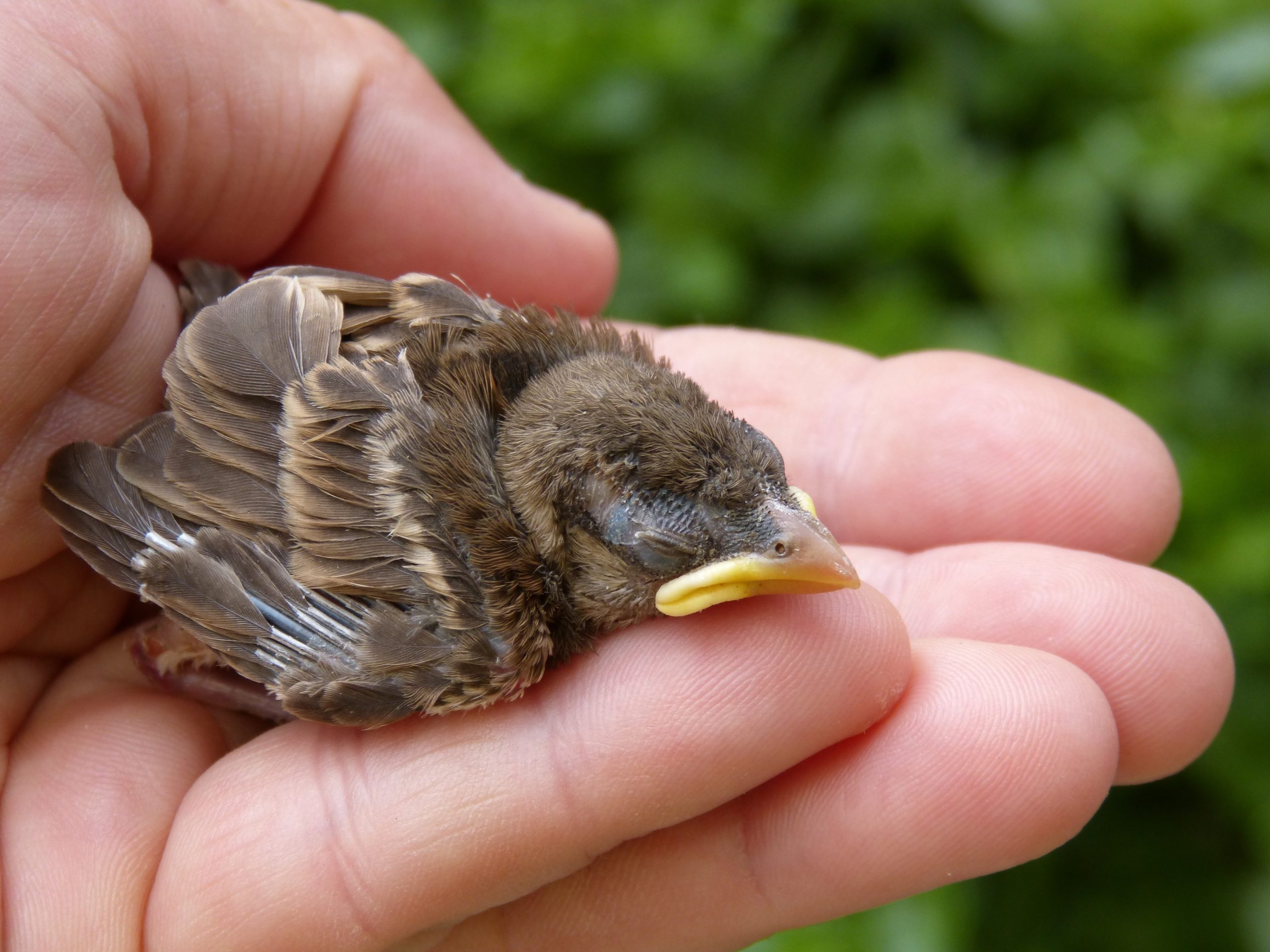
| Nestling | Featherless or with soft down, eyes may be closed, cannot move well | In the nest |
| Fledgling | Mostly feathered, can hop or flutter, short tail/wings | Outside nest, near nest area |
| Juvenile | Fully feathered, can fly well, still learning survival skills | Wide range, often away from nest |
| Adult | Mature, can breed and defend territory | Full habitat range |
The fledgling stage is short but critical. It usually lasts from a few days to a few weeks, depending on the species. For example, a robin fledgling may leave the nest at 13 days old and be cared for by parents for about 2 more weeks. In contrast, a blue tit fledgling may be fed for just 1 week after leaving the nest. The timing is all about survival: leaving the nest early can protect them from nest predators, but it also means they need time to finish growing and practicing life skills.
How To Identify A Fledgling Bird
Recognizing a fledgling is important if you want to help or observe them. Many people confuse fledglings with injured birds or think they are abandoned.
Physical Signs
- Feathers: Look for a mix of adult and fluffy down feathers. The bird may look scruffy.
- Tail and Wing Length: Tails and wings often look too short for the body.
- Mouth Color: The inside of the mouth or edges (gape) are often bright yellow or orange.
- Size: Fledglings are usually smaller than adults of the same species.
Behavior Clues
- They spend more time on the ground or low bushes.
- They hop, flutter, or try short flights.
- They call out, especially when they see adults nearby.
- They open their mouths wide when a parent is close, begging for food.
Example: American Robin Fledgling
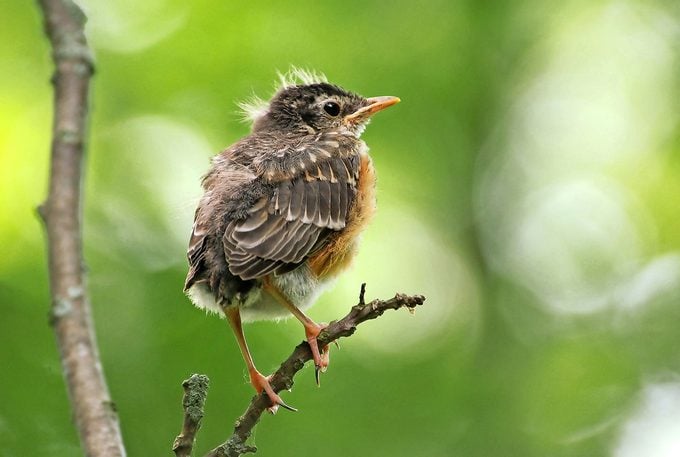
An American robin fledgling will have a spotted chest, a short tail, and fluffy head feathers. It can hop and flutter, but not fly high. Parents keep feeding it for up to 2 weeks after it leaves the nest.
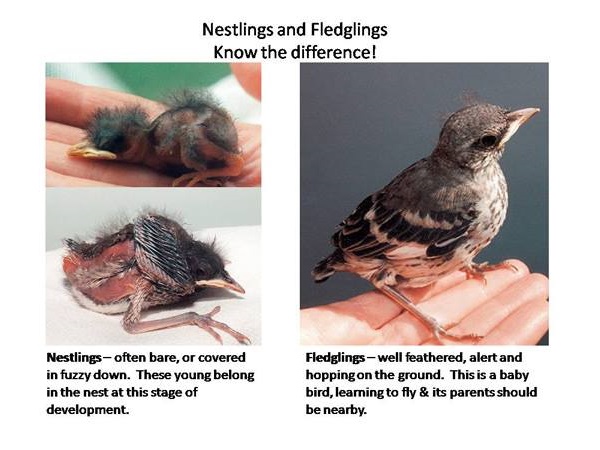
Fledgling Vs. Nestling Vs. Juvenile
It’s easy to mix up these stages. Here’s a simple comparison:
| Feature | Nestling | Fledgling | Juvenile |
|---|---|---|---|
| Feather Coverage | Mostly bare or downy | Mostly feathered, some down | Fully feathered |
| Mobility | Stays in nest | Can hop/flutter, leaves nest | Flies well |
| Independence | Completely dependent | Still fed by parents | Learning to feed itself |
Why Do Fledglings Leave The Nest So Early?
Many people are surprised to find young birds out of the nest before they can fly well. This is a natural process called fledging. Leaving the nest early helps protect young birds from predators that attack nests. Once fledglings spread out, it is harder for a predator to find and eat them all at once.
Survival Strategy
If all baby birds stayed in one nest, a single predator (like a snake or raccoon) could wipe out the whole brood. By leaving the nest before they can fly, fledglings reduce this risk. Their parents continue to feed and watch over them, often splitting the brood so each parent cares for a few fledglings in different locations.
Data And Research
A study by the Cornell Lab of Ornithology found that fledglings have a survival rate of about 50–70% in their first week out of the nest. The main threats are predators and bad weather. However, the survival rate would be even lower if they stayed in the nest longer.
Non-obvious insight: Fledglings that leave the nest too late can actually be weaker and less able to escape danger. Nature “chooses” an early exit for a reason.
What Do Fledgling Birds Eat And How Are They Fed?
Fledglings cannot feed themselves well at first. Their parents continue to bring them food—sometimes hundreds of trips per day.
Common Foods
- Insect-eating birds: Parents bring caterpillars, beetles, spiders, and other soft insects.
- Seed-eating birds: Parents may soften seeds or bring insects for more protein.
- Omnivorous birds: Some species, like robins, feed their young worms and berries.
Feeding Behavior
Fledglings beg for food by opening their mouths wide and making begging calls. Parents recognize these calls and mouth colors and feed them. As days pass, parents encourage fledglings to peck at food on their own. Some birds even use tricks—like pretending to leave—to make fledglings chase and learn to feed themselves.
Example: House Sparrow Feeding Rate
A study of house sparrows found that parents may feed a single fledgling every 10-15 minutes during daylight hours. That’s over 40 feedings per day.
Non-obvious insight: Sometimes, parent birds will split up their feeding routes, with the mother feeding one group of fledglings and the father feeding another. This increases each chick’s chance of survival.
Common Species And Their Fledgling Stages
Different birds have different fledgling periods. Here are some familiar examples:
American Robin
- Fledging Age: 13–14 days after hatching
- Fledgling Period: 10–15 days
- Notes: Still fed by parents on the ground
Blue Tit
- Fledging Age: 16–22 days
- Fledgling Period: 7–10 days
- Notes: Fledglings stay in groups, parents feed all
House Sparrow
- Fledging Age: 14–17 days
- Fledgling Period: 7–10 days
- Notes: Very noisy, often found in gardens
Barn Swallow
- Fledging Age: 18–23 days
- Fledgling Period: 7–10 days
- Notes: Fledglings practice flying in open areas
Blackbird
- Fledging Age: 13–14 days
- Fledgling Period: 12–18 days
- Notes: Often seen in hedges and on lawns
What Should You Do If You Find A Fledgling Bird?
Many people want to help when they see a young bird on the ground. But sometimes, the best help is to do nothing.
When To Leave A Fledgling Alone
Most fledglings are not abandoned. Their parents are nearby, watching and feeding them. If the bird is fully feathered and alert, and there are no obvious injuries, leave it alone. Watch from a distance. Parents usually visit every few minutes but may stay away if you are too close.
When To Intervene
You should only help if:
- The fledgling is in immediate danger (e.g., in a busy road, attacked by a pet).
- It is visibly injured (bleeding, cannot stand, wing hanging down).
- It is cold, wet, and not moving.
In these cases, move the bird to a safe spot nearby (under a bush or in a tree), as close as possible to where you found it. Parents will hear its calls and find it. If injured, contact a licensed wildlife rehabilitator.
What Not To Do
- Do not take the bird home. Wild birds need special care, and it is often illegal to keep them.
- Do not try to feed the bird yourself. The wrong food can kill fledglings.
- Do not assume a quiet bird is abandoned—parents watch from a distance.
Myths And Misunderstandings About Fledglings
There are many myths about fledgling birds. Clearing up these myths helps people make better choices.
Myth 1: Fledglings Have Been Abandoned
Fact: Parents are usually nearby. Fledglings call for food and the parents answer, but they may hide when humans are close.
Myth 2: If You Touch A Fledgling, The Parents Will Reject It
Fact: Most birds have a poor sense of smell. Parents will not abandon a chick just because you touched it. If you must move a bird, do so gently and quickly.
Myth 3: Fledglings Should Be Put Back In The Nest
Fact: Once a bird has left the nest, it will not stay if you put it back. It will jump out again.
Myth 4: Fledglings Are Weak Or Sick
Fact: Being on the ground is normal for this stage. Fledglings are learning to survive.
Myth 5: All Young Birds Can Fly
Fact: Fledglings can only flutter and hop at first. Flying takes a few days to master.
The Importance Of Fledglings In Bird Populations
The fledgling stage is risky but critical for bird populations. Most songbirds have high death rates at this time, but those that survive become strong, smart adults. Fledglings learn how to hide, what to eat, and how to escape predators.
The Numbers
According to research, over 50% of songbird fledglings die in their first month, mostly from predators. But this is balanced by large clutch sizes—many small birds lay 3–6 eggs each spring. The survivors carry strong genes and skills into adulthood.
Why Not Help More?
It may feel wrong to let nature take its course, but removing too many risks would upset the balance. Predators and weather are part of the ecosystem. If every fledgling survived, there would be too many birds and not enough food or space.
Real Examples: Fledglings In Your Backyard
If you watch your yard carefully in spring and early summer, you may see fledglings almost every day. Here are some examples of common backyard birds as fledglings:
- Northern Cardinal: Young cardinals have brownish feathers and stay low in bushes. Their parents feed them for up to 3 weeks after they leave the nest.
- House Finch: Fledglings make soft “cheep” calls and follow adults, fluttering their wings.
- Blue Jay: Young blue jays are noisy and bold, often moving in groups.
- Mourning Dove: Fledglings hide under bushes and freeze if approached.
- Starling: Young starlings have brownish-gray feathers and beg in large groups.
Fledglings And Urban Environments
Cities and towns are full of dangers for fledglings: cats, cars, windows, and people. But urban areas also provide food, shelter, and new nesting spots.
How To Make Your Yard Safer For Fledglings
- Keep cats indoors during spring and summer.
- Watch for fledglings before mowing lawns or trimming bushes.
- Place bird feeders and baths away from windows.
- Do not use pesticides, which can poison young birds.
- Teach children to observe, not touch, fledglings.
Data: Cat Predation
Studies suggest that free-roaming cats kill billions of birds each year in North America alone. Fledglings are especially at risk because they cannot fly well.
Practical tip: If you see a fledgling, try to keep pets indoors for a few days until the bird has moved on.
How Fledglings Learn To Survive
Fledglings do not just wait for food. They practice flying, foraging, and hiding from danger. Parents may show them food or call to warn them of threats.
Learning To Fly
Fledglings start with short, clumsy flights. Each day, their muscles and feathers grow stronger. In a week or two, most can fly as well as adults.
Learning To Find Food
Parents may bring insects or seeds and drop them in front of fledglings, encouraging them to peck and learn. Some birds even show their young which plants or bugs are safe.
Avoiding Predators
Parents give warning calls when danger is near. Fledglings learn to freeze, hide, or fly away. These lessons are essential for survival.
Data Table: Typical Fledgling Periods For Common Birds
Here is a summary of how long different common birds spend as fledglings:
| Species | Fledging Age (days) | Fledgling Period (days) | Adult Size Reached |
|---|---|---|---|
| American Robin | 13–14 | 10–15 | About 3 weeks after fledging |
| Blue Tit | 16–22 | 7–10 | About 2 weeks after fledging |
| House Sparrow | 14–17 | 7–10 | About 2 weeks after fledging |
| Barn Swallow | 18–23 | 7–10 | About 3 weeks after fledging |
| Blackbird | 13–14 | 12–18 | About 3 weeks after fledging |
How Birdwatchers And Nature Lovers Can Help
Watching a fledgling can be a special moment. Here’s how you can help without causing harm:
- Observe from a distance. Use binoculars if you want a closer look.
- Keep pets and children away from the area.
- Do not try to feed or rescue the bird unless it is in true danger.
- Educate others about the normal life of fledglings.
Extra tip: If you want to learn more, visit resources like the Cornell Lab of Ornithology for trusted advice.
Frequently Asked Questions
What Should I Do If I Find A Fledgling Bird?
If the bird is fully feathered and not injured, leave it alone. Its parents are likely nearby and will continue to feed it. Only move it if it is in immediate danger, such as from pets or traffic.
How Long Do Fledglings Stay With Their Parents?
Most fledglings stay near their parents for 1 to 3 weeks after leaving the nest. During this time, parents feed them and teach them to survive.
Can I Put A Fledgling Back In Its Nest?
No. Once a fledgling has left the nest, it will not stay if put back. It is normal for them to be out of the nest and on the ground at this stage.
What Do Fledgling Birds Eat?
Fledglings usually eat the same foods as their parents—mostly insects, seeds, or fruit, depending on the species. However, they rely on parents to bring food until they learn to find it themselves.
Why Do Fledglings Look So Clumsy And Helpless?
Fledglings are still learning to fly, balance, and feed themselves. This stage is short but risky. Their clumsy behavior is normal and part of growing up.
Watching a fledgling bird is a reminder of how delicate and complex nature can be. These young birds may seem helpless, but they are on their way to independence. By understanding their needs and behaviors, you can enjoy the wonder of birds and help protect the next generation of wildlife.