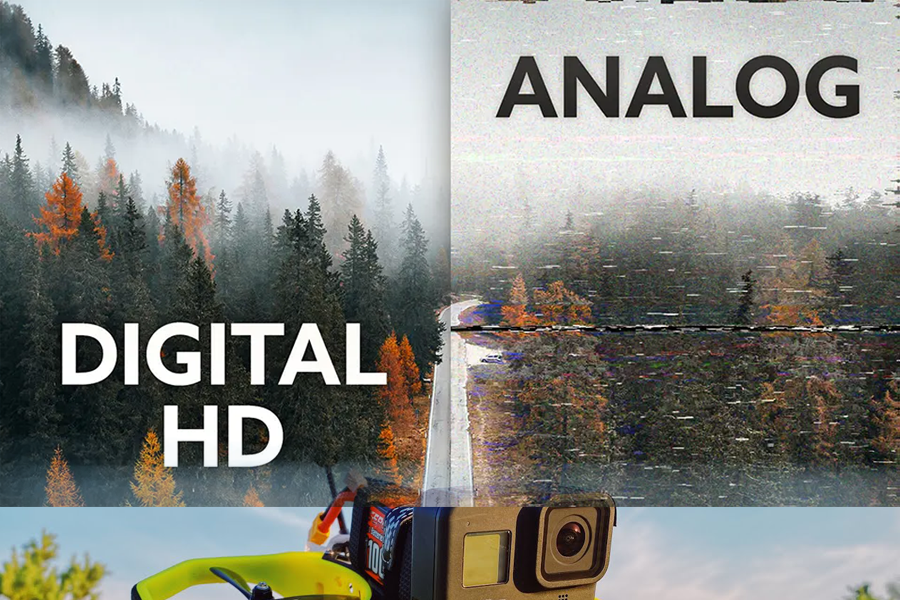
Choosing the right FPV (First Person View) camera is a big decision for anyone who loves drones, RC planes, or remote-controlled cars. The camera you pick shapes your flying experience, your video quality, and even how much fun you have. Today, the main question is: analog or digital FPV camera—which is better? Both options are popular and have strong fans. But they work in very different ways, and understanding these differences helps you make a smart choice.
This article dives deep into the world of FPV cameras. You’ll learn how analog and digital cameras work, what makes each good or bad, and how to pick the right one for your needs. We’ll look at real examples, show clear data, and answer common questions.
Whether you’re new to FPV or looking to upgrade, you’ll find practical advice and useful insights here.
What Is Fpv And Why Does The Camera Matter?
FPV stands for First Person View. When you use FPV, you see what your drone, plane, or car sees—live, in real time. The camera sends video to your goggles, screen, or smartphone. This makes you feel like you’re inside the machine, flying or driving yourself.
The FPV camera is the heart of this system. It captures everything, from trees and buildings to tiny details on the ground. If the camera is slow, blurry, or unreliable, your FPV experience suffers. If it’s fast and clear, you get sharp images and fast reaction times.
The two main types of FPV cameras are:
- Analog FPV cameras
- Digital FPV cameras
Each sends video in a different way. Let’s see how they work.
How Analog Fpv Cameras Work
Analog FPV cameras have been around for decades. They use simple technology to send video signals, much like old TV broadcasts.
Here’s how an analog FPV camera works:
- The camera captures video.
- It sends the signal to a transmitter.
- The transmitter sends the signal over radio waves (usually 5.8 GHz).
- The receiver (in your goggles or monitor) picks up the signal and shows the video.
Analog FPV uses a composite video signal, which is fast but not very detailed. The signal is sent as a continuous electrical wave, not as digital data.
Key Features Of Analog Fpv Cameras
1. Low Latency
The delay between real action and what you see is very short—often less than 20 milliseconds.
2. Simple Setup
Most analog systems are easy to install. You just connect wires and set up the frequency.
3. Wide Compatibility
Analog cameras work with many goggles and monitors. You don’t need special equipment.
4. Affordable Price
Analog FPV gear is usually cheaper than digital.
5. Flexible Channel Options
You can choose from many channels, making it easier to fly with friends.
Popular Analog Fpv Systems
- Fat Shark
Known for high-quality analog goggles.
- ImmersionRC
Offers reliable transmitters and receivers.
- RunCam Swift 2
A favorite analog camera for FPV pilots.

How Digital Fpv Cameras Work
Digital FPV cameras use modern technology. They send video as digital data, similar to how your smartphone streams video.
Here’s how a digital FPV camera works:
- The camera captures video.
- It processes the video into digital format (bits and bytes).
- The digital transmitter sends data over radio waves (often 2.4 GHz or 5.8 GHz).
- The receiver decodes the data and shows high-quality video on your goggles or monitor.
Digital FPV uses compressed video and advanced coding. This allows for clearer images and more details.
Key Features Of Digital Fpv Cameras
1. High Resolution
Digital cameras can show HD (720p, 1080p) or even 4K video.
2. Better Image Clarity
Colors, details, and sharpness are much higher than analog.
3. Advanced Features
Some digital systems offer recording, overlays, and flight data.
4. Low Interference
Digital signals are less affected by noise from other devices.
5. Expandable Options
You can often update firmware or add new features.
Popular Digital Fpv Systems
- DJI FPV
The leader in digital FPV, offering high-quality HD video.
- Fat Shark Shark Byte
A digital system compatible with some analog gear.
- Walkera
Known for affordable digital FPV products.
Analog Vs Digital Fpv: Quick Comparison
Let’s compare the two types side by side. This gives a fast overview of key differences.
| Feature | Analog FPV | Digital FPV |
|---|---|---|
| Video Quality | SD (480p), less detail | HD (720p/1080p), sharp detail |
| Latency | Very low (<20 ms) | Low (20–40 ms), sometimes higher |
| Price | Low ($20–$150) | High ($150–$600) |
| Setup | Simple, plug and play | Complex, needs pairing |
| Compatibility | Wide (many brands) | Narrow (specific brands) |
| Interference | More affected by noise | Less affected, clearer signal |
| Recording | Needs extra device | Often built-in |
Video Quality: Seeing The World Clearly
One of the biggest differences between analog and digital FPV is video quality.
Analog Fpv Video
- Shows standard definition (SD), usually 480 lines.
- Picture is often fuzzy or grainy.
- Fine details (small branches, wires) are hard to see.
- Colors may look faded or washed out.
Analog’s main strength is speed. The video comes fast, but sometimes it’s not very clear. For racing drones, speed matters more than clarity.
Digital Fpv Video
- Shows high definition (HD), often 720p or 1080p.
- Picture is sharp and detailed.
- You can see small objects, textures, and colors.
- Video looks smooth, even in fast motion.
Digital video is great for cinematic flying—filming landscapes, city scenes, or creative shots. You get beautiful images and can share them online.
Real-world Example
A pilot flying through a forest with analog FPV may see only shapes and colors. With digital FPV, they can see each leaf, branch, and shadow.
Latency: Reaction Time Matters
Latency is the delay between real action and what you see in your goggles. Low latency is vital for racing, freestyle, and fast flying.
Analog Latency
Analog systems are famous for ultra-low latency. Most analog cameras and transmitters offer less than 20 milliseconds delay. This means you see almost instantly what the drone sees.
Digital Latency
Digital systems have improved a lot. DJI’s FPV system offers 28 milliseconds latency (in low latency mode). Still, some digital setups have delays up to 60 milliseconds or more.
For freestyle pilots and racers, this difference can affect control. For slow flying or filming, latency is less important.
Insight: Latency Is Not Just A Number
Many beginners focus only on listed latency. But other factors matter, too:
- Camera processing speed (some digital cameras buffer video, adding delay)
- Goggle refresh rate (slow screens can add extra delay)
- Receiver quality (older receivers may lag, even with fast cameras)
Always test your gear before racing or freestyle flying.
Price: How Much Does Each Cost?
Cost is a big factor for most hobbyists. Analog FPV is known for being affordable.
Analog Fpv Price Range
- Basic analog camera: $20–$50
- Transmitter: $20–$50
- Goggles/monitor: $60–$150
Total Setup: Often Under $200
Digital Fpv Price Range
- Digital camera: $100–$200
- Digital transmitter: $100–$200
- Goggles: $250–$600
Total Setup: Usually $400–$800
Digital FPV can cost 3–4 times more than analog. But you get higher video quality and more features.
Insight: Hidden Costs
Some digital systems need special antennas, SD cards, or firmware updates. These add to the total price. Analog gear is often simpler and cheaper to maintain.
Setup And Compatibility: Getting Started
Setting up your FPV system can be easy or tricky, depending on the type.
Analog Setup
- Connect camera to transmitter
- Set frequency/channel
- Plug receiver into goggles or monitor
Most analog systems are plug and play. You can mix brands and models.
Digital Setup
- Connect camera to transmitter
- Pair transmitter and receiver (sometimes needs software)
- Update firmware (for best features)
- Use branded goggles (often required)
Digital FPV needs more steps. Sometimes you must use only the same brand for everything. Mixing brands can cause problems.
Compatibility Table
Here’s how analog and digital compare for compatibility.
| Component | Analog FPV | Digital FPV |
|---|---|---|
| Camera | Mix and match brands | Brand-specific |
| Transmitter | Many options | Usually one brand |
| Goggles | Universal support | Limited support |
| Monitor | Easy to connect | Special monitor needed |
Signal Range And Interference
Flying far from your starting point is fun—but only if your video stays clear.
Analog Fpv Range
Analog systems can reach up to 3–5 kilometers with strong antennas. Signal quality drops with distance. Trees, walls, and other drones can cause interference (static, noise).
Digital Fpv Range
Digital FPV usually offers 2–4 kilometers, sometimes more with advanced gear. Signal is more stable but can suddenly drop (no video) if you go too far.
Interference
Analog is more affected by radio noise, Wi-Fi, and other pilots. You may see static or lines on the screen. Digital is less affected, but when interference hits, video may freeze or disappear.
Practical Tip
Always test your FPV system in your flying area. Each place has different signal noise. Use strong antennas and avoid crowded frequencies.
Recording And Sharing Video
Many pilots want to record flights and share them online. How easy is this with analog and digital FPV?
Analog Recording
Analog cameras do not record video themselves. You need a separate DVR (digital video recorder) device. Quality is limited by the analog signal.
Digital Recording
Most digital FPV systems offer built-in recording. You can save HD video directly to a memory card in the goggles or camera. This makes sharing easy and keeps quality high.
Example: Social Media Sharing
A digital FPV pilot can upload sharp HD videos to YouTube or Instagram. Analog pilots may need extra steps and the quality may not look as good.
Advanced Features And Extras
Digital FPV systems often include advanced features:
- OSD (On-Screen Display): Shows flight info (battery, speed, altitude)
- Firmware updates: Add new features or improve quality
- GPS integration: Track location and flight path
- Telemetry: Send flight data to ground station
Analog systems have basic OSD, but fewer advanced options. Digital FPV is better for pilots who want more data or custom features.
Durability And Reliability
FPV gear must survive crashes, rain, and tough conditions.
Analog Durability
Analog cameras are simple and strong. They survive crashes and keep working. Replacement parts are cheap and easy to find.
Digital Durability
Digital cameras are more complex, with sensitive electronics. They may break in hard crashes. Repairs can be expensive, and parts are not always easy to find.
Insight: Repair Vs Replace
If you crash often, analog is easier to fix. For careful pilots or those who fly smooth, digital FPV is less risky.
Who Should Choose Analog Fpv?
Analog FPV is best for:
- Racing pilots: Need low latency and fast response
- Budget flyers: Want affordable gear
- Beginners: Easier to set up and fix
- Freestyle pilots: Fast moves, quick reactions
Analog is great for learning and for pilots who don’t care about fancy video. It’s reliable and proven.
Who Should Choose Digital Fpv?
Digital FPV is best for:
- Cinematic flyers: Want high-quality video for filming
- Content creators: Need HD for YouTube or social media
- Tech lovers: Enjoy advanced features and updates
- Smooth flyers: Prefer slow, steady flying
Digital FPV is perfect for creative pilots who want clear images and modern features.
Common Mistakes When Choosing Fpv Cameras
Choosing an FPV camera can be confusing. Here are mistakes to avoid:
1. Focusing Only On Resolution
High resolution is nice, but latency and durability matter more for racing.
2. Ignoring Compatibility
Not all goggles, transmitters, and receivers work together. Check before buying.
3. Underestimating Setup
Digital FPV can need updates, pairing, and troubleshooting. Be ready for extra steps.
4. Skipping Antenna Quality
Good antennas improve both analog and digital performance.
5. Choosing Based On Price Alone
Cheap gear may break or perform poorly. Balance cost with quality.
Real-world Data: Fpv Camera Performance
Here’s a sample of how analog and digital cameras compare in real-world tests.
| Test | Analog FPV | Digital FPV |
|---|---|---|
| Latency (ms) | 18 | 28 |
| Max Range (km) | 3.5 | 2.7 |
| Resolution | 480p | 1080p |
| Setup Time (min) | 15 | 45 |
| Crash Survival Rate (%) | 85 | 60 |
Non-obvious Insights For Fpv Beginners
1. Analog Cameras Handle Sunlight And Shadows Better.
Many digital cameras struggle with bright light or fast changes in brightness, causing image lag or poor colors. Analog cameras quickly adjust to light changes, especially outdoors.
2. Digital Fpv Systems Can Be Affected By Firmware Bugs.
If you don’t update your digital gear’s firmware, you may face glitches, poor signal, or missing features. Analog rarely needs software updates.
The Future: What’s Next For Fpv Cameras?
Technology changes fast. Digital FPV is improving every year. Soon, digital latency may match analog, and prices may drop. New systems like DJI’s O3 Air Unit offer even better range and quality.
Still, analog remains popular for its speed and reliability. Many pilots use both—analog for racing, digital for filming.
For the latest industry news, see DJI Newsroom.
Final Thoughts
There is no perfect answer to the analog vs digital FPV camera debate. Each type has strengths and weaknesses. Analog is fast, simple, and cheap. Digital is clear, modern, and feature-rich. The best choice depends on your style, your budget, and your goals.
If you love racing or freestyle, analog is a safe bet. If you want beautiful videos and advanced features, digital FPV is the future. Many pilots keep both systems for different needs.
Before buying, test both types if possible. Ask other pilots, check reviews, and think about what matters most to you. FPV is about fun and adventure—choose the camera that lets you enjoy the ride.
Frequently Asked Questions
What Is The Main Difference Between Analog And Digital Fpv Cameras?
The main difference is how they send video. Analog FPV cameras use electrical signals, giving fast but lower-quality video. Digital FPV cameras send video as digital data, offering HD quality but sometimes with more delay.
Is Digital Fpv Always Better Than Analog?
No. Digital FPV is better for video quality and advanced features. Analog is better for speed, reliability, and price. The best choice depends on your flying style and needs.
Can I Use Analog And Digital Fpv Gear Together?
Usually not. Analog and digital systems use different technologies. Some digital systems, like Fat Shark Shark Byte, can work with analog cameras, but most are not compatible.
How Much Does A Good Fpv Camera Cost?
Analog FPV cameras start at $20 and can go up to $150. Digital FPV cameras are more expensive, from $100 to $600 for full systems.
What Is The Best Fpv Camera For Beginners?
For beginners, analog FPV cameras are easier to set up and cheaper. They’re good for learning and casual flying. Once you gain experience, you can upgrade to digital FPV for better video and features.