
The number of deer living in the United States is a topic that often sparks debate among hunters, conservationists, and everyday people. Many notice deer in their backyards, on hiking trails, or even crossing busy roads. But how many deer actually live in the USA? Understanding the current population, its history, and how it impacts our daily lives can help us make better decisions about wildlife management and safety.
What Is The Deer Population In The Usa?
The deer population in the United States is estimated to be between 30 and 35 million as of 2024. This number includes the most common species, such as the white-tailed deer, mule deer, black-tailed deer, and a few others. The population can change each year due to weather, hunting, disease, and changes in habitat.
Deer are found in almost every state, but their numbers are highest in the eastern and midwestern parts of the country. Some states have over a million deer, while others have far less due to geography and climate.
Major Species Of Deer In The Usa
Different species make up the total deer population. Here are the main ones you will find:
1. White-tailed Deer
This is the most common deer in the USA. Their range covers almost all of the country except for the far west and some desert areas.
2. Mule Deer
These deer are found mainly in the western states, from the Rocky Mountains to the Pacific Coast.
3. Black-tailed Deer
A smaller group, living mostly in the Pacific Northwest, especially in California, Oregon, and Washington.
4. Other Species
Smaller populations of Key deer (in Florida), Coues deer (Southwest), and Sitka deer (Alaska) also contribute to the national total.
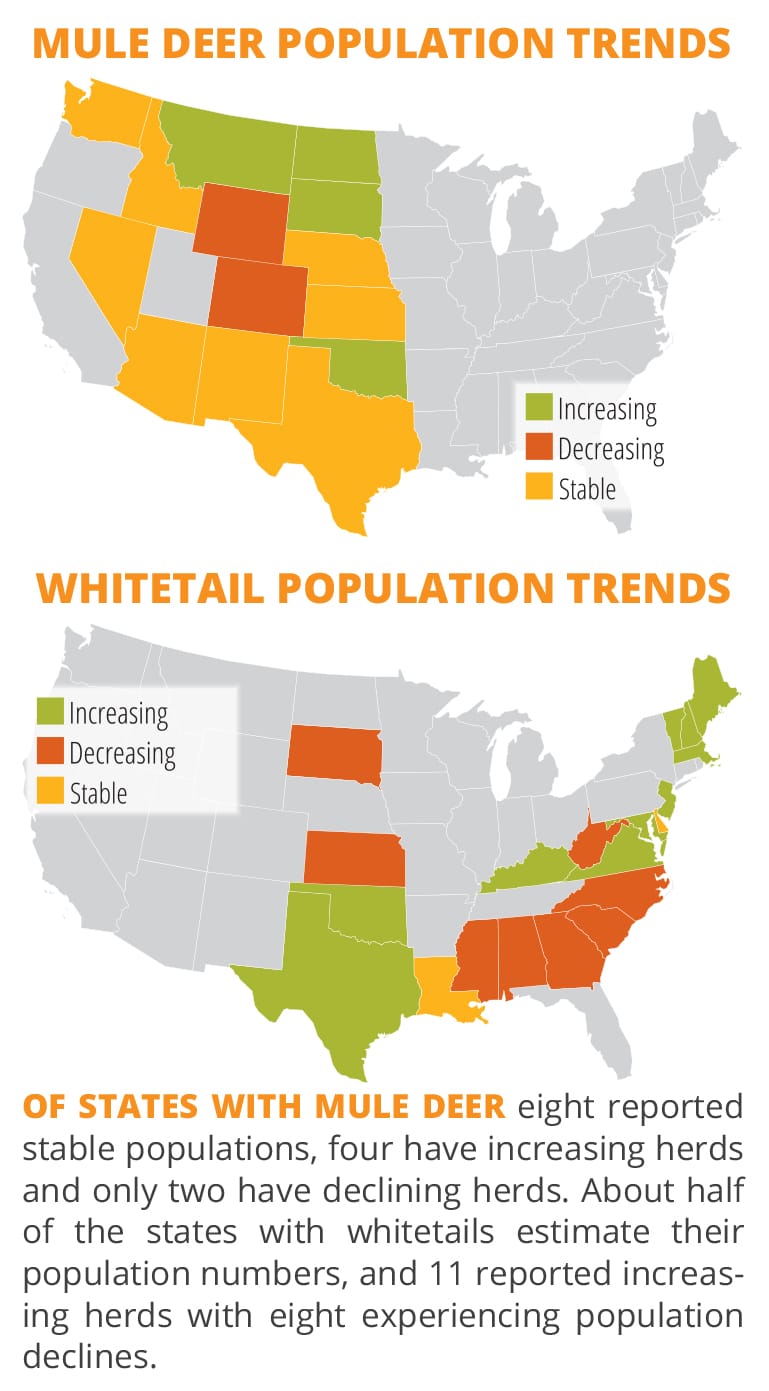
How Deer Populations Have Changed Over Time
Deer were not always so common. In the early 1900s, the white-tailed deer population dropped to under 500,000 because of overhunting and lost habitat. With better wildlife laws, hunting limits, and land management, numbers began to rise. By the 1950s, deer were returning to many areas.
Today, the population is much higher. In many states, deer are more common than at any point in the last 100 years. This growth has brought both benefits and new challenges.
Regional Differences In Deer Population
Deer numbers are not the same everywhere. Here’s a summary showing some of the highest and lowest populations by state.
| State | Estimated Deer Population | Main Species |
|---|---|---|
| Pennsylvania | 1.5 million | White-tailed |
| Texas | 4 million | White-tailed, Mule |
| Wisconsin | 1.6 million | White-tailed |
| California | 500,000 | Black-tailed, Mule |
| Florida | 700,000 | White-tailed, Key |
States like Texas and Wisconsin have large populations, while some western states have fewer deer due to deserts and mountains. Alaska also has unique deer species, but in smaller numbers.

Why Deer Population Matters
A large deer population can affect both nature and people. Here’s why it matters:
1. Ecosystem Balance
Too many deer can eat young trees and plants, making it hard for forests to grow. This also affects other animals that depend on the same plants.
2. Human Safety
Deer are often hit by cars, causing thousands of accidents each year. High numbers make these crashes more likely.
3. Agriculture Damage
Farmers sometimes lose crops to hungry deer, which can hurt their income.
4. Hunting And Recreation
Many people enjoy hunting deer for sport and food. Healthy populations support outdoor activities and local economies.
How Deer Populations Are Counted
Wildlife experts use several methods to estimate the deer population:
- Aerial surveys: Counting deer from planes or helicopters.
- Camera traps: Automatic cameras that capture deer moving through an area.
- Track counts: Looking for footprints in snow or mud.
- Hunter reports: Gathering data from people who hunt deer each season.
Each method has its limits. Weather, thick forest, and deer moving at night can make accurate counts difficult. That’s why population estimates are often a range, not an exact number.
Population Trends: Growth And Decline Factors
Several things can make the deer population go up or down:
| Growth Factors | Decline Factors |
|---|---|
| Less hunting pressure | Severe winters |
| Fewer natural predators | Disease outbreaks |
| More farmland and food sources | Habitat loss |
| Milder winters | Increased hunting |
For example, in places where wolves or mountain lions are rare, deer numbers grow faster. On the other hand, diseases like chronic wasting disease can lower populations quickly.
Non-obvious Insights About Deer Population
1. Suburban Growth Increases Deer Numbers
Many people think deer only live in forests, but suburban neighborhoods often have more deer than wild forests. Lawns, gardens, and parks give easy food, and hunting is not allowed in these areas.
2. Deer Affect Bird Populations
When too many deer eat young trees and plants, it changes the forest. This can make it harder for birds to nest and find food, so the impact goes beyond just deer.

Managing Deer Populations
States use hunting seasons, bag limits (how many deer a person can hunt), and special programs to keep populations healthy. In some areas, special hunts are held in parks or suburbs to reduce numbers and prevent accidents.
Wildlife managers also work to keep the balance between deer and their habitat. They may plant trees, restore wild areas, or help farmers protect crops.
The Future Of Deer In The Usa
The total deer population will keep changing with the seasons, climate, and human activity. As more people move to the countryside and suburbs, new challenges will appear. Disease, changing weather, and land use will all play a role.
Learning to live with deer means understanding their needs, the risks, and the benefits they bring. Careful management and good data will help keep both deer and people safe.
Frequently Asked Questions
How Many Deer Are There In The Usa?
There are about 30 to 35 million deer across the United States, mostly white-tailed deer.
Which State Has The Most Deer?
Texas leads with around 4 million deer, thanks to its large size and diverse habitats.
Why Did Deer Populations Drop In The Past?
Overhunting and habitat loss in the 1800s and early 1900s caused deer numbers to fall to very low levels.
How Do Experts Count Deer?
Experts use aerial surveys, camera traps, track counts, and hunter reports to estimate deer numbers.
Are High Deer Populations Dangerous?
Yes, high numbers can cause car accidents, crop damage, and harm to forests and other wildlife.
For more detailed information, you can visit the Wikipedia page about deer in the United States.
The story of deer population in the USA is one of recovery, growth, and new challenges. By staying informed and involved, everyone can play a part in keeping this important animal part of the American landscape for years to come.