Do Deer Attack Humans?
Many people see deer as gentle, shy animals that run away when humans get close. Their big eyes and calm appearance make them seem harmless. However, there are stories in the news and on social media about deer attacking people. This makes some people wonder: do deer really attack humans? And if so, why does it happen, and how can you stay safe?
Let’s look deeper into the truth about deer behavior, risks for humans, and what you should know if you spend time in areas where deer live.
Understanding Deer Behavior
Deer are usually timid animals. Their natural instinct is to avoid danger and run away from humans. Most of the time, if you see a deer in the wild, it will freeze for a moment and then run into the trees.
However, this is not the full story. Like many wild animals, deer can act differently depending on the situation. Understanding why they may attack is key to preventing problems.
Why Do Deer Sometimes Become Aggressive?
Deer are not usually aggressive, but there are times when they might attack or charge at humans. Common reasons include:
- Mating season (rut): In autumn, male deer (bucks) become more aggressive due to high testosterone. They fight other males and may see humans as threats.
- Protecting fawns: Female deer (does) with young babies can be very protective. If a human gets too close, the doe may attack to defend her fawn.
- Habituation: In places where people feed deer, the animals can lose their fear of humans. These deer may become bold, especially if food is involved.
- Injury or illness: A hurt or sick deer may not act normally. If cornered, it may try to defend itself.
- Mistaken identity: Sometimes, deer react to fast movements or loud noises, thinking a predator is near.
How Often Do Deer Attack Humans?
Many people worry after hearing about deer attacks. But how common are they really?
- In the United States, the number of reported deer attacks on people is very low—fewer than 10 per year according to several wildlife agencies.
- Most incidents happen during the fall rut or in spring when fawns are born.
- By comparison, the risk of being attacked by a dog or even a cow is much higher.
Still, when deer do attack, it can lead to serious injuries. Bucks have sharp antlers, and both males and females are strong enough to kick or trample.
Here’s a quick look at how deer attacks compare to other animal incidents:
| Animal | Annual Attacks on Humans (US) | Severity |
|---|---|---|
| Deer | Less than 10 | Usually moderate to severe |
| Dog | 4.5 million bites | Mild to severe |
| Cow | 20-22 fatal attacks | Severe, sometimes fatal |
While deer attacks are rare, they are not impossible. Knowing what to watch for can keep you safe.
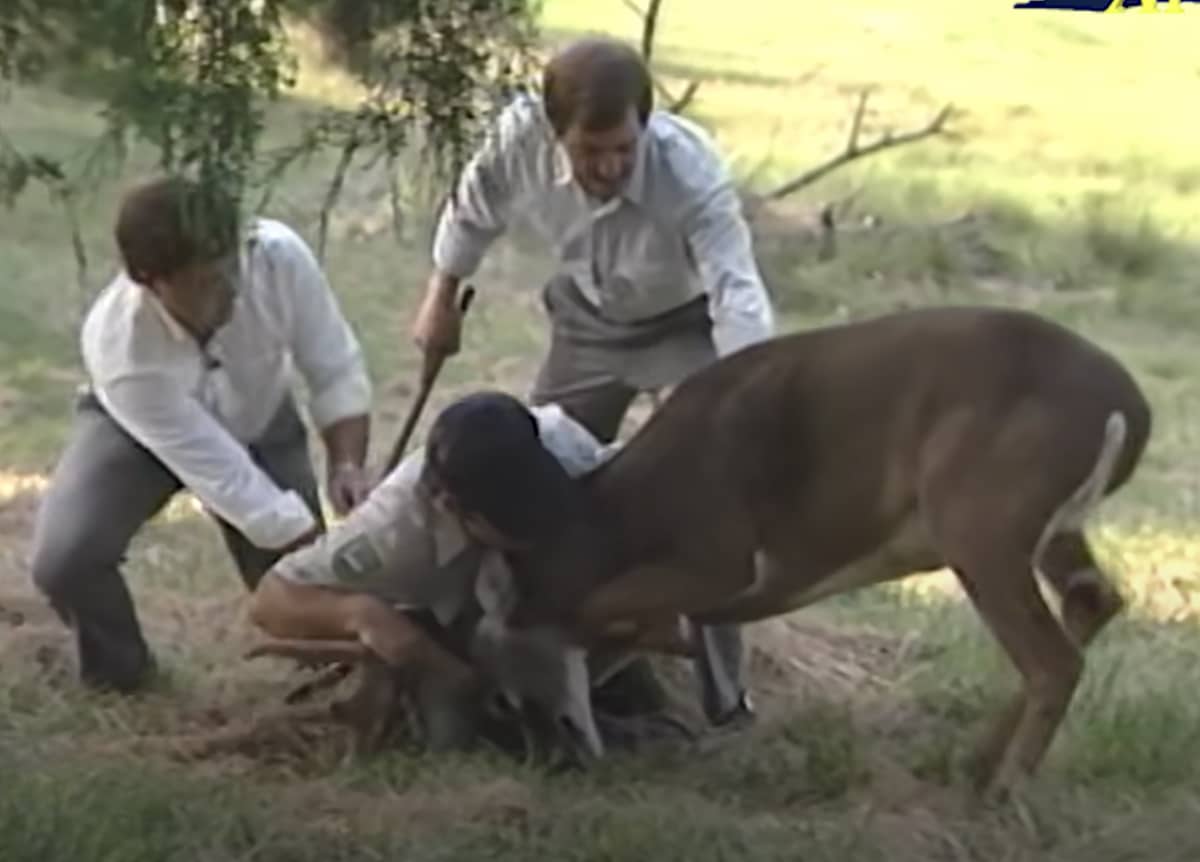
Real-life Examples Of Deer Attacks
Stories about deer attacking people do appear in the news, often during the fall. For example:
- In 2019, a man in Arkansas was killed by a deer he had shot and approached, which then attacked him with its antlers.
- In Japan’s Nara Park, where deer are tame and fed by tourists, over 200 people were treated for injuries in one year, mostly from deer pushing or biting to get food.
These cases show that while rare, deer can be dangerous in certain situations.
What To Do If You Encounter A Deer
Most encounters with deer end peacefully, but it’s smart to know what to do if you meet one up close.
Safety Tips
- Stay calm and quiet. Do not run or make sudden movements.
- Give the deer space. Move away slowly if you see a deer nearby, especially if it is a buck in autumn or a doe with a fawn in spring.
- Do not approach or feed deer. Feeding makes deer lose their natural fear of people.
- Watch for warning signs. If a deer lowers its head, stomps, or shows its side, it may be ready to charge.
- If charged, put something between you and the deer, like a tree or large object.
- If knocked down, curl into a ball and protect your head and neck.
Special Note On Bucks
During the rut, bucks can be unpredictable. Their antlers make them more dangerous. Always keep a safe distance and never try to photograph or approach a male deer at this time.
Why Do Some People Get Hurt By Deer?
Sometimes, people get too close for a better photo or try to feed deer by hand. These actions can lead to bites, kicks, or being knocked down. Another common mistake is not noticing signs that a deer is stressed or agitated.
Here are two insights beginners often miss:
- Habituated deer are riskier. In parks or neighborhoods where deer are used to people, they can become bolder and more likely to approach or attack for food.
- Antlerless deer can attack too. Many think only bucks are dangerous, but does can kick or charge if their young are threatened.
Deer-vehicle Collisions: An Overlooked Risk
While direct attacks are rare, the biggest danger deer pose to humans is on the road. In the US, about 1.5 million deer-vehicle collisions happen each year, causing around 200 deaths and thousands of injuries.
Here’s how deer-related injuries break down:
| Type of Incident | Estimated Annual Injuries | Estimated Annual Deaths |
|---|---|---|
| Direct deer attacks | Under 10 | Rare |
| Deer-vehicle collisions | 10,000+ | 200+ |
Most people are much more likely to be hurt in a car crash involving a deer than by being attacked.

How To Stay Safe Around Deer
You can avoid most problems with a few simple actions:
- Stay alert in deer areas, especially in autumn and spring.
- Drive slowly at dawn and dusk, when deer are most active.
- Teach children not to approach wild animals.
- Keep pets leashed if deer are nearby, as dogs can trigger defensive attacks.
For more tips on wildlife safety, the National Park Service offers practical advice.
Frequently Asked Questions
Do Deer Bite People?
Yes, deer can bite, especially if they are used to being fed by hand. Bites are usually not severe but can break the skin and cause infection.
Is It Safe To Feed Wild Deer?
No, feeding wild deer is not safe. It can make them lose their fear of humans and increase the risk of aggressive behavior and disease spread.
What Should I Do If A Deer Charges Me?
Try to put a large object, like a tree or bench, between you and the deer. If you cannot escape, curl into a ball and protect your head and neck.
Are Certain Types Of Deer More Dangerous?
Male deer (bucks), especially during the rut, are more likely to be aggressive. However, females with fawns can also attack if they feel threatened.
Can Pet Deer Be Dangerous?
Yes, even deer raised by people can become aggressive, especially during mating season. They are still wild animals at heart and can cause injuries.
Even though deer attacks on humans are rare, understanding their behavior and respecting their space is important. Most problems happen when people get too close, try to feed deer, or do not recognize warning signs. By staying alert and keeping a safe distance, you can enjoy watching deer without risk.
Remember, the most serious danger deer pose to humans is on the road, not in the woods. Stay safe and respect wildlife for a better experience for everyone.