If you enjoy spending time outdoors, you might come across animal tracks in the dirt or mud. For hunters, hikers, or wildlife watchers, knowing whether you’re seeing deer tracks or elk tracks can make your experience much richer. While both animals belong to the same family and their footprints may look similar at first, there are clear ways to tell them apart. Learning these details helps you understand what animals are in your area, improves your outdoor skills, and makes your trips more interesting.
Basic Anatomy Of Deer And Elk Tracks
The first step in telling the difference is understanding how the tracks are formed. Both deer and elk have cloven hooves, which means their hooves are split into two main parts. This creates a two-toed print with a pointed end. However, the size, shape, and extra marks around the hoof can vary a lot between these two animals.
Shape And Size Differences
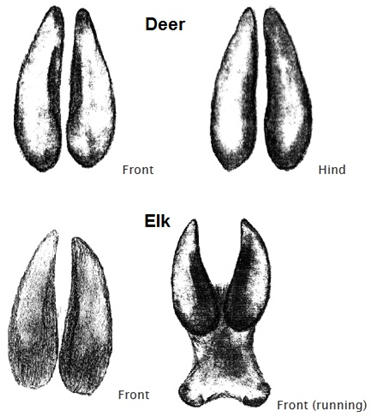
Deer tracks are usually narrow and heart-shaped, while elk tracks are larger and more rounded at the tips. Let’s compare the average sizes:
| Animal | Track Length | Track Width |
|---|---|---|
| Deer | 2–3 inches (5–7.5 cm) | 1–2.5 inches (2.5–6 cm) |
| Elk | 3.5–5 inches (9–13 cm) | 2.5–4.5 inches (6–11.5 cm) |
When you find a track, use a ruler or even your finger for scale. If the print is smaller than 3 inches, it’s most likely a deer. If it’s larger, you’re probably looking at elk.
Key Visual Clues For Track Identification
Track Shape
- Deer tracks: Pointed tips, narrow, and heart-shaped.
- Elk tracks: Blunter tips, more oval or rounded, wider overall.
Track Depth
Elk are much heavier than deer. Their tracks press deeper into soft ground. If the track is deep and wide, with clear edges, that’s a sign of an elk.
Stride And Straddle
How the animal walks can also give you clues.
| Animal | Average Stride Length | Average Straddle Width |
|---|---|---|
| Deer | 18–24 inches (45–60 cm) | 8–10 inches (20–25 cm) |
| Elk | 30–45 inches (76–115 cm) | 14–18 inches (36–46 cm) |
A longer stride and wider straddle usually means elk, not deer.
Dewclaw Marks
Both species have dewclaws—small, extra toes above the main hoof. These sometimes show in the track, especially in deep mud or snow.
- Deer dewclaws: Usually closer to the main hoof, may not always show.
- Elk dewclaws: Set farther back, and more likely to appear in tracks, especially from heavier males.
Extra Details That Beginners Miss
Most guides mention size and shape, but here are two things many people overlook:
- Track Placement: Elk often walk in single file, especially through snow or thick brush. Deer move more randomly and their tracks might cross over each other.
- Track Wear: In areas with lots of animal activity, older tracks get worn and muddy. Look for the freshest, cleanest prints to make your identification.
Seasonal And Regional Clues
Where and when you find the track matters, too. Elk usually live at higher elevations in summer but come down in winter. If you’re in lower valleys during cold months and see large tracks, elk might be migrating through.
In contrast, deer are common in forests, fields, and even close to towns. Their tracks often appear near the edge of woods or in gardens.
Common Mistakes In Track Identification
Many beginners mix up large deer tracks with smaller elk, or vice versa. Here’s how to avoid that:
- Check for group tracks: Elk often move in herds, so you may see many large tracks close together.
- Compare several prints: One odd print can mislead you. Study a few in a row to be sure.
- Mind the substrate: Tracks on snow or mud look different than on dry soil. Snow can make tracks look bigger, while dry soil makes them harder to see.
Practical Examples In The Field
Imagine you’re hiking in the Rockies and spot a set of wide, deep, 4-inch long tracks in soft ground, moving in a straight line. The stride between prints is nearly three feet. These are classic signs of elk.
Now, picture a narrow, pointed, 2.5-inch track beside a small stream. The prints are lighter, stride is shorter, and you see only two prints together. This is almost certainly a deer.

Quick Reference Table
For fast identification, keep these key features in mind:
| Feature | Deer | Elk |
|---|---|---|
| Track Length | 2–3 in (5–7.5 cm) | 3.5–5 in (9–13 cm) |
| Track Shape | Narrow, pointed | Wide, rounded |
| Dewclaw Mark | Close to hoof, rare | Farther back, common |
| Stride | Short (18–24 in) | Long (30–45 in) |
| Track Depth | Shallow | Deep |
Why Identifying Tracks Matters
Knowing the difference is more than just a fun skill. For hunters, it means following the right animal. For campers and hikers, it’s about safety—elk can be unpredictable during mating season. For anyone interested in nature, track identification adds another layer of excitement to your outdoor adventures.
Frequently Asked Questions
How Can I Tell Deer Tracks From Elk Tracks If The Ground Is Hard?
On hard or rocky ground, prints may be faint or incomplete. Focus on the overall size and the spacing between tracks. Elk tracks will still be larger and farther apart than deer tracks.
Do Elk And Deer Ever Leave Similar Tracks?
Very rarely. A large buck might leave a print close in size to a small elk, but usually, the overall shape and stride will still be different. Look for other clues like droppings or hair nearby.
What Time Of Year Are Elk Tracks Easiest To Find?
Late fall and early winter are best, as elk often move to lower elevations and leave clearer tracks in snow or mud.
Can I Use Technology To Help Identify Tracks?
Yes, there are apps and online guides that show images and compare tracks. For more details, visit resources like Wikipedia.
Is It Okay To Follow Fresh Elk Or Deer Tracks In The Wild?
Yes, but always keep a safe distance from wild animals. Never approach elk during calving or mating season, as they can be aggressive.
Learning to read tracks is like learning a new language. With practice, you’ll quickly spot the differences between deer tracks and elk tracks. The next time you’re outdoors, take a closer look at the ground—you might be surprised at what you find!