How To Spot Deer Tracks?
Walking through a quiet forest or across a muddy field, you might notice strange shapes in the ground. Some look like marks from boots, others from birds. But then you see a track that’s split at the front, almost heart-shaped. You wonder, could this be a deer? Learning how to spot deer tracks is a useful skill for hikers, hunters, and wildlife lovers. It helps you understand animal movement, find good observation spots, and connect with nature on a deeper level. This guide will teach you everything you need to know, even if you’re a total beginner.
What Do Deer Tracks Look Like?
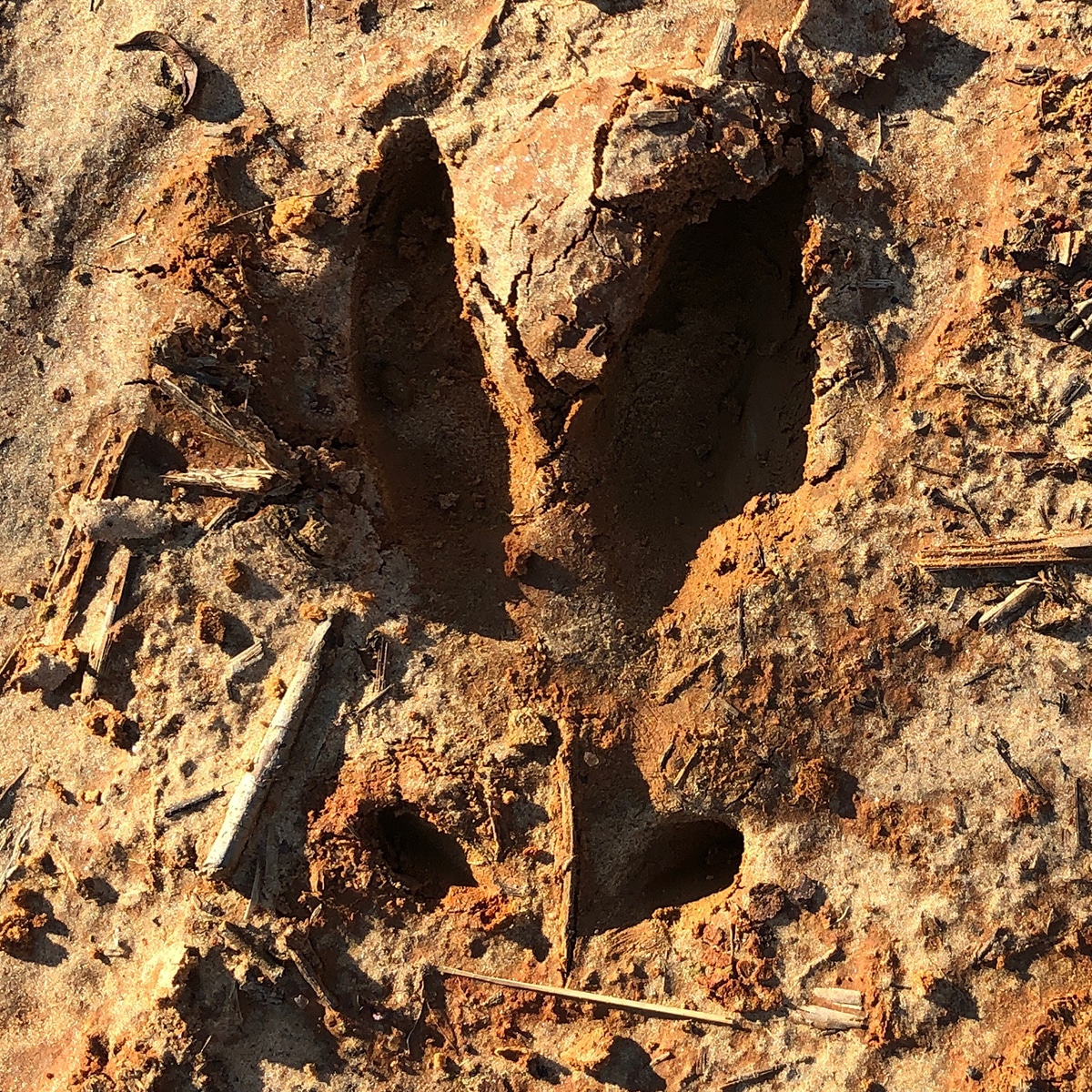
The first step is knowing what to look for. Deer tracks are unique compared to other animals. They show two long, narrow toes that form a pointed heart shape.
Here’s a simple comparison to help you:
| Animal | Track Shape | Track Size (Length x Width) |
|---|---|---|
| Deer | Heart-shaped, two toes | 5–8 cm x 3–6 cm |
| Dog | Round, four toes | 4–7 cm x 3–5 cm |
| Rabbit | Oval, four toes | 3–5 cm x 2–4 cm |
Key features of deer tracks:
- Two pointed toes, forming a “V” or heart shape.
- No claws (deer have hooves, not claws).
- Track points in the direction the deer is moving.
The front tracks can be a bit larger than the back ones, especially in adult males, known as bucks.
Best Places And Times To Find Deer Tracks
Finding tracks is easier in the right conditions. Deer tracks show up best in soft ground like mud, wet sand, or fresh snow. After rain or during early morning, the earth is damp and makes clearer prints.
Look for tracks in these places:
- Forest trails – Deer use paths through thick woods.
- Field edges – They move between forests and open fields to feed.
- Near water – Streams, ponds, and lakes attract deer for drinking.
After snow, tracks are easy to see, but be quick. Sunlight can melt the edges and make them hard to read.
How To Identify Freshness Of Deer Tracks
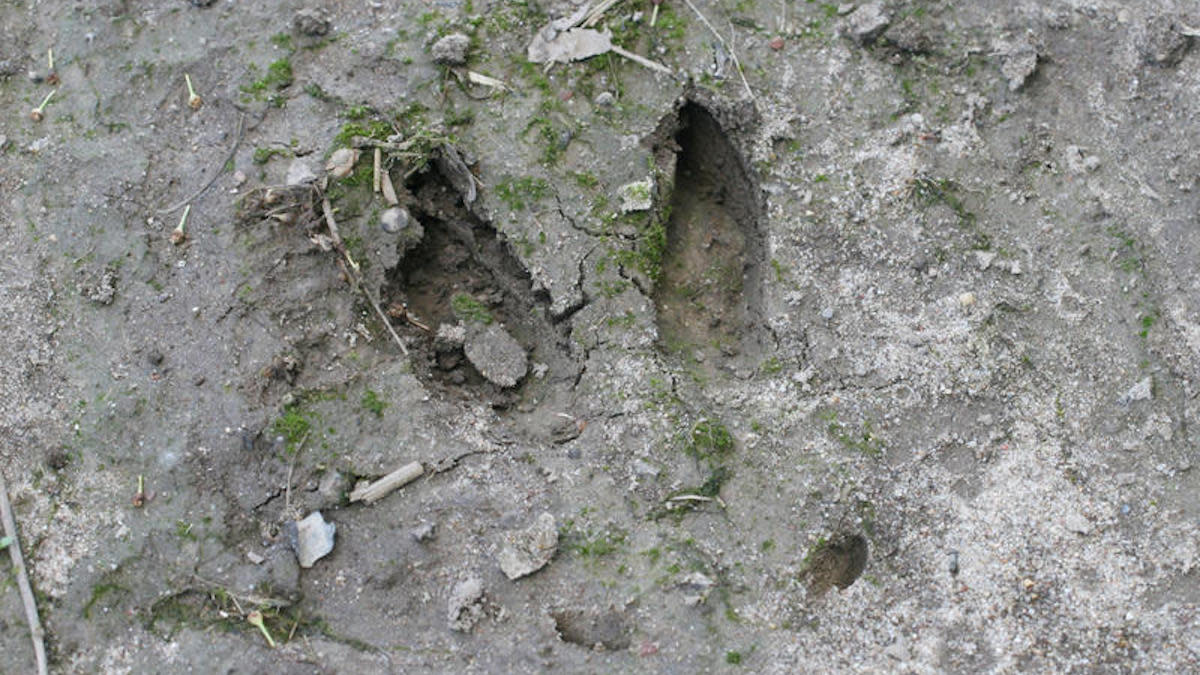
Knowing if a track is new or old helps you understand if deer are nearby. Fresh tracks are sharper and more detailed.
Here’s how to tell:
| Track Feature | Fresh Track | Old Track |
|---|---|---|
| Edges | Crisp, sharp lines | Rounded, weathered |
| Moisture | Wet, dark soil | Dry, faded |
| Details | Clear hoof marks | Blurry, filled with debris |
Sometimes, you may spot dew or tiny bits of mud around a fresh track. If the print is full of leaves or looks washed out, it’s old.
Difference Between Buck And Doe Tracks
It’s not always easy, but sometimes you can guess if the track belongs to a buck or doe (female deer).
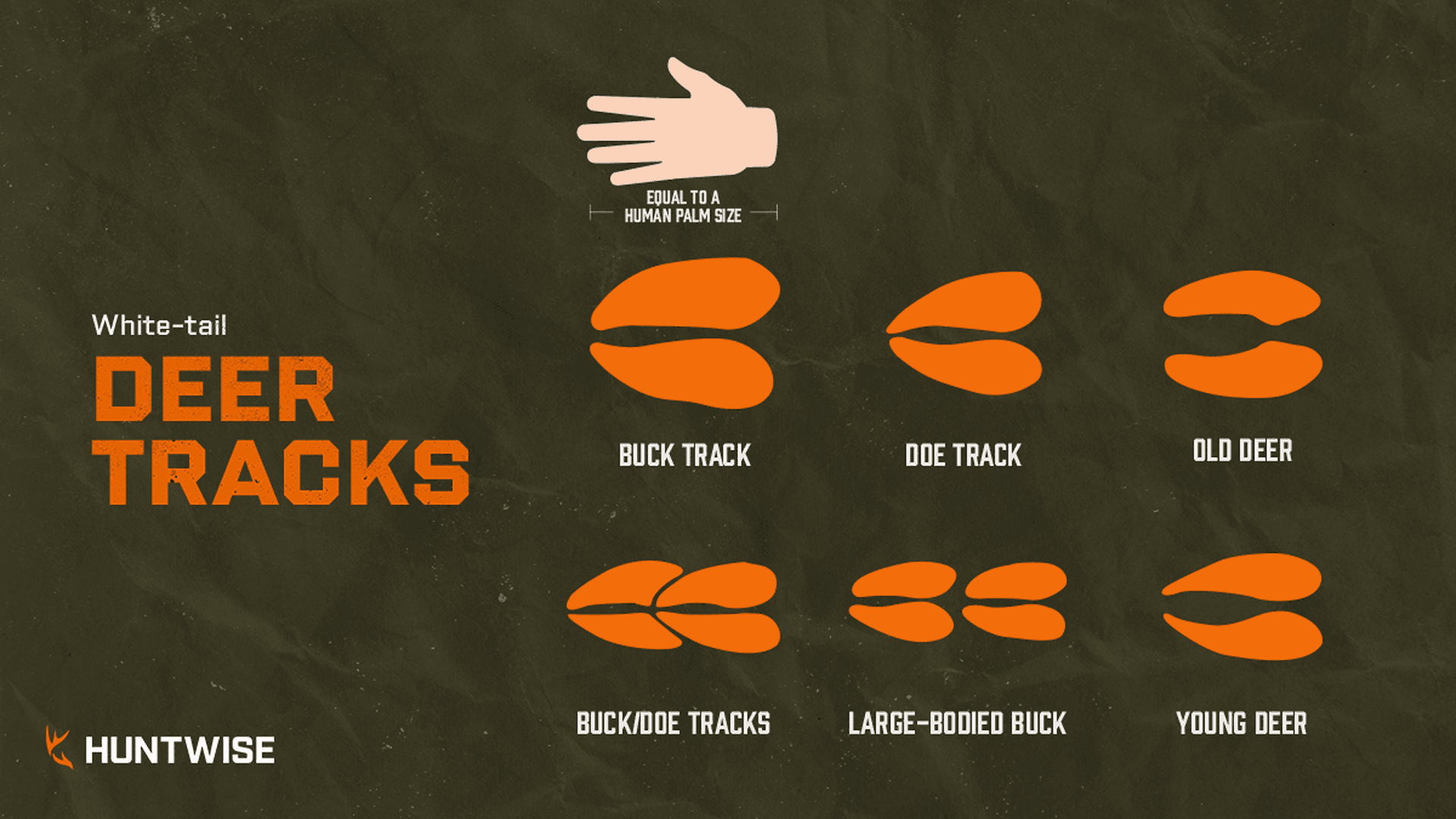
Bucks are heavier, so their tracks are usually wider, deeper, and may have a rounder shape at the back. Does leave smaller, lighter prints.
Here’s a quick guide:
- Buck tracks: 7–8 cm long, 5–6 cm wide, deeper in soft ground.
- Doe tracks: 5–6 cm long, 3–4 cm wide, lighter impression.
But remember, track size can also depend on the deer’s age and the ground type. A large doe might leave a print similar to a small buck.
Recognizing Gait And Movement Patterns
Deer walk, trot, and run in different ways. Their tracks tell a story about their movement.
- Walking: Tracks are in a straight line, each about 30–45 cm apart.
- Trotting: Prints are farther apart (45–65 cm), and may zigzag.
- Running: Tracks are spread out, sometimes over 1 meter apart, and the soil may be kicked up.
If you see deep impressions with dirt thrown backward, it means the deer was running, probably startled.
Mistakes Beginners Make When Spotting Deer Tracks
Many beginners misread tracks. Here are some common errors and how to avoid them:
- Mistaking dog tracks for deer: Dog tracks have claw marks; deer do not.
- Ignoring size differences: Young deer (fawns) have tiny prints, much smaller than adults.
- Missing other signs: Look for broken branches, droppings, or deer beds nearby.
- Not checking track direction: Deer tracks point forward; make sure you know which way the animal moved.
A clever trick: use a small stick or your finger to gently outline the track. This helps you see its shape and size better.
Non-obvious Tips For Successful Tracking
Some insights are not obvious, even to people who’ve spent time outdoors.
- Track clusters: If you see many tracks together, deer may be feeding or bedding in that area.
- Overlapping tracks: In winter, deer often follow the same paths, creating overlapping prints. Focus on the sharpest, freshest one.
- Sunlight angle: In early morning or late afternoon, low sunlight casts shadows, making tracks easier to see.
Watching for extra clues, like tiny hoof slips on slopes or patterns near obstacles, can help you learn even more about deer behavior.
Why Spotting Deer Tracks Matters
Understanding deer tracks isn’t just for hunters. It’s a key skill for anyone who wants to enjoy wildlife observation or learn about animal habits. When you follow tracks, you become more aware of your environment and notice details you’d normally miss. It’s a great way to teach kids about nature and even helps you spend more time outdoors.
For more in-depth tracking information, the Wikipedia page on tracking gives a historical perspective.
Frequently Asked Questions
What Is The Easiest Way To Tell Deer Tracks From Dog Tracks?
Look for claw marks. Dog tracks almost always show claws, while deer tracks do not. Deer tracks are heart-shaped with two toes, and the tip points in the direction of travel.
How Can I Tell How Old A Deer Track Is?
Fresh tracks have sharp edges and are usually moist or dark. Older tracks look faded, have rounded edges, and may be filled with debris like leaves or sand.
Can I Use Deer Tracks To Find Where Deer Sleep?
Yes, look for clusters of tracks in thick grass or brush. If you see many prints together, along with flattened grass, it’s likely a deer bedding area.
Do Deer Tracks Change With The Season?
Track shape stays the same, but track visibility changes. In snow or mud, tracks are clearer. In dry seasons, they may be faint or hard to see.
What Should I Do If I Find Fresh Deer Tracks?
Move quietly and slowly. Look for other signs, like broken twigs or fresh droppings. You may spot a deer nearby if you are careful and patient.
Spotting deer tracks takes practice, but with careful observation and these tips, you’ll soon be able to read the ground like a pro. Enjoy your next walk in the wild, and remember—the ground tells stories if you know how to look.