
Every year, thousands of people travel to North America’s forests and mountains, hoping to catch a glimpse of one of the continent’s most impressive animals: the elk. Also known as wapiti, elk are famous for their impressive size, towering antlers, and majestic presence. But exactly how big do elk get? The answer depends on many factors, including their subspecies, age, sex, and even where they live. Understanding the true size of elk can help hunters, wildlife enthusiasts, and anyone curious about nature appreciate just how remarkable these animals are.
Elk Basics: A Quick Overview
Elk are one of the largest members of the deer family (Cervidae), second only to the moose in North America. Native to both North America and parts of Asia, elk have adapted to a variety of environments, from mountain forests to open plains. Their large bodies, thick necks, and impressive antlers make them easy to recognize, but many people underestimate just how big these animals can grow.
Average Size Of Adult Elk
Body Length
Adult elk are long and sturdy animals. On average, an adult male (bull) elk measures between 7 to 10 feet (2.1 to 3 meters) from nose to tail. Females (cows) are a bit smaller, usually ranging from 6.5 to 8 feet (2 to 2.5 meters) in body length.
Height At The Shoulder
Elk are tall creatures, with their shoulders standing well above most humans’ waists. Bulls typically stand 4 to 5 feet (1.2 to 1.5 meters) at the shoulder, while cows average between 3.5 and 4.5 feet (1.1 to 1.35 meters).
Weight
Weight is where elk truly impress. A mature bull elk can weigh anywhere from 600 to 1,100 pounds (270 to 500 kg), with the largest bulls sometimes reaching over 1,200 pounds (545 kg). Cows are lighter, averaging 450 to 650 pounds (200 to 295 kg).
Below is a comparison of average size between bull and cow elk:
| Characteristic | Bull (Male) | Cow (Female) |
|---|---|---|
| Body Length | 7–10 ft (2.1–3 m) | 6.5–8 ft (2–2.5 m) |
| Shoulder Height | 4–5 ft (1.2–1.5 m) | 3.5–4.5 ft (1.1–1.35 m) |
| Weight | 600–1,100 lbs (270–500 kg) | 450–650 lbs (200–295 kg) |
Elk Subspecies And Their Sizes
Not all elk are the same size. In fact, there are several subspecies of elk, and each has its own average size range. Here are the most notable subspecies:
1. Rocky Mountain Elk
The most common elk in the western United States. Bulls often weigh between 700 and 1,100 pounds (318 to 500 kg).
2. Roosevelt Elk
Found mainly in the Pacific Northwest, especially in Washington, Oregon, and northern California. This is the largest elk subspecies, with mature bulls weighing up to 1,200 pounds (545 kg) or more.
3. Tule Elk
Native to California, this is the smallest elk subspecies. Adult bulls usually weigh 400 to 700 pounds (180 to 318 kg).
4. Manitoban Elk
Found in the Canadian Prairies and northern United States. Bulls typically weigh 700 to 1,000 pounds (318 to 454 kg).
5. Eastern Elk (extinct)
Once the largest elk in North America, adult bulls may have reached 1,300 pounds (590 kg). Unfortunately, this subspecies disappeared in the late 1800s.
6. Alaskan Elk (introduced)
Elk populations in Alaska descend from Roosevelt elk, and mature bulls can rival their Pacific Northwest cousins in size.
Here’s a side-by-side comparison of the main subspecies:
| Subspecies | Average Bull Weight (lbs/kg) | Range |
|---|---|---|
| Rocky Mountain Elk | 700–1,100 / 318–500 | Western US, Canada |
| Roosevelt Elk | 850–1,200 / 386–545 | Pacific Northwest |
| Tule Elk | 400–700 / 180–318 | California |
| Manitoban Elk | 700–1,000 / 318–454 | Canadian Prairies, N. US |
Insight: Many people are surprised to learn that Roosevelt elk can weigh almost twice as much as Tule elk, showing how much habitat and genetics can influence elk size.
Antler Size: A Symbol Of Power
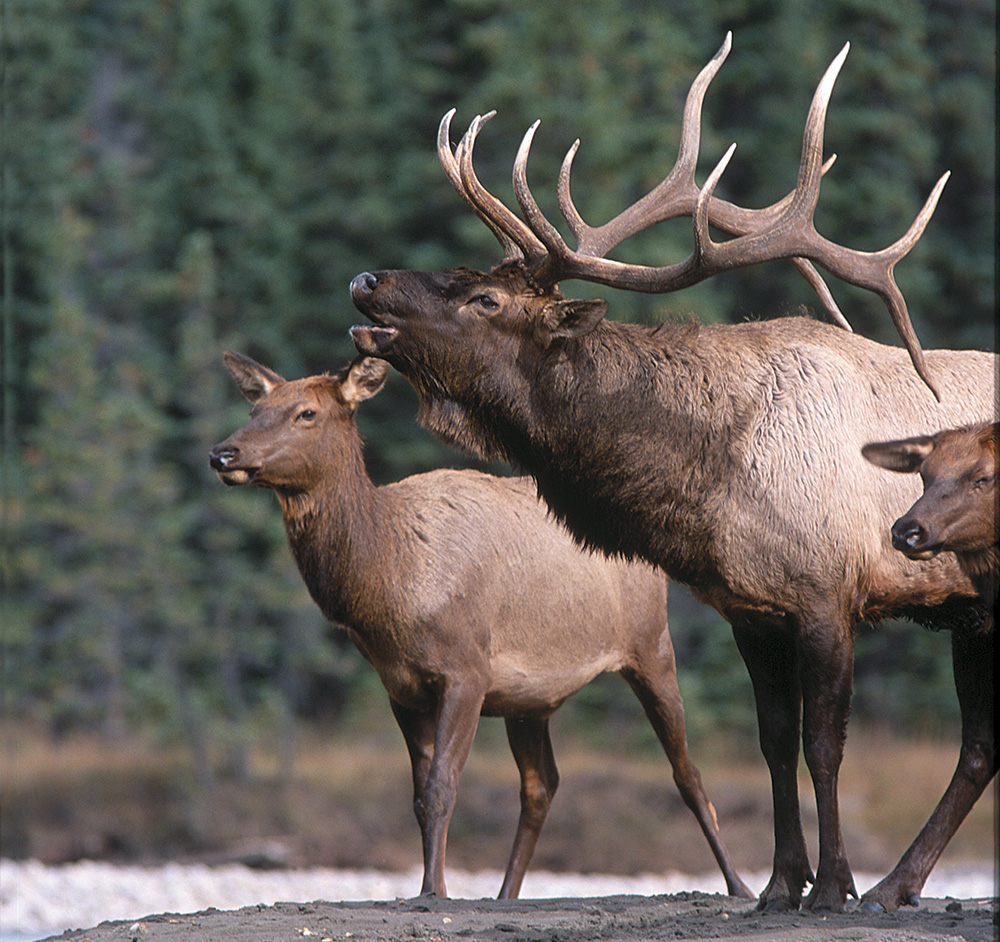
One of the most iconic features of the elk is its impressive antlers. Only bulls grow antlers, and these antlers can reach amazing sizes:
- Length: Mature bull elk antlers are often 3 to 4 feet (90–120 cm) long from base to tip. Exceptional antlers can be over 5 feet (1.5 meters).
- Spread: The distance between the farthest points of the antlers can be up to 5 feet (1.5 meters).
- Weight: A full set of antlers can weigh 40 pounds (18 kg) or more.
Antlers are shed and regrown each year. The size depends on age, genetics, and nutrition. Young bulls have small “spikes,” while prime-age bulls (6–10 years old) grow the largest, most branched racks.
Non-obvious insight: Elk antlers grow incredibly fast—sometimes more than an inch per day in the spring and early summer!
Growth Stages: From Calf To Mature Bull
Elk start life much smaller than their adult size. Here’s how they grow:
- Newborn calves weigh about 30–40 pounds (14–18 kg).
- By six months, calves can reach 200–250 pounds (90–113 kg).
- At 2–3 years, young bulls may weigh 400–600 pounds (180–270 kg), and their antlers are still developing.
- Mature bulls (5–8 years) reach full size and antler potential.
Female elk grow quickly but stop sooner, reaching adult size by age 3 or 4.
What Factors Affect How Big Elk Get?
Genetics
Genetics play a major role in determining elk size. Some herds, especially those with large, healthy populations and little inbreeding, produce bigger animals.
Nutrition
Elk living in areas with rich food sources—such as lush meadows and forests—grow larger. Poor nutrition can stunt both body and antler growth.
Habitat
Elk in colder, northern regions often grow larger to help conserve heat, while those in warmer or drier areas tend to be smaller.
Age
Older bulls are usually bigger, but after a certain age (about 10–12 years), they may lose body mass as they age.
Population Density
High numbers of elk in one area can lead to competition for food, which limits growth. Well-managed herds with balanced numbers tend to have larger individuals.
Practical tip: If you want to see or photograph the largest elk, visit national parks or preserves with good nutrition and low hunting pressure, like Olympic National Park in Washington.
Elk Vs. Other Large Animals
How do elk compare to other big animals in North America? Here’s a quick look:
| Animal | Average Adult Weight | Height at Shoulder |
|---|---|---|
| Moose | 900–1,600 lbs (410–725 kg) | 5–7 ft (1.5–2.1 m) |
| Elk | 600–1,100 lbs (270–500 kg) | 4–5 ft (1.2–1.5 m) |
| White-tailed Deer | 100–300 lbs (45–136 kg) | 2.5–3.5 ft (0.76–1.07 m) |
| Mule Deer | 120–330 lbs (54–150 kg) | 3–3.5 ft (0.9–1.07 m) |
| American Bison | 900–2,200 lbs (410–1,000 kg) | 5–6.5 ft (1.5–2 m) |
Key insight: Elk are much larger than most deer but smaller than moose and bison.
Record-breaking Elk
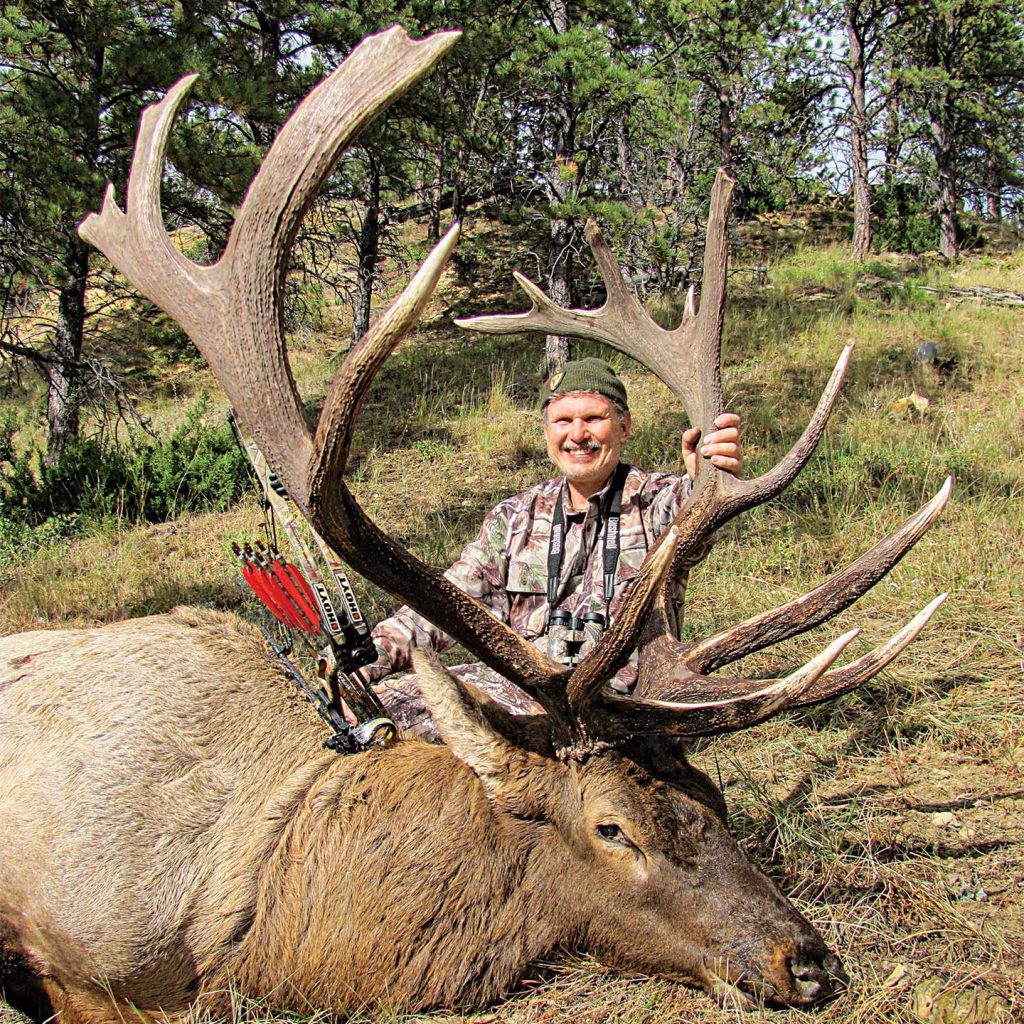
Some elk break all the size records. The largest wild bull elk ever recorded weighed more than 1,300 pounds (590 kg). The record for the largest set of antlers goes to a bull whose antlers measured over 60 inches (152 cm) in main beam length and had a spread of over 60 inches.
- Boone & Crockett Club (the main record-keeping organization for North American big game) has detailed records of trophy elk taken by hunters.
- The “Spider Bull” from Utah, taken in 2008, is considered one of the biggest elk ever, with a score of 478 5/8 in the typical category.
Why Do Elk Need To Be So Big?
There are good reasons for elk’s large size:
- Survival in winter: Large bodies help elk survive cold temperatures and deep snow.
- Defense against predators: Big size and antlers deter wolves, bears, and mountain lions.
- Mating displays: Bulls use their size and antlers to compete for females during the rut.
Non-obvious insight: Elk size is not just about looking impressive; it’s an adaptation to harsh environments and predator pressure.
Common Mistakes About Elk Size
- Confusing elk with moose: Some people think elk are as big as moose, but moose are larger and have different antlers.
- Believing all elk are giants: While bulls are huge, cows and young elk are much smaller.
- Thinking all elk are the same size: Subspecies and local environments make a big difference.
Spotting Big Elk: Where And When?
If you want to see the biggest elk, the best places are:
- National parks in the Rocky Mountains and the Pacific Northwest.
- Early fall (September–October) during the rut, when bulls are most visible and active.
- Look for open meadows at dawn or dusk, when elk come out to feed.
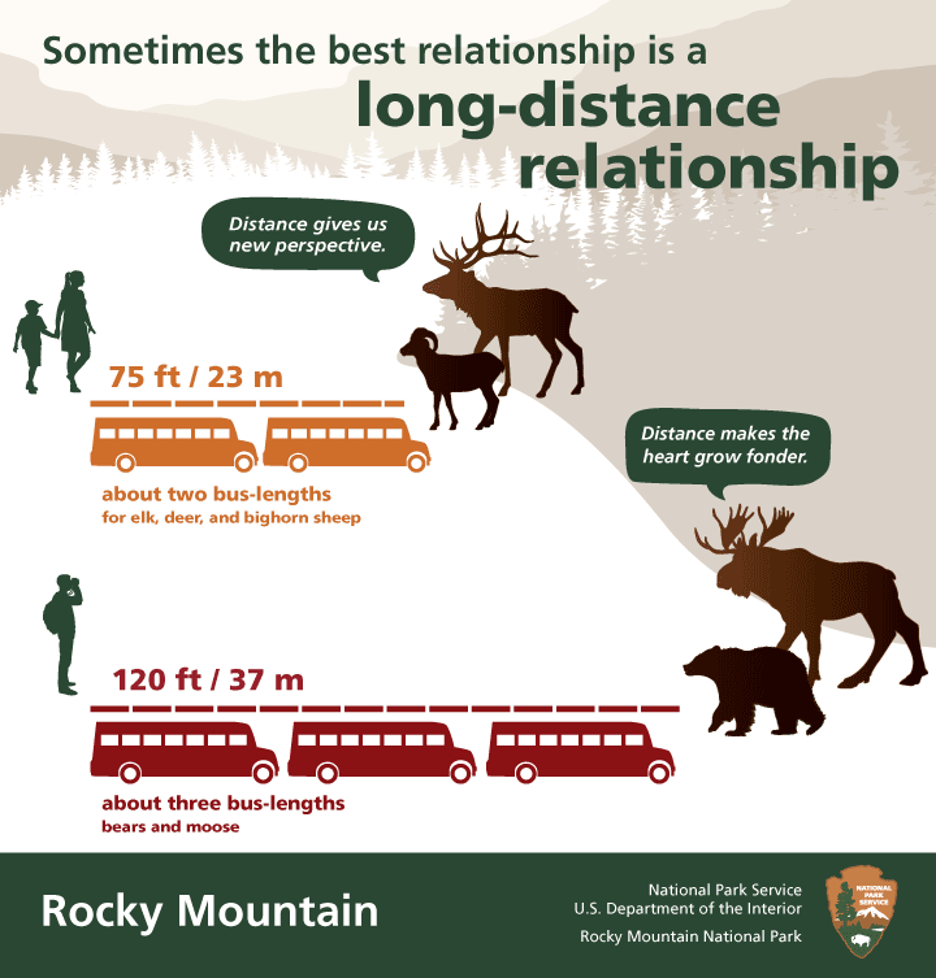
Tip: Bring binoculars and keep a safe distance. Bulls can be aggressive during mating season.
Elk Size And Human Interaction
Understanding elk size is important for safety and conservation. In areas where elk and humans live close together, accidents can happen, especially on roads or in parks. A collision with a 1,000-pound animal can be deadly for both elk and driver.
Hunters and wildlife managers also use size data to monitor herd health and set hunting regulations. Healthy, well-fed elk populations are a sign of a well-managed ecosystem.
For more detailed information, you can visit the Wikipedia page on elk.
Frequently Asked Questions
How Big Is The Biggest Elk Ever Recorded?
The largest wild elk on record weighed over 1,300 pounds (590 kg), and the largest antlers had a spread of more than 60 inches. These record-breaking elk are rare and usually found in areas with excellent food and little hunting pressure.
How Much Do Elk Calves Weigh At Birth?
Elk calves are surprisingly small at birth, weighing just 30 to 40 pounds (14–18 kg). They grow quickly, especially in their first year.
Do Female Elk Have Antlers?
No, only male elk (bulls) grow antlers. Female elk (cows) do not have antlers at any stage of life.
What Is The Difference In Size Between Elk And Moose?
Moose are bigger than elk. An average adult moose can weigh up to 1,600 pounds (725 kg) and stand 5 to 7 feet (1.5–2.1 m) at the shoulder. Elk are large, but not as massive as moose.
Where Can I See The Largest Elk In The Wild?
The biggest elk are usually found in the Pacific Northwest (Roosevelt elk) and the Rocky Mountains. National parks like Yellowstone and Olympic National Park are great places to see them, especially during the fall mating season.
Elk are not just big—they are a symbol of wild beauty and adaptability. Whether you see one from a distance or up close, their size and presence are unforgettable. If you spend time in elk country, remember to respect their space, and you’ll walk away with a deeper appreciation for these giants of the forest.