Every autumn, if you listen closely in the forests and mountains of North America, you might hear a loud, haunting sound called a bugle. This is the call of the elk—a signal that something dramatic is happening in the wild.
But what is really going on? Do elk actually fight each other? And if so, why do these battles happen? Many people are surprised to learn that elk are not just peaceful grazers. In fact, their world is full of competition, especially when it comes to finding a mate.
Understanding elk fights gives us a window into their behavior, survival strategies, and even the balance of nature in their habitats.
Why Do Elk Fight Each Other?
The main reason elk fight each other is for mating rights. Every year, during the rut (the mating season from September to October), male elk—called bulls—compete fiercely to control groups of females (cows). The strongest bulls get to mate and pass on their genes.
But elk don’t fight all year long. Most fighting happens only during rut. Outside this period, bulls may be more tolerant or even gather in small groups called bachelor herds. When rut arrives, hormones rise, and the calm disappears.
Another important reason for fighting is to establish dominance. Bulls want to show strength and fitness. The bigger and healthier the bull, the better his chances. Dominance is not just about winning a mate. It can affect access to food, space, and safety within the herd.
What Does An Elk Fight Look Like?
When two bulls decide to challenge each other, the process is both impressive and dangerous. Elk fights usually follow a clear pattern:
- Displays and Threats: First, bulls show off their size. They raise their heads, bugle loudly, and rub their antlers on trees. This is to warn others and avoid unnecessary injury.
- Parallel Walking: Bulls often walk side by side, sizing each other up. This helps both animals judge if the fight is worth the risk.
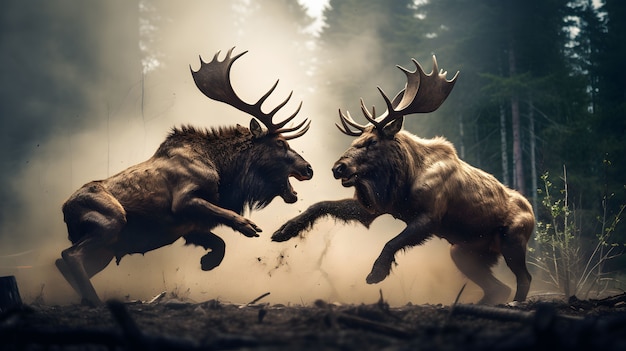
- Antler Clash: If neither backs down, they lock antlers and push with all their strength. This can last a few seconds or several minutes.
- Winner and Loser: The weaker bull gives up and runs away, or sometimes gets injured. The winner gets the right to stay with the females.
Bulls can weigh over 700 pounds (320 kg), and their antlers can span up to 4 feet (1. 2 meters) across. When these animals collide, the sound echoes through the forest, and the power is incredible.
How Often Do Elk Fights Turn Deadly?
Elk fights are serious, but most do not end in death. Injuries are common—broken antlers, cuts, and bruises—but elk usually avoid fatal blows. They often use fights as a test of strength, not to kill their opponent.
However, accidents do happen. Sometimes, bulls get their antlers tangled and cannot separate. If this happens, both animals can die from exhaustion or predation. In rare cases, a bull may suffer a deep wound and not survive.
Research shows that less than 1% of elk fights result in death, but injuries can affect a bull’s ability to survive winter. Losing a fight can mean less access to food or higher risk from predators.
Do All Male Elk Fight?
Not every male elk is involved in these battles. Only mature bulls with large antlers usually fight for dominance. Younger males, known as spikes or satellite bulls, often watch from a distance. They may try to sneak a chance to mate while the larger bulls are distracted.
This is a smart strategy. By avoiding the main fights, young bulls can survive to become strong enough for future years. In some cases, a group of satellite bulls may even team up to challenge the dominant bull if he shows signs of weakness.
The Role Of Antlers In Elk Fights
Antlers are more than just weapons. They are also a display of health and age. Growing large, symmetrical antlers takes a lot of energy and nutrients. Only healthy bulls can do this. The size and shape of antlers help other elk judge the strength of a possible opponent.
Antlers are shed and regrown every year. Each spring, bulls grow new antlers covered in soft velvet. By late summer, the velvet falls off, revealing hard, polished antlers for rut. After mating season, the antlers fall off, and the cycle starts again.
Here’s a comparison of antler size by age group:
| Age of Bull Elk | Average Antler Points | Antler Spread |
|---|---|---|
| 1-2 years | 2-4 points | Up to 1 foot (30 cm) |
| 3-4 years | 4-8 points | 2-3 feet (60-90 cm) |
| 5+ years | 8-12 points | 3-4 feet (90-120 cm) |
Bulls with broken or small antlers are less likely to win fights or attract females. That is why antler condition is so important during the rut.
Do Female Elk Fight?
While female elk do not fight with antlers, they do show social behaviors to establish rank. Cows may use kicks, bites, or body shoves to control access to food or defend their young. But these conflicts are less dangerous and usually end quickly.
Cows form groups with their calves, and a clear pecking order helps keep peace. Serious fights among females are rare.
How Do Elk Avoid Injuries During Fights?
Elk have developed many ways to reduce the risk of serious injury:
- Displays before fighting: Many conflicts end before a fight starts, thanks to visual and vocal warnings.
- Body language: Bulls show aggression by lowering their heads, bugling, and pawing the ground.
- Backing down: A weaker bull can choose to retreat. This is not seen as weakness but as a way to avoid damage.
- Antler locking: The shape of antlers helps spread force and prevent deep wounds.
Still, elk fighting is always risky. Sometimes, a bull pushes too hard and suffers a broken leg or antler. These injuries can make survival through winter much harder.
Elk Fights And The Ecosystem
Elk battles do more than decide who gets to mate. They help keep herds healthy. Only the fittest bulls pass on their genes, making the population stronger over time. This is called natural selection.
Fights also shape the environment. Bulls rub their antlers on trees and shrubs, breaking branches and opening up space for new plants to grow. This can change the look of forests and meadows. In this way, elk behavior supports a balanced ecosystem.
Here is a look at how elk fighting impacts the environment:
| Elk Behavior | Environmental Effect |
|---|---|
| Antler rubbing | Removes bark, shapes plant growth |
| Trampling during fights | Compacts soil, creates paths |
| Feeding patterns | Influences plant communities |
How Do Scientists Study Elk Fights?
Researchers use a mix of field observation, camera traps, and GPS collars to study elk. Scientists record the number, length, and outcome of fights. They also collect data on injuries and survival rates.
By following individual bulls over many years, researchers can see how fighting ability changes with age or health. DNA studies show which bulls father the most calves, helping scientists understand how elk populations evolve.
One interesting finding is that bulls with more fighting experience are often more successful, even if their antlers are not the biggest. Experience, strategy, and timing can all play a role.
Famous Elk Fighting Locations
Some places are well known for dramatic elk battles. These include:
- Yellowstone National Park (USA): Every fall, visitors gather to watch the rut in action. The open meadows make it easy to see big bulls fighting.
- Jasper National Park (Canada): Large herds and strong bulls attract wildlife photographers.
- Rocky Mountain National Park (USA): One of the best places to hear elk bugling and see antler clashes up close.
Park rangers often remind people to keep a safe distance. A fighting bull elk is powerful and unpredictable—never try to get close for a better photo.

Non-obvious Insights About Elk Fights
Many people believe only the biggest antlers win, but timing and energy are often just as important. Bulls that fight too early in the season may be too tired to defend their harem when the cows are ready to mate. Smart bulls save their strength for the right moment.
Another insight is about antler symmetry. Bulls with even, balanced antlers tend to win more fights than those with odd or broken antlers. This may be because symmetrical antlers lock more securely and help bulls push harder.
Finally, elk fighting is not only about aggression. Bulls must know when to fight and when to walk away. The ability to read an opponent and avoid unnecessary battles is a key survival skill.
How Elk Fighting Compares To Other Deer Species
Elk are not the only deer that fight for mates. But their battles are among the most dramatic. For example, white-tailed deer use shorter, quick clashes, while moose may push with wide, flat antlers. Elk fights are long, loud, and can attract attention from miles away.
Here is a quick comparison of fighting styles:
| Species | Antler Type | Fight Duration | Main Strategy |
|---|---|---|---|
| Elk | Long, branching | Up to 15 minutes | Strength and stamina |
| White-tailed deer | Short, pointed | Seconds to 1 minute | Quick attacks |
| Moose | Broad, palmate | Minutes | Pushing and shoving |

What Should You Do If You See Elk Fighting?
If you are lucky enough to see elk fighting in the wild, remember to keep your distance—at least 100 yards (91 meters) away. Never try to approach or distract them. Bulls are focused and can be dangerous if disturbed.
Use binoculars or a camera with a zoom lens. Stay quiet and observe from behind cover if possible. Always respect the animals’ space and follow park rules. Elk fights are a natural and important part of their lives. Watching from afar is the best way to enjoy this incredible show.
For more information about elk behavior, see this resource from Wikipedia.
Frequently Asked Questions
Why Do Elk Bugle During Fights?
Elk bugling is a way for bulls to announce their presence, warn rivals, and attract females. The bugle’s pitch and volume can tell other bulls about the caller’s size and strength. Sometimes, a strong bugle is enough to avoid a fight altogether.
Can Elk Fights Happen Outside The Mating Season?
Most elk fights happen during the rut, but small conflicts can occur any time bulls are together. Outside of rut, these are usually minor and help maintain social order rather than settle mating rights.
How Do Elk Heal After Fighting?
Elk are hardy animals. Small wounds and bruises heal naturally, especially if the bull is healthy and well-fed. If an elk suffers a serious injury, survival is harder, especially in winter when food is scarce.
Do Elk Ever Fight Predators Together?
Elk do not usually fight together against predators. However, cows will defend their calves by kicking or standing in a group. Bulls may use their size and antlers to scare off wolves or bears if threatened, but this is rare.
Are Elk Fights Dangerous For Humans?
Yes, watching elk fights up close can be dangerous. Bulls are focused and may not see people nearby. Always keep a safe distance and never try to get between fighting elk or approach a herd during rut.
Understanding why and how elk fight each other adds a new layer to our appreciation of these powerful animals. Their battles are not just about aggression—they are part of a complex, ancient dance that shapes the future of the herd and the landscape they call home.