Do Elk Attack Humans? The Real Risks and How to Stay Safe
The elk is one of North America’s largest and most majestic wild animals. Seeing an elk in the wild is a special experience for hikers, campers, and wildlife lovers. But many people wonder, do elk attack humans? You may have seen warning signs at parks or heard stories about dangerous encounters. The truth is more complex than a simple yes or no. Elk are usually peaceful, but there are important times and reasons when they can be dangerous.
This article explains when and why elk might attack, what risks you should know, and how you can avoid trouble. You’ll also find real examples, expert advice, and answers to common questions. If you plan to visit areas with elk, or just want to understand this animal better, read on for clear, practical guidance.
Understanding Elk Behavior
Elk, also called wapiti, are members of the deer family. Adult males are called bulls, females are cows, and young are calves. Bulls can weigh up to 700 pounds (320 kg) and stand 5 feet (1. 5 meters) tall at the shoulder.
With their size, speed, and sharp antlers, elk can be very dangerous if they feel threatened.
Most of the year, elk are shy and avoid humans. But elk are also wild animals, and their behavior changes with the season and their environment.
Natural Instincts
Elk are prey animals. Their main defense is to run away or hide from predators such as wolves, bears, and even humans. If they feel cornered, however, they may choose to fight rather than flee. Bulls have large antlers, which they use to protect themselves and compete for mates.
When Elk Become Aggressive
There are two main times when elk are more likely to attack humans:
- Mating season (the rut) – In autumn, usually September to October, bull elk become very aggressive. They fight other bulls and will charge anything they see as a threat, including people, cars, or even pets.
- Calving season – In late spring to early summer, cow elk are extremely protective of their newborn calves. They may attack if you get too close, even if you do not see the calf.
How Often Do Elk Attack Humans?
Elk attacks on humans are rare but not impossible. In most cases, these animals want to avoid people. But every year, there are reports of elk charging or injuring visitors in parks and towns, especially in places where elk are used to people.
According to statistics from Rocky Mountain National Park in Colorado (where elk are common), there are several elk attacks on people each year. Most injuries happen during the rut or calving season. While deaths are extremely rare, serious injuries can occur.
Here is a comparison of elk attacks with other large North American mammals:
| Animal | Average Attacks on Humans (Per Year) | Fatalities (Annual Average) |
|---|---|---|
| Elk | 5-10 (non-fatal) | Rare |
| Moose | 5-15 | Very rare |
| Bears (all species) | 40-50 | 1-2 |
| Bison | 10-20 | 0-1 |
You can see that elk are not the most dangerous large mammals, but attacks do happen.
Why Do Elk Attack Humans?
Most elk attacks are defensive, not because elk want to hunt or hurt people. Let’s look at the main reasons an elk might attack:
1. Protection Of Young
Mother elk (cows) are most dangerous when they have calves nearby. If you come between a cow and her calf, she may charge you, stomp, or kick.
2. Mating Aggression
Bull elk during the rut are full of hormones. They see almost anything as a rival or threat. Bulls will attack objects, vehicles, or people that get close.
3. Feeling Cornered
If an elk is trapped or cannot escape, it might attack to defend itself. This can happen near roads, fences, or buildings.
4. Habituated Elk
Elk that live near towns or parks where people feed them can lose their natural fear. These animals might approach people for food, and if refused, act aggressively.
5. Mistaken Identity
Sometimes, elk may see a pet, bicycle, or even a person as another animal or threat, especially in low light.
What Happens During An Elk Attack?
An elk attack can happen very quickly. The animal may lower its head, lay its ears back, and make short charges as a warning. If you do not move away, the elk might run at full speed, using its antlers or hooves to hit, stomp, or toss the target.
Injuries from elk attacks can include:
- Bruises and cuts from antlers or hooves
- Broken bones from being knocked over or stomped
- Rarely, more serious trauma if the elk strikes the head or chest
Here’s a quick overview of elk attack behaviors:
| Warning Sign | Meaning | What to Do |
|---|---|---|
| Ears back | Anger or warning | Back away slowly |
| Stomping hooves | Ready to charge | Increase distance |
| Head down, antlers forward | Preparing to attack | Leave the area immediately |
| Barking or whistling sounds | Agitation | Do not approach |

Where Are Elk Attacks Most Likely?
Elk are found in the western and northern United States, Canada, and parts of Asia and Europe. In North America, popular places to see elk include Yellowstone, Rocky Mountain National Park, Banff, Jasper, and some towns in Colorado and Wyoming.
Attacks are most likely in:
- Parks where elk are common and not hunted
- Areas where people feed or approach elk
- Suburban neighborhoods near elk habitat
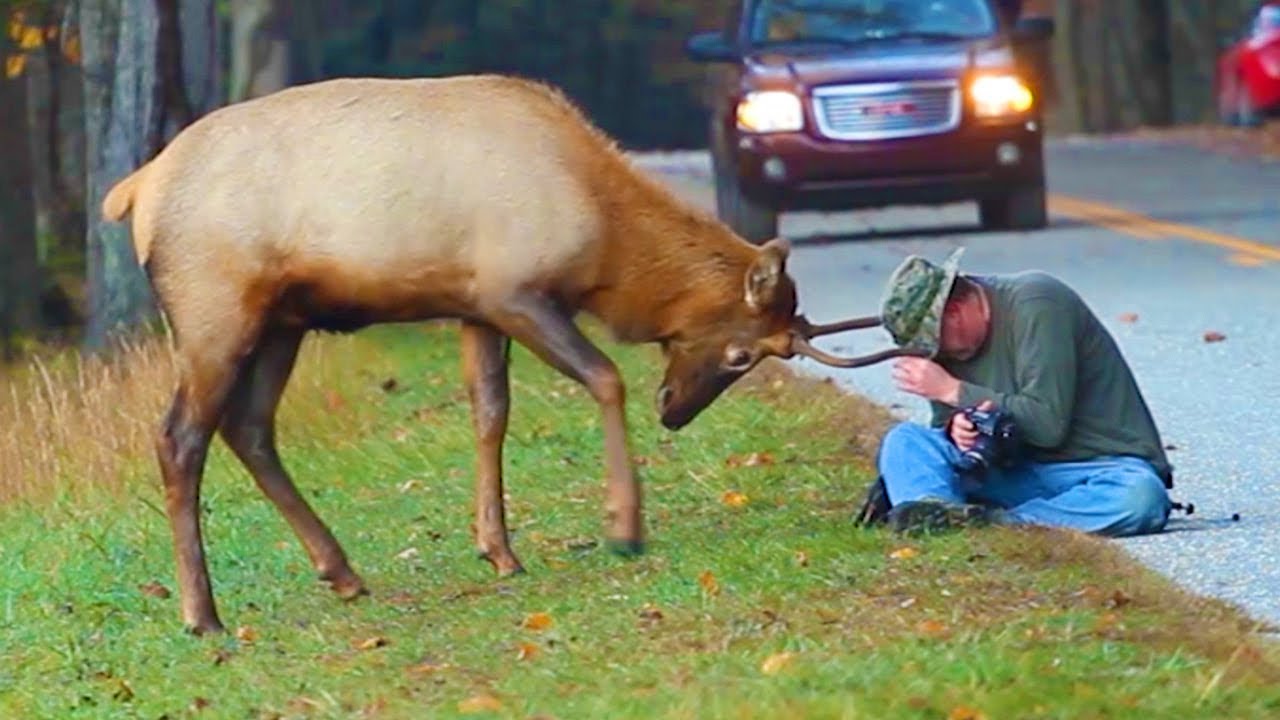
For example, in Estes Park, Colorado, elk often walk through town. Each year, people are injured because they get too close for a photo, especially during the rut.
How To Avoid An Elk Attack
Most problems with elk can be prevented by following a few simple rules. Here’s how you can keep yourself and the elk safe:
1. Keep A Safe Distance
Stay at least 100 feet (30 meters) from all elk. During the rut or calving season, increase that distance to 150 feet (45 meters) or more.
2. Watch For Warning Signs
Learn to spot the signals that an elk is upset: ears back, stomping, or lowering its head. Back away calmly if you see these.
3. Never Approach For Photos
A common mistake is getting close for a selfie or a better picture. Elk can charge much faster than you think. Use binoculars or a telephoto lens instead.
4. Do Not Feed Elk
Feeding wild elk is dangerous for you and for them. It teaches them to approach humans and lose their natural caution.
5. Keep Pets Leashed
Dogs can trigger an attack by barking or chasing elk. Always keep pets on a leash and away from wildlife.
6. Avoid Calves
If you see a lone calf, do not approach. The mother is usually nearby and watching.
7. Follow Local Warnings
In parks and towns, obey all posted signs and ranger advice. In some seasons, parts of trails or parks may close to protect people and elk.
Here’s a summary of safety tips:
| Situation | Recommended Action |
|---|---|
| Elk on trail ahead | Wait for elk to leave or go around at a safe distance |
| Elk shows warning signs | Back away slowly, do not run |
| Elk approaches you | Make yourself appear larger, speak calmly, retreat |
| During rut/calving season | Be extra cautious, avoid known elk areas if possible |

What To Do If You Are Charged By An Elk
Even with care, sometimes an elk may charge. Here’s what to do:
- Do not turn your back or run – Running can trigger a chase.
- Try to put a large object between you and the elk – A tree, car, or boulder can block the attack.
- If knocked down, curl up and protect your head and neck – Most elk will leave after a short attack.
- Get medical help for any injuries – Even minor wounds can become infected.
A key insight: Most elk attacks happen very fast and are over quickly. The best way to avoid injury is to give elk plenty of space and never surprise them.
Real-life Examples
- In 2018, a woman in Estes Park was knocked down and injured by a cow elk after she unknowingly walked near a hidden calf.
- In Yellowstone National Park, a man was gored by a bull elk after approaching for a close-up photo during the rut.
These cases highlight two mistakes: getting too close, and not watching for warning signs. Remember, elk are wild, unpredictable animals.
When To Be Most Careful
- September-October (rut): Bulls are aggressive and distracted.
- May-June (calving): Cows are protective and may attack without much warning.
- Dawn and dusk: Elk are most active, and it’s harder to see them.
Unusual insight: Many attacks happen in or near towns, not deep wilderness. Elk that live near people are often less afraid but can still be just as dangerous.
Do’s And Don’ts Around Elk
Do:
- Watch elk from a safe distance.
- Use binoculars or cameras with zoom.
- Back away if elk notice you.
Don’t:
- Try to feed or pet elk.
- Get between a cow and her calf.
- Approach a bull elk during the rut.
Comparing Elk With Other Dangerous Animals
It’s natural to worry about animal attacks in the wild. But elk are not the most dangerous animal you’ll meet. Compared to bears or bison, elk attacks are less common and less likely to be deadly. Still, because of their size, an elk can do serious harm in seconds.
Respect is key.
If you want to read more about elk and their habits, you can check the Wikipedia page on elk.
Frequently Asked Questions
How Dangerous Are Elk Compared To Other Wild Animals?
Elk are less aggressive than bears or moose, but more dangerous than deer. Most attacks are not fatal, but can cause serious injury due to the elk’s size and power.
Can You Outrun An Elk?
No. Elk can run up to 40 miles per hour (64 km/h). It is impossible for a human to outrun an elk. Your best defense is to back away slowly and use obstacles for protection.
What Should I Do If I See An Elk In My Yard?
Stay indoors or keep a safe distance. Do not try to scare the elk away. Wait until the animal leaves on its own. Keep pets inside.
Why Do Elk Come Into Towns Or Suburbs?
Elk come to towns for food, safety from predators, or because they have learned people are not a threat. This can make them bolder and sometimes more dangerous.
Are Elk Attacks More Common In Certain Seasons?
Yes. Most attacks happen in the fall (rut) and spring (calving season). These are times when elk are more aggressive and protective.
Staying safe around elk is about respect and awareness. Give these powerful animals the space they need, and your chance of an attack is almost zero. Enjoy the beauty of elk from a distance, and help keep both humans and wildlife safe.