
How Heavy Is An Elk?
If you have ever seen an elk in the wild, you know they are impressive animals. Their large bodies, tall antlers, and powerful movements make people stop and stare. But just how heavy is an elk? Understanding their weight is important for hunters, wildlife watchers, and anyone curious about North America’s big game.
In this article, you’ll discover detailed facts about elk weights, how much they vary, what affects their size, and more. We’ll compare elk to other animals, look at differences between males and females, and answer the most common questions people have about these giants of the forest and mountains.
What Is An Elk?
The elk (Cervus canadensis) is one of the largest species in the deer family. Native to North America and eastern Asia, elk are sometimes called wapiti, a Shawnee and Cree word meaning “white rump.” These animals are famous for their bugling calls during mating season and the enormous antlers on adult males. Elk live in herds, move across large distances, and have been reintroduced to several areas where they once disappeared.
Average Elk Weight: The Basics
When people ask, “How heavy is an elk?” the answer depends on several things—especially the elk’s sex, age, and subspecies. But on average:
- Adult male elk (bulls): 700–1,100 pounds (320–500 kg)
- Adult female elk (cows): 500–600 pounds (225–270 kg)
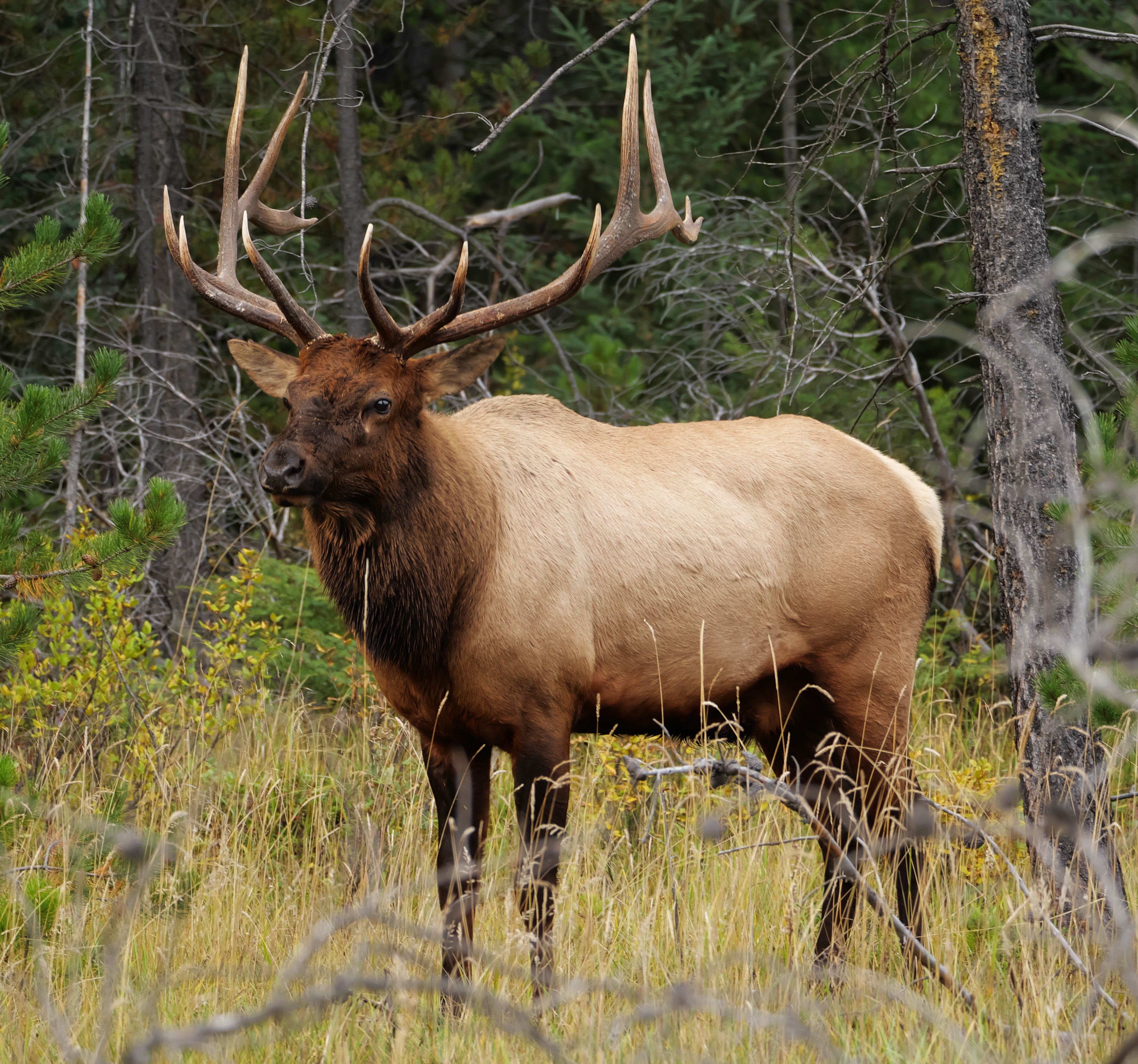
Most adult bulls are much larger than cows. The largest bulls can be as heavy as a grand piano. Just one front leg of a bull elk can weigh as much as a medium-sized dog.
Weight Range By Age
Elk calves are born much lighter. At birth, a calf usually weighs 30–40 pounds (13–18 kg). They grow fast, doubling in size within a few weeks. By their first birthday, a young elk can weigh between 200–300 pounds (90–135 kg).
Comparing Elk Subspecies By Weight
Not all elk are the same size. There are several subspecies in North America, each adapted to its environment. Here’s how they compare:
| Subspecies | Average Bull Weight (lbs) | Average Cow Weight (lbs) | Location |
|---|---|---|---|
| Rocky Mountain Elk | 700–1,100 | 500–600 | Western US, Canada |
| Roosevelt Elk | 700–1,100 | 575–625 | Pacific Northwest |
| Tule Elk | 400–700 | 375–425 | California |
| Manitoban Elk | 770–1,000 | 600–650 | Central Canada/US |
As you can see, Roosevelt elk and Manitoban elk tend to be the heaviest. Tule elk are the smallest, but still much larger than most deer.
Male Vs. Female Elk: Weight Differences
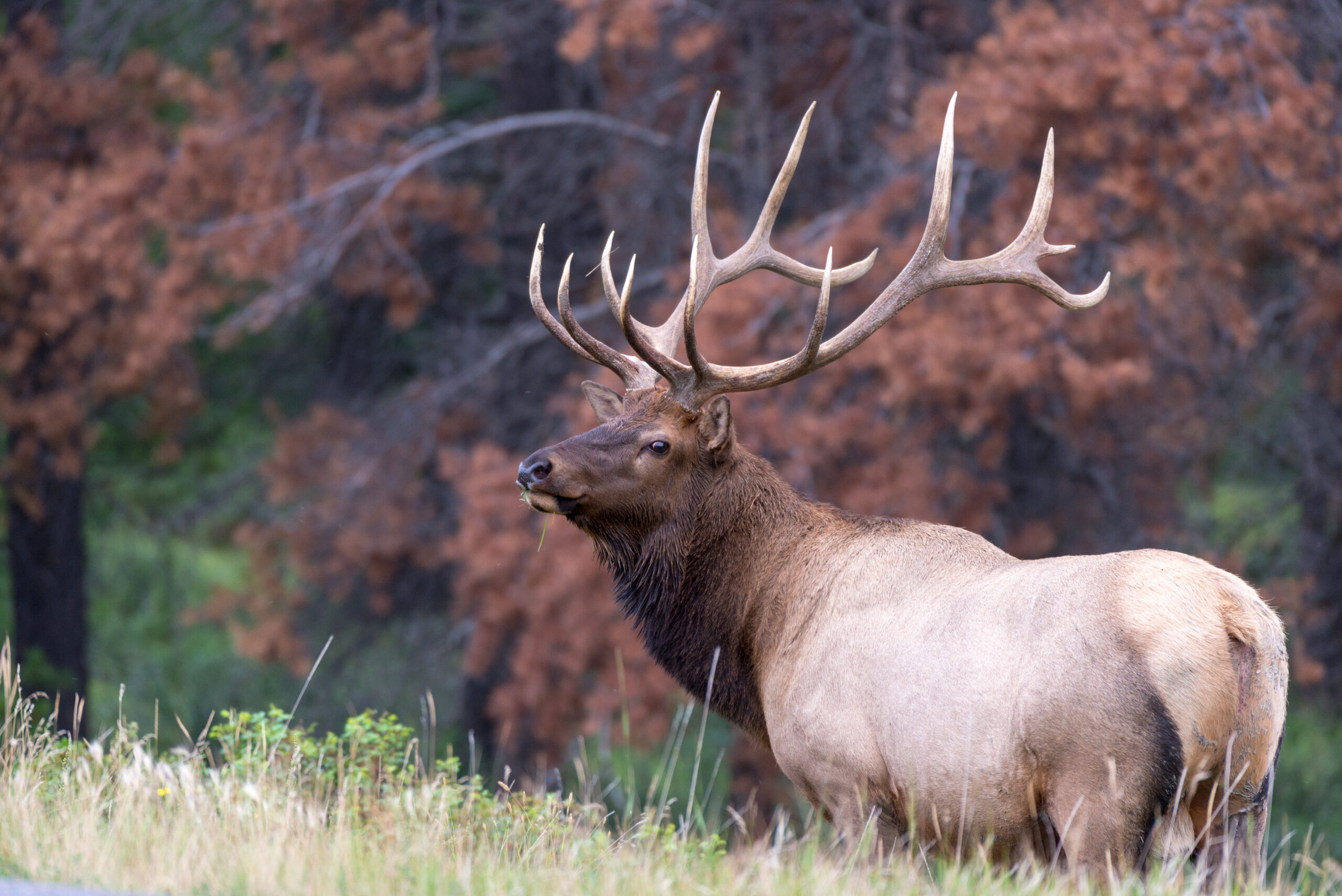
Male elk, called bulls, are always heavier than female cows. This difference is easy to see, especially during the fall when bulls are at their peak size. Bulls grow large antlers each year, and their bodies must be strong to carry them.
Here’s a simple comparison:
| Sex | Average Weight (lbs) | Key Feature |
|---|---|---|
| Bull (Male) | 700–1,100 | Large antlers, muscular neck |
| Cow (Female) | 500–600 | No antlers, slimmer body |
Antlers themselves are heavy too. A mature bull’s antlers can weigh up to 40 pounds (18 kg) or more.
Factors That Affect Elk Weight
No two elk are exactly the same. Several things can change how heavy an elk is:
- Genetics: Some elk are born with genes that help them grow bigger. Subspecies have different average sizes.
- Diet: Elk that live in areas with lots of grass, shrubs, and water grow heavier.
- Age: Young elk are smaller. Bulls keep gaining weight until they are 5–8 years old.
- Time of Year: Bulls lose weight during the rut (mating season) because they eat less and fight more. They are heaviest in late summer.
- Habitat: Mountain elk often weigh less than those in valleys, due to harder winters and less food.
Insight: Many beginners think antlers add more to total weight than they really do. In fact, an elk’s antlers are only a small part of its total body weight—about 3–5%.
Elk Weight Compared To Other Large Animals
It’s hard to picture just how big an elk is until you compare it with other animals. Here’s a side-by-side look:
| Animal | Average Weight (lbs) | Notes |
|---|---|---|
| Elk (Bull) | 700–1,100 | One of the largest deer species |
| Moose | 900–1,500 | Largest member of deer family |
| White-tailed Deer | 100–300 | Common across US and Canada |
| Horse | 900–2,200 | Varies by breed |
| Grizzly Bear | 400–790 | Heaviest in late summer/fall |
Elk are much heavier than most deer, but usually lighter than a moose or the largest horse breeds.
Field Dressing And Meat Yield
Hunters and wildlife managers often talk about “field-dressed” weight. This means the elk has had its organs removed, making it lighter. Field-dressed weight is usually 70–75% of the live weight.
For example:
- Live bull elk: 900 pounds
- Field-dressed: About 675 pounds
When butchers process the meat, the amount you can eat—called “edible yield”—is even less. On average, you get 35–40% of the live weight as boneless meat. So, a 900-pound bull elk might provide 315–360 pounds of meat.
Tip: Many beginners are surprised at how much of the elk’s weight is bone, hide, and organs. If you plan to hunt or buy elk meat, remember the number you see for “elk weight” is not all usable meat.
Why Elk Weight Matters
Understanding how heavy an elk is isn’t just interesting trivia. It has real-world uses:
- Wildlife management: Scientists use weight data to check elk health and decide how many elk an area can support.
- Hunting: Knowing the weight helps hunters plan how to move and process their meat.
- Safety: Hikers and drivers need to know elk size to avoid accidents and respect their power.
A full-grown elk can be dangerous if surprised, especially during the rut when bulls are aggressive. Knowing their weight helps you keep a safe distance.
Seasonal Changes In Elk Weight
Elk do not stay the same weight all year. Their body fat and muscle change with the seasons:
- Spring: Elk are lightest after winter, when food is scarce.
- Summer: Elk eat lots of green plants and gain weight quickly.
- Fall: Bulls are at their heaviest just before the rut, then lose weight during mating.
- Winter: Both bulls and cows lose weight as food becomes harder to find.
A bull elk can lose up to 20% of its body weight during the rut. This is one reason they need to be strong and well-fed in summer and fall.
How Scientists Weigh Elk
You might wonder, “How do experts actually weigh such a large animal?” Scientists use several methods:
- Live capture with scales: Sometimes, researchers use large animal scales, but this is rare due to stress on the elk.
- Estimating from body measurements: Most often, scientists measure the elk’s chest girth and length. Special formulas then estimate total weight.
- Post-mortem weighing: Hunters and wildlife managers can weigh parts of the elk and add them up.
Non-obvious insight: Accurate weighing of live elk is difficult and risky. Most published weights come from estimated or processed animals, not live measurements.

Elk Weight And Human Interaction
Elk size affects how people and elk interact:
- Vehicle collisions: Because elk are so heavy, car accidents involving elk can be deadly. Their high center of mass means the animal can crash through windshields.
- Fencing and barriers: Regular fences often don’t stop elk. Their weight and jumping ability allow them to cross many barriers.
- Livestock comparisons: Ranchers sometimes compare elk to cattle. While a big bull elk can match a large cow in weight, elk are usually slimmer but taller.
Elk Weight Around The World
While most elk live in North America, there are small populations in other places. For example, elk were introduced to New Zealand in the early 1900s. These elk have slightly lower average weights than their North American cousins, mostly due to a different diet and environment.
In Asia, a closely related animal, the red deer, is also very large, but not quite as heavy as the heaviest North American elk.
Myths And Common Mistakes About Elk Weight
Many people, even experienced outdoorsmen, believe myths about elk weight. Here are a few common mistakes:
- Overestimating body weight: Hunters sometimes claim their elk weighed 1,400 pounds or more, but this is extremely rare. Most bulls are under 1,100 pounds.
- Confusing field-dressed with live weight: Remember, a field-dressed elk is much lighter than a live elk. Always check what weight is being discussed.
- Thinking all elk are huge: Cows and young elk are much lighter than mature bulls. There is a big range.
Conservation And Elk Size
Conservation efforts have helped elk populations recover in many areas. Healthy herds often have bigger elk because there is enough food and space. Overcrowding or poor nutrition can lead to smaller, lighter elk.
If you want to learn more about elk biology and conservation, a great resource is the Wikipedia page on Elk.
Frequently Asked Questions
How Heavy Is The Heaviest Elk Ever Recorded?
The largest wild elk on record weighed around 1,300 pounds (590 kg). However, this is extremely rare. Most adult bull elk are between 700–1,100 pounds.
How Much Do Elk Calves Weigh At Birth?
Elk calves usually weigh 30–40 pounds (13–18 kg) at birth. They grow quickly, reaching 200–300 pounds within their first year.
Do Elk Antlers Add Much To Their Weight?
Antlers are heavy, but compared to the whole body, they are a small part. A mature bull’s antlers can weigh up to 40 pounds (18 kg), which is about 3–5% of total body weight.
How Much Meat Can You Get From A Bull Elk?
From a 900-pound bull elk, you can expect 315–360 pounds of boneless meat. The rest is bone, hide, and other non-edible parts.
Are Elk Heavier Than Moose?
No, moose are generally heavier than elk. A large moose can weigh 900–1,500 pounds or more, making them the biggest member of the deer family.
Elk are truly impressive animals, both in size and in the role they play in nature. Understanding their weight helps you appreciate their power and presence in the wild. Whether you’re a hunter, hiker, or wildlife fan, knowing how heavy an elk is can enrich your outdoor experience and keep you safe.