Every spring, deep in the forests and open meadows of North America, a quiet drama unfolds. Female elk, also called cows, separate from the herd to give birth. Many people who watch these elegant animals wonder: How many calves do elk have? The answer is surprisingly consistent, but the story behind it is much more fascinating. Understanding elk reproduction reveals not only the life cycle of these impressive creatures, but also how they survive in the wild, respond to predators, and maintain their population over generations.
The Simple Answer: How Many Calves Do Elk Have?
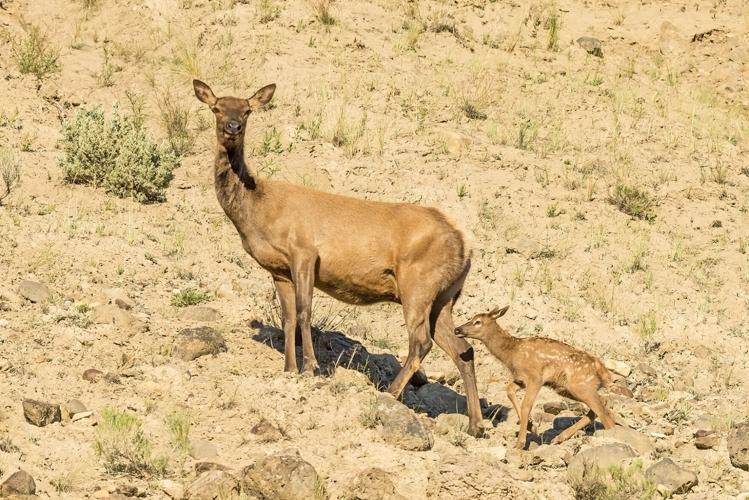
Most elk cows give birth to one calf per year. Twins are extremely rare, and triplets are almost unheard of. This single birth pattern is a result of evolution, helping elk populations survive in challenging environments. For elk, investing resources in one healthy calf is usually better than risking two weaker offspring.
Elk Reproduction: The Annual Cycle
Mating Season
Elk have a defined breeding season, called the rut, which takes place in late September to early October. Bulls (males) compete for access to cows, and only the strongest usually get to mate. After mating, cows carry their calves through winter and most of spring—a gestation period lasting about 240 to 262 days (8–8.5 months).
Calving Season
Calving usually happens from late May to early June. Cows search for quiet, sheltered places to give birth. This timing is not random—it lines up with the peak growth of plants, so mothers have plenty of food for milk production.
The birth of a single calf each year is the norm, and this consistency is key to elk survival.
Why Do Elk Usually Have Only One Calf?
Having only one calf is not a weakness. Instead, it is a well-adapted strategy for survival. There are several reasons:
- High Energy Cost – Pregnancy and nursing use a lot of energy, especially in the wild where food can be scarce. Cows need to be in good health to even produce one calf.
- Predator Pressure – Elk calves are vulnerable to predators like bears, wolves, and coyotes. A single calf means the mother can focus on hiding and protecting one, increasing survival chances.
- Body Size Limitation – Elk are large animals, but carrying two or more calves would be a heavy burden, especially in harsh winter conditions.
- Population Balance – One calf per year helps prevent overpopulation, which could lead to food shortages.
This “one calf” rule is so strong that less than 1% of elk births are twins. Even when twins are born, both rarely survive.
Factors That Influence Calf Numbers
Age And Health Of The Cow
Young elk cows (first-time mothers) and very old cows are less likely to produce a calf at all. The most productive age is between 3 and 10 years. Healthy, well-fed cows are more likely to have strong, viable calves.
Nutrition And Habitat
Elk living in areas with rich food sources and less competition are in better condition for reproduction. Poor nutrition leads to more failed pregnancies or weak calves that do not survive.
Stress And Predators
When elk face a lot of stress—such as from human disturbance, poor weather, or high predator numbers—fewer cows become pregnant, and calf survival drops.
Genetics
Some elk populations have a slightly higher chance of twins, but the difference is minimal. Genetics play a small role compared to environment and health.
How Elk Calves Survive Their First Months
The first weeks of a calf’s life are dangerous. Calves are born with a spotted coat, which helps them blend into the grass and shrubs. For the first 7–14 days, calves lie very still and rarely move, a behavior called “hiding.” Their mothers visit them a few times a day to nurse, but otherwise leave them alone to avoid attracting predators.
After two weeks, calves are strong enough to follow their mothers and join the larger herd. By this time, they are more mobile and alert, making them harder targets for predators.
Survival Rates: How Many Calves Live To Adulthood?
Not every calf survives. On average, 30% to 50% of elk calves die within their first year, most often in the first few weeks. The main causes of death include:
- Predation by bears, wolves, coyotes, and mountain lions.
- Harsh weather (very cold or wet springs).
- Starvation if the mother cannot produce enough milk.
A healthy elk population depends on enough calves surviving each year to replace adults lost to predators, disease, or old age.

Elk Calves Compared To Other Deer Species
It is natural to wonder how elk compare to other members of the deer family. The table below highlights the main differences:
| Species | Average Calves/Fawns per Birth | Twins Frequency |
|---|---|---|
| Elk | 1 | Very rare (<1%) |
| White-tailed Deer | 1–2 | Common |
| Mule Deer | 1–2 | Common |
| Moose | 1 | Rare |
| Caribou | 1 | Rare |
As you can see, elk are different from white-tailed and mule deer, which often have twins.
The Rare Case Of Elk Twins
Though twins are rare in elk, they do happen. Most reported twin births occur in areas with excellent food and low predator pressure. However, even when twins are born, both calves rarely survive. The mother struggles to feed and protect two calves, and predators often find one.
Some biologists have suggested that the low rate of twins is a result of natural selection—over time, only cows that focused on one calf were successful.
Birth Timing And Its Importance
The timing of calving is crucial for survival. Elk have evolved to give birth when the risk from predators is lowest and food is most available. Most calves are born within a 2–3 week window in late spring. This “birth pulse” means many calves appear at once, which can overwhelm predators. If a cow gives birth too early or too late, her calf faces higher risks from weather and predators.
Calf Growth And Development
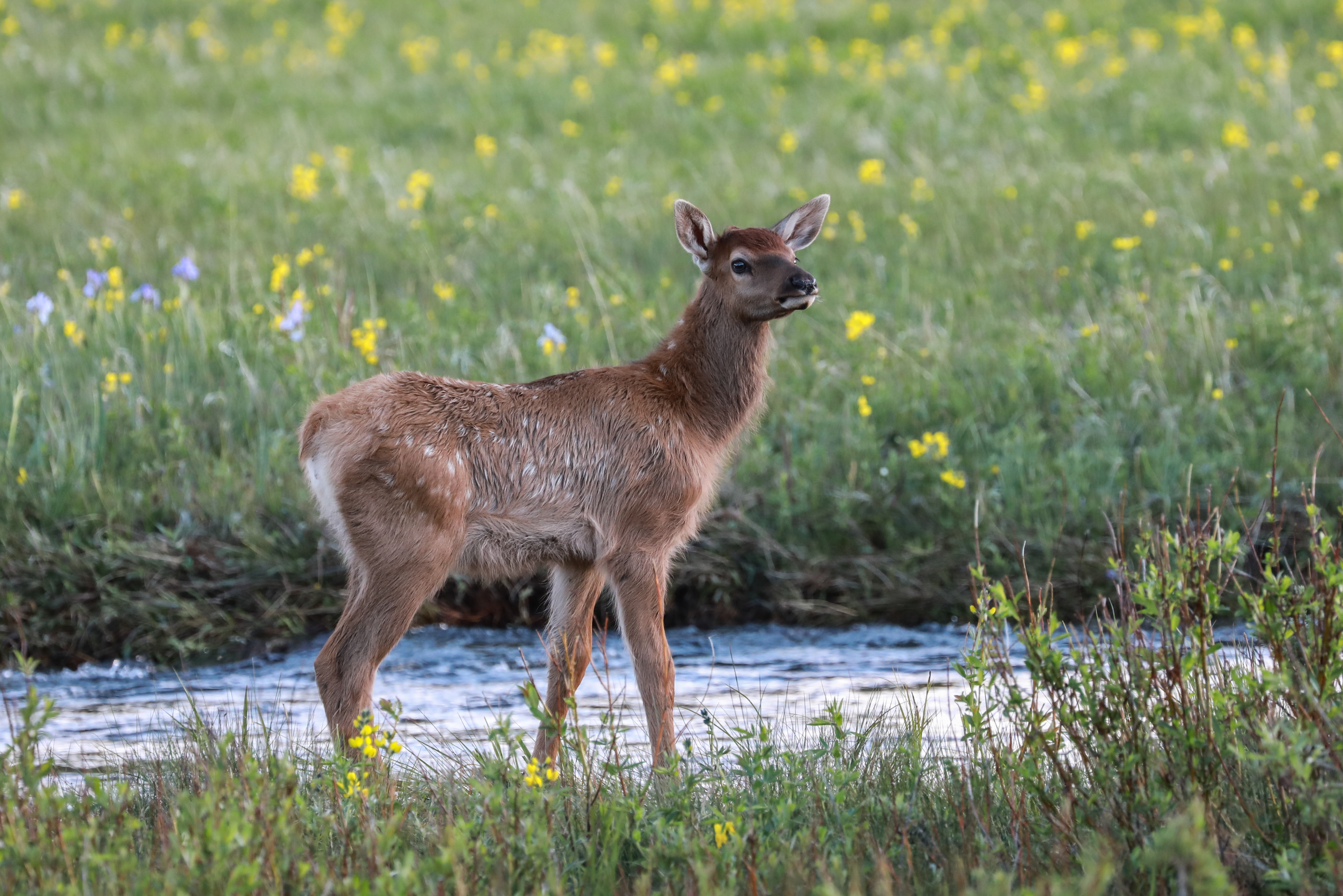
Calves grow quickly. At birth, an elk calf weighs 30–40 pounds (13–18 kg). In just a few months, it can reach 150 pounds (68 kg). Calves begin to eat solid food (like grass and leaves) at 2–3 weeks old but continue to nurse for up to 6 months.
Here is a summary of calf growth milestones:
| Age | Milestone |
|---|---|
| Birth | Weighs 30–40 lbs, can stand within 30 minutes |
| 1 week | Hiding, little movement, spotted coat |
| 2–3 weeks | Begins to follow mother, starts eating plants |
| 3 months | Much more active, part of the herd |
| 6 months | Weaned, can survive on its own |
Calving Locations: Choosing A Safe Place
Elk cows are careful about where they give birth. They look for thick cover—tall grass, shrubs, or forest edges—close to water but away from main herd activity. This helps keep the calf hidden from predators and gives the mother quick access to food and water.
How Scientists Study Elk Calving
Wildlife biologists use several methods to study elk calving:
- Radio collars are placed on cows to track movement and calving sites.
- Trail cameras capture images of cows with newborn calves.
- Direct observation is done in some parks and reserves where elk are used to people.
This research helps managers understand elk population health and set hunting or conservation policies.
Calf Survival: Key Insights Most People Miss
Two important insights often surprise beginners:
- Late-born calves struggle – Calves born just a week or two later than the main group are at a much greater risk from predators and bad weather. Timing is everything.
- Mother’s milk quality matters – A cow’s health affects the richness of her milk. Poor nutrition means weaker calves, even if only one is born. This is why habitat quality and food availability are so important for elk populations.
Elk Population Management And Calf Numbers
Wildlife managers keep a close eye on calf-to-cow ratios. A common goal is 30–40 calves per 100 cows each year. If the ratio drops, it could signal problems—too many predators, poor habitat, or disease. Hunters and conservationists use this information to help keep elk populations healthy.
Human Impact On Elk Calving
Human activity can disrupt calving in several ways:
- Habitat loss from development or logging reduces safe calving sites.
- Disturbance from hikers, ATVs, or pets can scare cows away from their hiding calves.
- Roads and fences can separate calves from mothers.
Protecting calving areas, especially in late spring, is critical for elk survival.
Elk Calf Birth In Captivity
In zoos or managed reserves, elk cows still almost always have one calf per year. Twins are slightly more common due to better nutrition and lack of predators, but the pattern remains the same. Researchers use captive elk to study genetics, nutrition, and disease, applying these lessons to wild herds.
Comparing Elk Calf Patterns By Region
Elk populations in North America show some regional differences. For example:
| Region | Calving Season | Calf Survival Rate |
|---|---|---|
| Rocky Mountains | Late May – Early June | 35–50% |
| Pacific Northwest | Early June – Mid June | 40–55% |
| Great Plains | Late May – Early June | 30–40% |
These differences are driven by climate, habitat, and predator numbers.
Frequently Asked Questions
How Old Must An Elk Cow Be To Have Her First Calf?
Most elk cows have their first calf at age two or three. Younger females usually do not breed successfully. Cows are most productive between ages three and ten.
Can Elk Have Twins Or Triplets?
Twins in elk are very rare, and triplets are almost unknown. Less than 1% of births result in twins, and both rarely survive. Single births are the norm for elk.
Do All Elk Cows Have A Calf Every Year?
Not always. Cows that are too young, too old, malnourished, or stressed may skip a year. On average, about 80% of healthy cows in a good habitat produce a calf each year.
How Long Do Elk Calves Stay With Their Mothers?
Elk calves stay with their mothers for about six months. By autumn, they are strong enough to survive on their own, but often remain with the herd for their first year.
Where Can I Learn More About Elk Reproduction?
You can find more detailed information at the Wikipedia page on elk, which covers their biology, behavior, and reproduction.
Elk are remarkable animals, and their single-calf strategy is a perfect example of how nature balances survival and population growth. By understanding how many calves elk have, we gain insight into their world—and the challenges they face in the wild.