
Every industry that deals with machinery, pipes, or engines eventually faces the same challenge: how do you see inside a space that’s too small or dangerous for your eyes? That’s where the borescope comes in. These clever devices act as your extended vision—helping mechanics, plumbers, engineers, and even doctors inspect hard-to-reach places without taking things apart. If you’re considering buying one, you’re probably asking: “What is the price range of a borescope?” The answer isn’t as simple as a single number. Borescope prices can be as low as $20 or reach thousands of dollars, depending on features, quality, and industry needs. Let’s explore what drives these prices and how you can make the right choice for your budget and purpose.
What Is A Borescope And Why Do Prices Vary So Much?
A borescope is a small camera on a flexible or rigid tube, often with a built-in light, that sends images to a screen. They are used for inspection—think engine cylinders, air ducts, walls, or medical examinations. Prices vary because borescopes come in many types and qualities. The most basic models work with your smartphone, while advanced versions record HD video, bend in any direction, or even fit inside jet engines.
The price range is wide due to:
- Image quality (from blurry VGA to crisp HD)
- Tube length and flexibility
- Camera diameter (thin for tight spaces, thick for durability)
- Lighting options
- Recording features (photos, video, Wi-Fi, etc.)
- Special functions (articulating tips, waterproofing, measurement tools)
Let’s break down the main price categories and what you get at each level.
Borescope Price Categories
1. Entry-level Borescopes: $20–$100
If you’re a DIYer or homeowner, you might start here. These budget borescopes are usually USB or Wi-Fi models that connect to your phone or laptop. They are great for quick checks—like finding a clog in a drain or looking inside a wall.
Features you can expect:
- Camera resolution: 480p to 720p (standard definition)
- Tube length: 1–10 meters (3–33 feet)
- Diameter: 5–8 mm (fits most household pipes)
- LED lighting: Basic, adjustable brightness
- Compatibility: Android, Windows, sometimes iOS
Drawbacks: Image quality may be poor in low light. Build quality can be flimsy. Most do not offer video recording or advanced features.
Example: The Depstech USB Borescope (around $40) offers 2 megapixel images and a 5-meter cable. It’s enough for basic home use but may not last under heavy work.
2. Mid-range Borescopes: $100–$500
This is the sweet spot for many professionals—mechanics, HVAC technicians, or plumbers. These mid-range borescopes offer better images, more durable cables, and extra features like recording and Wi-Fi.
What’s different here:
- Camera resolution: 720p to 1080p (HD video)
- Tube length: Up to 15 meters (50 feet)
- Diameter: As small as 3.9 mm for tight spaces
- Articulating heads: Some can bend the tip for better viewing
- Display: Often comes with its own LCD screen
- Battery-powered: No need to use your phone
Drawbacks: Still not industrial grade. Articulation may be limited or manual. Sometimes compatibility issues with certain devices.
Example: Teslong NTS300 (about $250) comes with a 4.3-inch display, 1080p camera, and 32GB memory card. It’s used by mechanics for engine inspections.
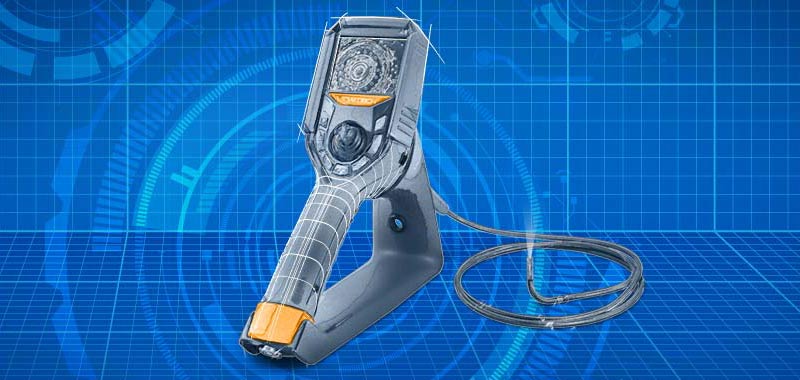
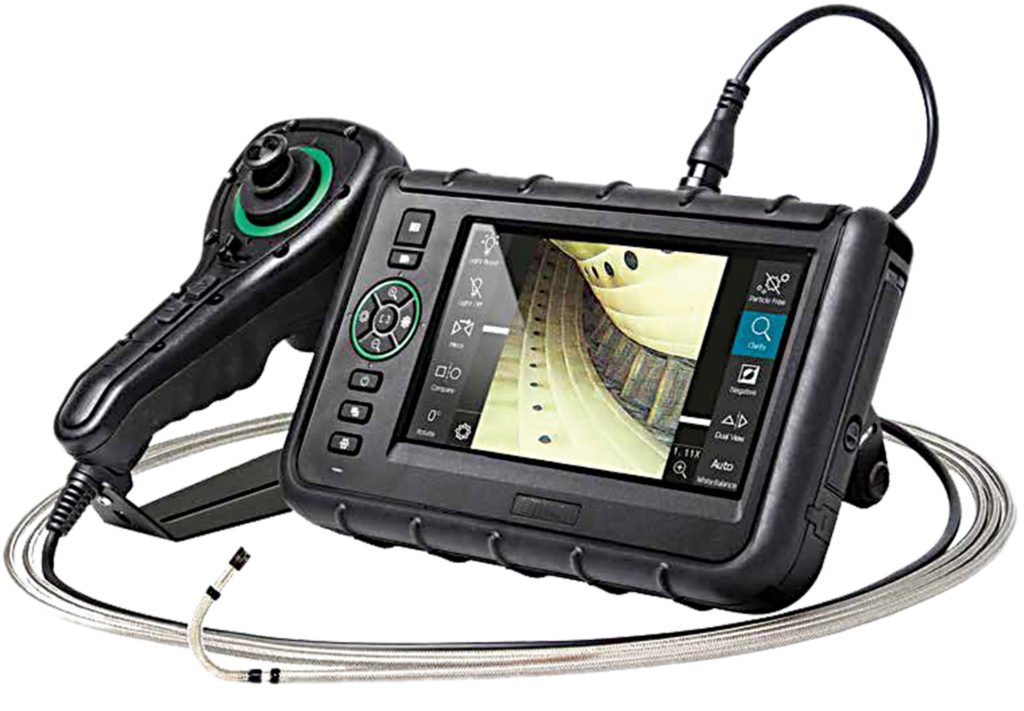
3. Professional/industrial Borescopes: $500–$3,000
When inspections are critical—like in aviation, manufacturing, or building safety—professional borescopes step in. These are built to survive tough environments and deliver reliable, detailed images.
What you get:
- Camera resolution: Full HD, sometimes 2K or 4K
- Tube length: 1–30 meters, with reinforced cables
- Articulation: Motorized, 2-way or 4-way
- Measurement tools: For sizing cracks or corrosion
- Waterproof and oil-resistant
- Advanced lighting: Multiple LEDs, adjustable color temperature
- Data storage: Save images, videos, and measurements
Drawbacks: Heavier and more complex. Price climbs quickly with each added feature.
Example: Olympus IPLEX (around $2,500 and up) is popular in aviation. It has a tough design, sharp images, and tip articulation.
4. Medical And Specialized Borescopes: $1,000–$15,000+
For medical, aerospace, or research uses, specialized borescopes offer features not needed elsewhere. These include fiber optics, sterilizable designs, or ultra-thin diameters for precision work. Prices can go beyond $10,000.
Features:
- Ultra-thin diameters (less than 2 mm)
- High flexibility for delicate navigation
- Sterilizable materials
- Advanced optics (fiber bundle or micro cameras)
- Real-time video with minimal delay
Drawbacks: Expensive, often overkill for non-medical uses. Service and calibration may be required.
Example: Karl Storz endoscopes are widely used in surgery, with prices often over $12,000.
Price Comparison By Borescope Type
To help visualize how prices compare across types, see the following table:
| Borescope Type | Typical Price Range (USD) | Main Users |
|---|---|---|
| Entry-Level (USB/Wi-Fi) | $20–$100 | DIY, Homeowners |
| Mid-Range (LCD display) | $100–$500 | Technicians, Mechanics |
| Professional/Industrial | $500–$3,000 | Industry, Aviation, Safety Inspectors |
| Medical/Specialized | $1,000–$15,000+ | Doctors, Aerospace, Researchers |
Key Factors That Affect Borescope Price
Understanding what makes a borescope expensive can save you from overpaying or buying a tool that doesn’t fit your needs.
Camera Resolution
Higher resolution means clearer images. A 1080p camera costs more than a 480p one. If you need to see fine details (like cracks or corrosion), invest in better resolution.
Probe Length And Diameter
Longer probes cost more. Thin probes (under 5 mm) are harder to make and more expensive, but are vital for very narrow spaces.
Articulation
A fixed camera tip is cheaper. If you need to steer the camera head (2-way or 4-way articulation), the price jumps. Articulation is essential for complex inspections.
Screen And Connectivity
Built-in screens add cost but offer convenience. Wi-Fi-enabled models are pricier but allow you to view images on your phone or tablet.
Durability And Waterproofing
Industrial borescopes are made to survive oil, water, and rough handling. These extra protections drive up the price.
Data Functions
The ability to record video, take snapshots, or measure distances adds to the cost. For some jobs, these are non-negotiable.
Here’s a quick look at how features impact prices:
| Feature | Basic | Mid-Range | Professional |
|---|---|---|---|
| Resolution | 480p–720p | 720p–1080p | 1080p–4K |
| Tube Length | 1–5 m | 5–15 m | 15–30 m |
| Articulation | No | Manual | Motorized |
| Recording | No | Yes | Yes + Measurement |
| Price Range | $20–$100 | $100–$500 | $500–$3,000+ |
Two Insights Most Beginners Miss
Many new buyers focus only on resolution or price, but two overlooked factors can greatly impact the experience:
1. Probe Stiffness Vs. Flexibility
A stiff probe is easier to push through straight pipes, but a flexible one bends around corners. If you only work on straight lines, stiffness helps. For complex paths, flexibility is crucial—even if resolution is lower.
2. Light Quality Matters As Much As Camera Quality
Even the best camera cannot see in the dark. Cheaper borescopes have weak LEDs, making images useless in deep or dirty places. Mid-range models often have more powerful, adjustable lighting, which makes a surprising difference.
Common Buyer Mistakes To Avoid
- Overbuying or underbuying: Many people buy an expensive borescope for occasional tasks, or a cheap one for critical jobs and regret it.
- Ignoring tip articulation: Without articulation, you may not see what you need in tight spots.
- Forgetting about compatibility: Some models do not work with all smartphones or operating systems.
- Neglecting warranty and support: Cheaper brands may not offer help if something breaks.
- Not checking accessories: You may need attachments like hooks, mirrors, or magnets—sometimes sold separately.
Should You Buy Or Rent?
For rare inspections, renting a high-end borescope can save money. Rental prices range from $50 to $200 per day, depending on the model. For professionals who inspect often, owning makes more sense.
How To Choose The Right Borescope For Your Needs
Ask yourself:
- What will I inspect? (Engines, pipes, walls, machinery, human body?)
- How often will I use it? (Once a year, weekly, daily?)
- How tight are the spaces? (Choose diameter accordingly)
- Do I need to save photos or videos? (Get one with recording features)
- Do I need articulation? (Essential for complex paths)
If you’re unsure, start with a mid-range model. It usually covers most needs without breaking the bank.

Real-world Examples Of Borescope Costs
- Automotive mechanic: Uses a $150–$300 model for engine checks.
- Home inspector: Chooses a $200–$500 model with long cable and video.
- Airplane technician: Needs $2,000+ model with articulation.
- Plumber: Often buys $100–$400 version with waterproofing.
- Hobbyist: May start with a $30 smartphone borescope.
Where To Buy And What To Look For
You can find borescopes at hardware stores, specialty tool shops, and online marketplaces like Amazon or eBay. For specialized or industrial models, look at brands like Olympus, Teslong, or Karl Storz.
When buying online, check:
- Return and warranty policy
- Customer reviews for real-world performance
- Sample images or videos
- Accessory availability
For more details on borescope technology and uses, visit Wikipedia.
Frequently Asked Questions
What Is The Difference Between A Borescope And An Endoscope?
A borescope is mainly for industrial or mechanical inspections (pipes, engines, machines). An endoscope is designed for medical or veterinary use, with sterilizable and body-safe materials. The terms are sometimes used interchangeably for non-medical devices.
Is A Cheap Borescope Good Enough For Home Use?
Yes, for basic tasks like looking inside walls or drains, a cheap borescope ($20–$50) can work well. For clearer images or tougher jobs, a mid-range model is better.
Can I Use A Borescope With My Smartphone?
Many modern borescopes connect to smartphones via USB or Wi-Fi. Always check compatibility—some only support Android, others also work with iPhones or PCs.
How Long Do Borescopes Last?
A well-made borescope can last several years if cared for. Cheap models may fail within months, especially if used in tough environments. Look for solid construction and warranty.
Are There Any Safety Concerns With Using A Borescope?
For industrial use, ensure the borescope is rated for the environment (waterproof, explosion-proof, etc. ). For medical use, only use devices designed for human or animal inspection.
A borescope is a smart investment for anyone who needs to see the unseen. Prices vary from $20 to over $15,000, but most users find a good fit in the $100–$500 range. By focusing on your real needs—and not just the cheapest or most expensive option—you can buy a tool that saves time, money, and frustration for years to come.

