
Every autumn, deep in the forests and meadows of North America, a wild and haunting sound echoes through the air. It’s the elk bugle—a mix of high-pitched whistles and guttural grunts that can send shivers down your spine. Hunters, hikers, and wildlife lovers often wonder: how loud is an elk bugle? Is it louder than a car horn? Can you hear it from a mile away? And why do these majestic animals make such a powerful sound? In this article, you’ll discover not just the numbers, but also the reasons behind the volume, how it compares to other animals, and what it feels like to hear an elk bugle up close.
What Is An Elk Bugle?
Before talking about loudness, it helps to know what an elk bugle really is. The bugle is a vocalization made mainly by male elk, called bulls, during the fall mating season (called the rut). It’s a complex sound: it starts with a high, whistling note, slides up and down, then ends with a series of deep barks or grunts.
Elk bugle for several reasons:
- To attract females (cows)
- To warn other males
- To show their strength and health
The sound can travel long distances, which is important in the open landscapes where elk live. Unlike deer, whose calls are usually quiet, the elk’s bugle is designed to be heard.
Decibel Levels: How Loud Is An Elk Bugle?
People are often surprised by the decibel (dB) level of an elk bugle. Decibels measure sound intensity. For reference:
- A normal conversation is about 60 dB
- A car horn is around 110 dB
- A chainsaw is about 120 dB
So, How Does The Elk Bugle Compare?
Studies and field measurements show that a mature bull elk’s bugle can reach between 80 and 100 decibels at a distance of one meter (about three feet) from the animal’s mouth. In the wild, the sound may seem even louder because of echoes in mountains and valleys.
Here’s a simple comparison of elk bugle volume to other common sounds:
| Sound Source | Decibel Level (dB) |
|---|---|
| Whisper | 30 |
| Normal conversation | 60 |
| Elk bugle (close range) | 80-100 |
| Car horn | 110 |
| Chainsaw | 120 |
The bugle’s highest pitch and the final grunts both carry well, but the initial whistle is often the loudest part.
Why Is The Elk Bugle So Loud?
It’s not just about making noise. The elk bugle evolved to be loud for several key reasons:
- Competition: During the rut, bulls compete for cows. A louder, stronger bugle signals health and size. It can scare off smaller bulls without the need for a fight.
- Communication Over Distance: Elk live in open forests, valleys, and mountains. Sound needs to travel far. A quiet call would not reach other elk.
- Attracting Mates: Cows listen for bugles from strong males. A loud bugle may suggest better genes.
- Acoustic Environment: The bugle’s pitch cuts through background sounds like wind, running water, and rustling leaves.
An insight beginners often miss: the elk’s long neck and specialized vocal cords help it create both the volume and the unique pitch of the bugle. The animal even tilts its head upwards to project the sound further, using its body like a trumpet.
How Far Can You Hear An Elk Bugle?
If you’re out in the woods, you might wonder if you can hear a bugle from a mile away. The answer depends on several factors:
- Terrain (open field vs. dense forest)
- Wind direction
- Humidity and temperature
- Other background noises
Under perfect conditions, people have reported hearing elk bugles from up to 2 miles (3.2 kilometers) away. In most normal situations, the bugle is easily heard for half a mile (about 800 meters).
Here’s how elk bugle range compares to other animal calls:
| Animal | Max Audible Range |
|---|---|
| Elk (bugle) | 2 miles (3.2 km) |
| Wolf (howl) | 6 miles (9.6 km) |
| Lion (roar) | 5 miles (8 km) |
| Red deer (roar) | 1 mile (1.6 km) |
The elk bugle is among the most far-reaching sounds in North American forests.
What Does It Feel Like To Hear An Elk Bugle Up Close?
Hearing an elk bugle from a distance is exciting. But being close—within 50 feet—can be unforgettable. Hunters and wildlife photographers often describe it as a “shockwave” or “tingle in the chest. ” The sound is so loud and sharp, it feels physical, almost like standing near a speaker at a concert.
A common beginner’s mistake: thinking that elk bugles are gentle or soft because of recordings online. In reality, live bugles are much more powerful than most microphones can capture. If you get close, protect your ears—especially if you’re with children.
Elk Bugle Compared To Other Animal Calls
The elk bugle is unique, but how does it compare to other famous animal sounds? Here’s a quick look:
- Elk bugle: High-pitched, piercing, lasts several seconds, up to 100 dB
- Lion roar: Deep, thunderous, up to 114 dB, travels 5 miles
- Wolf howl: Long, haunting, up to 90 dB, travels 6 miles
- Elephant trumpet: Low and rumbling, can reach 117 dB
Most North American mammals are much quieter. The elk bugle stands out for both its pitch and volume.
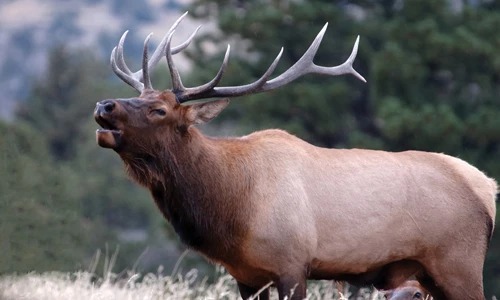
How Do Elk Produce Such A Loud Sound?
Elk have specialized anatomy for making their bugle:
- Vocal cords (larynx): Elk have large, strong vocal folds that can vibrate quickly.
- Long neck and mouth: This helps shape and amplify the sound, like a wind instrument.
- Head tilt: The upward angle helps project the bugle above obstacles and further across the landscape.
One insight many people overlook: the bugle’s high pitch is not just for show. High-pitched sounds travel further in cool, dense air—which is common during the elk rut in autumn.
When And Where Is The Elk Bugle Loudest?
The elk bugle is heard mainly during the rutting season, which runs from late August to early October. Bulls are most active at dawn and dusk, when air is cool and still. These are the best times to hear the bugle at its full volume.
Mountain valleys and open meadows are prime locations. In forests, trees may block or absorb some sound, but the bugle can still echo for long distances.
The Human Perspective: Risks And Etiquette
If you’re hoping to hear an elk bugle in the wild, there are a few things to remember:
- Don’t get too close: Bulls are aggressive during the rut. Keep a safe distance (at least 100 yards/90 meters).
- Protect your hearing: If you find yourself very close, cover your ears, especially for children.
- Respect wildlife: Avoid imitating elk bugles unless you’re a trained researcher or hunter. Fake calls can stress the animals.
Elk Bugle In Culture And Media
The elk bugle is more than just a sound. It’s a symbol of wilderness and the changing seasons. Native American stories often feature the elk’s call as a sign of strength or the coming of winter. In modern times, the bugle is used in documentaries, films, and music to evoke wild, untamed places.
If you want to experience the real thing, many national parks in the U. S. and Canada have “elk bugling” tours in September. Seeing and hearing elk in person is far more impressive than any video or recording.

Conservation And The Future Of Elk Bugling
Elk were once nearly wiped out in parts of North America due to overhunting and habitat loss. Thanks to conservation efforts, their numbers have rebounded in many states and provinces. Today, the bugle is a sign of healthy elk populations and wild landscapes.
However, urban noise and human activity can interfere with elk communication. Protecting large, quiet habitats ensures that future generations will still hear this amazing sound.
Useful Tips For Hearing Elk Bugles
- Visit during rutting season (late August to October).
- Go out at dawn or dusk for the best chance.
- Find open meadows near forests—elk like edges.
- Stay quiet and patient. Elk are wary of noise and movement.
- Bring binoculars, but keep your distance for safety.
An expert tip: If you hear a bugle, wait quietly. Sometimes, a bull will bugle several times in a row, each time getting closer or revealing his location.

Frequently Asked Questions
How Does The Loudness Of An Elk Bugle Compare To A Car Horn?
An elk bugle usually reaches 80–100 decibels at close range, while a car horn is about 110 decibels. So, a car horn is louder, but the elk bugle still feels intense, especially up close and in the wild.
Can Elk Bugles Damage Human Hearing?
At close range (within a few feet), a bugle can be loud enough to cause discomfort and, in rare cases, temporary hearing loss—especially for children or if exposed repeatedly. Always protect your ears if you’re close to a bugling elk.
Why Do Elk Tilt Their Heads When They Bugle?
Elk tilt their heads upward to help project the sound. This angle lets the bugle carry further across open spaces and avoids some obstacles, making the call more effective for communication.
Do Female Elk Bugle Too?
Female elk (cows) do not bugle. The bugle is a male (bull) behavior, used to attract females and challenge rivals. Cows make other sounds, like mews and chirps, but these are much quieter.
Where Can I Learn More About Elk And Their Bugling?
For more in-depth information, visit the Wikipedia page on elk. It covers elk biology, behavior, and the science behind their amazing vocalizations.
Hearing an elk bugle in the wild is an unforgettable experience. The sound is not just loud—it’s full of meaning, history, and wild beauty. Whether you’re a hunter, hiker, or just someone who loves nature, the elk bugle is a reminder of the power and mystery of the animal world.
If you ever get the chance, find a quiet spot in the autumn woods and listen. You might just hear the call of the wild echoing through the trees.

