
Every animal faces threats in the wild, but elk have survived for thousands of years thanks to their sharp instincts and unique defenses. If you have ever seen a herd of elk moving through a forest or an open field, you probably noticed how alert and careful they are.
Elk, also called wapiti, are among the largest members of the deer family. They live in North America and parts of Asia, roaming mountains, forests, and grasslands. But how do elk defend themselves against wolves, bears, mountain lions, and even human hunters?
Their survival is not just luck—elk use a mix of physical traits, group strategies, and smart behaviors to stay safe. Let’s take a close look at how these animals protect themselves from danger.
Physical Defenses
The elk’s body is built for survival, and their most important defenses come from their size, antlers, and speed.
Size And Strength
Adult elk are massive. A mature bull (male) can weigh up to 700 pounds (320 kg) or more and stand over 5 feet (1.5 meters) at the shoulder. Even females (cows) are large, usually between 500 to 600 pounds. Their size alone is a major deterrent for many predators. Wolves and coyotes often avoid healthy adult elk and instead target the young, old, or weak. When threatened, an elk can deliver powerful kicks with its front or hind legs. A single well-placed kick can injure or even kill a predator.
Antlers As Weapons
Male elk grow impressive antlers each year. These antlers can reach up to 4 feet (1.2 meters) long and weigh up to 40 pounds. During the rut (mating season), bulls use their antlers to fight rivals, but these weapons are also effective against predators. If cornered, a bull elk will lower its head and charge, using its antlers to stab or push away threats. Even bears and large mountain lions have been seriously injured by elk defending themselves.
Speed And Agility
Elk are surprisingly fast for their size. They can run at speeds of up to 45 miles per hour (72 km/h) for short distances. More important, they are extremely agile, able to change direction quickly and leap over obstacles. This makes it difficult for predators to catch them, especially in forests or rough terrain. Elk also have strong swimming abilities, crossing rivers or lakes to escape danger.
Group Behavior And Social Strategies
Living in groups gives elk several advantages when it comes to defense. Their group behavior is a powerful tool against predators.
Herd Vigilance
Elk rarely live alone. Most of the year, cows and calves form large herds, while bulls may gather in smaller groups or stay alone. In a herd, there are always several elk watching for danger. This shared vigilance means a predator is less likely to sneak up unnoticed. When one elk senses trouble, it will alert the others, and the entire herd can react quickly.
Calf Protection
Calves are the most vulnerable members of the herd. Mothers (cows) hide their newborns in tall grass or brush for the first weeks of life, visiting only to nurse. This helps keep the calves hidden from predators like bears, coyotes, and wolves.
If a predator does approach, cows will sometimes form a protective ring around the calves, using their hooves to kick at attackers.
Coordinated Flight
When predators approach, elk do not scatter in panic. Instead, the herd usually runs together in a coordinated flight. This confuses predators, making it harder for them to pick out a single target. The largest and healthiest elk often run at the edges or in front, while calves and weaker animals stay in the center for protection.
Communication: Warning Systems
Elk have developed a set of signals and sounds to warn each other of danger.
Alarm Calls
A common warning is a sharp bark or high-pitched scream. This sound can travel long distances, warning other elk in the area that a predator is near. When one elk barks, others become alert, often raising their heads, sniffing the air, and preparing to run.
Body Language
Elk use their body to signal alarm as well. If an elk senses something strange, it may raise its head, stiffen its body, or stomp the ground with a hoof. These signals tell other elk to pay attention. In some cases, they will all face the same direction, focusing on the possible threat.
Environmental Awareness And Habitat Use
Elk know their environment well and use the landscape to their advantage.
Choosing Safe Locations
Elk often choose to rest or feed in open areas with a good view. This gives them time to spot predators approaching. At night or during calving season, they may move into dense forests or steep hillsides, where it is harder for predators to follow or attack.
Seasonal Migrations
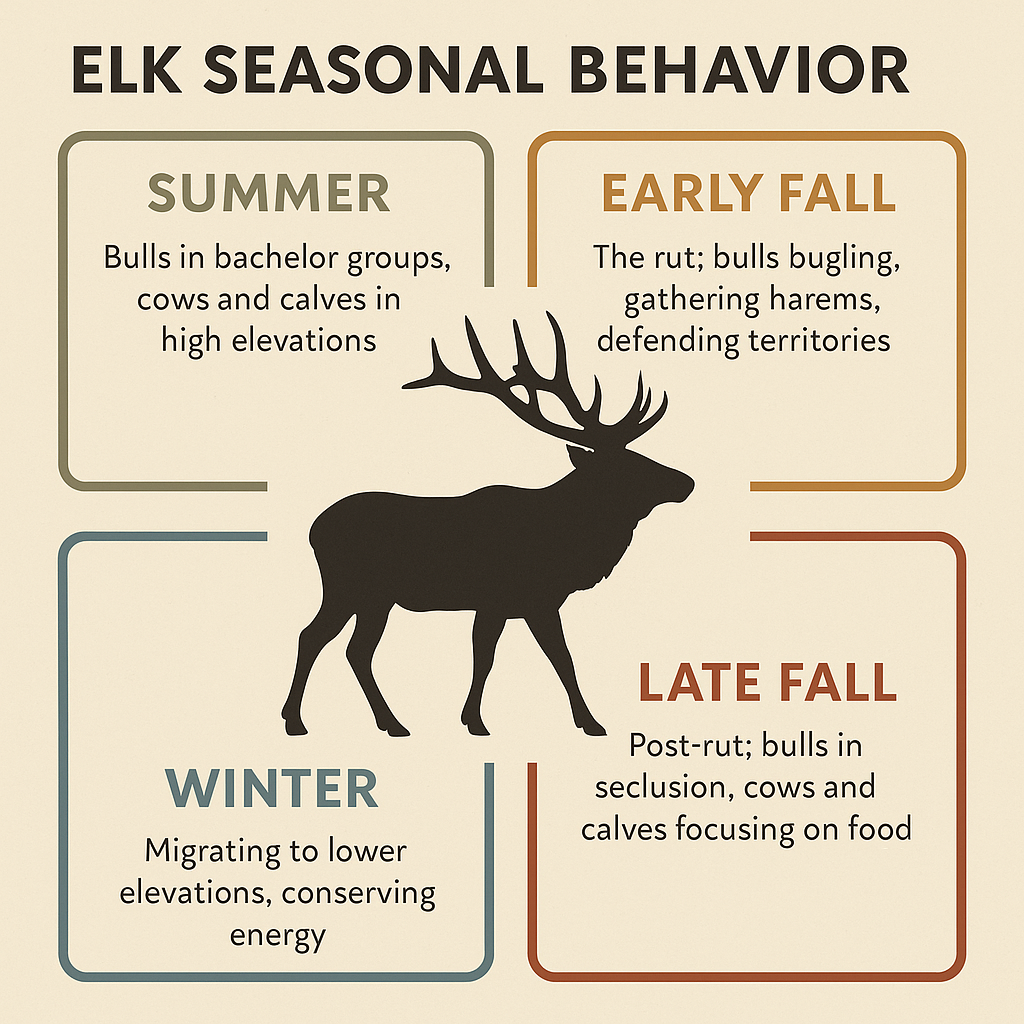
In many regions, elk migrate between summer and winter ranges. This movement helps them find food, but it also plays a role in defense. By moving in large groups and covering long distances, they avoid areas with heavy predator activity or human hunting pressure.
Using Water And Barriers
Elk are strong swimmers and will cross deep rivers or lakes to escape predators. In some cases, they use fallen logs, rocks, or thick brush to slow down or block attackers.
Antipredator Behaviors And Tricks
Beyond physical and social defenses, elk have learned behaviors that give them an edge.
Freezing And Camouflage
Young calves rely on camouflage. Their spotted coats blend with the grass and leaves, making them hard to see. Calves often lie completely still when danger is near. This “freeze” strategy works well against predators that hunt by sight.
False Alarms
Sometimes elk will give false warning calls if they are not sure about a threat. This may confuse predators or test their reaction. It also keeps the herd alert, so they are ready for real danger.
Aggression When Needed
While elk prefer to run, they can be aggressive if cornered. Bulls are especially dangerous during the rut. There are records of elk charging at wolves, bears, and even people who get too close.
Defense Against Human Threats
Humans have been hunting elk for centuries, but elk have learned new ways to avoid danger from people.
Avoiding Open Areas
In regions where hunting is common, elk tend to avoid open fields during daylight. They become more active at dawn, dusk, or night, when it is harder for hunters to see them.
Learning Human Patterns
Elk can learn which areas are most dangerous and may avoid roads, trails, or places where they smell humans. In some national parks, elk are less fearful because hunting is not allowed, but in hunted areas, they are much more cautious.
Changing Migration Routes
If hunting pressure is high in one area, elk may change their migration routes or timing. This makes it harder for hunters to predict where and when elk will appear.
How Elk Defenses Compare To Other Deer
Elk are not the only deer that face predators, but their defense strategies are unique in some ways. Here’s a look at how elk compare to other members of the deer family:
| Species | Size (Adult) | Group Behavior | Physical Defense |
|---|---|---|---|
| Elk | 500–700 lbs | Large herds, coordinated | Antlers, kicks, speed |
| White-tailed Deer | 100–300 lbs | Small groups, more solitary | Speed, hiding |
| Moose | 800–1,500 lbs | Solitary or small groups | Powerful kicks, antlers |
| Caribou | 180–700 lbs | Large migratory herds | Antlers, running |
Elk stand out for their combination of size, group tactics, and weapon-like antlers. While moose rely more on strength and deer on hiding or running, elk blend several strategies.
Predators Of Elk: Who Are The Main Threats?
Understanding elk defense means knowing which predators they face most often.
| Predator | Hunting Style | Common Elk Response |
|---|---|---|
| Wolves | Pack hunting, chase and tire out prey | Group defense, running as herd |
| Grizzly Bears | Ambush or target calves | Aggressive defense, kicking |
| Mountain Lions | Stalking, leaping attack | Alertness, group defense |
| Humans | Hunting with weapons, traps | Hiding, changing routes |
Most predators prefer to target young or weak elk. Healthy adults are risky targets, especially when the herd is alert and ready to defend itself.

Surprising Insights About Elk Defense
Some of the most interesting things about elk defense are not obvious at first glance.
1. Antler Shedding Creates Risk
Bulls shed their antlers every winter, which leaves them without this weapon for a few months. During this time, bulls are more cautious and often join cow herds for safety.
2. Predator Pressure Changes Behavior
Studies show that elk in areas with more wolves or bears are more vigilant and spend more time in groups. Where predators are rare, elk are less watchful and sometimes feed alone.
3. Elk Can Outsmart Predators
Some elk have learned to use human presence as protection. They may stay close to towns or roads, where wolves and bears are less likely to hunt.
4. Calves Learn Fast
Young elk must learn danger signals quickly from their mothers. Calves that do not respond to warnings are more likely to be caught.
Lessons From Research And Field Studies
Wildlife biologists have used GPS collars and field observations to study elk defense. Key findings include:
- Elk herds with more adults have higher calf survival rates.
- Predators are less successful when elk stay in open areas with good visibility.
- Human disturbance (like roads or hiking trails) can change elk movement and make them more vulnerable if it disrupts their normal group patterns.
For more research details, you can visit the Wikipedia Elk page.
Frequently Asked Questions
How Do Elk Protect Their Calves From Predators?
Elk mothers hide their newborn calves in tall grass and visit only to nurse. If a predator comes close, mothers may use their hooves to kick or form a defensive ring with other cows around the calves.
Do All Elk Have Antlers?
No. Only male elk (bulls) grow antlers, which they use for fighting and defense. Females (cows) do not have antlers but rely on their size, group defense, and kicking to protect themselves.
Can Elk Swim To Escape Danger?
Yes. Elk are excellent swimmers. They often cross rivers or lakes to avoid predators, especially during migration or when chased.
What Animals Are The Biggest Threat To Elk?
The main predators of elk are wolves, grizzly bears, and mountain lions. Young calves are also at risk from coyotes and sometimes black bears. Humans are a major threat through hunting.
How Fast Can An Elk Run?
Elk can run up to 45 miles per hour (72 km/h) for short distances. Their speed and agility help them escape from most predators.
Elk have survived for thousands of years by using their size, weapons, group tactics, and sharp senses. They are not just strong—they are smart and adaptable. Whether facing wolves in the forest or hunters in open fields, elk know how to keep themselves and their young as safe as possible.
Their story is a great example of how animals use both instinct and learning to survive in a world full of danger.

