Mirrorless camera batteries often drain quickly because of the continuous use of high-power features like the electronic viewfinder or constant autofocus modes. These settings keep the processor and sensors active even when you aren’t actively pressing the shutter button. Most of the time, this is simply a result of how mirrorless systems function compared to older cameras. You can confirm this by checking your camera’s power management settings or observing if the drain slows down when these features are turned off.
Why your mirrorless camera battery drains fast
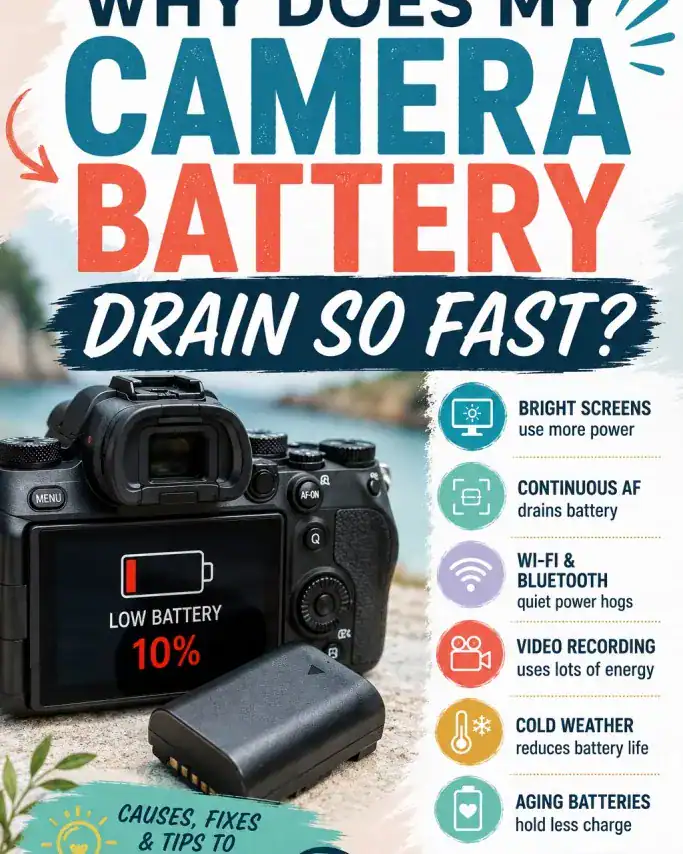
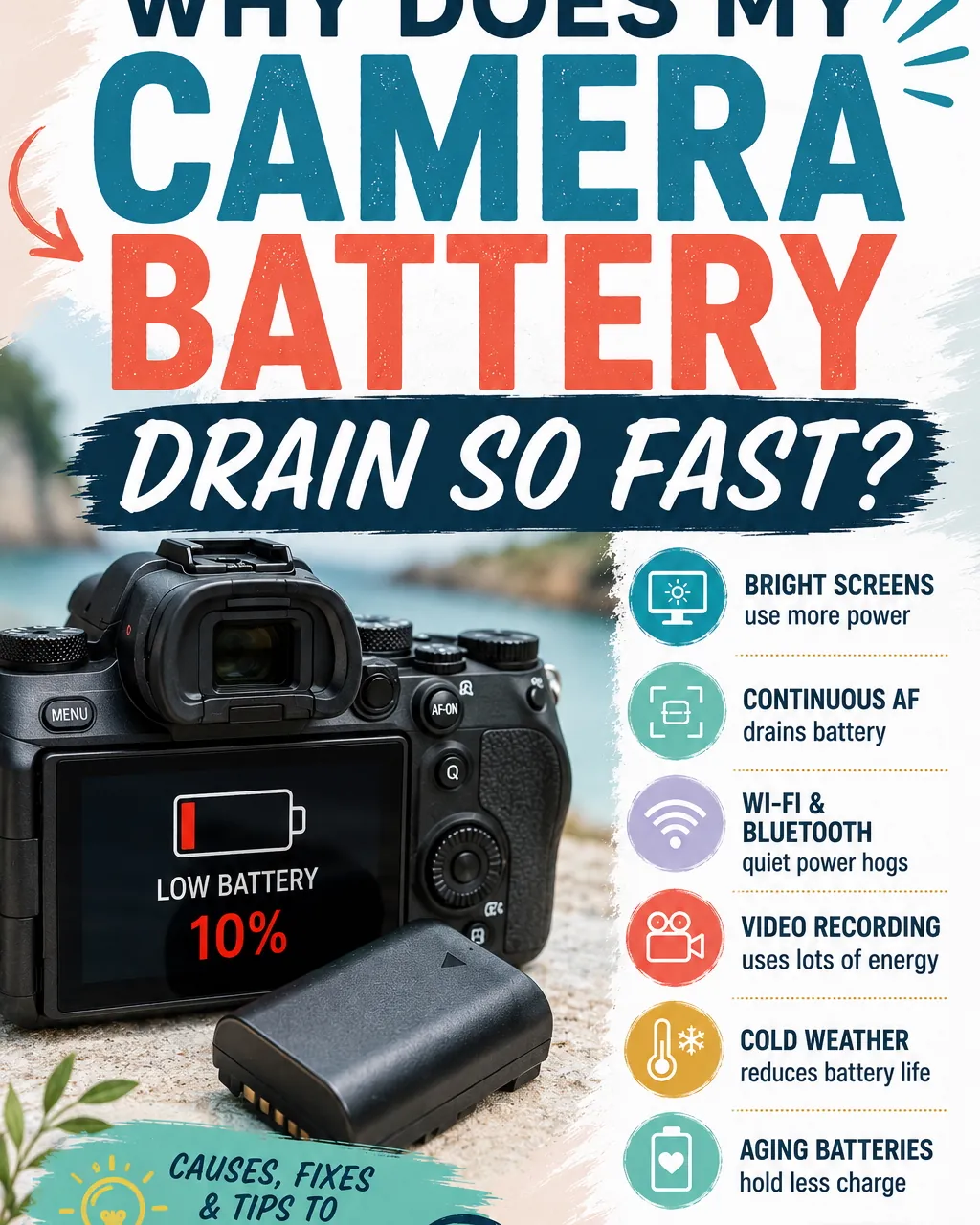
The following table summarizes the most frequent causes for battery power loss.
| Cause | How common | How to confirm it | Fix it yourself? |
|---|---|---|---|
| High EVF brightness | Very common | Lower brightness in menu | Yes |
| Constant autofocus | Very common | Switch to single-shot AF | Yes |
| Wireless connectivity | Common | Turn off Wi-Fi/Bluetooth | Yes |
| Old battery health | Common | Check battery age/cycles | No |
| Cold weather usage | Occasional | Warm battery to room temp | Yes |
| Internal short circuit | Rare | Camera fails to power on | No |
These issues often compound one another during a typical shoot. For example, keeping Wi-Fi active while using the electronic viewfinder at maximum brightness forces the camera’s processor to work significantly harder than necessary.
If you suspect a battery is failing, track how many shots you get on a full charge compared to when the unit was new. If the capacity drops by more than half, the chemical degradation of the internal cells is likely irreversible.
Conversely, if the camera drains while powered off, check for a stuck button or a faulty memory card. A card with a corrupted file structure can cause the camera to continuously attempt to write data, effectively preventing the device from entering a true sleep state.
High-Power Settings and Display Usage
The electronic viewfinder (EVF) and rear LCD screen are the biggest power consumers on any mirrorless device. Because these screens are constantly refreshing data from the sensor, they demand significant electrical current throughout your entire shooting session. If you keep your screen brightness at the maximum setting, your battery will deplete significantly faster than at a medium or low brightness level.
To test if your screen is the culprit, lower the brightness by two or three stops in your camera’s display menu. If you notice that your battery lasts 20% to 30% longer during a typical shooting day, the display was the primary source of the drain.
You can also prioritize the use of the EVF over the rear LCD if your model allows it, as some sensors for the viewfinder are more efficient. If the battery still drains rapidly after these adjustments, the issue may lie with the battery chemistry itself.
Constant Autofocus and Image Stabilization
Modern mirrorless cameras often feature advanced tracking modes that keep the lens motors constantly active. When your camera is set to continuous autofocus (AF-C), the system is constantly calculating distance and moving the lens elements, which consumes power even when you aren’t taking a picture. This is a common mistake that users make, as they leave tracking enabled during static portrait or landscape photography sessions.
You can verify this by switching your focus mode to single-shot (AF-S) or manual focus for one hour of use. If the power level remains higher than usual, the constant motor activity was likely the cause. Additionally, image stabilization (IS) systems built into the body or lens are power-hungry. If you’re shooting on a tripod, turning off the image stabilization system will save a noticeable amount of energy, as the camera will stop trying to compensate for non-existent movement.
Battery Age and Environmental Conditions
Lithium-ion batteries have a limited lifespan and will eventually lose their ability to hold a charge. Over time, the internal resistance increases, meaning the battery can’t provide the necessary voltage to the camera’s processor, leading to premature “low battery” warnings. If your battery has been in use for a long period, it’s likely reaching the end of its effective performance cycle.
Cold weather also significantly impacts battery performance, as low temperatures slow down the chemical reactions inside the cell. If you’re shooting in temperatures below 40°F, your battery will likely show a lower capacity than it would in a warm environment. You should keep spare batteries in an inside pocket close to your body heat. If a fresh, fully charged battery still drains in under an hour during normal room-temperature use, the battery pack has likely degraded and needs replacement.
Less Likely Causes for Power Loss
Firmware bugs often force your camera to remain in an active power state even when the device is supposedly asleep. Check the manufacturer’s website for updates, as developers frequently release patches that optimize power management protocols and resolve background processing errors.
Third-party accessories like battery grips or power adapters can introduce unexpected resistance. These components may lack the precise electrical shielding of official gear, creating a subtle, constant drain. Remove every external add-on to see if your battery life stabilizes during standard operation.
Corroded contacts also impede efficiency. Oxidized metal terminals on the battery or within the camera bay increase electrical resistance, forcing the system to pull more current to compensate for the poor connection. Gently polish these surfaces with a dry, lint-free cloth to ensure clean conductivity.
If your camera body feels unusually warm while powered off, an internal short circuit is likely present. This hardware failure causes a steady power leak that no software setting can fix. Seek professional service immediately.
What a Professional Repair Involves
Fixing a battery drain issue is often a simple matter of changing your habits or replacing a worn-out power cell. If the problem is an old battery, the cost is roughly the price of a standard camera accessory, which is much cheaper than a professional repair. If you suspect an internal hardware fault, you must contact an authorized service center.
A professional technician will test the camera’s power draw using specialized equipment to determine if the mainboard is leaking current. This process is complex and requires opening the camera housing, which voids your warranty and risks damaging delicate internal sensors. Don’t attempt to open the camera body yourself. If your camera is still under warranty, contact the manufacturer directly to arrange for a free inspection or repair.
Frequently asked questions
How long should a mirrorless battery last?
A standard mirrorless battery typically lasts for 300 to 500 shots per charge under normal conditions, though this varies by camera model and usage. You can check the exact battery rating for your specific model in the official user manual or on the manufacturer’s product specification page.
Is it safe to use third-party batteries?
It’s generally safe to use third-party batteries, but they often lack the sophisticated power management chips found in original manufacturer packs. These chips communicate with the camera to optimize power delivery. If you use third-party options, expect shorter runtimes and potentially inaccurate battery percentage readings on your camera’s display.
Why does my battery drain while the camera is off?
Your battery drains while off if you have wireless features like Bluetooth or Wi-Fi enabled for smartphone connection. These features keep a small portion of the camera’s circuitry active to listen for a signal. Turning off all wireless connectivity in the network menu will stop this background power consumption.
Does turning off the screen save battery?
Turning off the screen saves a significant amount of battery, as the display is one of the most power-intensive components. If you’re using the electronic viewfinder, you can set the camera to prioritize the viewfinder only. This prevents the rear LCD from powering up and draining your charge.
How do I know if my battery is dead?
Your battery is dead if it no longer holds a charge for more than a few minutes or if it appears physically swollen. If the battery doesn’t reach a full charge after being left in the official charger for the recommended time, it’s likely time to purchase a new one.
Can cold weather permanently damage my battery?
Cold weather doesn’t usually cause permanent damage, but it will temporarily reduce the available capacity until the battery warms up. If you bring a cold battery inside, let it reach room temperature slowly before charging it. Charging a freezing battery can lead to internal chemical damage and reduced lifespan.
Conclusion
Getting the most out of your gear doesn’t have to be a struggle. Once you’ve adjusted your settings, you’ll find that your camera won’t quit on you during a long day of shooting. It’s a good idea to keep a spare battery in your bag, so you’re always ready to capture the perfect shot.