Birds have fascinated humans for thousands of years, not just for their beauty or songs, but for the essential roles they play in nature. From tiny hummingbirds to towering eagles, birds are everywhere: forests, cities, deserts, and even the open sea. But what do these feathered creatures actually do for the environment? Why do ecosystems need birds, and what happens if birds disappear? Understanding the role of birds in ecosystems can change how we see the natural world and why we must protect it.
Birds are more than just colorful additions to our gardens; they are ecosystem engineers, pollinators, pest controllers, seed spreaders, and even scavengers. Birds help keep nature in balance. Sometimes, their contributions are obvious—like owls hunting mice in a field—but many times, their impact is hidden and complex. Recent studies show that when bird populations drop, the whole ecosystem can suffer. People who work in farming, forestry, and even city planning rely on healthy bird populations, often without realizing it.
This article looks deeply at the many ways birds support the planet’s health. We will explore their key roles, why these jobs matter, and what might happen if birds vanish. We’ll also look at some surprising facts and answer common questions about birds and ecosystems. By the end, you will see birds not just as beautiful animals, but as vital partners in the world’s natural systems.
Birds As Pollinators
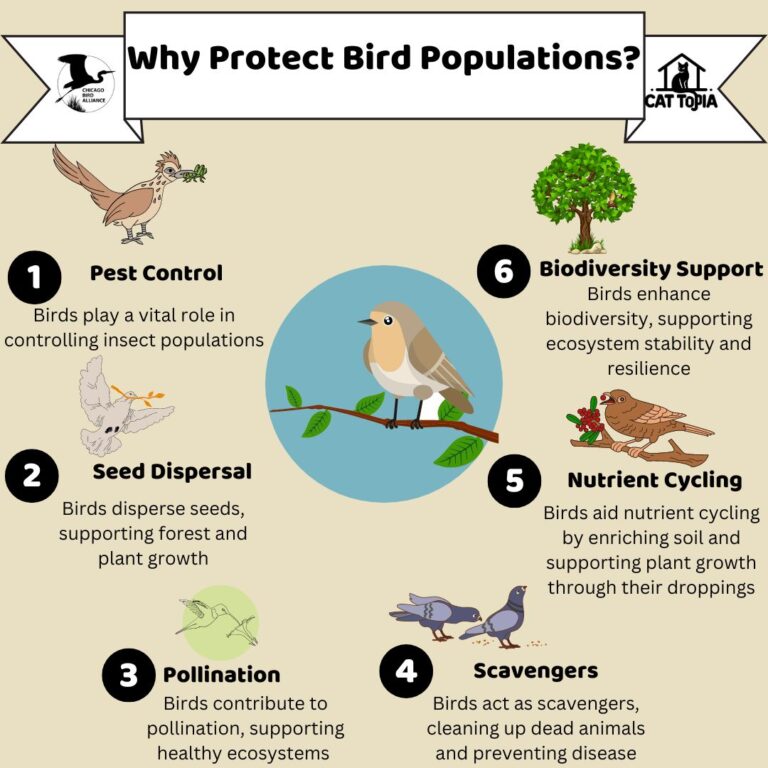
Many people know that bees and butterflies pollinate flowers, but birds are also important pollinators, especially in tropical and desert areas. More than 2,000 plant species depend on birds for pollination. Some of the most well-known pollinators are hummingbirds, sunbirds, honeyeaters, and certain parrots.
Birds visit flowers to drink nectar. As they move from flower to flower, pollen sticks to their feathers and beaks, and they carry it to other plants. This helps plants reproduce and grow fruit. In places where bees are rare or absent, birds may be the main or only pollinators. For example, in New Zealand, some native plants rely almost entirely on birds such as the tūī and bellbird for pollination.
Bird-pollinated plants often have bright red, orange, or yellow flowers, which attract birds’ sharp eyesight. The shape of the flowers sometimes matches the size and curve of a bird’s beak, showing a close relationship between the plant and its feathered partner.
Without bird pollinators, some fruits, nuts, and seeds would be much less common or even disappear from the wild. This would affect not only the plants but also the animals and people who depend on them for food.
Birds As Seed Dispersers
After plants make seeds, those seeds need to travel to new places to grow. Birds play a major role in this process, called seed dispersal. When birds eat fruits or berries, they often fly far from the original plant. Later, they drop the seeds in their droppings, sometimes miles away.
This is especially important in forests, where large birds like hornbills, toucans, and fruit doves carry big seeds that other animals cannot move. For example, some rainforest trees in Africa and Asia depend almost entirely on hornbills to spread their seeds.
Seed dispersal by birds helps forests recover after fire, storms, or logging. It also allows plants to reach new areas, which is important as climates change. In one study, scientists found that up to 90% of tree species in tropical forests depend on animals—mainly birds—for seed dispersal.
Birds do not just help forests. In grasslands, wetlands, and even cities, birds like crows, jays, and starlings move seeds and help shape the plant community. Some plants have even evolved to make their fruits tasty or colorful to attract birds.
If birds disappear, seed movement slows down. This can lead to fewer new plants, less forest recovery, and less food for other animals.
Birds As Pest Controllers
Farmers and gardeners have a special reason to thank birds: they eat insects, rodents, and other pests. Birds like swallows, flycatchers, warblers, and woodpeckers consume large numbers of insects every day. One barn swallow can eat up to 850 insects daily!
Birds help keep pest populations in check naturally. For example, in forests, woodpeckers control bark beetles that can kill trees. In rice fields, egrets and herons eat insects that damage crops. In cities, sparrows and robins help limit the spread of mosquitoes and flies.
In some cases, birds save farmers millions of dollars in pest control. A study in Jamaica found that birds reduced coffee berry borer beetle damage by more than 50%, increasing crop value. In the United States, purple martins and tree swallows are invited to nest near farms for their pest-eating skills.
Birds do not just eat insects. Hawks, owls, and falcons hunt mice, rats, and other small mammals that can destroy crops or spread disease. Without these natural predators, pest populations can explode, leading to more crop loss and the need for chemical pesticides.
One insight that is often missed: pest-eating birds also help protect human health. By reducing the number of mosquitoes and rodents, they lower the risk of diseases like malaria, dengue, and hantavirus.
Birds As Scavengers
Some birds play a less glamorous but very important job: cleaning up dead animals. These scavenger birds include vultures, condors, crows, and some eagles.
When an animal dies, its body can become a source of disease if not removed quickly. Scavenger birds find and eat carcasses, breaking them down fast and keeping the environment clean. Vultures are especially efficient; their stomach acid is so strong it kills most harmful bacteria and viruses.
In places where vultures have declined, like India, there has been a rise in diseases such as rabies and anthrax. This happens because carcasses stay longer in the environment, attracting rats and stray dogs that can spread disease to humans.
In India, the loss of vultures led to a 5. 5 million increase in feral dogs and thousands of extra rabies deaths.
Scavenger birds are also important in recycling nutrients. By eating dead animals, they return nutrients to the soil, supporting plant growth and helping the ecosystem stay balanced.
A common misunderstanding is that scavenger birds are dirty or dangerous. In fact, they are some of the planet’s best cleaners.

Birds As Ecosystem Engineers
Some birds change their environment in ways that benefit other species. These are called ecosystem engineers. For example, woodpeckers create holes in trees when they search for insects or build nests. After the woodpecker leaves, other animals—like owls, bats, or squirrels—move in and use the holes as their homes.
Another example is geese and ducks. When they graze on grass or dig in the mud, they shape the landscape of wetlands, lakes, and rivers. Their feeding helps keep plant growth in balance and creates open areas for other animals.
Some seabirds, like puffins and petrels, dig burrows on islands. These burrows provide shelter for insects, small mammals, and even rare plants. Seabird droppings, called guano, are full of nutrients that fertilize the soil and help coastal plants grow.
Birds can even change the fire pattern in forests. In Australia, some birds have learned to carry burning sticks to spread fires, which helps them catch prey. This is a rare but powerful example of birds shaping their ecosystem in unexpected ways.
Without these ecosystem engineers, many animals and plants would lose their homes, and the landscape would change in ways that are hard to predict.
Birds And Food Webs
Birds have a central place in food webs. They are both predators and prey. Small birds eat insects, seeds, or fruit. Larger birds eat fish, mammals, or even other birds. And many birds are eaten by snakes, mammals, larger birds, or humans.
This makes birds important links in the transfer of energy through ecosystems. For example, when birds eat insects, they control the insect population. When hawks eat small birds or rodents, they keep those populations in check. If one group disappears, the balance can tip, causing a chain reaction.
Consider the case of the passenger pigeon in North America. Once, these birds numbered in the billions. When they went extinct, forests changed. Some plants stopped growing as well, and predators had to find new prey. This shows how the loss of a single bird species can ripple through the entire ecosystem.
One non-obvious insight: birds help connect different parts of the ecosystem. Migratory birds, for example, carry energy and nutrients between continents, linking faraway environments.

Birds As Indicators Of Environmental Health
Birds are often called indicator species. This means that changes in bird populations can signal problems in the environment before other signs appear.
Because birds are found almost everywhere and respond quickly to changes in habitat, pollution, or climate, scientists use them to monitor ecosystem health. For example, a sudden drop in swallows might mean there are fewer insects, perhaps due to pesticides or pollution.
An increase in certain ducks can signal better water quality in wetlands.
Birds also help warn people about dangerous chemicals. In the 1950s and 1960s, scientists noticed that eagle and falcon eggs were thinning and failing to hatch. This led to the discovery that the pesticide DDT was harming birds and, likely, other wildlife and humans.
Banning DDT helped many bird species recover.
Birdwatchers—both amateur and professional—collect valuable data for conservation and science. Some of the largest citizen science projects in the world, such as the Christmas Bird Count and eBird, rely on people tracking birds to measure ecosystem changes.
One important note: if birds are in trouble, other parts of the ecosystem are likely in trouble too.
Birds And Climate Change
Birds are affected by climate change but also play roles in how ecosystems respond to it. As temperatures rise, bird migration patterns, breeding seasons, and ranges are shifting. Some birds move to new areas, while others struggle to find food or suitable habitat.
Birds help ecosystems adjust to climate change by moving seeds and pollens to new places. This allows plants to spread and adapt as their environment changes. For example, in the Arctic, birds like geese and shorebirds help plants colonize new areas as ice melts.
Birds also play a role in storing carbon. Seabirds, for instance, fertilize coastal plants with their guano, which supports plant growth and helps lock carbon in the soil. Forest birds spread seeds that grow into trees, which absorb carbon from the atmosphere.
However, as climate change intensifies, some birds may not be able to keep up. Losing birds could make it harder for ecosystems to recover from droughts, fires, or storms.
A less obvious impact: changes in bird populations can alter the timing of natural events, like when flowers bloom or insects appear, which can disrupt the entire ecosystem.
Birds In Urban Ecosystems
Cities are not empty of nature. Urban birds play important roles in city ecosystems. Pigeons, sparrows, crows, and even raptors like falcons adapt well to city life.
These birds help control pests such as insects and rodents, clean up food waste, and spread seeds of city trees and plants. Birds also add beauty, song, and a sense of wildness to urban areas, improving mental health and well-being for city residents.
Some city planners use birds as a measure of urban ecosystem health. Parks and green roofs designed to attract birds are often richer in other wildlife and provide cooler, cleaner air.
Urban birds face special challenges, such as glass windows, pollution, and lack of nesting sites. Some cities are now protecting and encouraging birds with bird-friendly building designs and native plant gardens.
A practical tip: even small balconies or window boxes with native plants can support urban birds, helping the whole ecosystem.
Cultural, Economic, And Recreational Value
Birds are not only important for nature but also for people’s lives, cultures, and economies. Birdwatching is one of the fastest-growing outdoor activities in the world, bringing billions of dollars to local economies through tourism, equipment sales, and conservation jobs.
In many cultures, birds are symbols of hope, freedom, or wisdom. Some religions see birds as messengers or sacred animals. Birds inspire art, music, and literature everywhere.
Birds also help educate people about science and conservation. Watching birds can spark curiosity and a desire to protect nature.
Some birds are used in falconry, racing, or as pets, though these practices must be managed to avoid harming wild populations.
One overlooked fact: when birds disappear, people lose not just nature’s benefits but also cultural traditions and sources of joy.
Data Tables: Birds’ Impact In Numbers
To better understand the influence of birds, let’s look at some real-world data.
| Bird Role | Global Impact | Notable Example |
|---|---|---|
| Pollination | 2,000+ plant species | Hummingbirds pollinate 8% of plants in the Americas |
| Seed Dispersal | Up to 90% of tropical trees | Hornbills spread large seeds in Asia/Africa |
| Pest Control | Up to $500 million/year value (US farms) | Swallows eat 850 insects/day per bird |
| Scavenging | Removes millions of carcasses | Vultures prevent rabies outbreaks in India |
Another look at birds’ disappearance and its impact:
| Bird Decline | Ecosystem Impact | Human Impact |
|---|---|---|
| Vultures (India) | More carcasses, more disease | 5.5 million extra feral dogs, rabies deaths |
| Passenger Pigeon (USA) | Forest changes, loss of tree species | Loss of food and cultural icon |
| Songbirds (Europe) | Fewer insects, less pollination | Higher crop pests, less nature tourism |
Threats To Birds And Ecosystem Health
Unfortunately, many bird populations are declining worldwide. The biggest threats include:
- Habitat loss – Forest clearing, wetland draining, and urban expansion destroy bird homes.
- Pollution – Pesticides, plastics, and chemicals harm birds directly or reduce their food.
- Climate change – Changes in temperature, rainfall, and seasons disrupt migration and breeding.
- Invasive species – Cats, rats, and other non-native animals prey on birds or compete for resources.
- Hunting and trapping – Some birds are overhunted for food, trade, or sport.
A study published in 2018 found that nearly 1 in 8 bird species is at risk of extinction. Losing birds can start a downward spiral for ecosystems, making them less productive and more vulnerable to other problems.
What Happens When Birds Disappear?
When birds decline or disappear, the effects are often dramatic:
- More pests: Without birds, insects and rodents can multiply, harming crops and spreading disease.
- Slower forest recovery: Fewer seeds are spread, so forests and other habitats recover more slowly after damage.
- Dirty environments: Without scavengers, dead animals build up, spreading disease.
- Weaker food webs: Other animals lose food sources, and the balance between predators and prey is lost.
- Loss of pollination: Some plants fail to produce fruit or seeds, affecting other animals and people.
These effects can combine and worsen over time, leading to a less healthy, less resilient ecosystem.
How To Protect Birds And Ecosystems
Protecting birds is not just about saving one group of animals; it is about keeping the whole ecosystem healthy. Here are some practical steps:
- Conserve habitats: Protect forests, wetlands, and grasslands. Even small parks or gardens help.
- Use fewer chemicals: Reducing pesticides and pollution benefits birds and people.
- Support bird-friendly farming: Shade-grown coffee and organic crops provide homes for birds.
- Reduce window strikes: Simple changes to windows can save millions of birds in cities.
- Join citizen science: Birdwatchers’ data helps guide conservation.
- Support laws that protect birds: Strong regulations are needed to stop illegal hunting and trade.
For more detailed guidance, visit the National Audubon Society.
Frequently Asked Questions
Why Are Birds Called Indicator Species?
Birds are sensitive to changes in their environment. When their numbers go up or down, it often means something is changing—like pollution, habitat loss, or climate. Scientists use birds as early warning signs of ecosystem health.
How Do Birds Help Humans Directly?
Birds control pests, pollinate crops, spread seeds, and clean up waste. They also support tourism, recreation, and culture. Without birds, people would face more pests, fewer crops, and higher health risks.
Which Birds Are Most Important For Ecosystems?
All birds play roles, but some are especially key: vultures (scavengers), hummingbirds and sunbirds (pollinators), hornbills and jays (seed dispersers), and hawks and owls (pest control). Losing these birds can cause big changes.
Can Cities Be Good For Birds?
Yes, if cities have parks, trees, and safe buildings, many birds can thrive. Urban birds help control pests and spread seeds. Simple actions like planting native flowers or adding bird baths can make a big difference.
What Can I Do To Help Birds In My Area?
Plant native plants, avoid pesticides, keep cats indoors, and support local conservation groups. Even small steps, like adding a bird feeder or joining bird counts, can help birds and the whole ecosystem.
Birds are everywhere, but their roles are often invisible. By understanding and protecting birds, we protect the entire web of life that supports us all.

