Birds have amazed humans for thousands of years. Their colors, songs, and ability to fly capture our imagination. But one question many people have is: how long do birds live? The lifespan of a bird is not just a number. It connects to their size, species, habitat, diet, and even the dangers they face every day. If you ever wondered why some parrots outlive their owners, while small songbirds seem to live fast and die young, this article will give you clear answers.
Learning about bird lifespan is more than just curiosity. It helps bird owners, wildlife lovers, and anyone interested in nature understand these fascinating creatures better. This guide will explain what affects bird lifespan, how long different kinds of birds live, and surprising facts that most people don’t know.
You will also learn how scientists study bird age, which birds are the oldest recorded, and what you can do to help birds live longer—whether in your backyard or in the wild.
What Does Bird Lifespan Mean?
A bird’s lifespan is the length of time it lives, from hatching out of its egg until death. This number can be the average lifespan (how long most birds of a species live) or the maximum lifespan (the oldest recorded individual of that species). Both are important, but they tell different stories.
Average lifespan gives you an idea of what is typical. Maximum lifespan shows the full potential, often reached only by lucky individuals. Many wild birds never live to their maximum possible age due to dangers like predators, disease, or accidents.
Why Do Bird Lifespans Vary So Much?
No two bird species live exactly the same amount of time. Some small birds may only live a few years, while others, like certain parrots, can live for decades. Here are the main factors that shape how long a bird lives:
1. Species And Genetics
The most important factor is the bird species. Some birds are simply built to live longer. For example, most songbirds (like sparrows and robins) have short lives, while parrots or albatrosses can live much longer. Genetics decide the basic limits for each species.
2. Size Of The Bird
In general, larger birds live longer than smaller ones. For example, a tiny wren may only live 2 years, while a swan or eagle could reach 20 years or more. One reason is that larger birds are less likely to be eaten by predators.
3. Wild Vs. Captivity
Birds in the wild have much shorter lives than those in captivity. Pet birds, or those in zoos, are safe from predators, starvation, and harsh weather. They get regular food and medical care, so they can reach their true potential lifespan.
4. Predators And Accidents
Wild birds face many threats every day. Young birds often die before their first birthday. If a bird survives its first year, its chances of living longer go up. This high early death rate is why average lifespans in the wild are much lower.
5. Diet And Nutrition
A healthy diet helps birds live longer. Birds that can find food easily, or those given proper nutrition by owners, usually live longer. Malnutrition, or eating the wrong foods, shortens life.
6. Diseases And Parasites
Birds can get sick from viruses, bacteria, or parasites. In the wild, disease is a big cause of death. Captive birds are less exposed, but they can still get sick if their environment is not clean.
7. Environmental Conditions
Weather, pollution, habitat loss, and even climate change can shorten a bird’s life. For example, birds living in cities face dangers from windows, cars, and pollution.
How Long Do Different Types Of Birds Live?
The question “what is the lifespan of a bird? ” does not have one simple answer. Here’s a closer look at how long various types of birds live, from the tiniest hummingbird to the mighty eagle.
Small Songbirds
These are the birds you often see in gardens and parks, like robins, sparrows, and finches.
- Average lifespan: 2-5 years in the wild
- Maximum recorded lifespan: Up to 10-12 years (rare cases)
Most die in their first year. If they survive, they may live a few more years. For example, the American Robin may live 2 years on average, but the oldest known wild robin reached 14 years.
Parrots
Parrots are famous for their long lives, especially the larger species.
- Average lifespan: 20-40 years (medium to large species)
- Maximum recorded lifespan: 80-100 years (macaws, cockatoos)
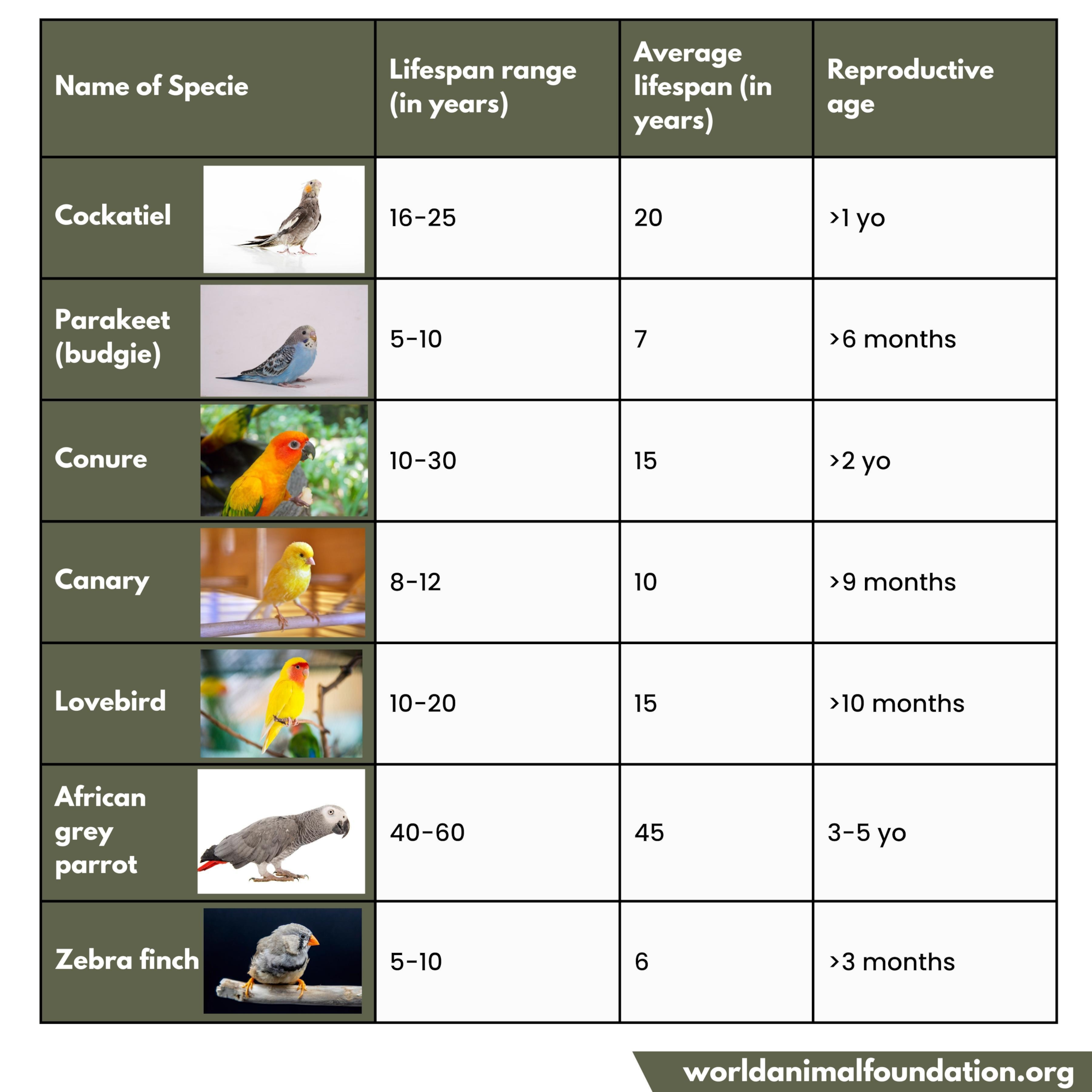
Small parrots like budgies live 5-10 years. African Grey Parrots often reach 40-50 years. Blue-and-yellow Macaws can live 50-60 years, sometimes even longer.
Birds Of Prey (raptors)
Owls, hawks, eagles, and falcons are powerful hunters.
- Average lifespan: 10-30 years
- Maximum recorded lifespan: Up to 50 years (some eagles in captivity)
Bald Eagles can live 20-30 years in the wild, with the oldest known wild Bald Eagle reaching 38 years.
Waterfowl
Swans, geese, and ducks often live near water.
- Average lifespan: 5-15 years in the wild
- Maximum recorded lifespan: Up to 30 years (mute swans)
Swans are among the longest-lived water birds, sometimes reaching 20-30 years.
Seabirds
Albatrosses, petrels, and gulls spend much of their lives at sea.
- Average lifespan: 10-30 years
- Maximum recorded lifespan: Over 60 years (albatross)
The oldest known wild bird is a Laysan Albatross named “Wisdom,” who is over 70 years old and still alive.
Pigeons And Doves
Common in cities and the countryside.
- Average lifespan: 3-6 years in the wild
- Maximum recorded lifespan: 15-20 years in captivity
Feral pigeons have short lives, but racing pigeons and pet doves can live much longer.
Hummingbirds
The smallest birds, full of energy.
- Average lifespan: 3-5 years
- Maximum recorded lifespan: About 12 years
Most hummingbirds do not survive their first year, but those that do can live several years.
Chickens And Game Birds
Domestic chickens, pheasants, and quail.
- Average lifespan: 3-8 years
- Maximum recorded lifespan: 15-20 years (chickens)
Wild game birds have shorter lives due to hunting and predators.
Flightless Birds
Ostriches, emus, and kiwis.
- Average lifespan: 10-40 years
- Maximum recorded lifespan: Over 60 years (ostriches in captivity)
Ostriches are the largest and among the longest-lived land birds.
Table: Lifespan Comparison Of Common Bird Types
| Bird Type | Average Lifespan (Wild) | Maximum Recorded Lifespan |
|---|---|---|
| Songbirds | 2-5 years | 10-14 years |
| Parrots | 20-40 years | 80-100 years |
| Birds of Prey | 10-30 years | 50 years |
| Waterfowl | 5-15 years | 30 years |
| Seabirds | 10-30 years | 60+ years |
| Pigeons/Doves | 3-6 years | 15-20 years |
| Hummingbirds | 3-5 years | 12 years |
| Chickens/Game Birds | 3-8 years | 15-20 years |
| Flightless Birds | 10-40 years | 60+ years |
How Do Scientists Know A Bird’s Age?
Birds do not have birth certificates, so how do we know their age? Scientists use several smart methods:
Bird Banding
This is the most common method. When a bird is young, researchers put a small, harmless band on its leg with a unique number. If the bird is found or captured later, the band tells its age. This method has helped record many of the oldest known wild birds.
Observing Captive Birds
Zoos, bird breeders, and pet owners often know exactly when a bird was born. This helps track the maximum possible lifespan for different species. However, these numbers can be higher than in the wild.
Studying Physical Changes
Some birds change their feathers, eye color, or beak shape as they age. Experts can sometimes estimate age by looking at these signs, but it is not always exact.
Using Modern Technology
New methods like genetic testing, or even measuring changes in bird tissues, are starting to give more clues about bird age.
Why Do Some Birds Live So Long?
You may be surprised that some birds outlive many mammals of the same size—or even much larger animals. For example, a parrot can live longer than a dog, cat, or even a horse. Why is this?
- Low Predation: Birds like parrots and albatrosses often live in places with few natural enemies.
- Slow Reproduction: Long-lived birds usually have fewer babies, but spend more time raising them.
- Stable Environments: Birds in safe, steady environments tend to live longer.
- Good DNA Repair: Some birds have bodies that repair damage better, slowing aging.
It is still a mystery why birds can live so long compared to similar-sized mammals. Scientists are studying this to learn more about aging—even for humans.
The Oldest Birds Ever Recorded
Some birds have reached amazing ages, especially with human care or in safe wild places. Here are a few record-breakers:
- Wisdom (Laysan Albatross): Over 70 years old, still lays eggs and raises chicks.
- Major Mitchell’s Cockatoo: A pet bird named “Cookie” lived to 83 years at Chicago’s Brookfield Zoo.
- Blue-and-yellow Macaw: Some individuals have reached 60-80 years.
- Mute Swan: Several have reached over 30 years in the wild.
- Bald Eagle: The oldest wild, banded eagle lived to 38 years.
These cases are rare, but they show the true potential of some bird species.

How Does Bird Lifespan Compare To Other Animals?
To put things in perspective, let’s see how birds compare to other animals of similar size:
| Animal | Typical Size | Average Lifespan |
|---|---|---|
| Mouse | 20g | 1-2 years |
| Canary | 20g | 8-10 years |
| Rabbit | 1.5kg | 6-10 years |
| Macaw | 1.5kg | 40-60 years |
| Dog (medium) | 20kg | 10-13 years |
| Swan | 10kg | 20-30 years |
You can see that birds often live much longer than mammals of the same size. This is one of the biggest surprises for new bird owners and nature lovers.
Life Stages Of A Bird
Understanding a bird’s lifespan means knowing the stages it goes through:
- Egg Stage: Lasts days to weeks, depending on the species.
- Chick (Nestling): Newly hatched, cannot survive alone. High risk of death from cold, hunger, or predators.
- Fledgling: Young bird learning to fly. Still depends on parents.
- Juvenile: Grows bigger, learns to feed itself. Survival rate increases.
- Adult: Fully grown, can reproduce. Most birds that reach this stage have a chance to live several more years.
- Old Age: Some birds show signs of aging (slower movement, fewer eggs), but many stay active until the end.
Human Impact On Bird Lifespan
Human activities can both help and harm birds. Here are some key points:
Negative Impacts
- Habitat destruction: Cutting forests or draining wetlands removes homes for birds.
- Pollution: Pesticides, plastics, and chemicals poison birds or their food.
- Collisions: Birds die from hitting windows, cars, or power lines.
- Hunting and trapping: Still a threat for many species.
Positive Impacts
- Protected areas: National parks and reserves give birds safe places to live.
- Wildlife laws: Many countries protect birds from hunting or capture.
- Bird feeders: In cities, feeders can help birds survive harsh weather.
How Can You Help Birds Live Longer?
If you love birds, there are ways you can help:
- Keep cats indoors: Outdoor cats kill millions of birds every year.
- Make windows safer: Use decals or screens to stop birds from flying into glass.
- Plant native trees and shrubs: These give food and shelter for local birds.
- Avoid pesticides: Use natural ways to control garden pests.
- Support bird conservation: Donate to groups that protect birds and habitats.
One non-obvious tip: Clean bird feeders regularly. Dirty feeders can spread diseases like salmonella, which can kill birds quickly.
Another practical idea: Provide fresh water, especially in winter or during droughts. Birds need clean water for drinking and bathing.
Why Bird Lifespan Matters
Knowing how long birds live is not just interesting trivia. It helps with:
- Conservation: Long-lived birds are slow to recover from population loss, so protecting adults is vital.
- Pet care: If you own a parrot, you may need to make plans for its care after you are gone.
- Ecosystem balance: Birds play key roles as seed spreaders, pest controllers, and food for other animals.
Bird lifespan is a window into the health of our environment. When birds live longer, it often means their world—and ours—is doing well.
Surprising Insights About Bird Lifespan
Many beginners believe all birds live short lives. This is not true—some birds can live longer than most pets or even people.
Another insight: Bird lifespan can change quickly if their environment improves or gets worse. For example, cleaner cities and fewer pesticides have helped some urban birds live longer. But new dangers (like glass buildings) create new risks.
Scientists are finding that some birds, like swifts and certain seabirds, can live decades despite facing tough conditions. It shows that luck, genetics, and environment all matter.
Frequently Asked Questions
How Can I Tell The Age Of A Pet Bird?
It is hard to know the exact age unless you have records from the breeder. Young birds have different eye and beak colors, but these changes stop after a few years. Vets can sometimes estimate age, but it is not exact.
Why Do Parrots Live So Long?
Parrots have slow lifestyles, few natural enemies, and strong immune systems. Their bodies repair damage well, and they often eat healthy diets. These factors add up to a long life, especially in captivity.
Is It True That Most Wild Birds Die In Their First Year?
Yes. Many wild birds never reach adulthood. Those that survive their first year have a much better chance of living several more years.
Can Birds Die From Old Age?
Yes, but this is rare in the wild. Most birds die from predators, accidents, or disease before reaching their natural lifespan. In captivity, some birds do die of age-related problems, like organ failure.
Where Can I Learn More About Bird Lifespan Research?
A good place to start is the Wikipedia list of long-living birds, which is updated as new records are found. You can also check books on ornithology or visit your local nature center.
Bird lifespan is a story of survival, luck, and amazing biology. Whether you watch birds in your garden or care for a pet parrot, knowing how long they might live helps you appreciate these remarkable animals even more.

