
Opera has always been a world of elegance, drama, and luxury. In the golden age of theater, the audience wanted not only to hear the music but to see every gesture on stage. This is where opera glasses entered the scene. These small optical devices changed the way people experienced performances, offering a closer look at the action, the costumes, and even the subtle facial expressions of the singers. The story of opera glasses is more than a tale of technology—it’s a window into culture, fashion, and society over centuries.
Early Origins Of Opera Glasses
The journey of opera glasses begins in the 17th century, at a time when opera itself was still new to the world. Before opera glasses, theaters were lit with candles, and the stage was often far from the audience. People struggled to see the details, especially in large venues.
The first optical aids used in theaters were simple hand-held magnifiers. These were not very powerful and often uncomfortable to use for long periods. Around the late 1600s, inventors began to experiment with small telescopes, called Galilean telescopes, named after Galileo Galilei. These telescopes used a convex lens and a concave lens to magnify objects without inverting them. They were the starting point for more practical devices for theatergoers.
The Rise Of Binocular Opera Glasses
By the early 19th century, theater attendance had become a fashionable activity for the upper and middle classes. The need for a better viewing experience led to the invention of compact binoculars. In 1823, Jules Duboscq, a French instrument maker, patented the first true pair of binocular opera glasses. These were designed to be small enough to fit in a pocket or purse and light enough to hold for several hours.
Opera glasses quickly gained popularity in Europe, especially in Paris, where attending the opera was a symbol of social status. They became as important as a fan or a pair of gloves in a lady’s evening attire. Unlike military or hunting binoculars, opera glasses were designed for style as well as function.

Design Evolution And Materials
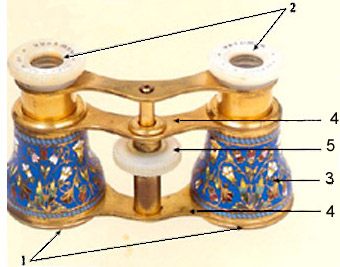
Opera glasses went through several design changes from the 1800s onward. The earliest models were made from brass and glass, with a simple sliding mechanism to focus. Soon, manufacturers started using more luxurious materials, such as:
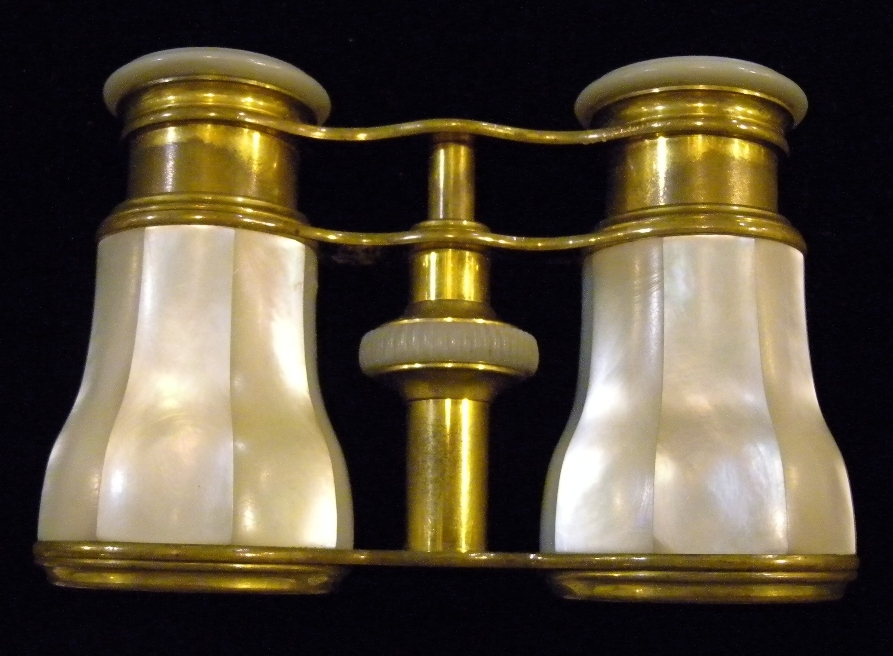
- Mother-of-pearl for a shimmering finish
- Enamel with painted scenes or patterns
- Gold and silver plating for added luxury
- Leather or velvet for a soft, elegant touch
The focus system also improved. Early opera glasses required manual adjustment by pulling or twisting the tubes. Later designs introduced a central focusing wheel, making it easier to adjust both lenses at once. Some even included a small handle or chain, so they could hang from the wrist.
Here’s a comparison of materials commonly used in historic opera glasses:
| Material | Advantages | Disadvantages |
|---|---|---|
| Brass | Durable, classic look | Heavy, can tarnish |
| Mother-of-pearl | Elegant, unique shine | Expensive, delicate |
| Enamel | Colorful, customizable | Prone to chipping |
| Leather | Soft grip, stylish | Can wear over time |
Opera Glasses And Society
Opera glasses were not just for better vision—they became a fashion statement. In the 19th and early 20th centuries, owning a pair showed that you were cultured and wealthy. Many opera glasses were given as wedding gifts or family heirlooms.
Some people even used opera glasses as a way to observe other members of the audience, not just the stage. This was called “people-watching,” and it became a popular pastime during intermissions. The glasses added a touch of mystery and elegance, as people wondered if they were being watched from afar.
Opera glasses also appeared in literature and paintings of the era, symbolizing curiosity and social status. For example, in works by French artists like Edgar Degas, you can often see women holding or using opera glasses.
Key Innovations In Opera Glasses
The world of optical technology moved quickly in the 1800s and 1900s. Some important innovations made opera glasses more useful and stylish:
- Adjustable Focus: The introduction of the central focusing wheel made it easy to sharpen the image with one hand.
- Telescoping Handles: Some models included a handle that could extend or retract, making them easier to hold and carry.
- Compact Folding Design: Later opera glasses could fold flat, fitting into a small evening bag.
- Use of Lightweight Alloys: By the early 20th century, manufacturers started using lighter metals, making the glasses more comfortable for long performances.
- Improved Lenses: Advances in lens coating and grinding gave clearer, brighter images.
Here’s a quick look at how the magnification of opera glasses compares to other common optical devices:
| Device | Typical Magnification | Field of View |
|---|---|---|
| Opera Glasses | 2.5x to 4x | Wide |
| Standard Binoculars | 7x to 10x | Narrow |
| Monocular | 3x to 8x | Medium |
Most opera glasses offer low magnification compared to field binoculars. This is actually an advantage indoors, where a wide field of view is more important than seeing faraway objects.
Opera Glasses In Different Countries
While Paris was the center of opera glass fashion, other countries also embraced the trend. In England, opera glasses became popular in the Victorian era, often decorated with the royal family’s symbols. Russian opera glasses were known for their use of gold and enamel, while Italian makers focused on intricate hand-painting.
In America, opera glasses became widely available after the Civil War. Imported French and German models were sold in department stores and theaters. As public theaters grew in size, the need for personal optical devices increased.
The Role Of Opera Glasses In Modern Times
By the mid-20th century, the use of opera glasses started to decline. Theaters improved their lighting and stage design, and seats were arranged to give everyone a better view. However, opera glasses never disappeared completely.
Today, they are still used in traditional opera houses and theaters, especially in Europe and Asia. Many venues even rent opera glasses to visitors, offering both antique and modern designs. They remain a favorite accessory for collectors and lovers of vintage fashion.
Here’s how modern opera glasses compare to historic models:
| Feature | Historic Opera Glasses | Modern Opera Glasses |
|---|---|---|
| Magnification | 2x to 3x | 3x to 4x |
| Materials | Brass, Mother-of-pearl, Enamel | Plastic, Aluminum, Coated glass |
| Weight | Heavy | Lightweight |
| Focus Mechanism | Manual or central wheel | Central wheel, sometimes auto-focus |
| Style | Decorative, ornate | Functional, simple |
Collecting Antique Opera Glasses
For collectors, antique opera glasses are highly desirable. The most prized items are those made by famous manufacturers like LeMaire or Chevalier of Paris. Rare models can fetch hundreds or even thousands of dollars at auctions.
When collecting, it is important to check:
- The condition of the lenses and body
- The originality of the materials (no replacements)
- Maker’s marks or engravings
- Any decorative features, such as painted scenes or inlays
A non-obvious tip for beginners: Many antique opera glasses are found in their original cases, which can be as valuable as the glasses themselves. Also, some models were made for children or men, which are less common and more valuable.
Opera Glasses In Pop Culture
Opera glasses have appeared in movies, plays, and even cartoons. They symbolize a certain old-world charm and sophistication. For example, in the film “The Phantom of the Opera,” opera glasses are part of the theater’s mystique.
In modern times, designers have created opera glasses as luxury gifts. Some are decorated with Swarovski crystals or hand-painted art, making them popular for special occasions.
Practical Uses Beyond The Opera
While their name suggests they are only for operas, these glasses are also used for:
- Ballet performances
- Classical concerts
- Sports events in small indoor arenas
- Lectures or ceremonies in large halls
One insight many people miss: Opera glasses are not suitable for outdoor sports or bird watching. Their low magnification and wide field of view make them perfect for indoor use, but not for viewing distant objects in nature.
The Enduring Appeal Of Opera Glasses
Despite changes in technology and culture, opera glasses have never truly gone out of style. For some, they are a link to history and tradition. For others, they are a useful tool for enjoying a performance. Their mix of function and beauty keeps them alive in the world of theater.
If you want to learn more about the science behind optical devices, you can visit the Wikipedia page on Opera Glasses.
Frequently Asked Questions
What Is The Main Difference Between Opera Glasses And Regular Binoculars?
Opera glasses usually have low magnification (2.5x to 4x) and a wide field of view, making them ideal for indoor use. Regular binoculars have higher magnification and are designed for outdoor activities like bird watching or sports.
Are Antique Opera Glasses Valuable?
Yes, some antique opera glasses can be valuable, especially if made by famous makers, decorated with rare materials, or in excellent condition. Collectors often look for original cases and unique designs.
Can I Use Opera Glasses For Events Other Than Opera?
Absolutely. Opera glasses are useful for ballet, theater, concerts, and other indoor events where you want a closer view of the stage. They are not recommended for outdoor use or sports that require high magnification.
How Do I Care For And Clean Opera Glasses?
Use a soft, dry cloth to clean the lenses and body. Avoid harsh chemicals, as they can damage delicate materials like enamel or mother-of-pearl. Keep them in a protective case when not in use.
Where Can I Buy Modern Opera Glasses?
Modern opera glasses are available at theater gift shops, optical stores, and online retailers. Some opera houses offer rental services during performances, and many brands offer both budget and luxury models.
Opera glasses continue to fascinate both collectors and theater lovers, blending centuries of history with the simple joy of seeing every detail on stage. Their story is proof that even a small invention can have a big impact on how we experience art and culture.

