
Most people have seen images from night vision devices in movies or video games—those green-tinted views where people move in the dark. Others have watched thermal imaging cameras that show heat as bright colors, revealing warm animals or cars even through fog. But what exactly is the difference between night vision and thermal imaging? While both technologies help us see in darkness, they work in very different ways. Knowing how each system works, when to use them, and their limitations can help you choose the right tool for your needs, whether you’re an outdoor enthusiast, a security professional, or simply curious about modern technology.
How Night Vision Works
Night vision technology helps us see in very low light. It does this by using a device called an image intensifier. Here’s how it works:
- Collects Light: Night vision devices gather any available light, including starlight or moonlight, using a special lens.
- Amplifies Light: The small amount of light is sent to a tube filled with electrons. This tube multiplies the electrons, making the image much brighter.
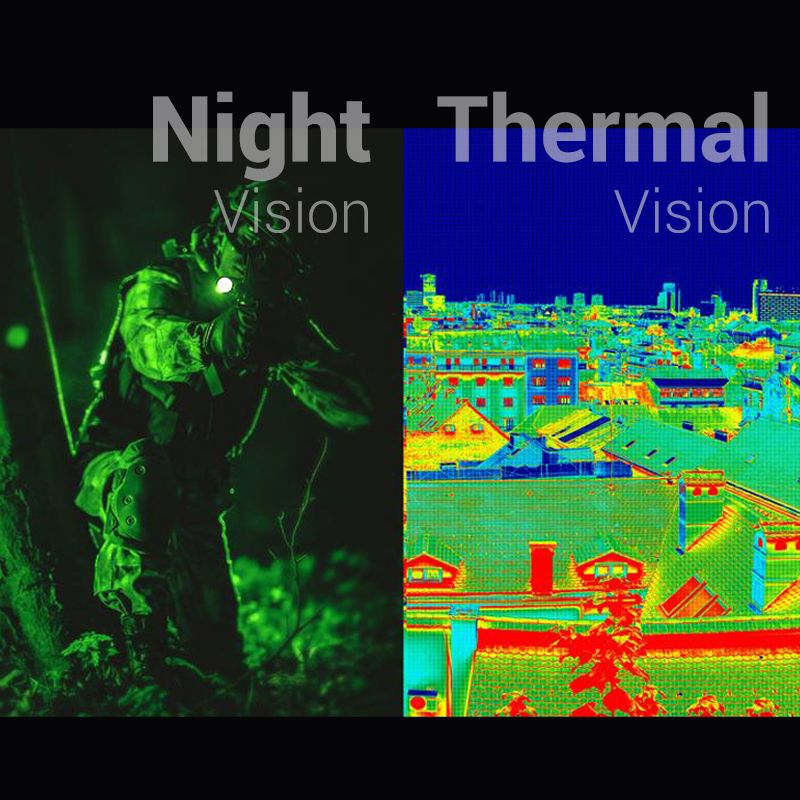
- Displays the Image: The brightened electrons hit a screen, usually coated with phosphor, creating a green glowing image that appears in the eyepiece.
This green glow is not just for effect. Human eyes can see more shades of green than any other color, making it easier to notice details in the dark.
Non-obvious Insight: Night vision does not work in complete darkness. It needs at least some light, even if it’s just stars.
How Thermal Imaging Works
Thermal imaging is very different. Instead of using light, it detects heat energy—also called infrared radiation. Here’s the process:
- Detects Heat: Every object with a temperature above absolute zero gives off infrared energy. Thermal imagers use special sensors to pick up these signals.
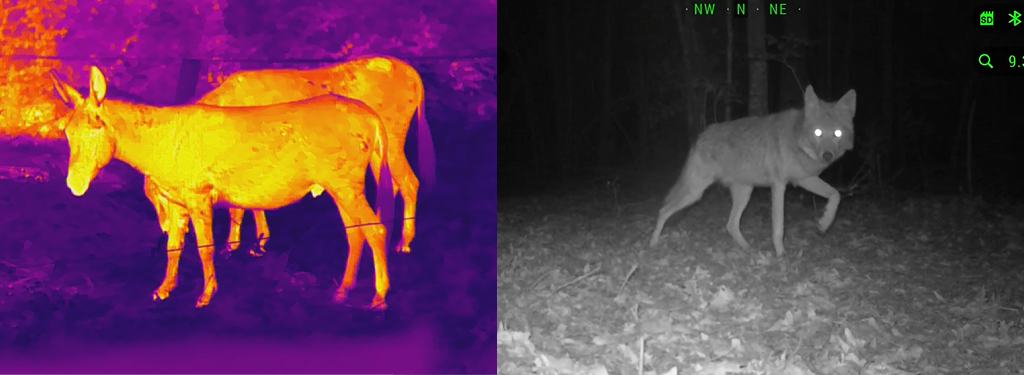
- Creates a Picture: The device translates the heat signals into an image. Warmer objects appear brighter or in different colors (like white, red, or yellow), while cooler objects look darker or blue.
- Displays Differences: The result is a clear picture showing temperature changes, not just shapes.
You can use thermal imaging in total darkness because it doesn’t rely on visible light at all. It’s also useful in fog, smoke, or dust, where night vision often fails.
Non-obvious Insight: Glass and water block thermal signals. So, thermal cameras can’t see through windows or water like they do in movies.
Key Differences Between Night Vision And Thermal Imaging
Understanding the technical details can be confusing. Here’s a direct comparison using a simple table:
| Feature | Night Vision | Thermal Imaging |
|---|---|---|
| How it works | Amplifies visible light | Detects heat energy |
| Image Color | Green shades | Varies (white-hot, black-hot, color palettes) |
| Use in total darkness | No | Yes |
| Through glass/water | Yes | No |
| Detects temperature | No | Yes |
| Best for | Seeing details in low light | Spotting living things, heat sources |
Practical Uses Of Night Vision
Night vision is popular in many fields. Here are some real-world examples:
- Military and Law Enforcement: Soldiers and police use night vision to move, observe, and aim in low-light situations without revealing their position.
- Wildlife Observation: Researchers and animal lovers watch nocturnal animals without disturbing them.
- Security Cameras: Many home and business cameras use night vision to record at night.
- Navigation: Pilots, sailors, and hikers sometimes use night vision to find their way in darkness.
- Night Driving: Some luxury cars have night vision systems to spot people or animals on the road.
Tip: Night vision lets you see fine details, like faces or writing, if there’s even a little light.
Practical Uses Of Thermal Imaging
Thermal imaging is powerful in many situations where night vision can’t help:
- Search and Rescue: Rescuers can spot lost people, even in thick brush or smoke, by their body heat.
- Building Inspections: Inspectors find leaks, missing insulation, or electrical problems by looking for heat patterns.
- Wildlife Tracking: Hunters and researchers see animals hidden in bushes or at night.
- Medical Uses: Doctors sometimes use thermal cameras to spot injuries or infections by checking skin temperature.
- Firefighting: Firefighters see through smoke to find hot spots or trapped people.
Tip: Thermal cameras are excellent for spotting anything that is warmer or cooler than its surroundings, not just living things.
Advantages And Disadvantages
No tool is perfect. Here’s a quick overview of what each does best—and where each falls short.
Night Vision
Advantages:
- Shows details like shapes and faces
- Works well when there’s some light
- Cheaper (especially older models)
- Can see through glass
Disadvantages:
- Needs some light to work
- Can’t see through smoke, fog, or thick vegetation
- Easily blinded by sudden bright lights
Thermal Imaging
Advantages:
- Works in total darkness
- Sees through fog, smoke, some light cover
- Finds hidden or camouflaged people/animals
- Detects heat leaks or hot spots
Disadvantages:
- More expensive
- Lower image detail (hard to recognize faces)
- Can’t see through glass or water
- May be confused by hot backgrounds
Types Of Night Vision And Thermal Imaging Devices
Both technologies come in different types and generations. Let’s look at the main options.
Night Vision Generations
Night vision devices are grouped by “generation” based on their technology:
- Generation 1: Basic, affordable, short range (about 75 yards), grainy images.
- Generation 2: Clearer image, longer range, used by professionals.
- Generation 3: Very sharp, long-lasting, used by military.
- Generation 4/White Phosphor: Latest tech, higher contrast, black-and-white images.
Types Of Thermal Imagers
Thermal devices are divided by sensor quality:
- Entry-level: Low resolution, good for spotting but not details.
- Mid-range: Higher resolution, clearer images, used by hunters and inspectors.
- Professional: Very high resolution, detailed temperature readings, for research and industry.
How To Choose: Night Vision Vs Thermal Imaging
Selecting between night vision and thermal imaging depends on your needs. Here are some factors to consider:
- Purpose: Want to recognize faces or read signs? Night vision is better. Need to find warm animals or people in darkness? Choose thermal.
- Budget: Night vision is usually cheaper, especially older generations. Thermal imaging is more expensive but offers unique abilities.
- Environment: For foggy, smoky, or thick brush, thermal is superior. For use through windows or when details matter, night vision wins.
- Battery Life: Night vision devices often last longer on batteries compared to thermal imagers, which use more power.
- Learning Curve: Night vision is easier for beginners. Thermal images can be confusing at first, as they show heat rather than clear outlines.
Non-obvious Insight: Many professionals carry both types. They use thermal for quick spotting, then switch to night vision for identification.
Real-world Comparison Example
Imagine two rescue workers in a forest at night, searching for a lost hiker:
- The first uses night vision. They see trees, paths, and any movement—if there’s some moonlight. But if the hiker is behind bushes, they might not spot them.
- The second uses thermal imaging. They see a glowing human shape even if the hiker is hidden behind leaves or in total darkness. However, they might not know if it’s the hiker or a deer until they get closer, since fine details are missing.
This is why many teams use both tools together for the best results.
Cost And Availability
Prices for both technologies have dropped in recent years, but there is still a big difference:
| Device Type | Entry-level Price Range | Professional Price Range |
|---|---|---|
| Night Vision | $150 – $1,000 | $2,000 – $10,000+ |
| Thermal Imaging | $500 – $3,000 | $5,000 – $20,000+ |
Tip: Used or older models can offer good value, but beware of worn-out tubes in night vision or “dead pixels” in thermal cameras.

Common Mistakes When Choosing
Many beginners make these errors:
- Assuming Night Vision Works in All Darkness: Night vision needs at least a little light. In a cave or deep forest, it may fail.
- Thinking Thermal Sees Through Walls: Thermal cannot see through walls, glass, or water. It only shows the surface temperature.
- Ignoring Battery Needs: High-end devices, especially thermal, use batteries quickly. Always check battery life.
- Overlooking Legal Restrictions: Some countries have strict rules about owning or exporting advanced night vision or thermal gear.
When To Use Each Technology
- Night Vision: Camping, night driving, observing animals, or surveillance where you need to see details.
- Thermal Imaging: Search and rescue, hunting, firefighting, spotting leaks or electrical issues, seeing through smoke or fog.
Pro Tip: If you need to detect movement or find hidden people/animals, start with thermal. If you need to recognize who or what it is, switch to night vision.
Future Trends
Both night vision and thermal imaging are getting smaller, lighter, and cheaper. Some new devices combine both technologies in one unit, giving the best of both worlds. Artificial intelligence is also being used to help spot and identify objects faster.
As these tools become more common, their use will spread far beyond military or police work.
For more in-depth technical information, you can visit the Wikipedia page on night vision devices.
Frequently Asked Questions
What Is The Main Difference Between Night Vision And Thermal Imaging?
Night vision amplifies visible light to help you see in low-light conditions, while thermal imaging detects heat to create an image, even in total darkness.
Can Thermal Imaging See Through Walls Or Glass?
No, thermal cameras cannot see through walls or glass. They only show the surface temperature, not what’s behind it.
Which Is Better For Hunting: Night Vision Or Thermal Imaging?
Thermal imaging is better for spotting hidden animals, even through brush or in darkness. However, night vision helps you see details once you’ve found the animal.
Is Night Vision Legal To Own?
In most countries, basic night vision is legal. High-end or military-grade devices may have restrictions. Always check local laws before buying.
Do Night Vision And Thermal Imaging Work Underwater?
Neither works well underwater. Night vision needs some light, which is limited underwater. Thermal imaging is blocked by water, so it cannot see heat signatures below the surface.
Night vision and thermal imaging are two powerful but different ways to see in the dark. By understanding their strengths, weaknesses, and real uses, you can choose the right tool for your next adventure or project. Whether you’re exploring the wilderness or ensuring safety, the right technology can open up a whole new world at night.

