
Night vision technology has changed how people see and operate in the dark. From wildlife researchers to soldiers, and even outdoor enthusiasts, night vision devices help us see clearly when natural light is low. But if you are searching for a night vision device, you will quickly notice two main types: monocular and binocular night vision. At first, they sound similar. Both let you see in darkness. But there are important differences between them, and each type has its own advantages and drawbacks.
Knowing the difference is not just about choosing what looks cooler. It affects your comfort, your ability to navigate, your depth perception, and even your budget. If you are planning to use night vision for work, safety, or adventure, understanding these differences will help you make a smarter choice.
This article breaks down how monocular and binocular night vision devices work, their specific strengths, their weaknesses, and which one might be the right fit for your needs.
What Is Monocular Night Vision?
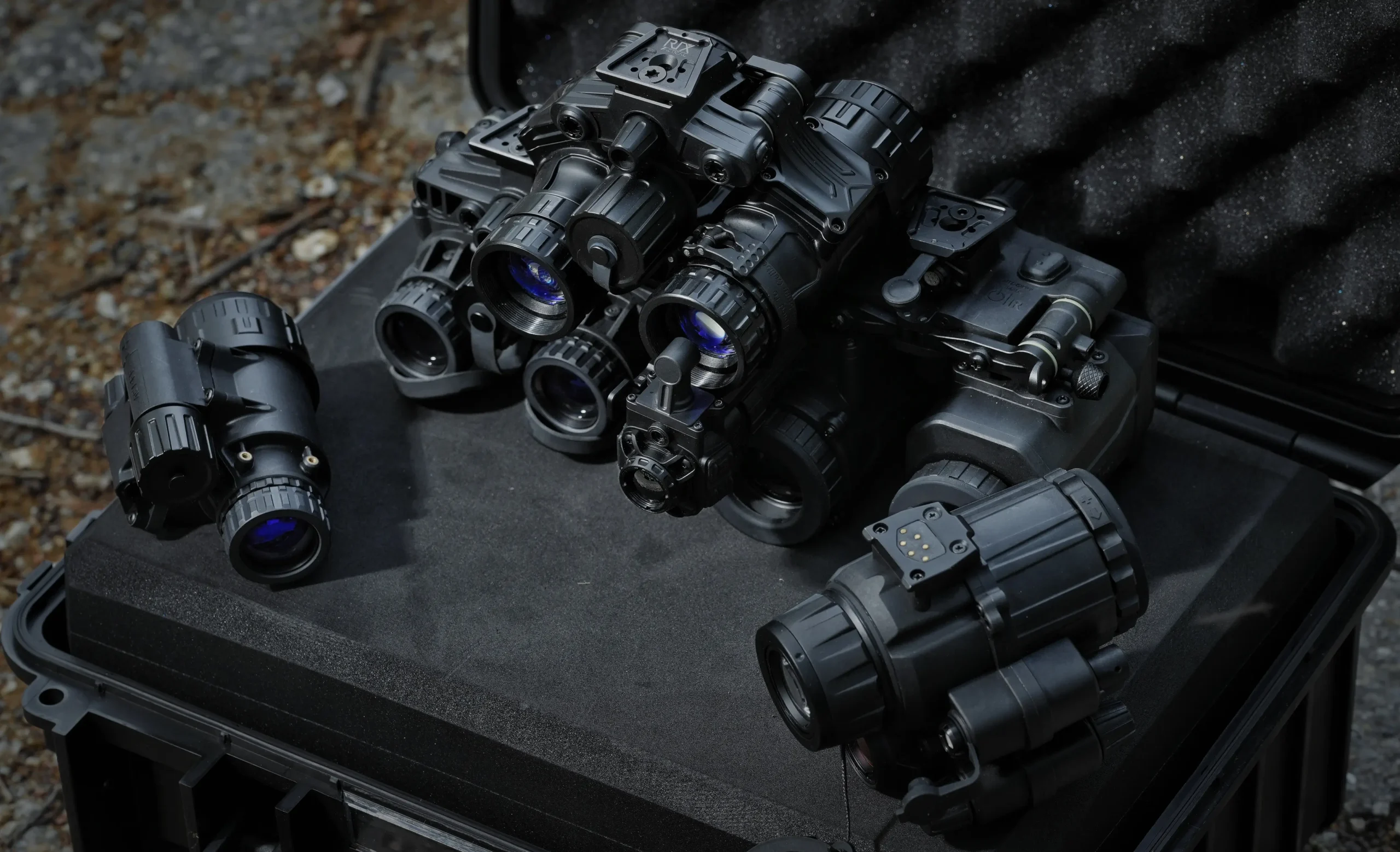
Monocular night vision refers to night vision devices that are designed to be used with one eye. The word “monocular” comes from the Greek word “mono” meaning “one,” and “ocular” meaning “eye.” These devices usually look like a small tube you hold up to one eye or mount on a helmet. Monoculars can be used in your left or right hand, and some models are lightweight enough to be used for long periods.
Monocular night vision is popular in situations where users need to keep one eye free for natural vision, or when they want a compact, easy-to-carry device. Law enforcement officers, hunters, hikers, and even some military units prefer monoculars when they need mobility and quick observation.
Key Features Of Monocular Night Vision
- Single eyepiece: Only one eye is used for viewing.
- Lightweight and compact: Typically smaller and lighter than binoculars.
- Portable: Easy to carry in a pocket or on a belt.
- Affordable: Generally less expensive than binocular night vision devices.
What Is Binocular Night Vision?
Binocular night vision devices are designed for use with both eyes at the same time. The term “binocular” comes from “bi” meaning “two,” and again “ocular” for “eyes.” These devices look much like regular binoculars, with two eyepieces and two objective lenses.
Binocular night vision is preferred in situations where depth perception, image clarity, and viewing comfort are important. This includes search and rescue operations, long-range scouting, or surveillance missions that last for hours.
Key Features Of Binocular Night Vision
- Two eyepieces: Both eyes are used for viewing.
- Better depth perception: More accurate sense of distance and space.
- Heavier and bulkier: Larger in size compared to monoculars.
- More expensive: The dual-lens system raises the price.
How Night Vision Works: The Basics
Before we compare monocular and binocular devices, it helps to understand the general science behind night vision.
Night vision technology does not magically create light. Instead, it amplifies the small amount of light available, such as moonlight or starlight. This process is called image intensification. Some devices also use infrared (IR) illumination to produce a clearer image in total darkness.
The core components of a night vision device are:
- Objective lens: Captures incoming light (including IR).
- Image intensifier tube: Boosts the light’s energy, making the scene brighter.
- Eyepiece: Presents the intensified image to your eye.
Both monocular and binocular night vision use these basic parts. The main difference is how many lenses and eyepieces they have.
Monocular Vs Binocular Night Vision: Key Differences
Choosing between monocular and binocular night vision is not just about preference. Each type has unique advantages and disadvantages. Here’s a closer look at how they compare:
| Feature | Monocular Night Vision | Binocular Night Vision |
|---|---|---|
| Number of Eyes Used | One | Two |
| Depth Perception | Limited | Excellent |
| Weight | Light | Heavier |
| Size | Compact | Bulkier |
| Price | Lower | Higher |
| Comfort | Good for short use | Better for long use |
Let’s break down these differences further:
1. Depth Perception
Binocular night vision gives you true depth perception. This means you can judge distances more accurately and move more naturally in the dark. For example, if you are walking through a forest, climbing, or driving at night, binoculars help you avoid obstacles and step safely.
Monocular night vision does not provide real depth perception. Since only one eye is used, your brain cannot easily judge how far objects are. This makes it harder to do activities that require precise movement, like driving or running.
2. Weight And Size
Monocular devices are much lighter and smaller. You can carry them in your pocket, attach them to a helmet, or hold them with one hand. This is helpful if you need to move fast or want something easy to pack.
Binocular devices are heavier and take up more space. They can be tiring to hold for long periods, and they require more storage space. However, their comfort for the eyes often makes up for the extra bulk during long missions.
3. Price
Monocular night vision is generally less expensive. With only one tube and lens, manufacturing costs are lower. You can find good quality monocular devices for a few hundred dollars.
Binocular night vision costs more, sometimes double or triple the price of monoculars. The extra lenses, tubes, and complex design all add to the price.
4. Comfort
Binoculars are more comfortable for long use. Using both eyes feels more natural, reduces eye strain, and makes it easier to scan wide areas.
Monoculars can cause eye fatigue if used for a long time. Since one eye is working harder, you might feel discomfort after extended use.
5. Field Of View
Binocular devices often give a wider field of view (FOV). This means you can see more area at once, which is useful for surveillance or navigation.
Monocular devices usually have a narrower FOV. You may need to move the device more often to scan your surroundings.

Use Cases: When To Choose Monocular Or Binocular Night Vision
The best device for you depends on your activities and needs. Here are some typical scenarios:
Monocular Night Vision Is Best For:
- Tactical operations: Law enforcement or military missions that require one eye to stay adjusted to darkness.
- Night hiking or camping: Lightweight and easy to carry.
- Wildlife observation: Quick spotting without heavy equipment.
- Budget buyers: Good performance at a lower cost.
- Navigation: Use one eye for maps or instruments, the other for natural vision.
Binocular Night Vision Is Best For:
- Search and rescue: Long hours and the need for depth perception.
- Driving or boating at night: Accurate judgment of distance.
- Long-range surveillance: Comfort and a wide field of view.
- Professional security: Extended monitoring duties.
- Nature watching: Clearer, more detailed views.
Non-obvious Insights Most Beginners Miss
Many first-time buyers focus only on price or magnification. But there are two important insights to remember:
1. Eye Adjustment Matters: If you use a monocular for a long time, your covered eye will need time to adjust back to the dark. This can be a problem in tactical or emergency situations. Binoculars keep both eyes adapted.
2. Peripheral Vision is Reduced: With a monocular, your field of vision is split—one eye sees bright, one stays dark. This can confuse your brain and slow your reaction time. Binoculars offer a balanced view, making movement safer and more natural.
Popular Technologies In Night Vision Devices
Both monocular and binocular night vision come in different generations of technology. Higher generations offer better image quality and longer range.
| Generation | Main Features | Typical Use |
|---|---|---|
| Gen 1 | Basic image, short range | Entry-level, hobby use |
| Gen 2 | Better clarity, longer range | Law enforcement, hunting |
| Gen 3 | Very clear, long range, durable | Military, professional use |
| Gen 4 | Top quality, works in almost total darkness | Elite military, special forces |
Most consumers use Gen 1 or Gen 2. Gen 3 and Gen 4 are expensive but offer the best performance.
How To Choose: Factors To Consider
When deciding between monocular and binocular night vision, think about these factors:
1. Purpose
Ask yourself: What will you use the device for? If you need hands-free use, a monocular mounted on a helmet may be best. For stationary observation, binoculars provide comfort.
2. Budget
Monoculars are more affordable. Binoculars require a higher budget but may be worth it for frequent or professional use.
3. Portability
If you need to travel light, monoculars win. If comfort and image quality matter more, binoculars are a better fit.
4. Duration Of Use
For short tasks, a monocular is fine. For long missions, binoculars prevent eye fatigue.
5. Environment
In dense forests or close areas, a wide field of view helps. In open terrain, both types can work, but binoculars provide better detail at distance.
Real-world Examples
- A wildlife biologist might choose a monocular for quick scanning and note-taking.
- A security guard on overnight watch would prefer binoculars for long shifts.
- A night hiker could use a monocular for navigation, keeping one eye on the trail and one on the map.
- A search and rescue team would need binoculars for depth perception and safe movement.
Care And Maintenance
Both monocular and binocular night vision devices are sensitive instruments. Here are tips to keep them working well:
- Avoid bright light: Exposure to daylight or strong lights can damage the image intensifier tube.
- Keep lenses clean: Use a soft cloth to remove dust and smudges.
- Store properly: Use a padded case to protect from bumps and moisture.
- Check batteries: Always carry spares, as night vision devices use power quickly.
- Do not disassemble: Repairs should be done by professionals.
For more care tips, you can check detailed guides on the Wikipedia Night Vision Device page.

Frequently Asked Questions
What Is The Main Advantage Of Monocular Night Vision?
The main advantage is portability. Monocular night vision devices are lighter, smaller, and easier to carry. They also cost less, making them a good choice for quick observation or for those on a budget.
Why Do Professionals Often Choose Binocular Night Vision?
Professionals choose binocular night vision because it offers better comfort, true depth perception, and a wider field of view. This is important for activities that last several hours or require accurate movement in the dark.
Can You Drive With Monocular Night Vision?
It is not recommended to drive with only a monocular night vision device. You will lose depth perception and may find it hard to judge distances, which can be dangerous.
How Much Does A Good Night Vision Binocular Cost?
A quality night vision binocular can cost from $1,000 to over $5,000, depending on the generation and features. Monoculars usually start from $200 and go up to $3,000 for advanced models.
Are There Any Legal Restrictions For Owning Night Vision Devices?
Laws vary by country. In many places, night vision devices are legal for civilian use, but Gen 3 or Gen 4 devices may be restricted or require permits. Always check local regulations before buying.
Night vision technology opens a new world at night, but choosing the right device is key. Whether you go for a monocular or binocular design, understanding the real differences will help you see more, do more, and stay safe in the dark.

