
Travel brings the world to life, and capturing those moments in high quality makes the memories last forever. Today, smartphones can record decent videos, but many travelers want something more—sharper images, better zoom, stable footage, and professional features. That’s where a dedicated camcorder shines. If you’re wondering, what is the best camcorder for travel, you’re not alone. With so many options on the market, it’s easy to feel lost. This guide will give you clear answers, honest advice, and practical tips to help you choose the right device for your adventures.
Why Choose A Camcorder For Travel?
Travelers have unique needs. You want a camera that’s compact, lightweight, and can handle different environments. Camcorders are made for video, so they often give better results than phones or even DSLRs in many situations. You get better zoom, longer battery life, and controls that are easy to use, even if you’re new to filming.
Camcorders also usually have flip-out screens, making it easy to film yourself or shoot from creative angles. Modern models come with image stabilization—a big help when you’re walking or filming from a moving vehicle.
Key Features To Consider
Before you pick a camcorder, think about what matters most for travel:
- Portability: Is it small and light enough to carry all day?
- Video Quality: Does it shoot in Full HD or 4K?
- Zoom Range: Can you capture far-away details?
- Battery Life: Will it last for a full day of filming?
- Durability: Can it survive bumps, dust, or rain?
- Audio Quality: Does it have a good built-in microphone or an input for an external mic?
- Ease of Use: Are menus and controls simple and intuitive?
Many beginners forget to check audio quality and battery life. Bad sound can ruin even the best-looking video, and a short battery life means missing important moments.
Top 7 Camcorders For Travel In 2024
After deep research, here are seven camcorders that stand out for travelers. Each has its strengths, but all will help you record your journey in stunning detail.
1. Sony Fdr-ax53
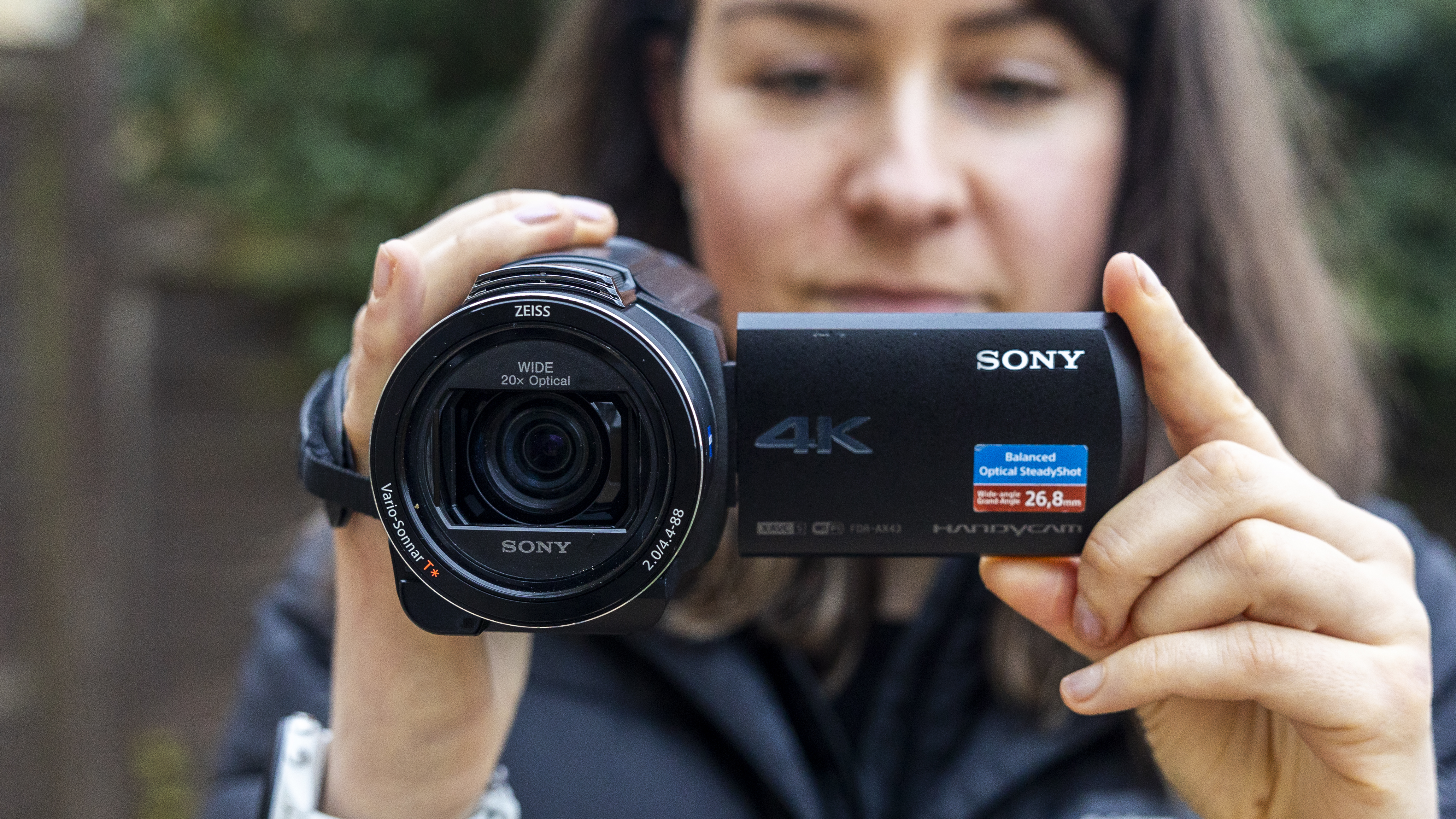
This is a favorite among travel vloggers. The Sony FDR-AX53 records in 4K, with a powerful 20x optical zoom. Its Balanced Optical SteadyShot system keeps your videos smooth, even when you’re moving. The touchscreen flips out, making it easy to film yourself. Audio is clear, and you can add an external mic for even better sound.
Beginners often overlook the manual controls. With this Sony, you can start on auto, then learn to use manual focus, exposure, and white balance as your skills improve. The battery lasts around 2 hours—enough for most day trips.
2. Panasonic Hc-vx1
If you want great value, the Panasonic HC-VX1 is a solid choice. It shoots sharp 4K video, even in low light. The 25mm wide-angle lens is perfect for landscapes, and the 24x zoom lets you get close to distant action. Three-level image stabilization keeps handheld videos steady.
A unique feature is the HDR Movie Mode. This helps balance bright skies and dark shadows, so your footage looks more natural. It’s a little lighter than the Sony, making it easier to pack.
3. Canon Vixia Hf G50
Travelers who want near-professional quality love the Canon VIXIA HF G50. It has a large sensor, 4K recording, and a fast 20x zoom lens. The controls are easy to use, but you can also set everything manually if you want.
The touchscreen is bright, and the viewfinder is helpful in strong sunlight. The G50’s image stabilization is good, but not as advanced as the Sony’s. However, the video quality is excellent, especially in daylight.
4. Dji Osmo Pocket 3
For travelers who want something tiny, the DJI Osmo Pocket 3 is hard to beat. It’s not a traditional camcorder—it’s a pocket-sized camera with a built-in gimbal. This means super-smooth footage, even when you’re walking or running.
The Osmo Pocket 3 shoots in 4K, and the touch screen is simple to use. It’s perfect for quick clips, vlogs, or action shots. The small size means you’ll actually carry it everywhere, and you won’t attract much attention when filming in public.
5. Sony Hdr-cx405
If you’re on a budget, the Sony HDR-CX405 offers great value. It doesn’t shoot 4K, but its 1080p Full HD video looks good for most uses. It’s extremely light—just 215 grams—and fits easily in a jacket pocket.
The 30x optical zoom is impressive for the price. Battery life is about 2 hours, and the menus are beginner-friendly. It’s a simple, reliable choice for travelers who want decent video without spending too much.
6. Panasonic Hc-wxf991k
This model stands out for its twin camera feature—a second lens on the LCD screen lets you film yourself and your subject at the same time. It shoots sharp 4K video, with strong stabilization and a 20x zoom.
Travelers who like to vlog or add commentary will appreciate this function. The camera is a little heavier, but still fits easily in a small bag. The Wi-Fi feature lets you share clips quickly to your phone.
7. Gopro Hero12 Black
While not a traditional camcorder, the GoPro HERO12 Black is a powerful travel video tool. It’s tiny, waterproof, and tough. It shoots high-quality 5.3K video, which you can easily crop or edit later.
The GoPro is perfect for adventure travel—hiking, snorkeling, skiing, or biking. The HyperSmooth stabilization keeps your footage shake-free. The main downside is the lack of optical zoom, but you gain unbeatable durability.
Comparing The Top Travel Camcorders
Here’s a quick look at how these models compare in some key areas:
| Model | Video Quality | Optical Zoom | Weight | Stabilization |
|---|---|---|---|---|
| Sony FDR-AX53 | 4K | 20x | 635g | Excellent |
| Panasonic HC-VX1 | 4K | 24x | 428g | Very Good |
| Canon VIXIA HF G50 | 4K | 20x | 875g | Good |
| DJI Osmo Pocket 3 | 4K | None | 116g | Excellent |
| Sony HDR-CX405 | 1080p | 30x | 215g | Good |
| Panasonic HC-WXF991K | 4K | 20x | 430g | Very Good |
| GoPro HERO12 Black | 5.3K | None | 154g | Excellent |

How To Choose The Best Camcorder For Your Travels
Think about your style of travel and what you want to film. Here are some practical tips:
- Backpackers and hikers need something light and tough. The GoPro HERO12 Black or DJI Osmo Pocket 3 are easy to carry and handle bumps or water.
- City travelers and vloggers often like the Sony FDR-AX53 or Panasonic HC-VX1 for their mix of quality, zoom, and stabilization.
- Wildlife and nature lovers should look for strong zoom (like the Sony HDR-CX405 or Panasonic HC-VX1) to capture distant animals.
- Families might prefer simple controls and good autofocus, so the Sony HDR-CX405 is a practical choice.
When comparing, don’t just look at specs. Try to hold the camcorder in your hand if possible. A camera that feels good to use will help you shoot more, and better, videos.
Essential Accessories For Travel Camcorders
A camcorder alone isn’t enough for most trips. Here’s what experienced travelers pack:
- Extra batteries: Filming drains power fast, especially in cold weather or at high resolution.
- Memory cards: Bring at least two high-speed cards. Video files are large, especially in 4K.
- Protective case: A padded case keeps your camcorder safe in your bag.
- External microphone: For clearer audio, especially if you record interviews or vlogs.
- Mini tripod or grip: Helps with steady shots and group selfies.
- Lens cleaning cloth: Dust and fingerprints are common on the road.
Many travelers forget to test their gear before the trip. Spend an afternoon filming and reviewing your clips. It’s better to solve any problems at home.
Travel Camcorder Settings For Better Results
Even the best camcorder can produce bad results with the wrong settings. Here are a few simple settings to check before you start:
- Resolution: Use the highest resolution your camcorder offers—usually 4K. You can always make the file smaller later.
- Frame rate: 30 fps (frames per second) is good for most travel videos. If you want slow motion, try 60 fps.
- Image stabilization: Turn it on for handheld shots.
- Audio levels: Test the mic before important moments, especially if it’s windy.
Tip: Don’t zoom while filming unless you need to. Sudden zooms can make videos look unprofessional.
Common Mistakes To Avoid
Many travelers make the same errors when using camcorders. Here’s how to avoid them:
- Not checking battery and memory: Running out of power or space means missing key moments.
- Filming everything: Short, focused clips are easier to edit and more interesting to watch.
- Ignoring sound: Background noise or wind can ruin footage. Use an external mic when possible.
- Not backing up videos: If your memory card fails, you could lose all your memories. Back up regularly to a laptop or cloud.
Camcorders Vs. Smartphones: Is The Upgrade Worth It?
Smartphones are getting better every year, so why buy a camcorder? Here are a few reasons:
- Optical zoom: Camcorders can zoom without losing quality. Most smartphones use digital zoom, which gets blurry.
- Long recording time: Camcorders can film for hours, while phones often overheat or run out of space.
- Better stabilization: Dedicated systems keep videos smooth, even when you’re moving.
- Audio options: External mic support is rare on phones, but common on camcorders.
For travelers who want casual clips for social media, a phone may be enough. But for longer trips, special events, or making vlogs, a camcorder is a smart investment.
Real-world Example: Using A Camcorder On A Trip
Imagine you’re hiking in the Swiss Alps. With a Panasonic HC-VX1, you capture wide mountain views and zoom in on distant wildlife. The stabilization helps when you film while walking. Later, you switch to the DJI Osmo Pocket 3 for a walk through a busy city market—nobody notices you filming, and your hands are free for food and souvenirs.
That’s the advantage of choosing the right camcorder: you’re ready for any situation.
Quick Reference: Key Specs At A Glance
Here’s a summary of the top models’ most important numbers:
| Model | Max Video Resolution | Battery Life (approx.) | Special Feature |
|---|---|---|---|
| Sony FDR-AX53 | 4K | 2 hrs | Balanced Optical SteadyShot |
| Panasonic HC-VX1 | 4K | 2.5 hrs | HDR Movie Mode |
| Canon VIXIA HF G50 | 4K | 3 hrs | Large sensor |
| DJI Osmo Pocket 3 | 4K | 1.5 hrs | 3-axis gimbal |
| Sony HDR-CX405 | 1080p | 2 hrs | Super light weight |
| Panasonic HC-WXF991K | 4K | 2 hrs | Twin camera |
| GoPro HERO12 Black | 5.3K | 1.5 hrs | Waterproof & rugged |
Frequently Asked Questions
What Is The Best Camcorder For Travel Vlogging?
For vlogging, the DJI Osmo Pocket 3 and Sony FDR-AX53 are top choices. Both offer easy-to-use flip screens, good stabilization, and clear audio. The Osmo Pocket is great for portability, while the Sony gives you more manual control and a better zoom.
Is 4k Recording Necessary For Travel Videos?
4K is not required, but it’s a good idea if you want sharp, detailed videos or plan to edit and crop footage later. Most new camcorders support 4K. If you only share on social media, 1080p is often enough.
How Do I Protect My Camcorder While Traveling?
Use a padded case to prevent damage. Keep a lens cap on when not filming, and avoid exposing the camera to rain or dust. For adventure travel, consider a waterproof model like the GoPro HERO12 Black.
Can I Use A Camcorder For Still Photos?
Most camcorders can take still photos, but the quality is usually lower than a dedicated camera or smartphone. Use your camcorder mainly for video, and your phone for quick snapshots.
Where Can I Find More Information About Camcorders?
For in-depth reviews and technical details, check out the official manufacturer websites or trusted sources like DPReview.
Capturing your travels with the right camcorder is an investment in memories you’ll cherish for years. Choose wisely, pack smart, and enjoy every moment of your journey.

