
If you’ve ever tried to look inside a narrow pipe, car engine, or wall cavity, you know how hard it is to see what’s really happening in those tight spaces. This is where a borescope becomes a game changer. Choosing the best borescope for tight spaces isn’t just about buying the most expensive device or the one with the highest camera resolution. It’s about understanding which features really matter, how different models perform in cramped areas, and what mistakes to avoid when choosing your tool.
Let’s break down what makes a borescope perfect for small and difficult-to-reach places, compare the top options, and give you everything you need to make a confident decision.
What Makes A Borescope Ideal For Tight Spaces?
Not all borescopes are created equal, especially for inspections in narrow gaps. Here’s what really matters:
- Probe diameter: The thinner the probe, the easier it is to fit into narrow spots.
- Flexibility: A flexible probe can navigate bends and corners.
- Camera quality: High resolution helps you see details, but in tight spaces, even modest cameras work if the lens is close enough.
- Lighting: Built-in adjustable LEDs are essential since tight spaces are usually dark.
- Length: Too long can be hard to handle, but too short means you might not reach the problem area.
- Viewing method: Some borescopes connect to your phone, others have built-in screens.
- Durability: Probes need to withstand bending without breaking.
A common mistake is picking the highest-resolution camera without checking probe thickness. In tight spaces, a thick probe simply won’t fit, no matter how sharp the image is.
Top 5 Borescopes For Tight Spaces
After careful comparison and user feedback, these five borescopes stand out for use in narrow and hard-to-reach areas.
1. Teslong Nts300 Industrial Endoscope
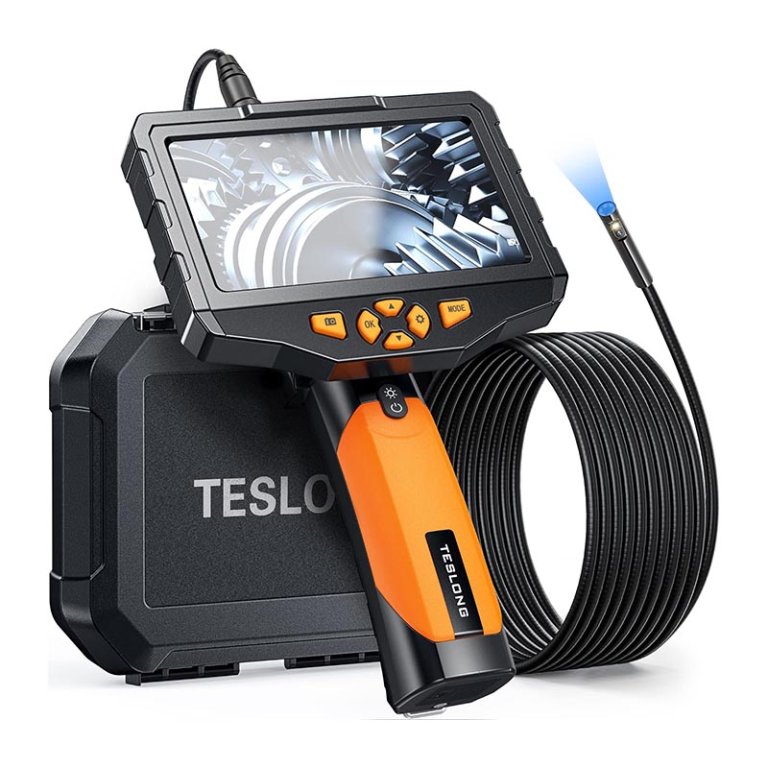
The Teslong NTS300 is popular among professionals for a reason. With a 5.5mm diameter probe, it fits into most tight spaces, and the camera delivers 1080p resolution. The semi-rigid cable keeps its shape, making it easier to control. The large color screen means you don’t need your phone, which is handy when working in oily or wet environments.
Key Features:
- Probe diameter: 5.5mm
- Cable length: 3 to 10 meters
- Screen: 4.3-inch LCD
- Waterproof IP67
- Adjustable LED lights
This model’s real strength is its balance of flexibility and image quality. Mechanics often choose it for engine inspections, and plumbers use it for pipe work.
2. Depstech Ds450 Dual Lens Borescope
The Depstech DS450 is known for its dual camera system—one forward-facing and one side-facing lens. This is incredibly helpful in tight spaces where turning the probe is difficult. The 5mm probe slides into most gaps.
Key Features:
- Probe diameter: 5mm
- Dual lens (front and side)
- 4.5-inch LCD screen
- 6 adjustable LEDs
- Photo and video recording
Beginners appreciate the large screen and simple controls. The dual lens means you can inspect pipe walls without twisting the cable, which is a huge time saver.
3. Bluefire Semi-rigid Wireless Endoscope
If you prefer a borescope that connects to your phone, the BlueFire model is a smart choice. Its 3.9mm probe is one of the thinnest available, making it a favorite for electricians and HVAC technicians.
Key Features:
- Probe diameter: 3.9mm
- Wireless WiFi connection
- Compatible with iOS and Android
- Semi-rigid cable, 5 meters
- 6 LED lights
This model sacrifices some image quality (720p) for a smaller probe, but in many cases, fitting the probe is more important than having ultra-high resolution.
4. Oiiwak Ultra Slim Borescope
The Oiiwak Ultra Slim is designed for the smallest openings. With a 3.9mm camera probe, it can enter spark plug holes, narrow tubes, and even some watch mechanisms.
Key Features:
- Probe diameter: 3.9mm
- 1080p camera
- 4.3-inch LCD screen
- Waterproof IP67
- 6 adjustable LEDs
The Oiiwak’s rigid but flexible cable strikes a balance, letting you push through bends without the probe kinking. It’s often used for firearm and jewelry inspections.
5. Anykit 3.9mm Inspection Camera
This model targets users who need an ultra-thin probe but want a simple, ready-to-use device with its own screen.
Key Features:
- Probe diameter: 3.9mm
- 4.5-inch IPS screen
- 1080p resolution
- Waterproof
- 6 LED lights
Users highlight its plug-and-play design—no app installation or WiFi pairing. This saves time, especially on job sites.

Comparison: Probe Diameter, Cable Length, And Resolution
Choosing the right borescope often comes down to size, reach, and image clarity. Let’s compare these top models:
| Model | Probe Diameter | Cable Length | Resolution |
|---|---|---|---|
| Teslong NTS300 | 5.5mm | 3–10m | 1080p |
| Depstech DS450 | 5mm | 3–5m | 1080p |
| BlueFire Wireless | 3.9mm | 5m | 720p |
| Oiiwak Ultra Slim | 3.9mm | 1.5–5m | 1080p |
| Anykit 3.9mm | 3.9mm | 2–5m | 1080p |
Notice the trend: 3.9mm probes give the best access to tight spaces, but sometimes at the cost of screen size or advanced features.
Wired Vs. Wireless Borescopes For Tight Spaces
One question often comes up: should you pick a wired (with built-in screen) or wireless (uses your phone) borescope? Each has its pros and cons.
| Type | Pros | Cons |
|---|---|---|
| Wired with Screen | No phone needed, stable connection, ready-to-use | Bulkier, limited to built-in screen size |
| Wireless (WiFi) | Uses your phone or tablet, usually lighter, easy sharing | Needs app, can have lag, battery life varies |
For jobs in dirty or wet environments, a built-in screen is often safer. But for quick, casual checks, wireless options are more convenient.
How To Choose The Best Borescope For Your Needs
Picking the right tool means matching features to your typical inspections. Here’s a practical approach:
- Measure your tightest gap. If you need to inspect a 4mm pipe, a 5.5mm probe won’t fit.
- Decide if you need a screen. If you work in messy areas, avoid using your phone.
- Think about cable length. Extra-long probes are harder to control in tight turns. Choose the shortest length that reaches your target.
- Consider the lighting. More LEDs and adjustable brightness help in dark, narrow spaces.
- Check durability ratings. Look for IP67 or better for wet or dusty work.
Non-obvious insight: Many beginners forget about probe flexibility. Too rigid, and you can’t navigate bends. Too soft, and you can’t push the probe into the space. A semi-rigid cable is usually the best choice.
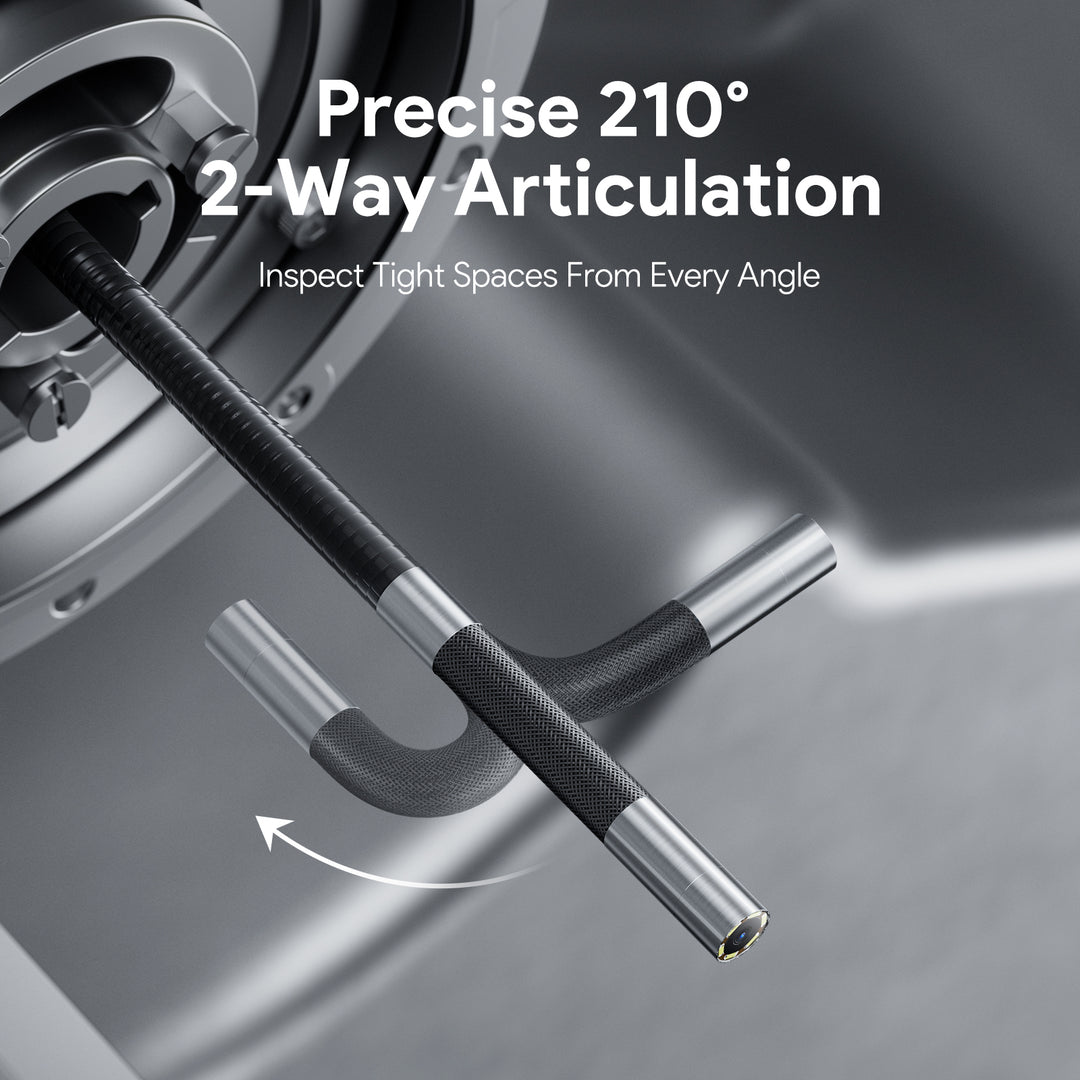
Another tip: Some borescopes come with mirror attachments. These let you see sideways or around corners, but mirrors require more space to rotate. In very tight spaces, a dual-lens camera (like on the Depstech DS450) is more practical.
Common Mistakes When Buying A Borescope
Even experienced buyers can make these errors:
- Focusing only on camera resolution: In tight spaces, fitting the probe is more important than getting a 4K image.
- Ignoring cable stiffness: If you can’t guide the probe, you won’t see anything useful.
- Overlooking lighting: Low-cost models often skimp on LEDs, making inspections difficult.
- Buying too long a cable: More length sounds good but can make the probe floppy and hard to control.
- Not checking device compatibility: Some wireless models don’t work with all phones or require specific apps.
Real-world Examples: Where A Slim Borescope Makes A Difference
Let’s look at two scenarios:
- Automotive repair: A mechanic needs to check for carbon build-up inside a cylinder. A 3.9mm probe slides through the spark plug hole, letting them see the piston top without engine teardown.
- Home inspection: A plumber suspects a small leak inside a wall. Using a borescope with a 5mm probe, they pass through a drilled hole without damaging more drywall.
In both cases, the right probe size and lighting made the job faster and less invasive.
Advanced Features Worth Considering
Some borescopes offer special features that help in tight spaces:
- Dual-lens cameras: See straight ahead and sideways without moving the probe.
- Image rotation: Helps adjust the view if the camera twists.
- Video recording: Useful for documentation or showing clients the problem.
- Waterproof and dustproof: Essential for plumbing, HVAC, or outdoor work.
Not all advanced features are needed for every job, but knowing what’s available helps you avoid overpaying or missing key tools.
Maintaining Your Borescope For Longevity
A borescope is an investment. To keep it working:
- Clean the probe after every use—especially if it’s been in oil, water, or dust.
- Avoid sharp bends. Even flexible probes have limits.
- Check the lens for scratches before and after use.
- Store in a case to prevent cable kinks and LED damage.
These simple steps can double the lifespan of your tool.
Price Vs. Value: What Should You Spend?
Prices for borescopes range from $30 for basic wireless models to $200+ for professional units. The key is value for your specific needs.
- Casual users: A basic wireless model (like BlueFire) usually does the job.
- Professionals: Spending more for a slim, durable, high-resolution device (like Oiiwak or Teslong) pays off in saved time and better results.
Don’t overpay for features you won’t use. But don’t go too cheap—poor lighting or a weak cable can make inspections impossible.
Where To Buy Reliable Borescopes
Choose established brands and buy from reputable sources. Avoid no-name models with unclear specifications. User reviews on sites like Amazon, Home Depot, and specialist tool shops are valuable. For more technical details, check resources like the Wikipedia page on borescopes.
Frequently Asked Questions
What Is The Thinnest Borescope Available?
Some borescopes have probe diameters as small as 2.8mm, but the most common slim models for tight spaces are around 3.9mm. The thinner the probe, the lower the image resolution tends to be, so always balance size and clarity.
Can I Use My Phone With All Wireless Borescopes?
Not always. Some wireless borescopes require specific apps, and not all are compatible with both iOS and Android. Always check app compatibility before buying.
Are Borescopes Safe To Use Around Water?
Most modern borescopes for tight spaces are waterproof to IP67 or higher, which means they can be submerged briefly. However, always check the rating and avoid getting the display or wireless unit wet.
How Important Is Probe Flexibility?
It’s critical. Semi-rigid probes allow you to push the camera into place while still navigating bends. Too stiff can make it impossible to reach around corners, and too flexible can make it hard to control.
Can A Borescope Record Video And Take Photos?
Many borescopes now offer photo and video recording. Models with built-in screens usually have a memory card slot, while wireless models save media directly to your phone.
Finding the best borescope for tight spaces isn’t about picking the flashiest device—it’s about matching features to your real-world needs. With the right tool, you can inspect, diagnose, and solve problems in places you couldn’t even see before. Take your time, measure carefully, and invest in a borescope that fits your work.
You’ll save hours of frustration and maybe even catch problems before they become expensive disasters.

