
Night vision goggles can feel like magic. You put them on, and suddenly, dark spaces become visible. But there’s a key feature that affects what you see: magnification. If you’ve ever wondered why some night vision goggles make things look closer, while others keep everything at normal size, you’re asking about magnification. Understanding this concept is important for anyone considering night vision goggles for security, wildlife watching, or outdoor adventure. Let’s break down what magnification in night vision goggles really means, why it matters, and how it can help—or limit—you in real-life situations.
What Is Magnification In Night Vision Goggles?
Magnification in night vision goggles refers to how much larger (or closer) an object appears compared to seeing it with your naked eye. For example, 2x magnification means the object looks twice as close, while 5x magnification makes things look five times closer. Most night vision goggles have either no magnification (1x) or slight magnification (up to 2x). Some night vision devices, especially night vision monoculars and scopes, offer higher magnification levels.
The main reason for low or no magnification in standard goggles is to keep your depth perception natural and allow for hands-free walking or movement. High magnification is more common in tools for observation, not for walking or moving through the night.
How Magnification Works In Night Vision Devices
Magnification in night vision is achieved mainly through the lenses. The objective lens at the front collects light, and the ocular lens at the back delivers the image to your eyes. By adjusting the size and curve of these lenses, manufacturers can change the apparent size of objects.
But night vision works differently from normal optics. Since it relies on amplifying tiny amounts of light, increasing magnification also makes the image dimmer and sometimes blurrier. This is why you don’t often see high magnification on most night vision goggles.
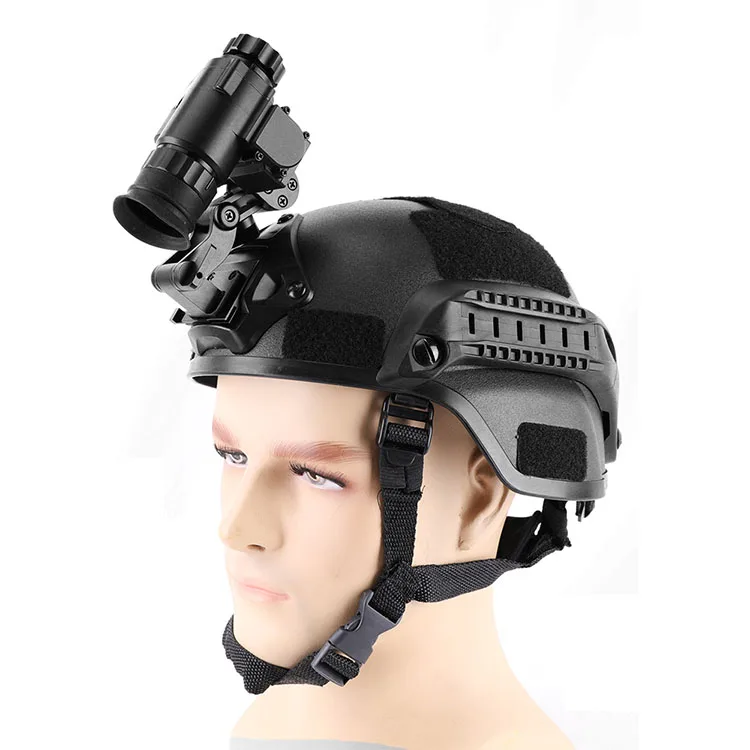
Types Of Night Vision Goggles Based On Magnification
Let’s look at the main categories of night vision goggles based on their magnification:
- 1x Magnification (No Zoom)
- Most common for navigation, walking, and hands-free use.
- Keeps depth perception accurate.
- Used by military and rescue teams.
- 2x Magnification
- Makes objects look twice as close.
- Useful for stationary surveillance or spotting animals.
- Small loss of depth perception.
- 3x and Higher Magnification
- Rare in goggles, more common in scopes and monoculars.
- Good for detailed observation at a distance.
- Not suitable for moving around—can be disorienting.
Why Most Night Vision Goggles Have 1x Magnification
The majority of night vision goggles have 1x magnification for a simple reason: safety. When you walk or move, your brain relies on the image size and depth cues to judge distances. If magnification is added, your judgment can be off, leading to tripping or accidents.
Another reason is field of view. Higher magnification makes the view narrower, so you see less of your surroundings. For activities like hiking or tactical movement, you need to see as much as possible.
Magnification Vs. Field Of View
There’s a trade-off between magnification and field of view in night vision goggles. The higher the magnification, the smaller your field of view.
Here’s a quick comparison:
| Magnification | Field of View (degrees) | Best For |
|---|---|---|
| 1x | 40°–50° | Navigation, walking, general use |
| 2x | 20°–25° | Surveillance, stationary spotting |
| 3x or more | 10°–15° | Long-distance observation |
This is why military and rescue teams almost always use 1x goggles—they need to see wide areas and move safely.
Real-world Examples Of Magnification Use
Let’s look at some common situations:
- Wildlife Observation: A 2x or 3x magnification helps you see animals without getting close. But you need to stay still or move very slowly, or you may lose your balance.
- Security and Surveillance: Guards might use 2x for scanning distant fences or buildings. For patrols, 1x is safer.
- Hiking or Camping: Always use 1x. Anything higher can be risky.
- Hunting: Night vision scopes with 3x or more are used to spot targets at a distance, but these are not “goggles” and are not worn while walking.

How To Choose The Right Magnification
Choosing the right magnification is about matching your needs. Here are steps to help you decide:
- Think About Your Main Activity
- Walking or moving? Stick to 1x.
- Watching from a fixed position? 2x might help.
- Need to see far? Consider a scope or monocular with higher magnification.
- Consider Image Quality
- Higher magnification can mean a dimmer, grainier image.
- Lower magnification usually gives a brighter, clearer view.
- Check the Field of View
- If you need to see a wide area, avoid high magnification.
- Try Before You Buy
- If possible, look through different models. The experience is different from daytime binoculars.
- Balance Cost and Quality
- Higher magnification often means higher price and more weight.
Common Mistakes When Choosing Magnification
Many beginners believe higher magnification is always better. But in night vision, too much magnification can be a problem. Here are mistakes to avoid:
- Choosing High Magnification for Movement: This makes navigation difficult and dangerous.
- Ignoring Image Brightness: 3x or more can make everything too dark to see details.
- Not Considering Weight: More powerful optics are heavier and less comfortable.
- Overlooking Eye Fatigue: High magnification can cause more eye strain, especially in low-light conditions.
Magnification In Night Vision Goggles Vs. Binoculars
People often confuse night vision goggles with binoculars. Here’s a side-by-side look:
| Feature | Night Vision Goggles | Daytime Binoculars |
|---|---|---|
| Typical Magnification | 1x–2x | 8x–12x |
| Purpose | Navigation, hands-free use | Observation at a distance |
| Field of View | Wide | Narrow |
| Weight | Light | Varies |
Night vision binoculars do exist and usually offer more magnification than goggles, but they are not for walking or moving around.
Digital Vs. Optical Magnification
Night vision goggles can use two types of magnification:
- Optical Magnification
- Achieved by the physical lenses.
- Maintains image quality.
- Typical in high-end devices.
- Digital Magnification (Digital Zoom)
- Enlarges the image electronically.
- Can reduce sharpness and add “pixelation.”
- Found in some digital night vision goggles.
Optical magnification is preferred for clear and natural images. Digital zoom is useful but can make the image less clear, especially in very dark conditions.

Impact Of Magnification On Image Quality
Higher magnification in night vision often leads to:
- Lower Brightness: Less light reaches your eyes.
- More “Noise”: The image can appear grainier.
- Narrower Field of View: You see less of your surroundings.
- Focus Issues: Small movements can blur the image.
For best results, stick to low magnification unless you need to observe a specific, distant target.
Which Professions Use High Magnification Night Vision?
Most military, police, and rescue workers use 1x magnification goggles for movement and situational awareness. High-magnification night vision is mainly for:
- Snipers (using scopes, not goggles)
- Wildlife researchers in fixed positions
- Security guards monitoring distant areas
For normal navigation, high magnification is avoided.
Technical Specs To Check When Buying
When shopping for night vision goggles, look for:
- Magnification Level: 1x is standard for movement.
- Field of View: Wider is better for most users.
- Lens Size: Larger objective lenses collect more light.
- Image Intensifier Generation: Newer generations give brighter images.
- Weight and Comfort: Important for long-term use.
Don’t be fooled by marketing that pushes high magnification as always better.
Non-obvious Insights About Magnification
- Magnification Can Expose More Flaws: Night vision technology has limits. Higher magnification can make image imperfections (like “halo” or “distortion”) more obvious. Sometimes, a lower magnification actually gives you more useful information.
- Your Eye’s Natural Limits Matter: The human eye’s ability to focus and adjust in low light is reduced. Even with high magnification, you might not see extra details if the scene is very dark. Sometimes, increasing the scene’s brightness (using an IR illuminator) is more useful than increasing magnification.
Care And Usage Tips
- Keep Lenses Clean: Dust and smudges affect image sharpness, especially at higher magnifications.
- Use a Neck Strap: For 1x goggles, this prevents drops during activity.
- Store Properly: Protect optics from humidity and shock.
- Practice in Safe Areas: If using 2x or more, avoid moving in unfamiliar terrain.
When Is High Magnification Useful?
High magnification night vision is most helpful when:
- You’re stationary and need to watch something far away.
- You can use a tripod or stable surface.
- The area has enough ambient light or you have an IR illuminator.
It’s not recommended for walking, driving, or quick movement in the dark.
The Future Of Magnification In Night Vision
Technology is improving fast. Modern digital night vision goggles now offer variable magnification and better digital zoom. Some military systems can switch between 1x and 4x modes with a button, though these are expensive and not common for civilian use. As image sensors improve, future devices may allow higher magnification without losing brightness or clarity.
If you want to read more about the science behind night vision and optics, see this Wikipedia article.
Frequently Asked Questions
What Does 1x Magnification Mean In Night Vision Goggles?
1x magnification means objects appear at their normal size, just as you see them with your own eyes. This is the most common setting for night vision goggles because it keeps your sense of distance and depth correct, making it safe for moving around.
Can I Use High-magnification Night Vision Goggles For Walking?
It’s not recommended. High-magnification goggles narrow your field of view and change depth perception, making it easy to trip or misjudge distances. For walking, stick to 1x magnification.
Are Night Vision Binoculars The Same As Goggles?
No. Night vision binoculars usually have higher magnification and are designed for observation, not for wearing while moving. Night vision goggles are made for hands-free use and typically have 1x magnification.
Does Higher Magnification Always Mean Better Detail?
Not always. In night vision, higher magnification can reduce image brightness and make the image grainier. Sometimes, you’ll actually see less detail because the image is dimmer or blurry.
Is Digital Zoom As Good As Optical Magnification?
No. Digital zoom simply enlarges the image electronically, often lowering image quality. Optical magnification uses lenses to make things appear larger and usually keeps the image clearer and brighter.
Night vision goggles are powerful tools, and understanding magnification helps you get the most from them. By choosing the right level for your needs, you’ll see more, stay safe, and enjoy your nighttime adventures with confidence.

