
Every year, the sky becomes a highway for millions of birds. They fly thousands of kilometers, crossing mountains, oceans, and deserts. This grand movement is called bird migration season. For many people, it’s just a beautiful event to watch. But for birds, it’s a matter of survival. If you have ever wondered why birds travel so far or how they know where to go, you are not alone. Bird migration is one of nature’s most fascinating wonders, and understanding it can help us protect these amazing creatures.
What Is Bird Migration Season?
Bird migration season is the time of year when birds travel from one place to another, usually between their breeding and non-breeding (wintering) grounds. These journeys are not random. Birds migrate to find food, escape bad weather, or find safe places to raise their young. Migration usually happens twice a year: in spring and in autumn. During these seasons, billions of birds are on the move all over the world.
Bird migration is not just about long flights. It is about timing, energy, and survival. Each species has its own migration pattern, distance, and reason for moving. Some travel only a few kilometers; others cross entire continents. While people often think of migration as a simple north-to-south movement, the reality is much more complex.
Why Do Birds Migrate?
Migration is a big risk for birds. They face predators, storms, and the danger of getting lost. So why do they do it? The main reasons are:
- Food availability: In many places, winter brings cold weather and less food. Insects disappear, lakes freeze, and plants stop growing. Birds leave these areas to find better food sources.
- Breeding grounds: Some birds migrate to places with fewer predators or better nesting spots. This helps their chicks survive.
- Climate: Birds may move to avoid extreme weather. For example, Arctic birds fly south to escape freezing temperatures.
- Daylight hours: Longer days in certain regions mean more time to find food and feed young.
It’s important to note that not all birds migrate. Some stay in the same place all year if they can find enough food and shelter.
When Does Bird Migration Season Happen?
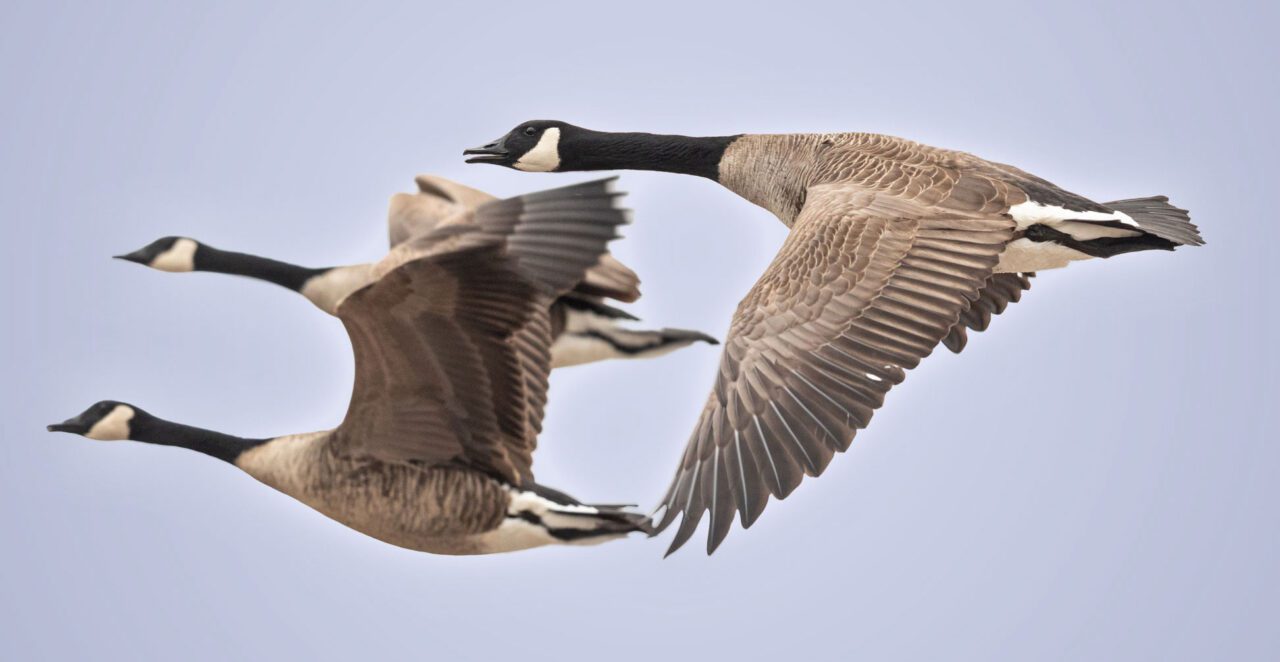
The timing of migration depends on the species and where they live. However, most bird migration happens in two main seasons:
- Spring migration: Birds fly from their winter homes (usually in the south) back to their breeding grounds (often in the north). This usually happens from February to June, depending on the species and location.
- Autumn migration: Birds leave their breeding grounds and head to warmer places for the winter. This usually takes place from August to November.
In tropical areas, some birds migrate during the rainy or dry season, not because of temperature, but to follow food.
The exact timing can change from year to year. Weather, temperature, and even climate change can make birds start migration earlier or later.
How Do Birds Know When To Migrate?
Birds use several signals to know when it’s time to move:
- Day length: When days get longer or shorter, birds sense the change. This is the main trigger for many species.
- Temperature: Sudden drops in temperature can push birds to leave early.
- Food supply: If food becomes hard to find, birds may begin migration.
- Genetics: Some birds are “programmed” to migrate at a certain time, even if they are raised in a different place.
Some birds even prepare for migration by eating more and storing fat as fuel for their long journey.
How Do Birds Know Where To Go?
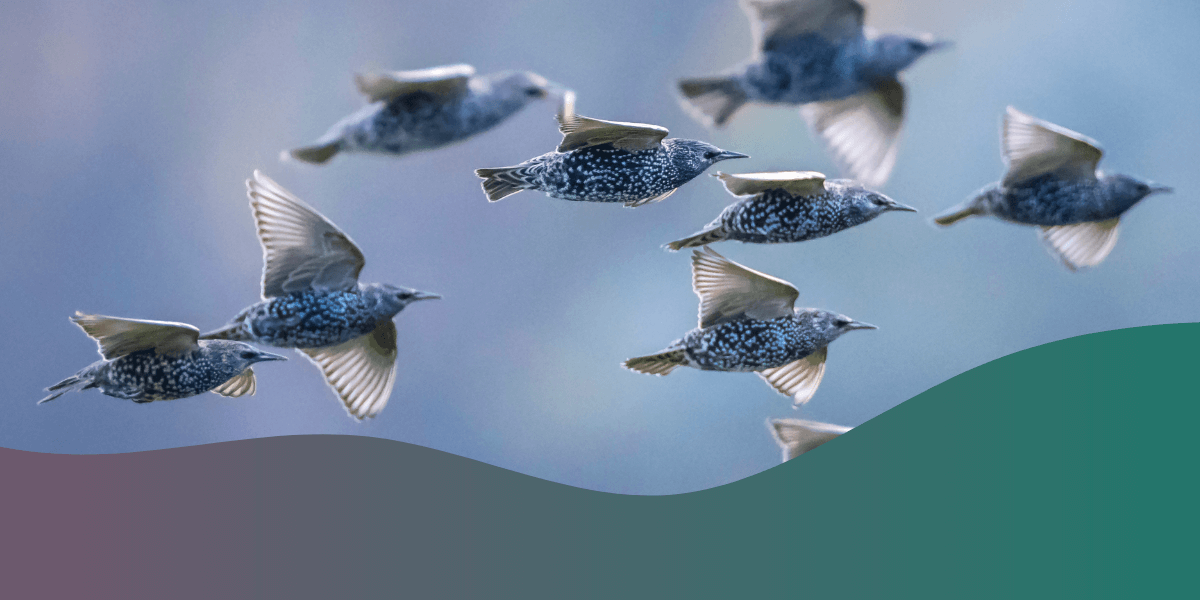
This is one of the most amazing parts of migration. Birds use a mix of senses and natural signs to find their way:
- Sun and stars: Many birds use the position of the sun during the day or stars at night to navigate.
- Earth’s magnetic field: Some birds can sense the magnetic field to help them fly in the right direction.
- Landmarks: Rivers, mountains, and coastlines guide birds, especially those that migrate during the day.
- Smell and sound: New studies show that birds can use smells and even sounds to find their way.
Young birds often migrate alone and still reach the correct place, showing how strong these instincts are.
Types Of Bird Migration
There are different types of migration, depending on distance and pattern:
Long-distance Migration
Some birds, like the Arctic Tern, travel over 40,000 kilometers from the Arctic to Antarctica and back each year. This is the longest migration of any animal. These journeys can cross oceans, deserts, and multiple countries.
Short-distance Migration
Not all birds travel far. For example, some ducks in North America move only a few hundred kilometers south in winter. This is called short-distance migration.
Altitudinal Migration
Some birds, especially in mountainous areas, move up and down the mountains rather than north and south. They spend summer at higher altitudes and winter lower down where it’s warmer.
Partial Migration
In some species, only part of the population migrates. For example, in a flock, some birds stay while others leave. This is common in robins and blue tits.
Irruptive Migration
This is less regular. When food is scarce, birds like snowy owls move far from their usual range. This type of migration does not follow a fixed pattern.
Common Migratory Birds And Their Journeys
Across the world, many birds take part in migration. Here are some famous examples:
- Arctic Tern: Migrates from the Arctic to Antarctica, about 40,000 km each year.
- Barn Swallow: Flies from Europe to Africa or from North America to South America.
- Bar-tailed Godwit: Known for flying non-stop for over 11,000 km between Alaska and New Zealand.
- Common Cuckoo: Travels from Europe and Asia to Africa.
- Sandhill Crane: Moves between northern North America and the southern U.S. or Mexico.
- Ruby-throated Hummingbird: Flies across the Gulf of Mexico, a non-stop journey of nearly 800 km.
- Swainson’s Thrush: Migrates from Canada and the U.S. to South America.
Each species faces unique challenges during migration, from weather to predators to finding food.
Major Bird Migration Routes
Birds don’t just fly in any direction. They follow migration routes, known as flyways. These routes often follow coastlines, rivers, or mountain ranges. The main flyways are:
- Pacific Flyway: Along the west coast of the Americas.
- Central Flyway: Runs through the Great Plains in North America.
- Mississippi Flyway: Follows the Mississippi River from Canada to the Gulf of Mexico.
- Atlantic Flyway: Along the east coast of the Americas.
- East Asian–Australasian Flyway: From Siberia and Alaska to Southeast Asia and Australia.
- African-Eurasian Flyway: From Europe and Asia to Africa.
These routes are important because they have stopover sites where birds can rest and feed.
Here’s a table comparing some of the world’s main flyways:
| Flyway | Continents Covered | Main Species | Notable Stopovers |
|---|---|---|---|
| Pacific Flyway | North and South America | Geese, ducks, shorebirds | California, Alaska, Chile |
| East Asian–Australasian | Asia, Australia | Sandpipers, plovers, swans | Yellow Sea, Australia wetlands |
| African-Eurasian | Europe, Asia, Africa | Storks, cranes, swallows | Mediterranean, Nile Delta |
Dangers And Challenges Of Bird Migration
Migration is risky and often deadly. Many birds do not survive the journey. The main dangers include:
- Weather: Storms, strong winds, and cold can exhaust or kill birds.
- Predators: Birds are vulnerable during migration, especially at stopovers.
- Human activities: Buildings, power lines, and wind turbines can cause accidents. Light pollution confuses birds, especially at night.
- Habitat loss: Wetlands and forests that birds use to rest are disappearing.
- Hunting: In some regions, birds are hunted during migration.
Surprisingly, some birds double their weight before migration to store enough energy. But even with careful preparation, many face enormous odds.
How Birds Prepare For Migration
Birds get ready for migration in several ways:
- Molting: Some birds grow new feathers for better flight.
- Hyperphagia: Birds eat much more than usual to build fat reserves.
- Muscle changes: Their muscles, especially in the chest, become stronger.
- Restlessness: Known as “zugunruhe,” birds become more active before migration.
Preparation is critical. Without enough fat or the right feathers, birds cannot complete the journey.
Tracking And Studying Migration
Scientists use many tools to study migration:
- Bird banding: Attaching small rings to birds’ legs to track their journeys.
- Radio and satellite tags: These give real-time data on location.
- Radar: Used to see flocks of birds, especially at night.
- Citizen science: Birdwatchers report sightings, helping track migration.
Thanks to these methods, we know much more about migration than we did 50 years ago. For example, the Bar-tailed Godwit’s non-stop flight was discovered using satellite tags.
Here’s a comparison of common bird tracking methods:
| Method | How It Works | Pros | Cons |
|---|---|---|---|
| Bird Banding | Small ring on bird’s leg | Cheap, simple | Data only if bird recaptured |
| Radio Tagging | Radio transmitter attached to bird | Gives location data | Limited range, needs tracking station |
| Satellite Tagging | GPS tag sends data to satellites | Global tracking, real-time data | Expensive, tags are heavy |
| Citizen Science | Birdwatchers report sightings | Large data set, covers many areas | Data quality can vary |
The Role Of Climate Change In Bird Migration
Climate change is affecting bird migration in many ways:
- Timing shifts: Many birds are migrating earlier in spring and later in autumn. This can cause problems if food is not available at the new time.
- Range changes: Some birds are moving to new areas as their old homes become too hot or dry.
- Extreme events: More storms or heatwaves can kill birds during migration.
For example, studies show that some European birds now arrive at breeding grounds weeks earlier than 30 years ago. This can create a mismatch—birds may arrive before insects hatch, leaving less food for their chicks.
How Can People Help Migratory Birds?
Protecting migratory birds is important for nature and for people. Here’s how you can help:
- Protect habitats: Support the conservation of wetlands, forests, and grasslands that birds use as stopovers.
- Reduce window collisions: Use stickers or special glass to prevent birds from flying into windows.
- Turn off lights: Light pollution can confuse birds, especially in cities. Turning off unnecessary lights during migration helps.
- Support bird-friendly farming: Farms that use fewer pesticides and keep hedges or ponds are better for birds.
- Participate in bird counts: Help scientists by joining citizen science projects.
Small actions can make a big difference, especially when many people join in.
Bird Migration And Human Culture
Bird migration has inspired stories, art, and science for thousands of years. Ancient people noticed birds leaving and returning, often linking migration to the seasons. In some cultures, birds are symbols of hope or change.
Birds like swallows are seen as messengers of spring in many places. The arrival of cranes is celebrated in Japan and other countries. Even today, bird migration brings people together for festivals and birdwatching events.
Non-obvious Insights About Bird Migration Season
Many beginners think all birds migrate, but actually, resident birds stay in the same place all year. Also, not all birds in a species migrate the same distance. For example, some robins in the north move south, while others stay put if food is available.
Another surprising fact is that young birds often migrate without adult guidance. Their ability to find the right path shows how powerful instinct and nature’s built-in GPS can be.
Famous Birdwatching Spots During Migration Season
If you want to see bird migration, some places are famous for this event:
- Point Pelee National Park (Canada): A hotspot for spring migrants.
- Cape May (USA): One of the best places to see hawks and songbirds.
- Bharatpur Bird Sanctuary (India): Hosts thousands of migratory birds each winter.
- Eilat (Israel): A meeting point for birds flying between Europe, Asia, and Africa.
- Danube Delta (Romania): Important for waterbirds and raptors.
During migration season, these places attract birdwatchers from around the world.
Bird Migration In Numbers
The scale of migration is hard to imagine. Here are some numbers:
- Over 4,000 species of birds migrate, which is about 40% of all bird species.
- Some birds fly non-stop for up to 9 days, like the Bar-tailed Godwit.
- Every autumn, more than 2 billion birds migrate across the Americas.
These numbers show how important migration is for the natural world.
Comparing Migration In Different Continents
The patterns of migration can be very different across continents. Here is a quick comparison:
| Continent | Main Migration Direction | Unique Features | Key Species |
|---|---|---|---|
| North America | North-South | Four major flyways, long ocean crossings | Sandhill Crane, Ruby-throated Hummingbird |
| Europe-Africa | Europe to Africa | Sahara crossing, narrow Mediterranean routes | Common Cuckoo, Swallow |
| Asia-Australia | North-South | Wetland stopovers, coastal routes | Bar-tailed Godwit, Great Knot |
| South America | Amazon basin to Andes/pampas | Altitudinal migration, rainforest crossings | Swainson’s Thrush |
The Future Of Bird Migration Season
As the world changes, so will migration. Climate change, habitat loss, and pollution are big threats. But there is hope. Conservation projects, new research, and public awareness are helping to protect migratory birds. International agreements, like the Migratory Bird Treaty Act, aim to keep birds safe across borders.
Bird migration season will continue to amaze people. Whether you are a scientist, a birdwatcher, or just someone who loves nature, understanding migration helps us connect with the world around us.
Frequently Asked Questions
What Is The Main Purpose Of Bird Migration Season?
The main purpose is for birds to move between places where they can find enough food and safe breeding spots. Migration helps them survive changing seasons and harsh weather.
How Do Birds Find Their Way During Migration?
Birds use the sun, stars, Earth’s magnetic field, and landmarks like rivers or mountains. Some even use their sense of smell. Their ability to navigate is a mix of instinct and learning.
Are All Birds Migratory?
No. Only about 40% of bird species migrate. Many birds, called resident birds, stay in the same place all year if conditions are good.
What Are The Biggest Threats To Migratory Birds?
The main threats are habitat loss, climate change, collisions with buildings, and hunting. Light pollution and bad weather also cause problems during migration.
Where Can I Learn More About Bird Migration?
A good starting point is the Wikipedia page on bird migration, which covers science, routes, and conservation issues in detail.
Bird migration season is more than a spectacle. It is a sign of a healthy planet, a test of survival, and a reminder of nature’s complexity. By learning about it and taking small steps to help, everyone can play a part in protecting these amazing travelers.


