
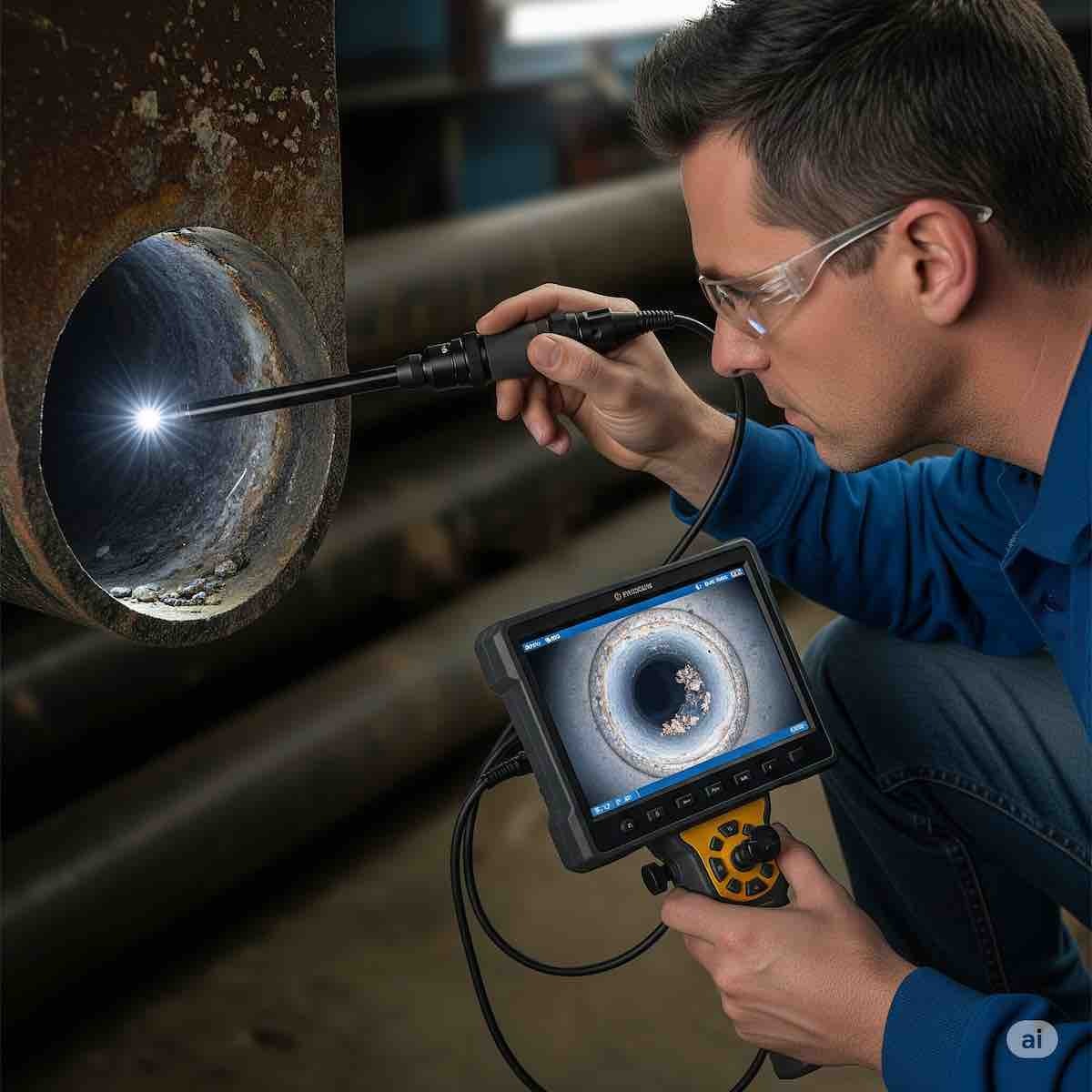
When you need to see inside a tight space—like an engine, a wall, or a pipe—a borescope is an essential tool. These clever devices, often called inspection cameras, can save hours of work, prevent costly mistakes, and give you a clear view where your eyes simply can’t reach.
But with so many models on the market, each with different features, how do you know which borescope is right for your needs? Whether you’re a mechanic, a home inspector, or a DIY enthusiast, choosing the right features can make your job much easier and your inspections much more effective.
Let’s explore the most important features you should consider before buying a borescope. Understanding these will help you pick a device that fits your tasks, your budget, and your level of experience.
Image Quality And Resolution
One of the main reasons to use a borescope is to get a clear image of something you can’t see directly. The resolution of the camera is the key factor here. Most borescopes offer resolutions ranging from 320×240 pixels (low) to 1920×1080 pixels (Full HD) or even higher.
High resolution means you can spot fine cracks, corrosion, or other small defects. However, higher resolution often costs more. If you need to identify tiny faults in machinery or engines, a high-definition camera is a smart investment. But for simple blockages or large objects, a lower resolution might be enough.
Also, pay attention to the frame rate. A higher frame rate (like 30 frames per second) gives smoother video, which is useful for moving inspections or when you need real-time feedback.
Probe Length And Diameter
The probe is the long, flexible part of the borescope that goes into small spaces. Its length and diameter are critical.
- Length: Common lengths range from 1 meter (3.3 feet) to over 10 meters (33 feet). Choose a length that allows you to reach your inspection area without unnecessary bulk. For example, for car engines, 1-2 meters is often enough, while plumbing or building inspections may require much longer probes.
- Diameter: Most probes are between 3.9mm and 8mm. Thinner probes fit into smaller spaces, but they may have lower image quality or less durability. Make sure the probe is narrow enough for your task but strong enough not to break.
Here’s a quick comparison of common probe sizes:
| Probe Diameter | Typical Use | Pros | Cons |
|---|---|---|---|
| 3.9mm | Small engines, fine electronics | Fits tight spaces | Lower image quality |
| 5.5mm | Car repair, HVAC | Good balance | May not fit very narrow gaps |
| 8mm | Pipes, general inspection | Durable, brighter image | Too large for tight spots |
Articulation And Flexibility
How well the probe can bend and move is another important factor. Some borescopes have fixed probes that you can only push or twist manually. Others offer articulating tips, which let you steer the camera left, right, up, or down using a control on the handle.
- Articulating probes are great for navigating complex paths and inspecting around corners.
- Cheaper models may only bend slightly, while professional borescopes can turn the tip up to 180 degrees in multiple directions.
Flexibility is essential in areas with lots of bends, such as engine cylinders or behind walls. However, more flexible probes can be more fragile, so balance your needs between flexibility and durability.
Display Options
You need a way to view what the camera sees. There are three main types of display options:
- Built-in Display: Many borescopes include a small screen on the handle. This is convenient and portable, but the screens are usually small (2.7–5 inches).
- Smartphone/Tablet Connection: Some models connect to your phone or tablet via WiFi or USB. This gives you a larger, clearer display and often lets you record images or video directly on your device.
- External Monitors: High-end models can connect to laptops or large screens. These are best for team inspections or detailed work.
When comparing, consider screen brightness and resolution—a bigger, brighter screen is easier to see in sunlight or dark areas.
Lighting And Illumination
Since borescopes work in dark places, good lighting is a must. Most probes have LED lights around the camera.
- Look for adjustable brightness controls. Too much light can cause glare, too little and you won’t see details.
- The number of LEDs varies; 6 to 8 is standard, but some advanced models have up to 12 or more.
- Some borescopes offer side-view lighting or special modes for very reflective or very dark areas.
If you often inspect shiny or oily surfaces, choose a model with adjustable light temperature (warm vs cool light), as this helps reduce glare.
Camera Direction And Field Of View
Not all borescopes look straight ahead. There are two main types:
- Forward-View Cameras: These see directly in front of the probe. Best for straight pipes or simple spaces.
- Side-View Cameras: These look out the side, useful for inspecting walls, cylinders, or the sides of pipes.
Some modern borescopes offer dual cameras—one forward and one side-facing. This lets you quickly switch views without moving the probe.
The field of view (FOV) describes how wide the camera can see. Wider fields (90–120 degrees) show more area but can make objects look smaller. Narrower fields (60–80 degrees) show less, but with better detail.

Image And Video Recording
Being able to record images and videos is essential for documentation and sharing results. Most modern borescopes allow you to:
- Take still pictures
- Record video clips
- Save files to an SD card or internal memory
Check the storage capacity—some only store a few images, while others support SD cards up to 128GB or more. If you need to share findings with clients or colleagues, easy file transfer is a must.
Some advanced models also support WiFi sharing or instant uploads to cloud storage.
Waterproof And Durability Ratings
Many inspections happen in wet or dirty environments—inside pipes, engines, or outdoors. Look for waterproof and dustproof ratings, usually shown as IP67 or IP68.
- IP67 means the probe can be submerged in water up to 1 meter for 30 minutes.
- IP68 offers even better protection for longer or deeper water exposure.
Also, check the overall build quality. Reinforced cables, shock-resistant handles, and scratch-resistant lenses help ensure your borescope survives tough jobs.
Power Source And Battery Life
Long inspections require reliable power. Borescopes are usually powered by rechargeable batteries, but battery size and runtime vary.
- Typical battery life ranges from 1.5 to 6 hours.
- Some professional models offer replaceable batteries, so you can swap in a fresh one on long jobs.
- Look for fast charging options if you need quick turnaround.
If you use a smartphone-connected model, remember that the borescope may use your phone’s battery, too.
Compatibility And Connectivity
If you want to view, save, or share images easily, check the borescope’s compatibility:
- WiFi borescopes connect wirelessly to smartphones and tablets. Make sure they work with your device (iOS, Android).
- USB borescopes plug in directly, but some need special apps or drivers.
- HDMI output is useful if you want to connect to a TV or monitor.
Not all borescopes work with all devices. Always check supported platforms before buying.
Here’s a quick look at connection types:
| Connection Type | Devices Supported | Main Benefit | Main Limitation |
|---|---|---|---|
| WiFi | iOS, Android, PC | Wireless, flexible | May have lag |
| USB | PC, some Android | Stable connection | Limited device support |
| HDMI | TV, monitor | Big screen viewing | No file storage |
Accessories And Attachments
Some tasks need special tools. Many borescopes come with attachments such as:
- Magnet tips: Grab small metal objects (like screws) in hard-to-reach places.
- Hooks: Pull out wires or debris.
- Mirror attachments: Change the camera angle to see around corners.
Check what’s included in the box, as buying accessories separately can add to the cost.
Price And Warranty
Borescopes range from under $50 for basic models to over $2,000 for advanced, professional tools. Think about:
- Your main tasks: Simple inspections don’t need top-end features.
- How often you’ll use it: Occasional users may not need premium durability or articulation.
- Support and warranty: A good warranty (at least 1 year) and responsive customer support can save frustration if something goes wrong.
Don’t be swayed by price alone. An expensive borescope with features you never use is wasted money, but a cheap one that breaks quickly is no bargain.
Non-obvious Features That Make A Difference
While most buyers focus on the basics, a few less obvious features can make a big difference:
- Temperature sensors: Some probes measure temperature inside pipes or engines, warning you of overheating or leaks.
- Voice annotation: Add spoken notes to your videos as you inspect—this saves time on written reports.
- Software updates: Some smart borescopes get better over time with downloadable updates, improving performance or adding features.
These extra features are especially valuable for professionals or anyone who needs to document and share findings regularly.
Common Mistakes When Choosing A Borescope
Many buyers make the same errors when picking a borescope:
- Ignoring probe size: A probe that’s too big won’t fit your inspection area.
- Overlooking lighting: Weak or non-adjustable LEDs make dark areas hard to inspect.
- Buying too cheap: Low-cost models often have poor image quality or break easily.
- Not checking compatibility: Some borescopes don’t work with certain phones or operating systems.
- Skipping warranty: Repairs can be expensive without coverage.
Take a moment to match the features to your real needs before buying.
Real-world Example: Choosing A Borescope For Automotive Use
Suppose you’re a car mechanic who often checks inside engines or behind dashboards. Here’s how you might prioritize:
- Probe diameter: Under 5.5mm to fit spark plug holes
- Length: 1–2 meters is enough for most car jobs
- Articulation: Helpful for looking around bends in cylinders
- Image quality: At least 720p for spotting small cracks
- Lighting: Adjustable, with at least 6 LEDs
- Recording: Needed for showing customers the problem
A model with these features will make inspections much faster and more accurate.
Frequently Asked Questions
What Is The Difference Between A Borescope And An Endoscope?
A borescope is a tool for inspecting areas you cannot see directly, often used in mechanical or industrial settings. An endoscope is similar but designed for medical use, following stricter hygiene and safety standards. Both use cameras and flexible probes, but their applications and build quality differ.
Can I Use A Smartphone As A Borescope Display?
Yes, many modern borescopes connect to smartphones via WiFi or USB. You’ll need a compatible app, and your device must support the connection type. This setup offers a bigger screen and easy saving of images and video.
How Important Is Probe Articulation For Home Inspections?
Articulation is very helpful when you need to look around corners or behind obstacles, such as inside walls or pipes. For straight-line inspections, a fixed probe is usually enough, but for complex tasks, articulation saves time and effort.
Are There Safety Risks When Using A Borescope?
Borescopes are generally safe, but avoid using them in live electrical areas or extreme heat unless the tool is rated for those conditions. Always check the probe’s temperature and waterproof ratings before use in harsh environments.
What’s The Best Way To Clean And Store A Borescope?
Clean the probe with a soft cloth and mild cleaner after each use, especially if used in dirty or oily places. Avoid harsh chemicals. Store the device in its case, keep cables untangled, and charge the battery before long-term storage.
Choosing the right borescope is about more than just picking the cheapest or most expensive model. By understanding the features that matter most for your work—like image quality, probe size, lighting, and durability—you’ll get a tool that makes inspections faster, easier, and more accurate. If you’re still unsure, check out reviews and expert guides from trusted sources like the Wikipedia entry on borescopes to compare your options.
With the right borescope, you’ll see problems before they become disasters—and save both time and money in the process.


