
Elk are some of the most impressive animals in North America and parts of Asia. As winter sets in, their world changes dramatically. Food becomes scarce, snow covers the ground, and freezing temperatures test every living thing. You might wonder, what do elk eat in winter when green grass and flowers disappear? Understanding their winter diet reveals a story of survival and adaptation.
Many people think elk simply “eat whatever they find,” but their choices are more complex. Elk must balance energy, safety, and nutrition, all while moving through deep snow and avoiding predators. If you want to know how these large herbivores make it through harsh winters, and what foods keep them alive, you’re about to discover the complete answer.
How Winter Changes Elk Diets
Winter is not just a season for elk—it’s a challenge. Unlike summer, when food is everywhere, winter forces elk to adapt. Deep snow covers low-growing plants, cold weather increases the energy elk need, and many foods lose their nutrients.
Why Elk Need Different Foods In Winter
Elk are ruminants, which means they have a special stomach for digesting tough plants. In summer, they eat mostly green, soft plants that are easy to digest and high in protein. In winter, these plants disappear under snow or die off. Elk must switch to eating woody plants, bark, and dry grasses that are harder to digest but still offer some nutrition.
How Much Do Elk Eat In Winter?
An adult elk can eat 6 to 8 kilograms (13 to 18 pounds) of food every day in winter. This is less than what they eat in summer. Because winter foods have less energy, elk often lose weight during these months.
Survival depends on finding enough to eat, even if it is not perfect.
Main Winter Foods For Elk
Let’s break down the key foods elk rely on in winter. These foods change depending on where the elk live, but several types are common across North America, Europe, and Asia.
1. Grasses
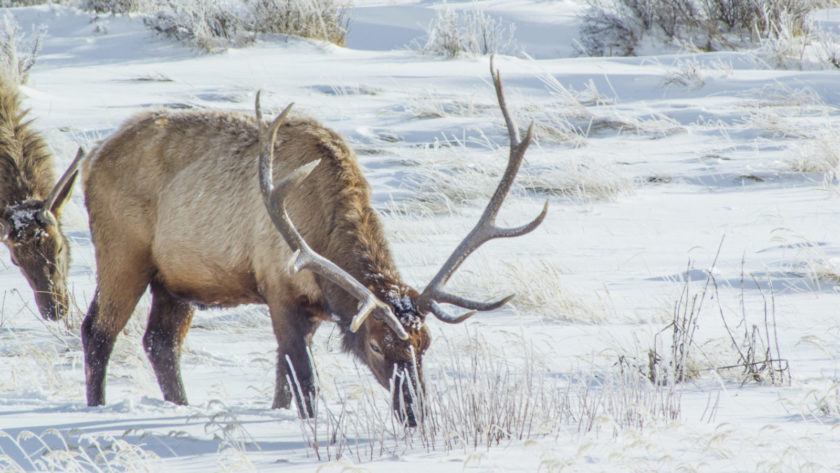
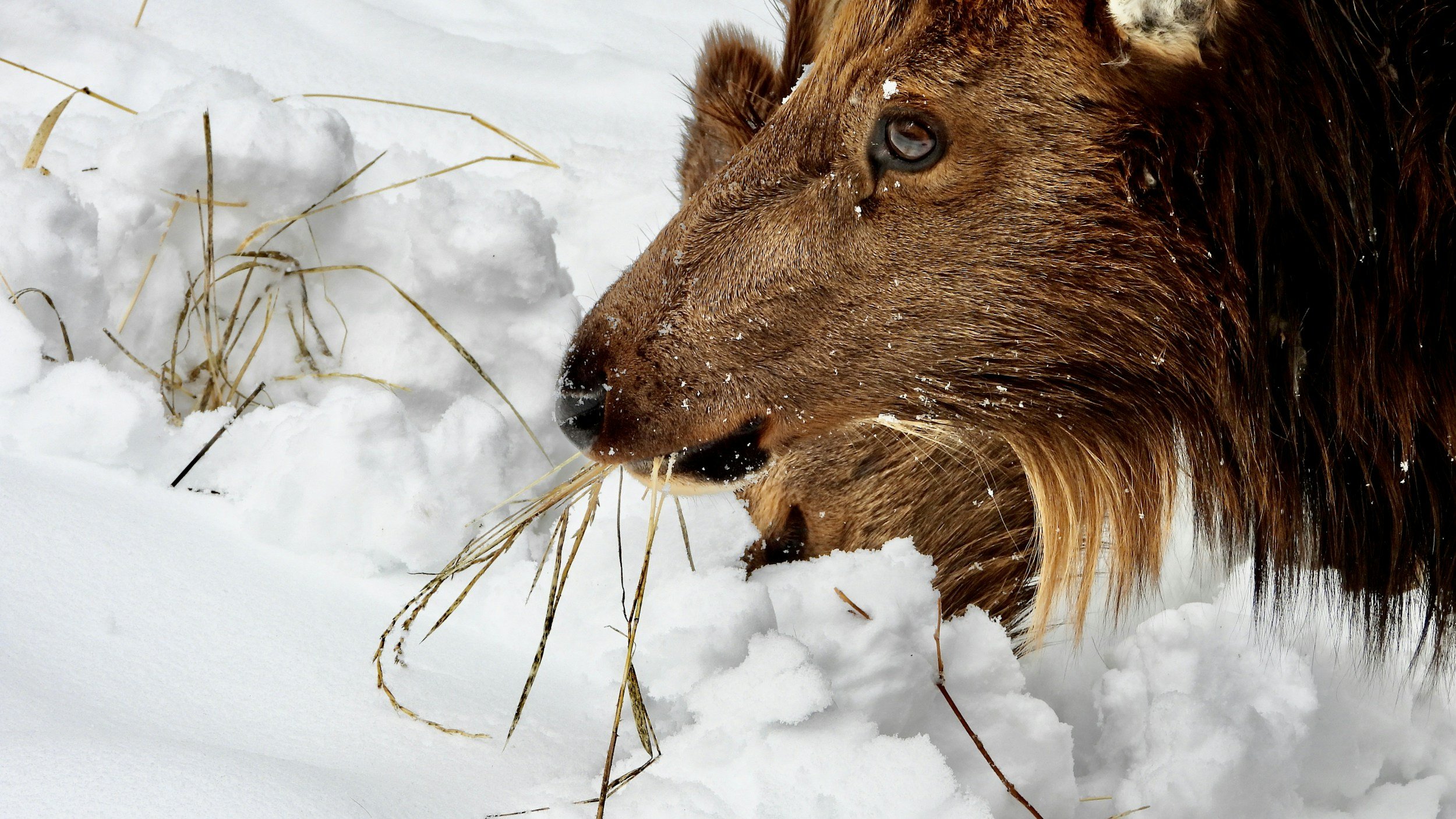
Even in winter, elk look for grasses. These are their favorite foods, but grass is often buried under snow. Elk use their hooves to dig and expose what’s left. Most winter grasses are dry and less nutritious, but they still provide fiber and some energy.
2. Forbs
Forbs are broad-leafed plants (not grass or woody shrubs). Many die back in winter, but some survive under the snow. Elk will dig for any leftover forbs, especially in mild winters or shallow snow. Forbs like dandelion roots and yarrow can be important, though they are less common than in summer.
3. Shrubs
Woody shrubs become very important in winter. Elk browse on twigs, buds, and stems of plants like:
- Willow
- Sagebrush
- Serviceberry
- Chokecherry
Shrubs are tough and not as tasty as summer foods, but they stay above snow and offer minerals elk need.
4. Tree Bark And Branches
When food is scarce, elk eat the bark and young branches of trees. This is a last resort, but it helps them survive. They prefer:
- Aspen
- Douglas fir
- Lodgepole pine
Eating bark is hard on the trees, and too much browsing can damage forests, but for elk, it’s about staying alive.
5. Evergreen Needles
Elk sometimes chew evergreen needles (like spruce, pine, or fir) during deep winter. Needles have vitamin C and some energy, though they are not easy to digest. This is a backup food, used only when better options are gone.
6. Agricultural Crops
In some areas, elk find leftover crops on farms, like alfalfa, hay, or even grain left in fields. These foods are high in energy and protein, but eating crops can bring elk into conflict with farmers. Some wildlife managers provide hay to help elk herds survive hard winters, but this is not always the best long-term solution.
How Elk Find Food Under Snow
Finding food in winter is not just about what elk eat, but how they get it. Snow can be one of the biggest challenges. Elk use their:
- Strong legs to move through deep snow
- Sharp hooves to dig “craters” in the snow and find plants below
Elk often follow trails made by other animals or use wind-blown slopes where snow is less deep. South-facing hillsides lose snow faster and expose grass earlier, so elk seek out these places.
Energy Balance And Fat Reserves
Winter food is low in calories, so elk must use the fat they stored in autumn. This fat provides energy when food is not enough. Adult bulls (male elk) lose 10%–20% of their body weight over winter, while cows (females) lose a bit less. Calves (young elk) are most at risk because they have less fat.
If winter is long or harsh, many elk can die from starvation, especially the young and weak. Survival is a balance between eating enough and saving energy by moving as little as possible.
How Elk Diet Changes By Region
Elk live in many places, from the Rocky Mountains to European forests and Asian plains. Their winter diet changes with local plants and snow depth.
Mountain Elk
In high mountains, snow is deep and covers most plants. Elk here eat more bark, twigs, and evergreen needles. They move to lower valleys if possible.
Plains And Foothill Elk
Elk on open plains or rolling hills have less snow and more grass available. They eat more dry grass and forbs left over from summer.
Forest Elk
In thick forests, elk find shrubs and small trees. They browse on aspen, willow, and young fir trees.
Below is a comparison of common winter foods available to elk in different regions:
| Region | Main Winter Foods | Snow Depth |
|---|---|---|
| Mountain | Bark, twigs, needles | Deep (over 60 cm) |
| Plains | Dry grasses, forbs | Shallow (under 30 cm) |
| Forest | Shrubs, small trees | Variable |
Nutritional Value Of Winter Foods
Not all foods are equal. Elk get different amounts of protein, energy, and minerals from each food type. In winter, many foods have much less protein than in summer. For example:
| Food Type | Average Protein (%) | Digestibility |
|---|---|---|
| Fresh grass (summer) | 12–18% | High |
| Dry grass (winter) | 4–7% | Low |
| Shrub twigs | 6–9% | Medium |
| Evergreen needles | 2–5% | Low |
Non-obvious insight: Even if elk find enough food by weight, the low protein and energy mean they can still starve. Body condition is more important than just the amount eaten.
How Weather And Snow Affect Food Choice
Snow is not just an obstacle—it shapes the entire elk diet.
- Shallow snow (under 30 cm): Elk can dig for grass and forbs.
- Deep snow (over 60 cm): Elk switch to shrubs, bark, and needles.
- Crusty snow or ice: Makes digging impossible; elk must find exposed plants or face starvation.
Cold temperatures also increase how many calories elk need, making fat stores even more important.
How Elk Avoid Starvation
Elk use several strategies to survive:
- Migration: Some herds move long distances to find better winter range.
- Herding: Staying in groups makes finding food easier and helps with predator defense.
- Resting More: Elk rest to save energy, moving only when needed.
- Choosing South Slopes: These melt faster and expose food earlier.
- Eating Low-Quality Food: When desperate, elk eat almost anything that gives energy.
The Impact Of Human Activity
Humans have changed elk diets in many places. Roads, fences, and development block migration paths. In some areas, wildlife managers provide supplemental feeding (like hay or pellets) to help elk survive. While this can save herds in harsh years, it may also cause disease, crowding, or loss of natural foraging skills.
Non-obvious insight: Feeding elk in winter can attract large numbers to one place, increasing the risk of disease spread and making them targets for predators or poachers.
If you want to dive deeper into elk’s winter survival and the science behind supplemental feeding, the National Park Service offers helpful resources.
How Elk Diets Compare To Other Deer
Elk are not the only animals facing winter hunger. Deer and moose also change diets in winter, but elk are more flexible. For example, whitetail deer eat mostly twigs and buds but rarely dig for grass, while moose eat large amounts of bark.
Here’s a simple comparison:
| Animal | Main Winter Foods | Snow Adaptation |
|---|---|---|
| Elk | Grass, shrubs, bark, needles | Good diggers, migrate |
| Deer | Shrubs, twigs, buds | Stay in cover, less digging |
| Moose | Bark, twigs, aquatic plants | Wade through deep snow |
Frequently Asked Questions
What Is The Main Food For Elk In Winter?
The main winter foods for elk are dry grasses, woody shrubs, and tree bark. When available, elk prefer grasses, but when these are covered by snow, they switch to shrubs like willow and sagebrush. In hard times, they eat bark and evergreen needles.
How Do Elk Find Food Under Deep Snow?
Elk use their strong hooves to dig through snow, creating “craters” where they can reach buried plants. They also move to windswept hills and south-facing slopes where snow melts faster and exposes more food.
Do Elk Eat The Same Foods Everywhere In Winter?
No, elk diets change depending on the region. Mountain elk eat more bark and needles, while plains elk rely more on grass. Local plant types, snow depth, and human activity all affect what elk eat during winter.
Can Elk Survive The Whole Winter Without Eating?
Elk cannot survive an entire winter without eating, but they do rely heavily on fat reserves built up in the fall. If they cannot find enough food for weeks, especially young or weak elk, they may die from starvation.
Is Feeding Elk In Winter A Good Idea?
Feeding elk hay or pellets can help herds survive in tough winters, but it can also cause problems like disease spread, overgrazing, and unnatural behavior. It is usually better to protect and manage natural winter ranges for elk.
Elk are true survivors, adapting their diet to whatever winter brings. From digging for grass to stripping bark from trees, their food choices are a lesson in resilience. Whether you see them on snowy hillsides or read about their winter habits, you now know exactly how elk eat and survive when the world is white and cold.

