
Many people are drawn to the soothing sound of water and the gentle movements of birds at rivers, lakes, and seashores. Birds that live near water, known as water birds or aquatic birds, are fascinating to watch because of their unique habits and striking appearances. But which species actually make their homes near ponds, streams, wetlands, and oceans? And what special features help them survive in these watery places?
Understanding the birds that live near water is not only enjoyable for nature lovers, but also important for protecting local wildlife and keeping ecosystems healthy. Water birds play key roles in their environments. They help control insect populations, spread seeds, and even tell us when something is wrong with a habitat.
This guide will help you discover the many kinds of birds that live near water. You’ll learn about their habitats, behaviors, and how to spot them. Whether you are a beginner, a casual birdwatcher, or just someone curious about nature, you’ll find surprising details and practical tips inside.
What Makes A Bird A “water Bird”?
The term water bird covers a variety of species, but they all share one thing: they rely on water for food, nesting, or safety. Most have special adaptations for swimming, diving, or wading. For example, webbed feet help ducks paddle, while long legs allow herons to walk in shallow water.
Water birds can live in many types of watery places, from the salty waves of the sea to small backyard ponds. Some only visit water for part of the year; others rarely leave it. Understanding their needs helps you identify which birds you might see in different locations.
Main Types Of Water Birds
- Wading birds: These birds have long legs and necks, perfect for searching for food in shallow water. Herons and egrets are good examples.
- Diving birds: They go underwater to catch fish or insects. Cormorants and grebes are common diving birds.
- Swimming birds: Ducks, swans, and geese spend most of their time floating and feeding on the water’s surface.
- Shorebirds: These birds walk along beaches and mudflats, probing the sand for tiny creatures. Sandpipers and plovers belong to this group.
- Seabirds: Gulls, terns, and pelicans live near the coast and often travel far out to sea.
Each group has its own features and habits. Learning about these helps you understand why different birds choose certain watery homes.
Habitats Where Water Birds Live
Birds that live near water are found in many different habitats. Here are the main places you can look for them.
Freshwater Habitats
- Lakes and ponds: Quiet, open water attracts ducks, geese, and swans.
- Rivers and streams: Fast-moving water is a home for kingfishers and dippers.
- Wetlands and marshes: These are rich in plant and insect life, perfect for wading birds like herons and ibises.
Saltwater Habitats
- Coastal beaches: Shorebirds and gulls are common along sandy and rocky coasts.
- Estuaries: Where rivers meet the sea, mudflats support many birds, especially during migration.
- Open ocean: Some birds, like petrels and albatrosses, live most of their lives far from land.
Human-made Water Habitats
- City parks: Many ponds and lakes in parks attract ducks and geese.
- Reservoirs and canals: These can be important stopovers for migratory birds.
- Fish farms and sewage ponds: Surprisingly, these sometimes attract rare water birds looking for food.
Understanding the type of water and the plants around it helps you predict which birds you might see.

Popular Water Birds And Their Features
Let’s look at some of the most common and interesting water birds you might find around the world. Each has unique traits and behaviors.
Ducks
Ducks are probably the most familiar water birds. They have webbed feet and rounded bills. Most ducks can fly well and migrate long distances.
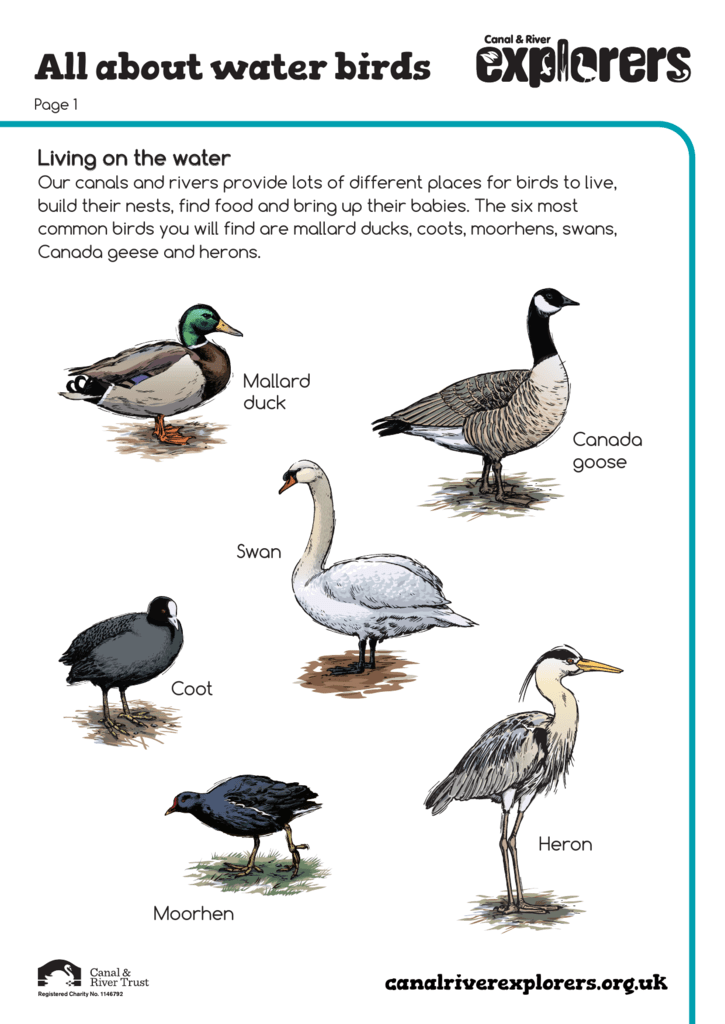
- Mallard: Bright green head (male), loud quack, often seen in city parks.
- Northern Pintail: Long neck and tail, elegant swimmer, prefers shallow water.
- Wood Duck: Colorful markings, likes wooded swamps and ponds.
Ducks are known for “dabbling”—tipping forward to feed on plants underwater.
Geese
Geese are larger than ducks and have long necks. They are strong fliers and migrate in V-shaped flocks.
- Canada Goose: Black head and neck, white cheek patch, common in North America.
- Greylag Goose: Ancestral to domestic geese, found in Europe and Asia.
Geese mainly eat grass and roots near water, but they also swim well.
Swans
Swans are graceful, large birds with long necks and pure white feathers (most species). They mate for life and are symbols of beauty.
- Mute Swan: Orange bill with a black knob, often glides silently on lakes.
- Trumpeter Swan: Loud, trumpet-like call, native to North America.
Swans build large nests from reeds and grass close to the water’s edge.
Herons And Egrets
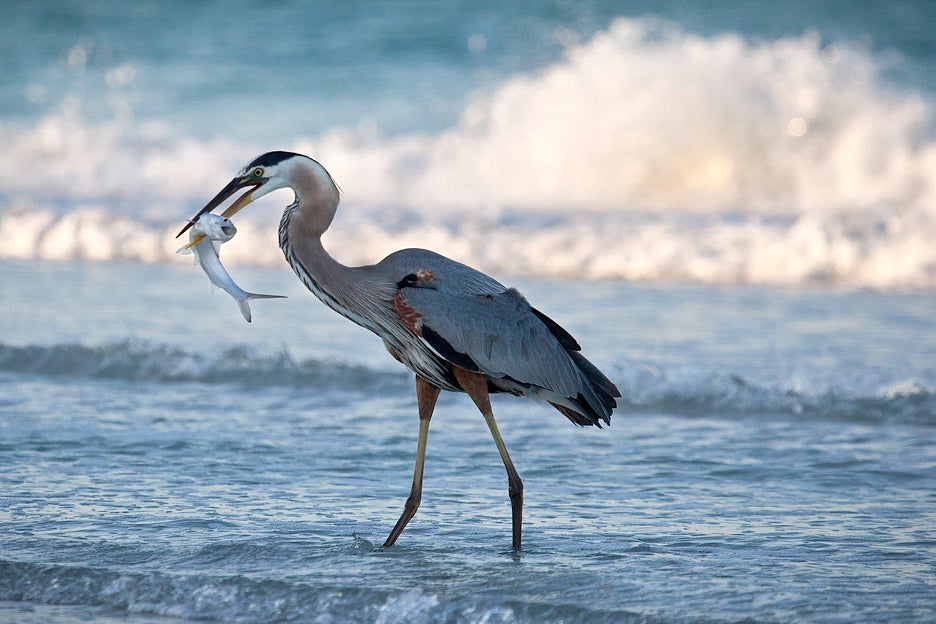
These tall birds have long legs for wading and sharp bills for spearing fish.
- Great Blue Heron: Common in North America, blue-gray color, slow and patient hunter.
- Little Egret: Small, white, with black legs and yellow feet, found in Europe, Africa, and Asia.
Herons and egrets stand still for long periods before striking at prey.
Cormorants
Cormorants are expert divers. They have hooked bills and often spread their wings to dry after swimming.
- Great Cormorant: Black with a white throat patch, strong swimmer, found worldwide.
- Double-crested Cormorant: Common in North America, named for its double crest during breeding.
They eat mostly fish and are often seen diving in groups.
Grebes
Grebes have lobed toes (not webbed) and are excellent underwater hunters.
- Great Crested Grebe: Elegant head plumes during breeding, found in Europe and Asia.
- Pied-billed Grebe: Small, brown, with a thick bill, common in the Americas.
Grebes build floating nests from water plants.
Kingfishers
Small but striking, kingfishers have bright colors and large heads. They dive for fish from a perch.
- Common Kingfisher: Shiny blue and orange, found across Europe and Asia.
- Belted Kingfisher: Slate blue with a white collar, found in North America.
Kingfishers usually nest in tunnels dug into riverbanks.
Gulls And Terns
Gulls are generalists and eat almost anything. Terns are more streamlined and graceful, diving for fish.
- Herring Gull: Large, pale gray, with a loud call, common along coasts.
- Common Tern: Slender, forked tail, black cap, migrates long distances.
Gulls often gather in large flocks, while terns are more delicate.
Shorebirds
This group includes sandpipers, plovers, and stilts. They have long bills and legs for probing mud and sand.
- Sanderling: Small, pale, runs along beaches chasing waves.
- Black-winged Stilt: Very long pink legs, found in Europe, Africa, Asia, and Australia.
Shorebirds are often seen in huge numbers during migration.
Pelicans
Pelicans are huge birds with giant throat pouches for scooping fish.
- American White Pelican: White with black wing tips, glides over lakes and rivers.
- Brown Pelican: Dives from the air to catch fish, common along ocean coasts.
Pelicans often fish together in groups.
Rails, Coots, And Moorhens
These secretive birds live in dense reeds and marshes.
- Common Moorhen: Red and yellow bill, walks on floating plants.
- American Coot: Black with a white bill, often seen in city ponds.
Rails are more shy and rarely seen.
Cranes
Cranes are large, elegant birds with long necks and legs. They perform beautiful dances during courtship.
- Sandhill Crane: Gray, with a red cap, common in North America.
- Common Crane: Migrates across Europe and Asia.
Cranes usually nest in wetlands and feed on plants and small animals.
Flamingos
Flamingos are famous for their pink feathers and strange, curved bills. They filter tiny animals from water.
- Greater Flamingo: Tallest and most widespread, found in Africa, Europe, and Asia.
- American Flamingo: Bright pink, found in the Caribbean and northern South America.
Flamingos stand on one leg to rest and keep warm.
How To Identify Water Birds
Identifying water birds can be tricky because many species look similar. Here’s how to improve your skills:
- Look at the size and shape: Is the bird tall and skinny, short and round, or large and heavy?
- Note the color pattern: Bright colors, spots, or stripes can help.
- Check the bill shape: Long and straight for probing, hooked for catching fish, or flat for dabbling?
- Watch the behavior: Does it dive, wade, swim, or run along the shore?
- Listen to the calls: Many water birds have loud and unique voices.
Binoculars and a simple field guide help, but patient observation is key.
Water Birds Around The World
Water birds are found on every continent except Antarctica. Here’s a quick look at some famous examples by region.
North America
- Great Blue Heron: Lakes and rivers.
- Canada Goose: Parks and fields.
- American White Pelican: Inland lakes and reservoirs.
Europe
- Mute Swan: Lakes and slow rivers.
- Common Kingfisher: Streams and ponds.
- Black-headed Gull: Urban lakes and coasts.
Asia
- Sarus Crane: Wetlands and rice fields.
- Little Egret: Marshes and rivers.
- Baikal Teal: Shallow lakes.
Africa
- African Spoonbill: Wetlands and lagoons.
- Greater Flamingo: Salt lakes.
- Sacred Ibis: Riverbanks.
Australia
- Australian Pelican: Coastal waters and lakes.
- Black Swan: Freshwater lakes.
- Royal Spoonbill: Wetlands.
South America
- Roseate Spoonbill: Marshes and mangroves.
- Andean Goose: High mountain lakes.
- Coscoroba Swan: Southern wetlands.
Migration: Why Water Birds Travel
Many water birds migrate long distances each year. This helps them find food and safe places to nest. For example, the Arctic Tern travels over 70,000 kilometers each year from the Arctic to the Antarctic and back—the longest migration of any animal.
Migration is risky. Birds face storms, predators, and loss of wetland resting places. Still, their ability to travel so far is one of nature’s wonders.
Migration Pathways
- Flyways: Water birds use ancient pathways called flyways. The East Atlantic Flyway, for example, connects Europe to Africa.
- Stopover sites: Birds stop to rest and feed at key wetlands along the way.
Protecting these places is vital for water bird survival.
The Role Of Water Birds In Ecosystems
Water birds do more than look beautiful; they are important for the health of their habitats.
- Control pests: Many eat insects and small animals that can damage plants.
- Seed spreaders: Ducks and geese carry seeds to new places, helping plants grow.
- Ecosystem indicators: Changes in water bird numbers can warn us about pollution or climate change.
The loss of water birds often means that something is wrong with the environment.
Threats Facing Water Birds
Sadly, many water birds are in danger. Their homes are being lost or polluted, and climate change is making things worse.
Main Threats
- Habitat loss: Wetlands are drained for farming or building.
- Pollution: Oil spills, pesticides, and plastic harm birds and their food.
- Hunting and egg collecting: Some species are hunted for food or feathers.
- Climate change: Rising sea levels and droughts change where water is found.
Some birds, like the Spoon-billed Sandpiper, are now critically endangered.
Conservation Success Stories
There is hope. When people protect water habitats, bird numbers often recover. For example, the return of the Bald Eagle in North America is a result of cleaner water and careful protection.
How To Watch And Help Water Birds
Anyone can enjoy and support water birds, even in cities. Here’s how:
Where To Watch
- Visit local lakes, rivers, or wetlands early in the morning.
- Use binoculars, and wear dull-colored clothes to blend in.
- Stay quiet and move slowly.
How To Help
- Support wetland protection projects.
- Avoid using pesticides near water.
- Keep dogs on leashes near nesting sites.
- Join a local birdwatching group or citizen science project.
Even small actions can make a big difference.
Comparison Of Common Water Bird Features
Here’s a look at some key differences between common water birds:
| Bird | Feet Type | Main Food | Nesting Habitat |
|---|---|---|---|
| Mallard Duck | Webbed | Plants, insects | Pond edges, reeds |
| Great Blue Heron | Long toes | Fish, frogs | Trees near water |
| Mute Swan | Webbed | Aquatic plants | Shoreline nests |
| Common Kingfisher | Small claws | Fish | Riverbanks |
| American Coot | Lobed | Plants, insects | Floating nests |
Water Bird Diets: What Do They Eat?
The diets of water birds are as varied as their shapes and sizes. Here’s a summary:
| Bird Type | Typical Diet | How They Find Food |
|---|---|---|
| Herons & Egrets | Fish, frogs, insects | Wade and spear prey |
| Ducks | Seeds, plants, insects | Dabble or dive |
| Shorebirds | Worms, crustaceans | Probe sand or mud |
| Gulls | Fish, scraps, eggs | Scavenge and hunt |
| Pelicans | Fish | Scoop with pouch |
Fun Facts And Surprising Insights
Many beginners miss these interesting facts about water birds:
- Some ducks, like the Hooded Merganser, can see clearly underwater, helping them catch fish more easily.
- The Jacana (also called “lily-trotter”) has extra-long toes that allow it to walk on floating leaves without sinking—a feature almost unique among birds.
- Not all water birds need fresh water. The Sooty Tern drinks seawater and uses special glands to remove the salt.
- The Dipper is the only songbird that can dive and walk underwater, searching for insects in streams.
- Some gulls, like the Heermann’s Gull, are known to steal fish right from the mouths of pelicans, showing surprising cleverness.
Water Birds And People: Cultural Connections
Water birds appear in art, stories, and traditions all over the world. The swan is a symbol of beauty in Europe, the crane stands for luck and peace in Asia, and the stork is famous for “bringing babies” in many legends.
In some places, people still work with water birds. For example, fishermen in China and Japan have trained cormorants to catch fish for centuries. Understanding these connections helps us appreciate the value of water birds beyond just watching them.
Where To Learn More
If you want to dive deeper into this topic, visit the Wikipedia List of Water Birds for a complete list and more detailed descriptions.
Frequently Asked Questions
What Is The Difference Between A Water Bird And A Land Bird?
Water birds rely on wet habitats for feeding, nesting, or safety, and have adaptations like webbed feet or long legs for swimming or wading. Land birds do not need water in the same way and usually lack these special features.
Are All Ducks Considered Water Birds?
Yes, all ducks are water birds. They spend most of their time in or near water, feeding, nesting, and raising their young in ponds, lakes, and rivers.
Can Water Birds Live In Both Fresh And Salt Water?
Many water birds can live in both fresh and salt water. For example, gulls and terns are found on both oceans and inland lakes, while some species, like flamingos, prefer salty or alkaline lakes.
How Can I Attract Water Birds To My Garden Or Pond?
To attract water birds, provide a clean pond or wetland, plant native water plants, and avoid using chemicals. Adding floating logs or islands for nesting and keeping the area quiet will also help.
Why Are Water Birds Important For The Environment?
Water birds help keep ecosystems healthy by controlling pests, spreading seeds, and acting as indicators of water quality. Their presence often means the habitat is in good condition.
Spending time watching water birds opens your eyes to the richness of nature. Whether you live near a city park or a wild wetland, these birds can teach you about adaptation, survival, and beauty. By learning about the birds that live near water, you help protect their future—and discover more of the world around you.

