Forests are some of the most vibrant places on Earth. When you walk under the trees, you often hear songs, see flashes of color, and notice birds swooping between branches. These birds are not just beautiful; they are a vital part of the forest ecosystem.
They help spread seeds, control insects, and even shape the way the forest grows. But what kinds of birds actually live in forests? The answer is more complex than you might think. Forests come in many types—tropical, temperate, boreal, and more—and each one is home to its own special mix of birds.
Some birds stay high in the treetops, while others hunt on the ground. Some are tiny and hard to spot, while others are large and easy to hear. In this article, you will discover the main types of birds that live in forests, learn about their behaviors, and see why forests matter so much for birds all over the world.
Types Of Forests And Their Birds
Not all forests are the same. Each type of forest offers different food, shelter, and challenges. This means the birds you find in one forest might be completely different from those in another.
Tropical Rainforests
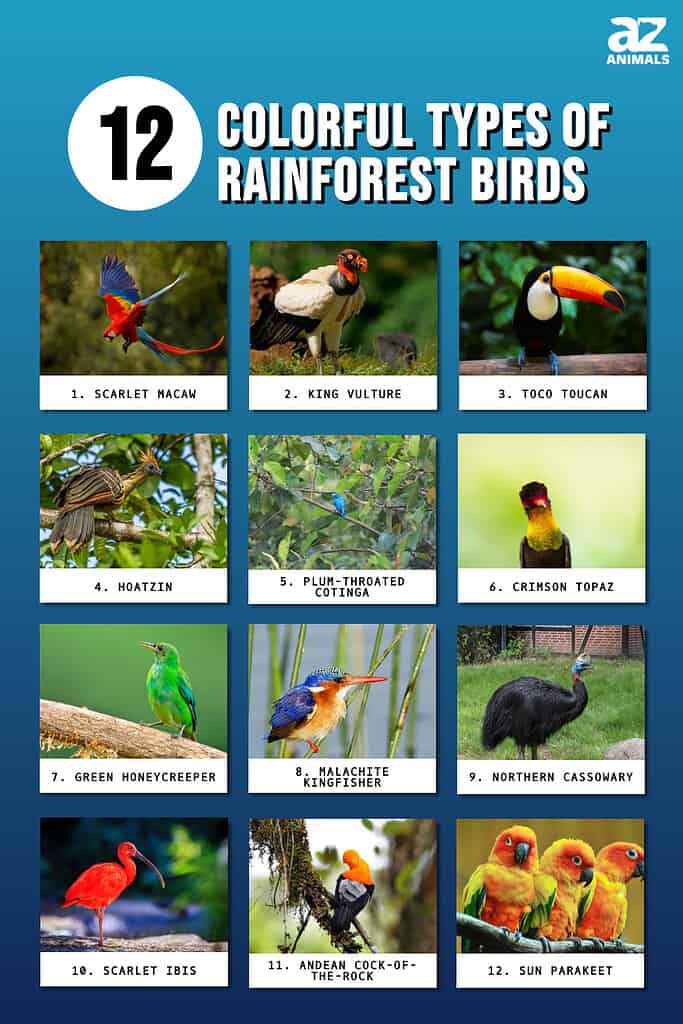
Tropical rainforests are lush, hot, and full of life. They get a lot of rain and have tall, thick trees. These forests are famous for their high number of bird species. You can find toucans, parrots, hummingbirds, and hornbills here.
For example, the scarlet macaw is a bright red, blue, and yellow parrot found in South American rainforests. It uses its strong beak to crack nuts and fruits. The toucan, with its huge colorful bill, is another rainforest resident. Its beak helps it reach fruit on thin branches where other birds cannot go.
Tropical rainforests also have many small, shy birds, like the antbird. Antbirds follow armies of ants, eating insects that the ants scare up. This is a great example of how forest birds adapt to their environment.
Temperate Forests
Temperate forests have four seasons: spring, summer, autumn, and winter. They are found in North America, Europe, and parts of Asia. In these forests, you might hear the drumming of woodpeckers or the song of the black-capped chickadee.
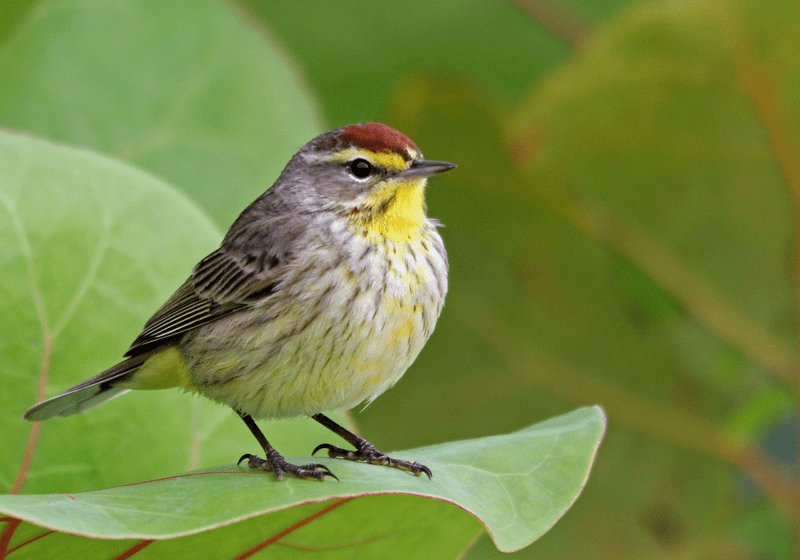
The northern cardinal, a bright red songbird, is common in North American temperate forests. Owls, such as the barred owl, hunt for small mammals at night. Warblers—small, colorful birds—migrate long distances to breed in these forests during spring and summer.
Boreal Forests (taiga)
Boreal forests are found in the far north, across Canada, Russia, and Scandinavia. These forests are cold and have long winters. The trees are mostly pines, spruces, and firs. Only the toughest birds live here.
The great gray owl is one of the largest owls in the world and hunts rodents in the snow. The bohemian waxwing eats berries and can survive freezing temperatures. Crossbills have unique bills that cross at the tips, perfect for prying open pine cones.
Deciduous Forests
Deciduous forests lose their leaves in winter. They are rich in insects during the warm months, making them a magnet for many birds. Species such as the American robin, blue jay, and wood thrush are common sights.
These forests are also important stopovers for migrating birds. In autumn, you might see flocks of thrushes and warblers feeding before they fly south.
Cloud Forests
Cloud forests are moist, mountain forests found in the tropics. They are often covered in mist. Here, you can find unique birds like the quetzal, famous for its long green tail feathers, and several kinds of hummingbirds.
Cloud forests are small and delicate. Many of their bird species are rare and found nowhere else.
Why Birds Choose Forests
Forests offer everything birds need: food, shelter, nesting places, and safety from predators.
- Food Sources: Forests are full of fruits, nuts, seeds, insects, and even small animals.
- Nesting Sites: Trees give birds places to build nests—on branches, in holes, or in the canopy.
- Protection: The leaves and branches hide birds from predators like snakes, hawks, and mammals.
- Stable Environment: The forest climate is more stable than open areas, with less wind and sun.
Some birds, like woodpeckers, can only live where there are old trees with soft wood for nesting. Others, like hummingbirds, need flowers that grow in the forest shade.
Common Forest Birds Around The World
There are thousands of bird species that call forests home. Some are famous, while others are rarely seen. Here are some of the most well-known forest birds from different continents.
North America
- Pileated Woodpecker: This large woodpecker has a red crest and is known for making loud, rectangular holes in trees.
- Eastern Screech Owl: A small, camouflaged owl that hides in tree cavities during the day.
- American Robin: Often seen hopping on the forest floor looking for worms.
- Blue Jay: Intelligent and noisy, with blue and white feathers.
- Northern Cardinal: Males are bright red; females are brownish but both sing loudly.
South America
- Scarlet Macaw: Large, brilliantly colored parrot of the rainforest.
- Harpy Eagle: One of the world’s largest eagles, it hunts monkeys and sloths in the treetops.
- Toucan: Famous for their big, colorful bills.
- Hoatzin: A strange, leaf-eating bird with claws on its wings as a chick.
- Andean Cock-of-the-rock: Bright orange males display in groups to attract females.
Europe
- Eurasian Jay: A striking bird with pinkish-brown feathers and blue wing patches.
- Great Spotted Woodpecker: Black, white, and red, often heard drumming on tree trunks.
- European Robin: Small and round with an orange-red chest.
- Tawny Owl: Common in old forests, its call is a familiar sound at night.
- Eurasian Nuthatch: Can walk down tree trunks head-first.
Asia
- Indian Pitta: Known for its rainbow of colors and whistling call.
- Fairy Bluebird: Shiny blue and black, often found in Southeast Asian forests.
- Japanese Paradise Flycatcher: Males have extremely long tail feathers.
- Oriental Pied Hornbill: Large birds with big, curved bills.
- Siberian Rubythroat: A small songbird with a bright red throat.
Africa
- African Grey Parrot: Famous for its intelligence and ability to mimic sounds.
- Turaco: Green and blue birds with a unique red pigment in their feathers.
- Hartlaub’s Turaco: Found in mountain forests, it rarely flies far from the canopy.
- Southern Ground Hornbill: The largest hornbill, often seen walking on the ground.
- Sunbird: Tiny, nectar-feeding birds with metallic colors.
Australia
- Superb Lyrebird: Can mimic almost any sound in the forest, including chainsaws and camera clicks.
- Rainbow Lorikeet: A bright, noisy parrot that feeds on nectar.
- Kookaburra: Known for its loud, laughing call.
- Eastern Whipbird: Makes a whip-crack sound that echoes through the forest.
- Australian King-Parrot: Males are red and green, females are mostly green.
How Forest Birds Survive
Living in the forest is not always easy. Birds must find food, avoid predators, and cope with changes in weather. Some birds have developed amazing adaptations to help them survive.
Camouflage
Many forest birds, like the eastern screech owl or the nightjar, have feathers that match the bark of trees. This makes them almost invisible to predators.
Specialized Bills
Birds such as the woodpecker have strong bills for drilling into wood to find insects. The crossbill has a bill shaped to open pine cones. The hummingbird has a long, thin bill for reaching nectar.
Song And Calls
Birds use songs to mark their territory and attract mates. In dense forests, sound travels differently, so many forest birds have loud, clear songs. The lyrebird can even copy the calls of other birds and sounds from its environment.
Migration
Some forest birds, especially in temperate regions, migrate to avoid cold winters. They travel thousands of kilometers to warmer places, then return to the forest to breed.
Flocking
Flocking is when birds move together in groups. This helps them find food and stay safe. Mixed-species flocks are common in tropical forests—different kinds of birds move together, each looking for their favorite food.
Birds And The Forest Ecosystem
Birds are not just visitors in the forest—they play important roles.
- Seed Dispersal: Birds eat fruits and carry seeds far away, helping new trees grow. The toucan and hornbill are famous for this.
- Pest Control: Many forest birds, like woodpeckers and warblers, eat insects that harm trees.
- Pollination: Some birds, such as hummingbirds and sunbirds, help plants reproduce by moving pollen from flower to flower.
- Decomposition: Birds like vultures clean up dead animals, keeping the forest healthy.
Forests without birds often become less diverse and less healthy.
Endangered Forest Birds
Sadly, not all birds are safe. Many forest birds are now endangered because of habitat loss, climate change, and illegal hunting.
Examples Of Endangered Forest Birds
- Philippine Eagle: Fewer than 500 remain in the wild.
- Kakapo: The world’s only flightless parrot, found in New Zealand.
- Forest Owlet: Rediscovered in India after being thought extinct.
- Ivory-billed Woodpecker: Possibly extinct, once found in U.S. forests.
- Helmeted Hornbill: Hunted for its beak, numbers are dropping fast.
Reasons For Threats
- Deforestation: Cutting down forests for farming, logging, and cities destroys bird homes.
- Climate Change: Alters where birds can live and find food.
- Illegal Pet Trade: Some birds are caught and sold, especially parrots and songbirds.
- Invasive Species: Animals like rats and cats eat eggs and chicks.
Protecting forests is the best way to save these unique birds.
Unique Behaviors Of Forest Birds
Forest birds are known for their interesting and sometimes strange behaviors.
- Bowerbirds (Australia, New Guinea) build decorated structures called bowers to attract mates.
- The lyrebird mimics chainsaws, cameras, and car alarms.
- Hoatzin chicks have claws on their wings to climb branches before they can fly.
- Manakins (Central and South America) perform acrobatic dances on branches.
- Woodpeckers drum on trees not just to find food, but to communicate.
These behaviors help birds survive and reproduce in complex forest environments.
How To Spot Birds In The Forest
Seeing forest birds can be challenging, but with patience and the right techniques, you can enjoy amazing sights.
- Go Early: Birds are most active at sunrise.
- Move Quietly: Loud noises scare birds away.
- Use Binoculars: Many birds stay high in the treetops.
- Listen: Learn bird calls—they often reveal birds you cannot see.
- Wear Earth Colors: Bright clothes can scare birds.
- Stay Still: Birds will come closer if you do not move.
Birdwatching is a popular hobby. In many countries, it brings tourists who help protect forests.
Bird Diversity In Forests
Forests are home to more bird species than any other habitat.
- The Amazon rainforest has over 1,300 bird species.
- In the Congo Basin, you can find about 1,000 species.
- Borneo’s forests have more than 420 species.
- Even a small European forest can have 60–100 bird species.
Forest bird diversity is highest near the equator and decreases towards the poles.
Comparison Of Bird Diversity In Major Forests
| Forest Region | Approximate Bird Species | Famous Birds |
|---|---|---|
| Amazon (South America) | 1,300+ | Scarlet Macaw, Harpy Eagle |
| Congo Basin (Africa) | 1,000+ | African Grey Parrot, Turaco |
| Borneo (Asia) | 420+ | Hornbill, Fairy Bluebird |
| Eastern U.S. (North America) | 200+ | Pileated Woodpecker, Cardinal |
| Amazon (Peru section) | 600+ | Toucan, Hoatzin |
How Birds Help Forests Regrow
Birds are key to forest regeneration. When they eat fruit, they carry seeds far from the parent tree. This helps the forest spread and recover after fires or storms.
For example, after a tree falls, birds like tanagers and thrushes visit the sunny gap to eat fruit from new plants. Their droppings plant seeds in the soil, starting new trees.
Some birds, such as the Clark’s nutcracker in North America, store thousands of pine seeds in the ground. Many are forgotten and grow into new trees.
Seed Dispersal Effectiveness
| Bird Species | Seeds Dispersed per Day | Distance Carried (km) |
|---|---|---|
| Toucan | 50–100 | Up to 3 |
| Hornbill | 30–60 | Up to 6 |
| Thrush | 10–40 | Up to 2 |
| Parrot | 15–30 | Up to 1 |
Birds are often better at spreading seeds than mammals, because they can fly over rivers and hills.

Forest Birds And Human Culture
Forest birds have inspired stories, art, and music around the world.
- In Central America, the quetzal is a symbol of freedom.
- The lyrebird appears on Australia’s 10-cent coin.
- The nightingale, found in European forests, is famous for its beautiful song.
- Many national parks protect forests mainly to save their birdlife.
Birds also have economic value. Ecotourism focused on birds brings billions of dollars to countries with rich forests, according to the World Bank.
Threats And Conservation
Birds in forests face many dangers today. The main threat is deforestation—cutting down trees for agriculture, logging, or building. This destroys bird homes and food sources. Climate change is shifting where forests grow, making it hard for birds to survive.
Hunting and trapping for food or the pet trade is also a serious problem, especially in Asia and Africa. Invasive species—like rats, cats, and snakes—eat eggs and chicks.
Conservationists are working to save forest birds by:
- Creating protected areas and parks
- Restoring forests with native trees
- Educating people about the value of birds
- Supporting sustainable forestry
Some organizations even use technology—like satellite tracking—to study bird movements and protect important habitats. For more information on forest bird conservation, see this detailed guide from BirdLife International.
Protected Forest Bird Population Trends
| Bird Species | Protected Area Population | Threat Level |
|---|---|---|
| Philippine Eagle | ~400 | Critically Endangered |
| Kakapo | ~250 | Critically Endangered |
| Helmeted Hornbill | ~1,000 | Critically Endangered |
| Harpy Eagle | ~5,000 | Near Threatened |
Non-obvious Insights For Bird Lovers
Many people think forest birds are all colorful and loud, but some of the most important species are plain and quiet. For example, the wood thrush is brown with spots, but its song is a key sound of North American forests. Also, many birds you see in cities—like crows and pigeons—originally lived in forests before adapting to human environments.
Another surprise: In some forests, the most common birds are not always the most important for the ecosystem. Some rare birds, like the hornbill, play a bigger role in spreading large seeds than more common, smaller birds.
Frequently Asked Questions
What Is The Most Common Bird In Forests?
The answer depends on the region. In North American temperate forests, the American robin and black-capped chickadee are very common. In tropical forests, birds like tanagers and flycatchers are often seen. No single bird is the most common everywhere.
Do All Birds In Forests Live In Trees?
No. While many birds nest and sleep in trees, some, like ground thrushes and partridges, spend most of their time on the forest floor. Others, such as swifts and swallows, fly high above the trees but still rely on forests for nesting.
How Do Birds Help Forests Stay Healthy?
Birds help forests by spreading seeds, controlling pests, and pollinating flowers. Without birds, forests would lose many tree species and become less diverse. Birds also clean up dead animals, reducing disease.
Why Are Some Forest Birds So Colorful?
Many forest birds are colorful for attracting mates or warning predators. Bright colors help males stand out during courtship. In dense forests, colors can also help birds recognize each other in the dim light under the trees.
Are There Forest Birds That Cannot Fly?
Yes. The kakapo of New Zealand is a flightless parrot that lives in forests. It climbs trees using its beak and feet. Some young birds, like hoatzin chicks, can climb before they learn to fly.
Forests are alive with the sights and sounds of birds. Each one, from the smallest hummingbird to the largest eagle, plays a role in the health and beauty of these vital ecosystems. By learning about and protecting forest birds, we help keep forests—and the planet—healthy for everyone.