Deer are one of the most recognized animals on Earth. Their graceful movement, antlers, and gentle eyes make them easy to spot in forests, grasslands, and even city parks. But did you know there are many different types of deer around the world?
Each type has its own look, size, and behavior. Some live in cold snowy mountains, while others run through hot jungles. Understanding the main types of deer helps you see how special and diverse these animals really are.
What Makes A Deer A Deer?
All deer belong to the family Cervidae. This family is made up of animals with split hooves and, in most cases, antlers. Only male deer usually grow antlers, and they shed them every year. Deer are herbivores, which means they eat plants, leaves, and sometimes fruit. Their sharp senses help them escape predators, and their bodies are built for running fast through thick forests or open plains.
Major Types Of Deer Worldwide
There are over 40 species of deer, but a few main types are found across different continents. Below are the most important and well-known types.
1. White-tailed Deer
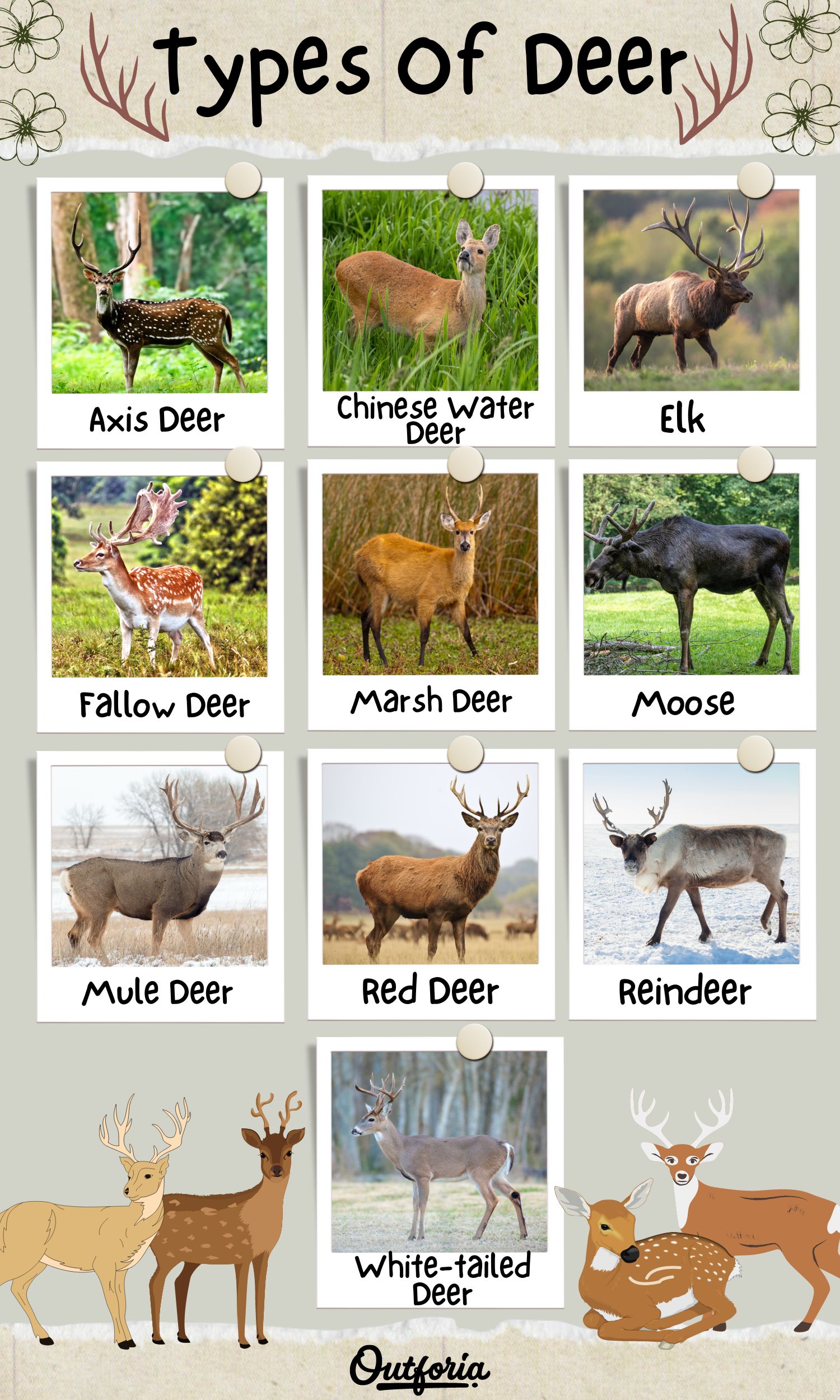
The white-tailed deer is the most common deer in North America. Its tail is white on the underside, which it raises as a signal when frightened. Adults usually weigh between 45 and 130 kg. These deer adapt well to forests, fields, and even suburban areas. They breed quickly and are often seen grazing at dawn and dusk.
2. Mule Deer
Known for their large, mule-like ears, mule deer live mostly in western North America. They are bigger than white-tailed deer, with adults weighing up to 150 kg. One unique trait is their bounding leap, called “stotting,” which helps them escape predators in rocky terrain.
3. Red Deer
The red deer is one of the largest deer species. It can be found in Europe, parts of Asia, and North Africa. Male red deer, known as stags, grow impressive branching antlers. They can weigh as much as 240 kg. Red deer are famous for their loud calls, called “roaring,” during mating season.
4. Elk (wapiti)
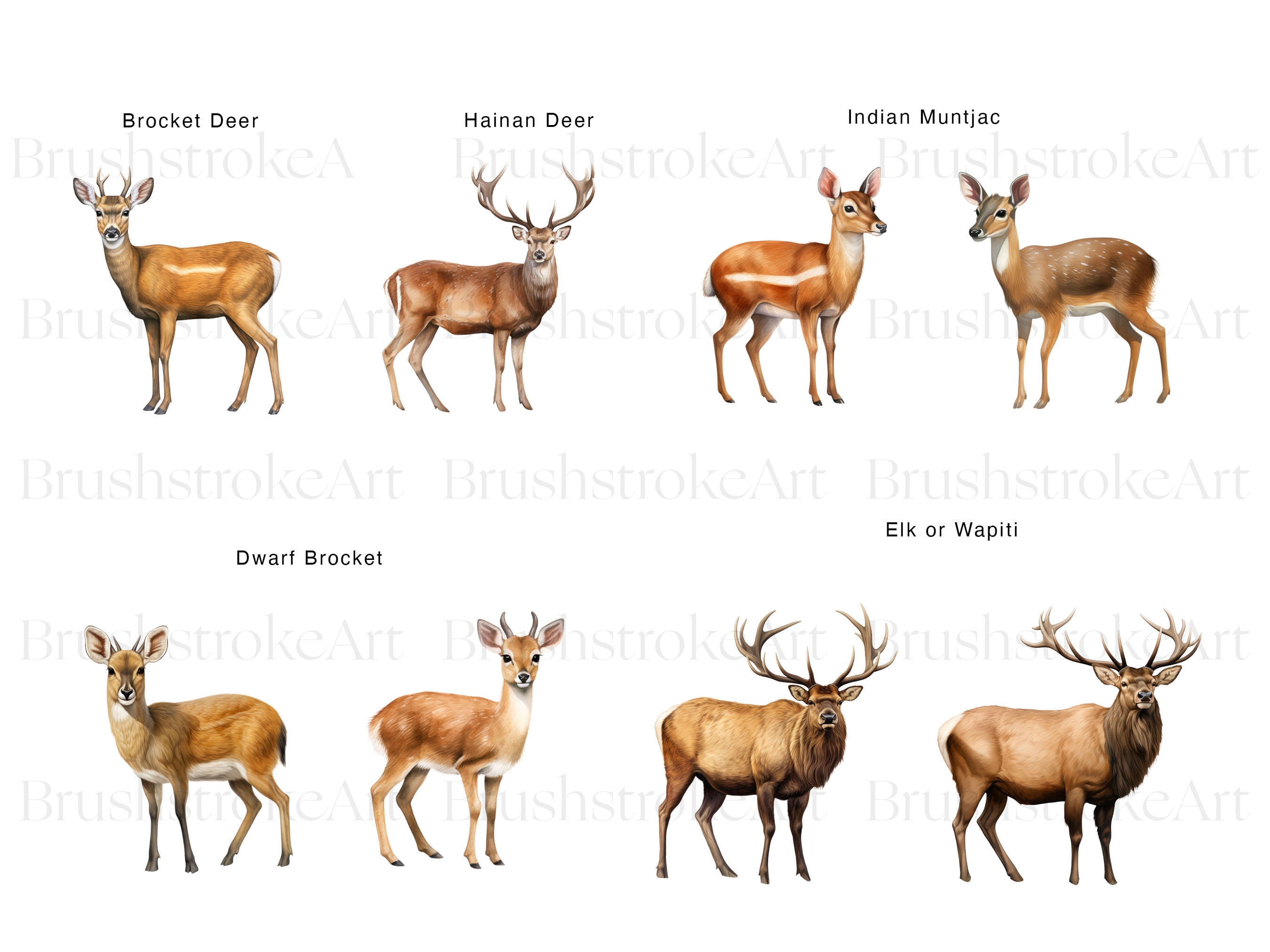
Elk, called wapiti in North America, are even larger than red deer. Males can weigh up to 320 kg. Elk live in forests and meadows in North America and eastern Asia. Their bugling calls echo across valleys in autumn. Elk herds are often seen moving together in large groups.
5. Moose
The moose is the largest member of the deer family. Adult males, called bulls, can weigh over 600 kg. Moose have long legs and a large, overhanging nose. Their wide, flat antlers can span up to 2 meters. Moose live in northern forests and are good swimmers, often seen eating aquatic plants.
6. Roe Deer
Roe deer are small and elegant, found across Europe and parts of Asia. Adults weigh about 15 to 35 kg. They have short, straight antlers and a reddish-brown coat in summer. Roe deer are shy and prefer woodlands with plenty of cover.
7. Sika Deer
The sika deer is native to East Asia but has been introduced to places like the UK and New Zealand. These deer are medium-sized and known for their spotted coats, which they keep into adulthood. Sika deer are adaptable and can live in forests, marshes, and grasslands.
8. Axis Deer (chital)
The axis deer or chital is native to India and Sri Lanka. With a golden-brown body and white spots, they are easy to recognize. Adult males have three-tined antlers. Axis deer are social and often found in herds of 10–50 animals, sometimes more.
9. Fallow Deer
Fallow deer are famous for their palmate (shovel-shaped) antlers and variety of coat colors—ranging from white to dark brown. They are native to the Mediterranean region but are now found in parks and estates around the world. Fallow deer are medium-sized, usually weighing 30–100 kg.
10. Reindeer (caribou)
Reindeer, called caribou in North America, are special because both males and females grow antlers. These deer live in Arctic and Subarctic areas. Reindeer are well-adapted to cold climates and migrate long distances. They are important for northern peoples, who use them for transport and food.
11. Muntjac
Muntjac deer are small, shy animals from South and Southeast Asia. Some species, like the Indian muntjac, weigh only 15–35 kg. They have short antlers and large canine teeth, which look like small tusks. Muntjacs are often called “barking deer” because of their dog-like calls.
12. Water Deer
The water deer is unique. Native to China and Korea, it has no antlers but grows long canine teeth, earning the name “vampire deer.” These small deer are good swimmers and live near rivers and wetlands.

Comparing Size And Habitat
To see how different deer types compare, here’s a simple overview of their average size and main habitats:
| Deer Type | Average Weight (kg) | Main Habitat |
|---|---|---|
| White-tailed Deer | 45–130 | Forests, fields, suburbs |
| Mule Deer | 55–150 | Rocky hills, grasslands |
| Red Deer | 120–240 | Woodlands, grasslands |
| Moose | 350–700 | Boreal forests, wetlands |
| Roe Deer | 15–35 | Woodlands, hedgerows |
Antlers: Not All The Same
One thing that makes deer unique is their antlers. But not every deer’s antlers look the same. Here’s a quick look at how antlers differ:
| Deer Type | Antler Shape | Who Grows Them? |
|---|---|---|
| White-tailed Deer | Branched | Males only |
| Fallow Deer | Palmate (broad, flat) | Males only |
| Reindeer | Branched | Both sexes |
| Water Deer | No antlers | Neither |
Lesser-known Deer Species
Beyond the popular deer, there are rare types few people see:
- Pudu: The world’s smallest deer, found in South America. Adults are only 30–40 cm tall.
- Barasingha: Also known as the swamp deer, native to India and Nepal. It has many-tined antlers.
- Père David’s deer: Extinct in the wild, now found only in reserves. Native to China.
Many of these species face threats like habitat loss and hunting. Conservation efforts are important to keep these unique deer alive.
Surprising Facts About Deer
- Some deer, like the moose, can swim for several kilometers without stopping.
- The axis deer can breed year-round in warm climates, unlike most deer that breed only in autumn.
- Water deer use their long canine teeth to defend themselves, not antlers.
Why Understanding Deer Types Matters
Knowing the different types of deer helps with wildlife protection and ecosystem balance. For example, when new deer species are introduced to a region, they can compete with local animals and even damage forests. Hunters, park rangers, and scientists need to identify deer species correctly to make smart decisions.
For more details on deer species and their global distribution, see this Wikipedia overview.
Frequently Asked Questions
How Many Species Of Deer Are There?
There are about 43 species of deer worldwide. Some are common, while others are rare and only found in small areas.
Which Is The Largest Deer In The World?
The moose is the largest, with males weighing up to 700 kg and standing over 2 meters at the shoulder.
Do All Deer Grow Antlers?
No. In most species, only the males grow antlers. The reindeer (caribou) is the exception—females also have antlers.
Where Do Deer Live?
Deer are found on every continent except Australia and Antarctica. They live in forests, grasslands, mountains, and even deserts.
Are All Deer Endangered?
Not all deer are endangered, but some types—like the Père David’s deer and Barasingha—are at risk and need protection.
Deer are more than just animals with antlers. Their many types show how adaptable and interesting nature can be. Whether you see a white-tailed deer in your backyard or a moose in the wild, each type plays a special role in its habitat.