
Some birds look like flying rainbows. Their feathers shine with reds, blues, greens, and even purple. These birds are not only beautiful—they are also rare and special in nature. Many people travel to different continents just to see these colorful creatures with their own eyes.
If you love nature, art, or just want to learn about the wonders of the animal world, exploring the most colorful birds can be an unforgettable journey.
But what makes a bird colorful? Often, it’s a mix of genetics, environment, and the need to attract mates or warn predators. Some birds use their bright colors to hide among flowers or leaves, while others show off to stand out.
In this article, you will meet the most colorful birds in the world. Each one is unique, and their colors can teach us about evolution, survival, and even the creativity of nature itself.
Let’s discover these amazing birds, where they live, what makes them so vibrant, and why they matter in our world.
Rainbow Lorikeet
The Rainbow Lorikeet is a living palette. Its feathers include blue, green, orange, red, and even purple. This parrot species comes from Australia and nearby islands. The bird’s head is bright blue, its chest glows orange-yellow, and its back is a deep green. The tail has flashes of yellow and green, making the whole bird look like a moving rainbow.
Rainbow Lorikeets live in forests, coastal bushlands, and even urban gardens. Their diet is also colorful—they eat nectar, pollen, fruits, and flowers. Their brush-tipped tongues help them get nectar from flowers, which is rare among parrots. In the wild, they move in noisy flocks, and their screeching calls are hard to miss.
One non-obvious fact: their bright colors help them blend with flowers, not just stand out. This camouflage keeps them safe from predators while feeding.
Scarlet Macaw
The Scarlet Macaw is often seen as the symbol of tropical forests. Its bright red feathers cover most of its body, but the wings show yellow and blue. The face has bare white skin with tiny black lines. Scarlet Macaws are found in Central and South American rainforests, especially in the Amazon.
These birds can grow up to 85 cm (33 in) long, with half that length being the tail. They are very intelligent and social, often living in pairs or small groups. Their strong beaks crack open hard nuts and seeds, and they sometimes eat clay from riverbanks to neutralize toxins in their food.
A surprising insight: young Scarlet Macaws stay with their parents for up to two years. This long bond helps them learn how to survive and find food.
Indian Peafowl (peacock)
The Indian Peafowl, better known as the peacock, is famous for its spectacular tail. The male’s tail, or “train,” can be over 1.5 meters (5 feet) long and covered in “eye” spots that shine with blue, green, gold, and bronze. When the male fans out his tail, it’s a display that can stop anyone in their tracks.
Peafowl are native to India and Sri Lanka, often found in forests, farmlands, and even temples. Only males have the long, colorful tail—females (peahens) are brown and plain. The tail display is for attracting mates. The brighter and fuller the tail, the better the male’s chance of finding a partner.
An interesting detail: those eye spots actually “move” due to tiny crystals in the feathers, which reflect light differently depending on the angle.
Resplendent Quetzal
The Resplendent Quetzal is the national bird of Guatemala and a symbol in ancient Mayan culture. Its feathers are metallic green and blue, with a deep red breast. Males grow extra-long tail streamers—sometimes longer than their body—giving them a magical look when flying.
These birds live in Central American cloud forests, especially in high, moist mountains. The quetzal’s diet includes fruits, insects, and small animals. Sadly, they are now threatened by habitat loss.
What beginners miss: quetzals are shy and hard to see. Birdwatchers sometimes wait for hours just for a glimpse, so patience is key if you ever go looking for one.
Wilson’s Bird-of-paradise
The Wilson’s Bird-of-Paradise looks almost unreal. Its body mixes royal blue, yellow, green, and red. The male’s head is hairless, showing bright turquoise skin, and the tail ends in two curling wires.
This small bird lives only on a few islands in Indonesia, like Waigeo and Batanta. Males clear a small patch on the forest floor to dance and impress females. Their dance involves showing all their colors at once, which is breathtaking to watch.
A unique insight: their blue crown is not made of feathers but is actually bare skin. This is rare among birds, making Wilson’s Bird-of-Paradise even more unusual.
Lilac-breasted Roller
Africa’s skies sometimes flash with the colors of the Lilac-breasted Roller. This bird has a body of sky blue, with a chest that glows lilac and hints of green, turquoise, and brown. The tail feathers are extra long and deep blue.
Lilac-breasted Rollers live in open woodlands and savannas from sub-Saharan Africa to the southern Arabian Peninsula. They are famous for their rolling flight displays during courtship—diving and twisting through the air.
Non-obvious fact: these birds often perch on high branches or wires to spot insects and small prey. Their colors look brightest in morning and evening light.
Gouldian Finch
The Gouldian Finch is a small jewel of Australia. Its head can be red, black, or yellow (depending on genetics), the chest is purple, the belly is bright yellow, and the back is green. Both males and females are colorful, but males are even brighter.
These finches prefer grassy woodlands and eat mostly seeds. Sadly, their wild populations have dropped because of habitat loss and fires, though they are common in aviaries worldwide.
A practical tip: if you want to keep Gouldian Finches, remember they need a calm environment. Stress can make them lose their bright colors.
Mandarin Duck
The Mandarin Duck is often called the most beautiful duck in the world. Males have an orange “sail” on the back, purple breast, red bill, and blue-green sides. Females are more grey-brown with a white eye-ring.
Mandarin Ducks are native to East Asia but have been introduced to parts of Europe and the UK. They prefer lakes and slow-moving rivers with lots of trees nearby.
An easy-to-miss detail: during the summer molt, male Mandarin Ducks lose their bright colors and look more like females, regaining the vivid plumage before the next breeding season.
Painted Bunting
The Painted Bunting looks hand-painted. Males have a blue head, red belly, green back, and yellow highlights. Females are bright green, which helps them hide from predators.
These birds breed in the southern United States and migrate to Central America in winter. They like thickets and woodland edges and mostly eat seeds and insects.
A key fact: Painted Buntings are often caught illegally for the pet trade because of their beauty. This threatens their wild populations, especially in Mexico and Central America.
Keel-billed Toucan
The Keel-billed Toucan is famous for its giant, rainbow-colored beak. The beak can be nearly 20 cm (8 in) long and shows green, orange, red, and blue. The bird’s body is mostly black, with a yellow throat and red under the tail.
These toucans live in Central and South American rainforests. They eat fruit, insects, and sometimes small reptiles or eggs. Their large beak helps them reach fruit on thin branches.
One surprising insight: the beak looks heavy, but it’s actually light and spongy inside. This makes it easy for the toucan to balance.
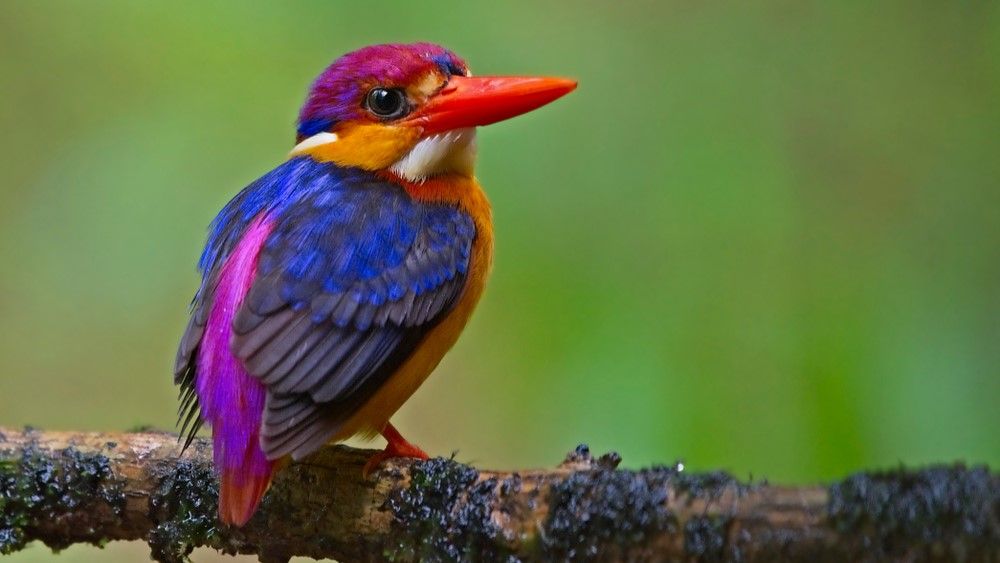
Crimson Rosella
The Crimson Rosella is a parrot from eastern and southeastern Australia. Its main color is bright red, with blue cheeks, wings, and tail. Young birds look green and only turn red as they mature.
These birds live in forests, gardens, and parks. They eat seeds, fruits, and flowers and are common visitors at picnic spots in Australia.
What many people don’t know: Crimson Rosellas have different color forms in different regions. In some areas, they can be yellow or orange instead of red.
Blue Jay
The Blue Jay is a common but stunning bird in North America. Its body is sky blue with white and black patterns on the wings and tail. The crest on its head makes it easy to recognize.
Blue Jays live in forests and suburban areas, often seen at bird feeders. They eat seeds, nuts, insects, and sometimes small animals. Their calls can mimic hawks, which helps scare away other birds.
A detail beginners miss: Blue Jay feathers aren’t really blue! The color comes from the structure of the feather, which scatters light—a trick called “structural coloration.”
Nicobar Pigeon
The Nicobar Pigeon stands out with metallic greens, blues, and copper colors on its wings. Its head and upper body are gray, while the rest shines like polished metal.
These pigeons live on small islands in Southeast Asia and the Pacific. They prefer forests and mangroves and eat seeds, fruits, and grains. Nicobar Pigeons are the closest living relatives to the extinct dodo.
A unique note: these pigeons travel between islands, sometimes flying long distances over open water.
King Bird-of-paradise
The King Bird-of-Paradise is tiny but dazzling. Males have a red body, white belly, green highlights, and two long tail wires with emerald disks. During courtship, males hang upside down and display their feathers to attract females.
This bird lives in lowland forests of New Guinea and nearby islands. It eats fruit and insects, and its small size helps it move quickly through dense branches.
A non-obvious fact: the King Bird-of-Paradise is sometimes called the “jewel of the forest” because of its shining colors.

Scarlet Tanager
The Scarlet Tanager is one of North America’s brightest birds. The male has a red body with black wings and tail, while the female is olive-yellow. These colors help males attract mates in spring and summer.
Scarlet Tanagers breed in eastern forests and migrate to South America for winter. They eat insects and fruit, often high in the canopy where they are hard to spot.
A tip for birdwatchers: look for these birds during migration in parks and gardens—they are easier to see when traveling.
Sun Conure
The Sun Conure is a small parrot from South America. Its feathers are bright yellow, orange, red, green, and blue. Sun Conures are popular pets, but wild populations are now endangered.
They live in forests and savannas in Brazil, Guyana, and Venezuela. Sun Conures are noisy, social, and love to play. Their bright colors help them blend with fruits and flowers in the wild.
A key insight: Sun Conures need a lot of social time and mental stimulation. Without it, they can become bored or destructive in captivity.
Splendid Fairywren
Australia is home to the Splendid Fairywren, a tiny bird with electric blue and turquoise feathers. Males are especially bright during the breeding season, while females are brown and plain.
These birds live in shrubs and open woodlands. They eat insects and small seeds. Male fairywrens sometimes pluck colorful petals and offer them to females as gifts.
A detail you might miss: outside the breeding season, even males lose their bright blue feathers and become brown like females.
Violet-backed Starling
The Violet-backed Starling is a small African bird with iridescent violet-purple on its back and white underparts. Females are brown and less showy. In sunlight, the male’s feathers shine with a metallic glow.
They live in woodland and forest edges, eating fruit and insects. These starlings are often seen in pairs or small flocks.
What beginners miss: the violet shine changes with the angle of the sun—a trick called “iridescence” that is common in starlings.
Andean Cock-of-the-rock
The Andean Cock-of-the-rock is famous for its bright orange-red plumage and unique fan-shaped crest. Males gather in groups called “leks” to compete for females by dancing and showing off their feathers.
These birds live in cloud forests of the Andes Mountains in South America. They eat fruit, insects, and small animals. The Cock-of-the-rock is the national bird of Peru.
A special insight: their bright colors are important for courtship, but also for warning predators that they are not easy prey.
Blue-crowned Motmot
The Blue-crowned Motmot is a medium-sized bird from Central and South America. It has a green body, blue head, and racquet-shaped tail feathers. The tail has bare shafts with “flags” at the end, which the bird swings like a pendulum.
Motmots live in forests, gardens, and coffee plantations. They eat insects, fruit, and small animals. Their tail display is used to attract mates and warn predators.
A tip: the motmot’s tail is easily damaged. If you see one with a full tail, it means the bird is healthy and successful.
Eclectus Parrot
The Eclectus Parrot is unique because males and females look totally different. Males are bright green with orange beaks, while females are red and blue with a black beak. This is called “sexual dimorphism” and is rare among parrots.
They live in rainforests of New Guinea, Australia, and nearby islands. Eclectus Parrots eat fruit, nuts, and seeds. In the wild, their colors help them hide—green for males in leaves, red for females in tree hollows.
A practical detail: if you keep Eclectus Parrots as pets, their diet needs lots of fresh fruit and veggies to keep their feathers bright.
Table: Quick Comparison Of The Most Colorful Birds
To help you compare these colorful birds, here is a summary of their main features:
| Bird | Main Colors | Region | Special Feature |
|---|---|---|---|
| Rainbow Lorikeet | Blue, green, red, orange, yellow | Australia | Brush-tipped tongue |
| Scarlet Macaw | Red, yellow, blue | Central & South America | Large size, loud calls |
| Indian Peafowl | Blue, green, gold, bronze | India, Sri Lanka | Huge tail display |
| Resplendent Quetzal | Green, red, blue | Central America | Long tail streamers |
| Wilson’s Bird-of-Paradise | Blue, red, yellow, green | Indonesia | Bare blue crown |
| Lilac-breasted Roller | Lilac, blue, green | Africa | Rolling flight |
| Gouldian Finch | Red/black/yellow, green, purple | Australia | Colorful head varieties |
| Mandarin Duck | Orange, blue, green, purple | East Asia | Male’s “sail” feathers |
| Painted Bunting | Blue, green, red, yellow | USA, Central America | Hand-painted look |
| Keel-billed Toucan | Green, yellow, orange, red, blue | Central & South America | Rainbow beak |
| Crimson Rosella | Red, blue, black | Australia | Regional color forms |
| Blue Jay | Blue, white, black | North America | Crested head |
| Nicobar Pigeon | Green, blue, copper | Southeast Asia | Metallic feathers |
| King Bird-of-Paradise | Red, white, green | New Guinea | Long tail wires |
| Scarlet Tanager | Red, black | North America | Bright breeding plumage |
| Sun Conure | Yellow, orange, red, green, blue | South America | Noisy, social |
| Splendid Fairywren | Blue, turquoise | Australia | Petal-giving males |
| Violet-backed Starling | Violet, white | Africa | Iridescent feathers |
| Andean Cock-of-the-rock | Orange-red | South America | Fan-shaped crest |
| Blue-crowned Motmot | Green, blue | Central & South America | Racquet-shaped tail |
| Eclectus Parrot | Green (male), red/blue (female) | New Guinea, Australia | Sexual dimorphism |
Why Are Birds So Colorful?
Birds use bright colors for many reasons. Some show off to attract mates, others use colors to warn or hide from predators. Feather colors come from pigments and from the way feathers reflect and scatter light.
For example, red and yellow feathers often have carotenoid pigments from the bird’s diet. Blue and green colors are usually made by tiny structures in the feathers that bend light—a process called structural coloration. Some birds, like the peacock or starling, show “iridescence,” where colors shift with the angle of the sun.
Table: Color Creation In Birds
Here’s a quick look at how birds produce their colors:
| Color | How It’s Made | Bird Example |
|---|---|---|
| Red/Yellow/Orange | Pigments (carotenoids, psittacofulvins) | Scarlet Macaw, Sun Conure |
| Blue/Green | Feather structure scatters light | Blue Jay, Eclectus Parrot |
| Iridescent | Layered feather structures reflect light at different angles | Peacock, Violet-backed Starling |
| Metallic | Combination of structure and pigment | Nicobar Pigeon |

Conservation And The Importance Of Colorful Birds
Many of these colorful birds are now threatened by habitat loss, hunting, and the pet trade. For example, the Sun Conure and Gouldian Finch are endangered in the wild. Protecting their habitats and stopping illegal trade is vital for their survival.
Colorful birds also help local economies. Birdwatching tourism brings money to rural communities, especially in places like Central America and Australia. These birds are also important in culture, art, and even science, inspiring everything from national flags to new materials.
If you want to help, support organizations that protect rainforests and other wild areas. Don’t buy wild-caught birds as pets, and share what you learn with others.
Frequently Asked Questions
What Is The Most Colorful Bird In The World?
The Rainbow Lorikeet and the Scarlet Macaw are often named the most colorful, but the answer depends on taste. The Rainbow Lorikeet has nearly every color in the rainbow, while the Scarlet Macaw’s bright reds, yellows, and blues are unforgettable.
Why Do Some Birds Have Such Bright Colors?
Birds use bright colors to attract mates, warn predators, or hide in their habitat. Some colors also show health and strength, helping birds find the best partners.
Are Colorful Birds Only Found In The Tropics?
Most colorful birds live in tropical regions, but some—like the Blue Jay and Scarlet Tanager—can be found in temperate areas too. Habitat diversity is a key factor for bird color variety.
Can Diet Affect A Bird’s Color?
Yes. Birds like the Scarlet Tanager and Gouldian Finch need certain foods to keep their colors bright. Poor diet can lead to dull feathers, especially in captivity.
Where Can I Learn More About Colorful Birds?
For more in-depth information and images, visit the Wikipedia List of Most Colourful Birds. This resource offers a wide range of colorful species and their details.
Colorful birds remind us of the planet’s beauty and diversity. Their feathers show the wonders of evolution, and their survival depends on our choices. By learning about these birds, we can appreciate and help protect them for future generations.

