
Borescopes have become essential tools for inspecting hard-to-reach areas in many industries. Mechanics use them to peek inside engines, engineers check pipes for blockages, and even doctors examine parts of the human body with similar devices. But while borescopes make many jobs easier, they are not perfect.
Understanding their limitations helps users avoid mistakes, select the right tool, and get the best results.
In this article, we will explore the main limitations of a borescope. We will look at technical, practical, and user-based challenges, giving you a clear picture of what these devices can—and cannot—do. Whether you are considering buying your first borescope or want to improve your inspection skills, knowing these limits is key.
Image Quality Constraints
One of the first things users notice is the image quality a borescope produces. While modern devices offer color screens and even high-definition views, there are still several challenges.
Low Resolution In Entry Models
Basic borescopes usually offer low-resolution cameras. This means images can appear grainy or blurry, making it hard to spot fine details or small cracks. Even with digital zoom, details get lost. For example, a mechanic inspecting a small valve may miss a tiny defect that a higher-end camera could reveal.
Limited Lighting
Most borescopes use built-in LED lights to illuminate dark spaces. However, in very deep or reflective areas, this lighting is often not strong enough. Shadows, glare, or uneven lighting can hide important features. In some cases, too much light causes “blooming,” where bright spots wash out the image.
Color Distortion
Some borescopes, especially cheaper models, show colors inaccurately. For example, a rust spot might look brown on the screen but could actually be red or orange. This makes it tricky to judge the true condition of the inspected area.
Physical Size And Access
Borescopes are designed to fit into tight places, but there are still physical limitations that users must consider.
Diameter Of Insertion Tube
The insertion tube, or probe, comes in different diameters. Thinner tubes can access smaller spaces, but they may also be more fragile or have lower image quality. Thicker tubes are stronger but cannot fit into very narrow holes. For example, inspecting a fuel injector may require a tube less than 4 mm in diameter.
Limited Bending And Articulation
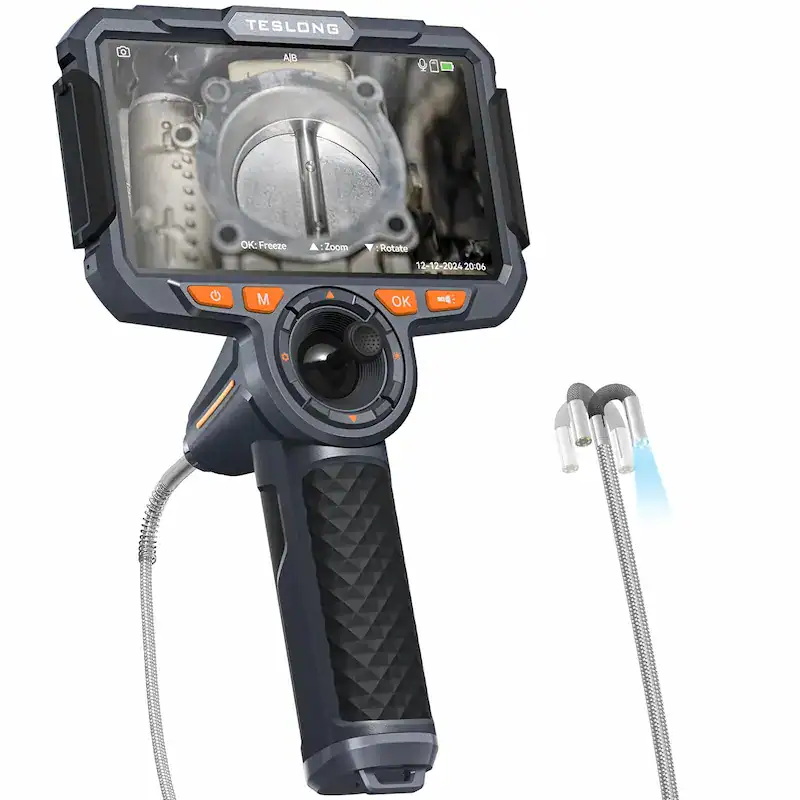
Some advanced borescopes allow the tip to bend or “articulate” for better viewing angles. However, most models have a fixed, non-bending tip. This limits how well you can see around corners or behind objects. Articulating tips are also prone to mechanical failure, especially if bent too much.
Probe Length
Longer probes can reach deeper, but they are harder to control and may sag or bend inside a pipe. Very short probes, on the other hand, cannot inspect long or complex systems. Choosing the right length is always a compromise between reach and control.
Durability And Environmental Limits
Borescopes must survive tough environments, but they are not indestructible. Understanding their durability limits helps prevent costly mistakes.
Vulnerability To Chemicals
Most borescopes are not resistant to strong chemicals, oils, or solvents. For example, using a non-industrial borescope inside a pipe with caustic residue may damage the probe or camera.
Water And Dust Protection
Not all borescopes are waterproof or dustproof. While some offer IP67 or higher ratings (meaning they can survive submersion and dust), many consumer models do not. Using the wrong device in wet or dirty spaces can quickly ruin it.
Temperature Limits
Borescopes are sensitive to extreme temperatures. Most cannot operate above 60°C (140°F) or below freezing. Inspecting a hot engine right after use or a very cold freezer may damage the camera or electronics.
Field Of View And Inspection Limitations
Even with a camera inside, you do not always see everything you want. The field of view and other design choices create inspection challenges.
Narrow Viewing Angle
Most borescope cameras offer a viewing angle between 60–90 degrees. This sounds wide, but in tight spaces, you might see only a small area at once. Rotating or moving the probe is often needed to get a full picture.
No Depth Perception
Borescopes create 2D images. You cannot easily judge how far away something is, or its true size, without extra reference points. This makes estimating the depth of cracks, holes, or corrosion difficult.
Limited Focus Range
Many borescopes have a fixed focus, designed for a set distance (often 1–10 cm from the lens). If the object is too close or too far, it appears blurry. Some advanced models offer adjustable focus, but these are more expensive.
Recording And Data Management
Capturing and storing images or videos is important for documentation and analysis. But borescopes have several data handling limitations.
Limited Storage Capacity
Entry-level borescopes often have small built-in memory or rely on microSD cards with modest capacity (like 32GB). High-resolution videos and images fill up storage quickly, forcing users to stop and transfer files.
Compatibility Issues
Some borescopes use old file formats or require special software to view recordings. This can make sharing files with others difficult. For instance, a mechanic may struggle to send inspection videos to a client who cannot open the file type.
Poor Wireless Connectivity
Many borescopes now offer WiFi or Bluetooth for streaming images to a smartphone or tablet. However, connections can be unstable, especially in industrial settings with lots of interference. Lag, dropped frames, or failed connections are common complaints.
User Skill And Training
A borescope is only as good as the person using it. Human factors often limit the effectiveness of inspections.
Steep Learning Curve
Getting clear images, navigating tight spaces, and interpreting what you see takes practice. Beginners often miss critical details or misidentify normal features as problems. Experienced users develop a “feel” for probe movement and camera alignment that takes time to learn.
Subjective Interpretation
Images from a borescope can be unclear or ambiguous. Two users may disagree on whether a spot is corrosion or just dirt. Without experience, it is easy to jump to the wrong conclusion and make expensive mistakes.
Difficult Manipulation
Guiding a flexible probe through a complex path is challenging. Pushing too hard can kink or break the tube, while moving too gently means slow progress. Fine control is especially hard in long or narrow channels.
Cost And Maintenance
While borescopes are more affordable than ever, there are still cost-related drawbacks to consider.
High Price For Advanced Features
Basic models are cheap, but high-quality devices with articulation, adjustable focus, and HD video can cost thousands of dollars. For many users, these features are out of reach.
Frequent Repairs Or Replacements
Probes are fragile and wear out quickly, especially if used in rough environments. Common problems include broken articulation wires, water damage, or scratched lenses. Repairs may cost almost as much as buying a new device.
Accessory Costs
Many inspections require extra accessories like mirror tips, longer probes, or special lighting. These add to the total cost and must be replaced over time.
Security And Privacy Concerns
Borescopes can be used for legitimate work, but their ability to “see” into hidden spaces creates privacy issues.
Unauthorized Use
In the wrong hands, a borescope can invade privacy. For example, someone could use it to look through walls, vents, or into private spaces.
Data Security
WiFi-enabled borescopes can be hacked if not properly secured. Sensitive images or videos could be stolen, especially if the device is used in restricted areas.
Industry-specific Limitations
Different industries face unique challenges when using borescopes.
Aviation
Aircraft engines and components often have complex, narrow paths. Borescopes must be certified for aviation use, and not all models meet these standards. Non-certified devices may miss critical defects or even damage sensitive parts.
Automotive
Engine oil, fuel, and heat can quickly ruin consumer-grade probes. Mechanics need devices that can withstand harsh conditions and deliver clear images even in dirty, oily environments.
Plumbing
Waterproofing is essential, but many borescopes are only water-resistant, not fully waterproof. Plumbing professionals also need longer probes to inspect pipes that run for several meters.
Comparison Of Borescope Types
Choosing the right borescope depends on balancing features and limitations. Here’s a side-by-side look at three common types:
| Type | Key Advantage | Main Limitation | Typical Price |
|---|---|---|---|
| Rigid | Clear images, durable | Cannot bend | $150–$500 |
| Flexible (Non-articulating) | Reaches tight spaces | Limited tip control | $100–$300 |
| Articulating | Precise tip movement | Expensive, fragile | $800–$3,000 |
Real-world Example: Missed Defect Due To Limitations
A maintenance worker used a basic borescope to check a steam pipe for leaks. Because of the low image quality and narrow viewing angle, he missed a small crack that grew larger over time. Later, the pipe burst, causing expensive damage and downtime.
This case shows how borescope limitations can have real consequences.
When Not To Use A Borescope
Sometimes, a borescope is not the right tool. Here are examples:
- Inspecting sealed electronic devices: Borescopes can damage delicate parts or leave debris inside.
- Examining high-temperature systems: Most probes melt or fail under extreme heat.
- Testing for precise measurements: Borescopes are not measuring tools; they only provide images.
Overcoming Some Limitations
While no borescope is perfect, users can reduce problems by:
- Choosing the right model for the job
- Practicing probe manipulation
- Using accessories like mirrors or better lighting
- Reviewing images on a larger screen for better detail
It’s also wise to keep devices clean, avoid harsh chemicals, and store them carefully. Training and practice go a long way in getting the most from these tools.
Comparison: Borescope Vs. Other Inspection Tools
Here’s how borescopes stack up against two common alternatives:
| Tool | Best For | Main Limitation | Portability |
|---|---|---|---|
| Borescope | Internal visual checks | Image quality, access limits | High |
| Ultrasound Tester | Detecting cracks, leaks | No visual image | Medium |
| X-ray Scanner | Seeing through materials | Expensive, not portable | Low |
Non-obvious Insights
- Lighting Angle Matters: Many defects only appear under certain lighting angles. Rotating the probe, even slightly, can reveal hidden cracks or dirt missed on the first pass.
- Probe Rigidity Impacts Safety: A probe that is too flexible can coil or knot inside a pipe, making removal difficult. Always consider both flexibility and strength for safe use.
Final Thoughts
Borescopes are powerful tools, but they are not magic wands. Their limitations—image quality, access, durability, user skill, and data handling—mean that results can vary. The best results come from matching the tool to the job, understanding its limits, and practicing careful, skilled use.
By being aware of these challenges, users can avoid costly errors and make smarter decisions in their inspections.
For more details on borescope technology and inspection standards, you can check out the Wikipedia: Borescope entry.

Frequently Asked Questions
What Is The Main Limitation Of A Borescope?
The main limitation is image quality and access. Low-resolution cameras, limited lighting, and fixed focus make it difficult to see fine details in some situations.
Can A Borescope Be Used In Water?
Some borescopes are waterproof, but many are not. Always check the device’s IP rating before using it in wet environments.
How Long Do Borescopes Last?
With proper care, a good borescope can last several years. However, probes are fragile and may need replacement after heavy use or exposure to harsh conditions.
Do Borescopes Measure Distances Or Sizes?
No, borescopes only provide visual images. They do not measure depth, size, or distance without special accessories or calibration.
Are Borescope Images Reliable For Legal Or Official Reports?
Images can support reports, but interpretation is subjective. For critical inspections, use certified devices and experienced operators to ensure accuracy.

