
If you spend time outdoors in North America, you might spot small piles or clusters of animal droppings. For hunters, hikers, and nature enthusiasts, recognizing what animal left them is a useful skill. Elk are large animals, but their droppings are not always as obvious as you might think.
Knowing how to tell elk droppings from those of deer, moose, or other wildlife helps you track animals, understand their behavior, and even protect your property. Let’s explore how to accurately identify elk droppings and avoid common mistakes that beginners often make.
Why Learn To Identify Elk Droppings?
Elk are found across many forests, meadows, and mountains in the United States and Canada. Their presence can affect hunting, farming, and even gardening. But elk are shy, and you might not see them in person. Their droppings, however, are left behind for anyone to find.
Recognizing elk droppings gives you clues about:
- Population size: More droppings mean more elk in the area.
- Movement patterns: Fresh droppings show recent activity.
- Diet and health: The shape and texture tell you what they’ve been eating.
- Species identification: Avoid confusion with deer or moose.
But elk droppings can look similar to those of other large animals. So, accurate identification is important.
What Do Elk Droppings Look Like?
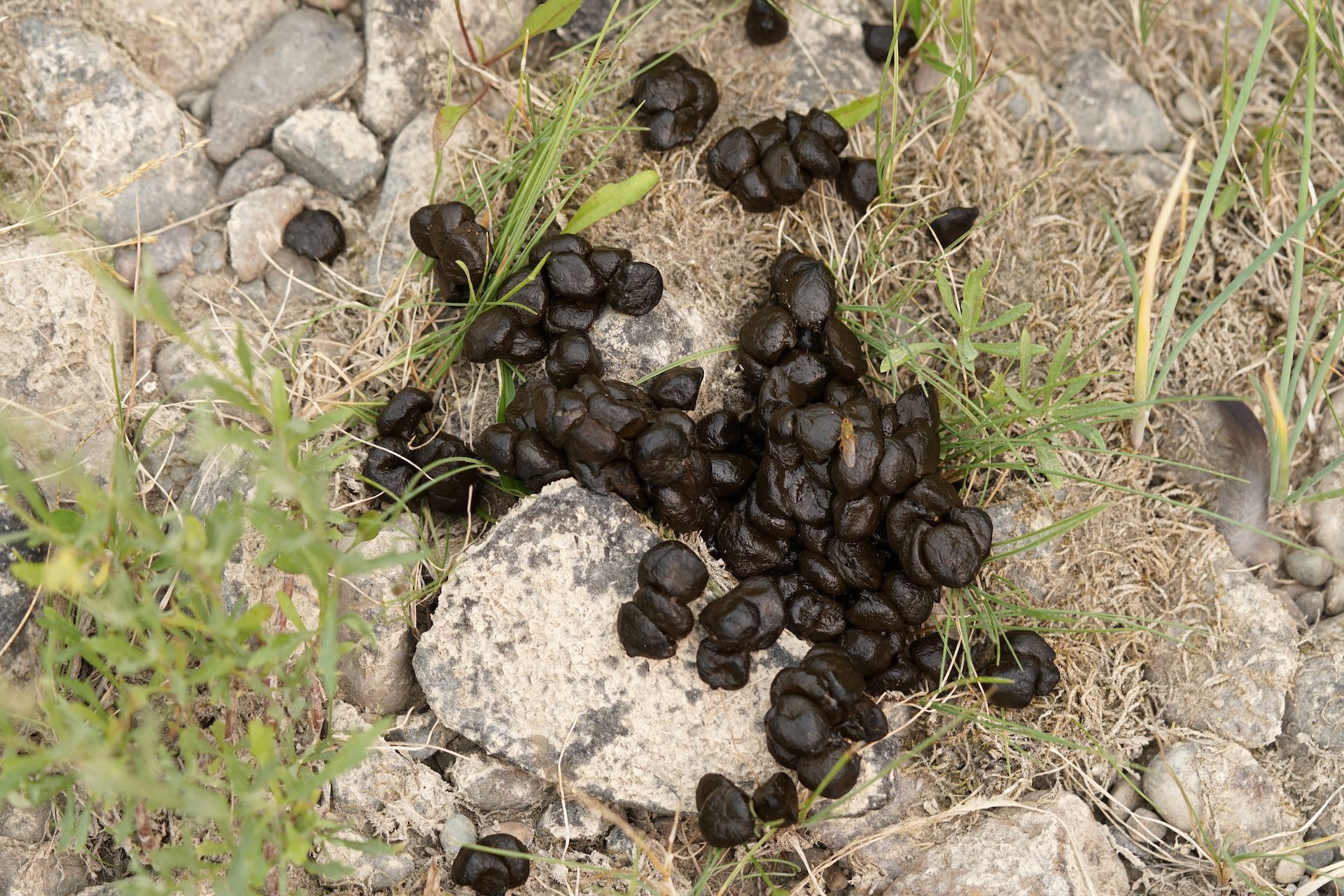
Elk droppings are often called pellets, but their appearance changes depending on the season and what the elk are eating.
Key Features Of Elk Droppings
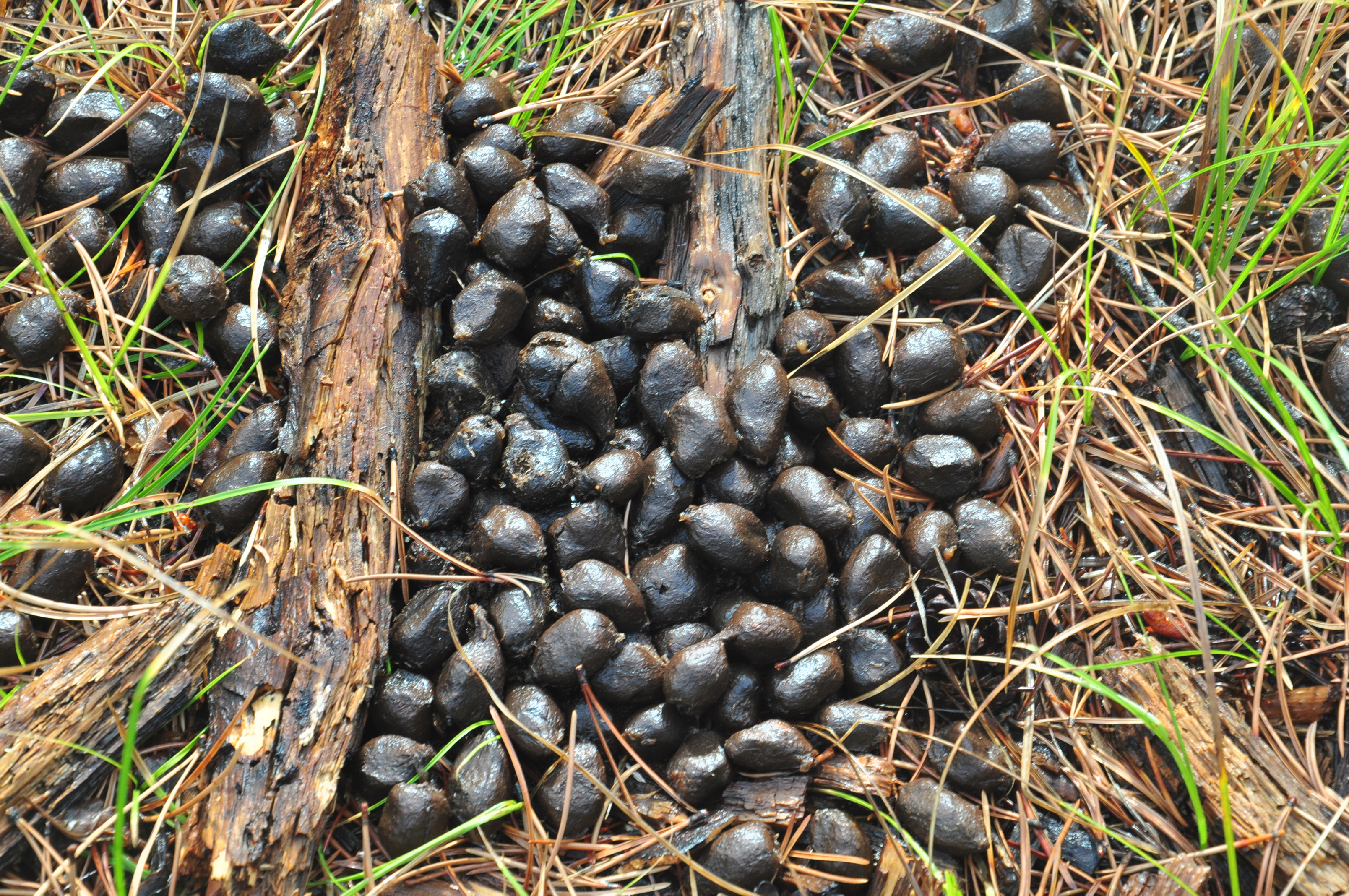
- Shape: Most elk droppings are oval or slightly pointed at one end, like a jelly bean or a large raisin.
- Size: Pellets are typically 1.5 to 2 centimeters (about 0.6 to 0.8 inches) long and 1 to 1.5 centimeters (0.4 to 0.6 inches) wide.
- Color: Fresh elk droppings are dark brown or black. As they dry, they become lighter brown or grayish.
- Texture: When fresh, they are moist and shiny. Old droppings are hard and dry.
- Clumping: In spring and summer, elk often eat moist plants and grass. This can make their droppings clump together into larger, softer masses.
- Arrangement: Droppings are usually left in piles, with dozens or even hundreds of pellets close together.
Here’s a quick comparison of pellet sizes for elk, deer, and moose:
| Animal | Length (cm) | Width (cm) | Typical Shape |
|---|---|---|---|
| Elk | 1.5–2.0 | 1.0–1.5 | Oval, slightly pointed |
| Deer | 1.0–1.3 | 0.8–1.0 | Round, sometimes pointed |
| Moose | 2.5–3.0 | 1.5–2.0 | Large, oval, blunt ends |
Non-obvious insight: The size of elk pellets can overlap with large deer or small moose, making it tricky for beginners. Always check several pellets and look for other clues.
How To Differentiate Elk Droppings From Similar Animals
Elk are not the only hoofed animals in North America. Knowing the differences helps you avoid mistakes.
Elk Vs. Deer Droppings
- Size: Elk pellets are larger and more oval. Deer pellets are smaller and almost round.
- Arrangement: Both animals leave piles, but elk piles are usually larger.
- Context: Elk are more common in open meadows, while deer prefer wooded areas.
Elk Vs. Moose Droppings
- Size: Moose droppings are much bigger.
- Shape: Moose pellets are more cylindrical with blunt ends.
- Color and Texture: Similar when fresh, but moose piles often look messier due to their larger size.
Elk Vs. Cattle Droppings
- Form: Cattle leave flat, pancake-shaped piles (cow patties), never pellets.
- Location: Cattle droppings are usually found near farms or open grazing land.
Here’s a quick reference on how elk droppings compare with others you might find:
| Animal | Pellet or Pile | Key Difference |
|---|---|---|
| Elk | Pile of oval pellets | Larger than deer, smaller than moose |
| Deer | Pile of small round pellets | Smaller, more rounded |
| Moose | Pile of large oval/cylindrical pellets | Much bigger, blunt ends |
| Cattle | Flat, moist pile | No pellets; looks like a pancake |
Seasonal Changes In Elk Droppings
Elk diet changes with the seasons, which affects the look of their droppings.
Fall And Winter
- Diet: Dry grasses, twigs, bark.
- Droppings: Firm, dry, separate pellets.
- Color: Dark brown to black.
Spring And Summer
- Diet: Fresh grass, leaves, forbs.
- Droppings: Softer, stickier, sometimes clumped together.
- Color: Lighter brown.
Non-obvious insight: If you find soft, clumped droppings in winter, it may be a sign that the elk found an unusual food source or water-rich area. This can help advanced trackers locate hidden water sources.

How To Use Elk Droppings For Tracking
Hunters and wildlife watchers often rely on droppings to follow elk. Here are a few tips:
- Check Freshness: Shiny and moist means the droppings are less than a day old. Dull and dry could be a week or more.
- Follow the Trail: Elk move while feeding, leaving a series of droppings. Look for a pattern in the direction of travel.
- Look for Other Signs: Tracks, rubbed trees, and bedding sites give more clues.
- Estimate Group Size: Large piles in one area may mean several elk are nearby.
Mistakes Beginners Make
- Assuming all large pellets are elk: Check the size and shape carefully.
- Ignoring freshness: Old droppings mean the elk have moved on.
- Not checking surroundings: Other signs help confirm your guess.
Other Clues Found With Elk Droppings
Droppings are not the only sign of elk. Combined with other evidence, you can be almost certain.
- Elk tracks: Large, heart-shaped prints about 10–13 cm (4–5 inches) long.
- Rubs and wallows: Trees scraped by antlers and muddy spots where elk roll.
- Bedding areas: Flattened grass or leaves.
If you find all these together with the right droppings, you are in elk country.
When Not To Use Droppings For Identification
Sometimes, droppings alone are not enough. For example:
- In mixed herds (deer and elk together), pellets may be similar.
- Droppings can change if the animal is sick or eating unusual food.
- Rain or snow can break up piles and hide clues.
When in doubt, use multiple signs and, if possible, check with a local wildlife expert.
Health And Safety Tips
- Do not touch droppings with bare hands.
- Wash hands after handling soil or objects near droppings.
- Elk droppings can carry bacteria or parasites, though risk is low if you are careful.
If you are gathering droppings for research or education, use gloves and store samples in sealed bags.
Practical Uses For Elk Droppings
Elk droppings are not just for tracking. In some places, they are used in:
- Soil studies: To check plant types in the animal’s diet.
- Forest health: To estimate animal populations for conservation.
- Educational programs: Teaching students about wildlife.
Some creative artists even use elk droppings (dried and cleaned!) for crafts.
Real-world Example: A Field Scenario
Imagine you are hiking in the Rocky Mountains. You spot a pile of dark, oval pellets about 2 cm long, still moist and shiny. Nearby, you see large hoof prints and a tree with bark rubbed off. You know this is elk sign. By following the direction of the droppings and tracks, you might spot the elk herd grazing in a meadow ahead.
Advanced Tip: Using Droppings To Estimate Diet
Scientists often study elk droppings to learn about their diet. By breaking apart dried pellets, you can sometimes see bits of grass, leaves, or bark. The more fiber or woody material, the more likely the elk have been eating winter foods.
This helps wildlife managers understand what plants are important for elk survival.
Elk Droppings Around The World
Elk are also known as wapiti in some regions. In Asia, their droppings are similar, but the exact shape and size can change slightly based on local diets and subspecies. Always consider the local context if you are outside North America.
For more in-depth research on elk and their behavior, see this Wikipedia article on elk.
Frequently Asked Questions
How Can I Tell If Droppings Are From Elk Or Deer?
Look at the size and shape. Elk pellets are larger and more oval, while deer pellets are smaller and rounder. Also, elk piles are usually bigger.
Are Elk Droppings Dangerous To Touch?
While generally safe, it’s best not to touch any animal droppings with bare hands. They may contain bacteria or parasites. Always wash your hands after contact.
What Does It Mean If Elk Droppings Are Soft And Clumped?
This often happens in spring and summer when elk eat fresh, moist plants. Soft, clumped droppings are normal for this season.
Can I Use Elk Droppings To Track Elk Herds?
Yes. Fresh elk droppings show recent activity. By following the trail and looking for other signs, you can estimate where the herd is moving.
Do Elk Droppings Change With The Season?
Yes. In winter, elk droppings are firm and dry due to a diet of woody plants. In spring and summer, they’re softer because of the fresh vegetation.
Learning to identify elk droppings is a practical skill for anyone who spends time outdoors. With careful observation and a bit of practice, you’ll be able to tell elk sign from that of other animals and gain a deeper understanding of the wild places you visit.

