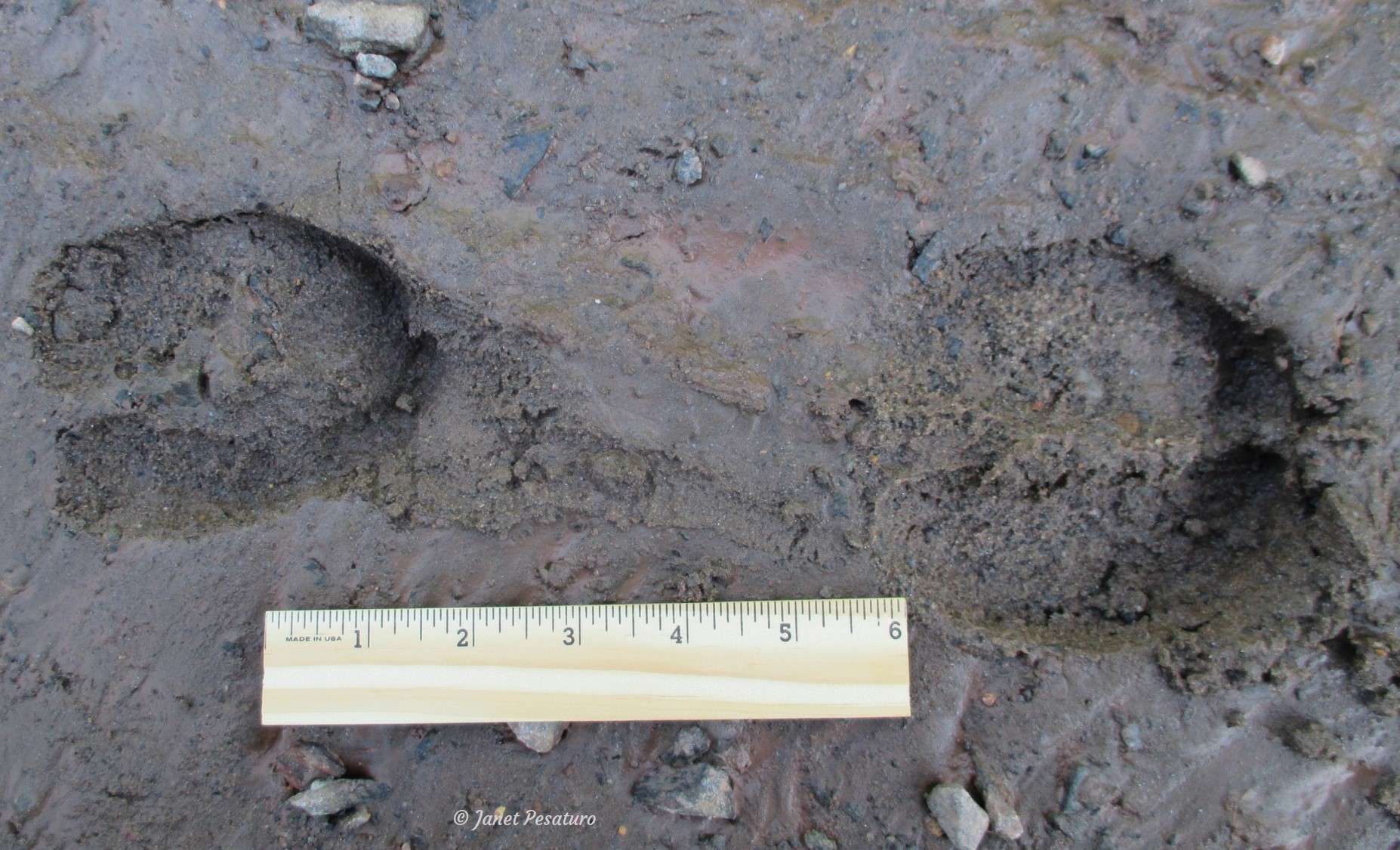
Spotting animal tracks in the wild is a skill that connects you to nature in a special way. For hunters, hikers, and wildlife lovers, knowing how to tell elk tracks from deer tracks is more than just a fun challenge—it helps you understand which animals are nearby, how they move, and what their habits are. Yet, even experienced outdoors people sometimes find it tricky to know which animal left those hoof prints. The prints might look similar at first glance, especially if you’re new to tracking or the ground is muddy or snowy. But there are clear differences if you know what to look for.
This article breaks down the key features, tips, and advanced signs that help you confidently identify elk tracks vs deer tracks. Whether you’re planning a hunt, enjoying a hike, or simply want to impress friends with your outdoor knowledge, these insights will give you a reliable way to read the story written in the soil.
Understanding Elk And Deer: Why Track Differences Matter
Before looking at tracks, it’s useful to know that elk and deer are both members of the cervid family. They share similar body shapes and hoof structures, but their sizes and behaviors differ. Elk are much larger—adult males (bulls) can weigh up to 700 pounds or more, while deer (such as white-tailed or mule deer) usually weigh between 100 and 300 pounds. These size differences influence the size, depth, and pattern of their tracks.
Elk and deer also have different habits. Elk often move in larger groups and travel longer distances, while deer can be more solitary or move in small family groups. Understanding these basics helps you interpret not just the tracks, but also what the animals might be doing.
Key Features Of Elk Tracks
When you find a hoof print, your first step is to look at its size and shape. Elk tracks have several unique features:
- Size: Elk tracks are big. The average adult elk track measures 4 to 5 inches long and 3.5 to 4.5 inches wide. The size is often the most obvious clue, especially if you have seen tracks from smaller animals before.
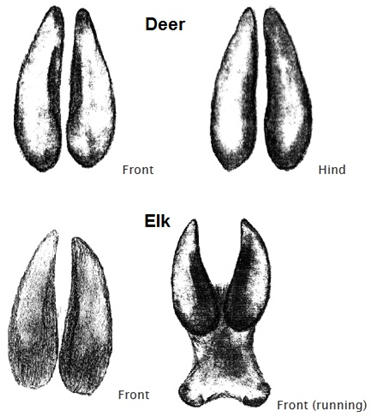
- Shape: Each track has a clear, heart-like shape. Elk tracks show two large, slightly rounded toes. The tips are not sharply pointed but more blunted or rounded compared to deer.
- Depth: Because elk are heavy, their tracks usually sink deeper into the soil, especially on soft ground or snow.
- Dew Claws: Dew claws are small, secondary hooves behind the main toes. Elk dew claw marks often appear in deeper mud or snow but are usually set wider apart than those of deer.
- Stride and Straddle: Elk have long legs and take longer steps. Their stride (distance between steps) can be 30 to 45 inches when walking. The straddle (width between left and right tracks) is also wide, reflecting their large body.
Key Features Of Deer Tracks
Deer tracks can be easy to spot, but harder to identify if you’re not familiar with the details:
- Size: Deer tracks are much smaller. The average adult deer track is about 2 to 3 inches long and 1.5 to 2.5 inches wide.
- Shape: The track is more pointed and narrow. The toes often form a sharp “V” at the front, and the track overall looks slimmer.
- Depth: Because deer are lighter, their tracks are not as deep as elk tracks, unless the ground is very soft.
- Dew Claws: Deer dew claw marks are less common in normal walking but can appear in deep snow or mud. They are closer together than those of elk.
- Stride and Straddle: A deer’s stride is shorter, around 18 to 30 inches when walking. The straddle is also more narrow.
Side-by-side Track Comparison
To help you quickly compare, here’s a clear look at the most important track features:
| Feature | Elk Track | Deer Track |
|---|---|---|
| Length | 4 – 5 inches | 2 – 3 inches |
| Width | 3.5 – 4.5 inches | 1.5 – 2.5 inches |
| Shape | Blunt, rounded heart | Pointed, narrow “V” |
| Depth | Deep, especially in mud/snow | Shallow, unless very soft ground |
| Dew Claw Position | Wider, often visible | Narrow, less visible |
| Stride | 30 – 45 inches | 18 – 30 inches |
Track Patterns: How Animals Move
Looking at a single track is helpful, but examining the pattern left by an animal’s walk gives even more clues. Track patterns show how elk and deer move.
Elk Track Patterns
- Walking: Elk tracks will appear in a straight line, with each print spaced far apart. The stride is long and the tracks are usually parallel.
- Running or Trotting: The stride gets even longer, and dew claws often appear as the animal’s hooves dig deeper.
- Group Movement: Elk often travel in herds, so you may see many tracks together—sometimes overlapping.
Deer Track Patterns
- Walking: Deer tracks are closer together. The path often curves or zig-zags, especially if the animal is browsing for food.
- Bounding: When frightened, deer leap, leaving pairs of tracks grouped close together, then a gap, then another pair.
- Solo or Family: Deer usually move alone or in small groups, so there are fewer overlapping tracks.
Advanced Signs: What Beginners Often Miss
Most people focus on size and shape, but there are subtle details that reveal even more:
- Track Age: Fresh tracks are sharp and clear, while old tracks are worn or filled with debris. Elk tracks remain visible longer because they are deeper.
- Surface Clues: On rocky, hard ground, you might see only part of a print. Elk prints still appear larger and more rounded, while deer prints look slimmer.
- Gait Changes: Both elk and deer change their stride if they sense danger. Elk may leave deeper, more spaced tracks when running. Deer will show more “bounding” pairs.
- Habitat Context: Elk prefer open meadows, forest edges, and high mountain valleys. Deer are more common in dense woods or near water. Finding tracks in the right habitat boosts your confidence in identification.
- Trail Width: Elk trails through grass or snow are wider—sometimes up to 2 feet across. Deer trails are narrow, often less than a foot wide.
Practical Tips For Identifying Tracks In The Field
Here are steps you can follow for reliable track identification:
- Measure Carefully: Carry a small ruler or use a common object (like a pocketknife) to compare track length and width.
- Check Multiple Tracks: Don’t decide based on one print. Look at several to confirm the animal’s size and stride.
- Look for Dew Claws: If you see dew claw marks, check their width and position. Wide and far apart usually means elk.
- Consider the Context: What habitat are you in? Are there other signs, like scat, hair, or feeding marks?
- Photograph the Tracks: Take clear photos with a size reference (such as a coin) for later study.
Common Mistakes When Identifying Tracks
Even experienced trackers make errors. Watch out for these common mistakes:
- Ignoring Ground Conditions: Mud, snow, or loose soil can distort track size and shape. Always adjust your judgment for the surface.
- Overestimating Size: Sometimes, deer tracks appear larger after rain or snow melt. Compare with known objects for accuracy.
- Assuming All Large Tracks Are Elk: Moose tracks are even bigger and can be confused with elk in some areas. Learn the local wildlife.
- Forgetting Juveniles: Young elk tracks may look like adult deer tracks. Consider the full set of clues, not just size.
Real-world Examples
Imagine you’re hiking in Colorado and see a print that is 4 inches long, 4 inches wide, and set deep in the mud with blunt tips. There are several similar tracks nearby, spaced about three feet apart. These are strong signs of elk.
If you’re in a forest in Wisconsin and find a pointed, V-shaped print, 2 inches long, with a stride of about 20 inches and no obvious dew claws, you’re probably looking at a deer track.
Track Identification In Different Seasons
Tracks are easier to find in snow and mud, but each season brings its own challenges:
- Winter: Snow shows even small animals, but melting snow can make tracks look larger. Elk tracks are still much wider and deeper.
- Spring: Mud makes for sharp, clear tracks. This is the best season for identification.
- Summer: Hard ground can make tracks faint. Focus on trail width and habitat clues.
- Fall: Fallen leaves can cover tracks. Look for impressions along trails or in soft earth.
Using Technology For Track Identification
Modern technology helps too. Many outdoor apps let you photograph a track and compare it with a database. Some even use AI to suggest likely animals based on location and track features. Still, learning to observe with your own eyes remains the most reliable method in the wild.
For more detailed wildlife tracking guidance, the Wikipedia page on animal tracks offers a solid overview.
Comparison Of Elk And Deer Tracks In Different Substrates
The surface where the track appears can change its look. Here’s how elk and deer tracks usually show up on different ground types:
| Substrate | Elk Track Appearance | Deer Track Appearance |
|---|---|---|
| Mud | Deep, clear, with dew claws often visible | Shallow, sharp edges, dew claws rare |
| Snow | Wide, deep, may look even larger when melting | Narrow, pointed, sometimes distorted by melt |
| Hard Soil | Partial prints, still broad and rounded | Faint, slim, and pointed prints |
| Leaf Litter | Wide impressions, sometimes with pushed aside leaves | Thin, lighter marks, less disturbance |

When To Call In An Expert
If you’re still unsure, talk to local wildlife experts, park rangers, or experienced hunters. They can often confirm what you’re seeing and teach you more about the animals in your area. Remember, each region has its own wildlife mix, and sometimes rare animals can confuse even skilled trackers.
Frequently Asked Questions
How Can I Tell If A Track Is From An Elk Or A Moose?
Moose tracks are even larger than elk tracks, often 5 to 7 inches long and more rounded at the tips. If you are in moose country, always check the size—if it’s bigger than 5 inches and very rounded, it’s likely a moose.
Do Elk And Deer Tracks Ever Look The Same?
Tracks can look similar if the ground is muddy, snowy, or if you find tracks from a young elk or a large deer. Always check several clues—size, shape, stride, and habitat—before making a decision.
What Other Signs Help Identify Elk Or Deer Besides Tracks?
Look for scat (droppings), hair, feeding marks on plants, or even the width of animal trails. Elk scat is usually larger and more oval, while deer scat is smaller and rounder.
Can I Use Track Identification For Hunting Legally?
Yes, many hunters use track identification to locate animals. However, always follow local hunting laws and ethical practices. Never track or disturb wildlife in protected areas.
Are There Good Field Guides Or Apps For Track Identification?
Yes, several field guides and mobile apps can help. Books with photos and size charts are useful. Apps like iNaturalist or Seek let you compare your photos with large databases to help with identification.
Identifying elk tracks vs deer tracks is a rewarding skill that brings you closer to the wild. With careful observation, a little practice, and the tips above, you’ll soon be able to read the stories animals leave behind and enjoy a richer outdoor experience.