
How Many Species Of Deer Are There?
Deer are some of the most fascinating and widespread mammals on our planet. People often see them in forests, grasslands, and even near cities. But have you ever wondered, how many species of deer are there? The answer is more interesting than you might think. Deer belong to the family Cervidae, which is found across Asia, Europe, North and South America, and even parts of Africa. These animals come in many shapes and sizes, from tiny forest dwellers to giant species found in open plains. Knowing the different types of deer can help us understand nature’s diversity and why conservation matters.
The Main Families Of Deer
The deer family is divided into two main groups:
- Old World deer (Cervinae): Mostly found in Europe and Asia.
- New World deer (Capreolinae): Mainly found in the Americas.
Each group includes several genera, and each genus contains different species.
Total Number Of Deer Species
There are about 43 recognized species of deer worldwide. This number can change as scientists discover new information or reclassify species. Here is a breakdown by continent:
| Continent | Number of Species | Examples |
|---|---|---|
| Asia | 17 | Sambar, Barasingha, Chital |
| Europe | 7 | Red Deer, Roe Deer |
| North America | 9 | White-tailed Deer, Mule Deer |
| South America | 7 | Pudu, Marsh Deer |
| Africa | 1 | Barbary Red Deer |
These numbers can vary based on how scientists define species, but 43 is widely accepted.

Notable Deer Species Around The World
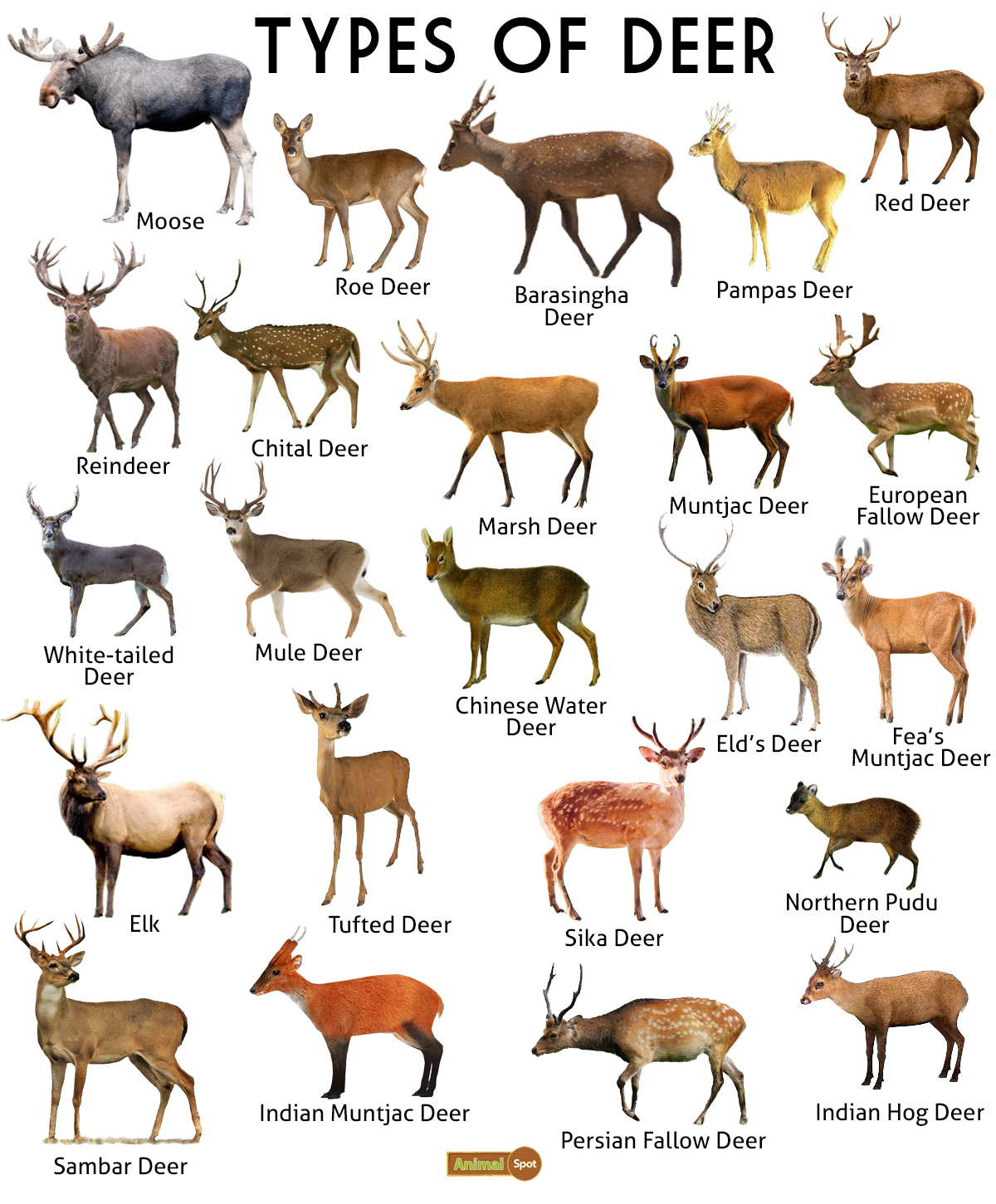
Let’s look at some unique deer species that stand out for their size, appearance, or habitat.
White-tailed Deer (odocoileus Virginianus)
This is the most common deer in North America. It has a white underside to its tail, which it raises when alarmed. White-tailed deer are very adaptable and live in forests, fields, and even near cities.
Red Deer (cervus Elaphus)
Red deer are the largest wild deer in Europe and parts of Asia. Males have impressive antlers, and they are famous for their loud calls during mating season.
Moose (alces Alces)
The moose is the largest species of deer. It can weigh up to 700 kg (1,540 lbs). Moose have long legs and wide antlers, making them easy to recognize.
Roe Deer (capreolus Capreolus)
Found in Europe and Asia, roe deer are small and elegant. They are shy animals that prefer forests and woodland edges.
Sambar (rusa Unicolor)
These are large deer native to South and Southeast Asia. Sambar can weigh over 500 kg (1,100 lbs) and have rough, dark brown coats.
Pudu (pudu Puda And Pudu Mephistophiles)
Pudus are the smallest deer in the world. Adult pudus stand only about 30-40 cm (12-16 inches) tall at the shoulder.
Barasingha (rucervus Duvaucelii)
Also called the “swamp deer,” barasingha are found in India and Nepal. They are known for their large, spreading antlers.
Reindeer (rangifer Tarandus)
Known as caribou in North America, reindeer are unique because both males and females grow antlers. They are well-adapted to cold, snowy climates.
Water Deer (hydropotes Inermis)
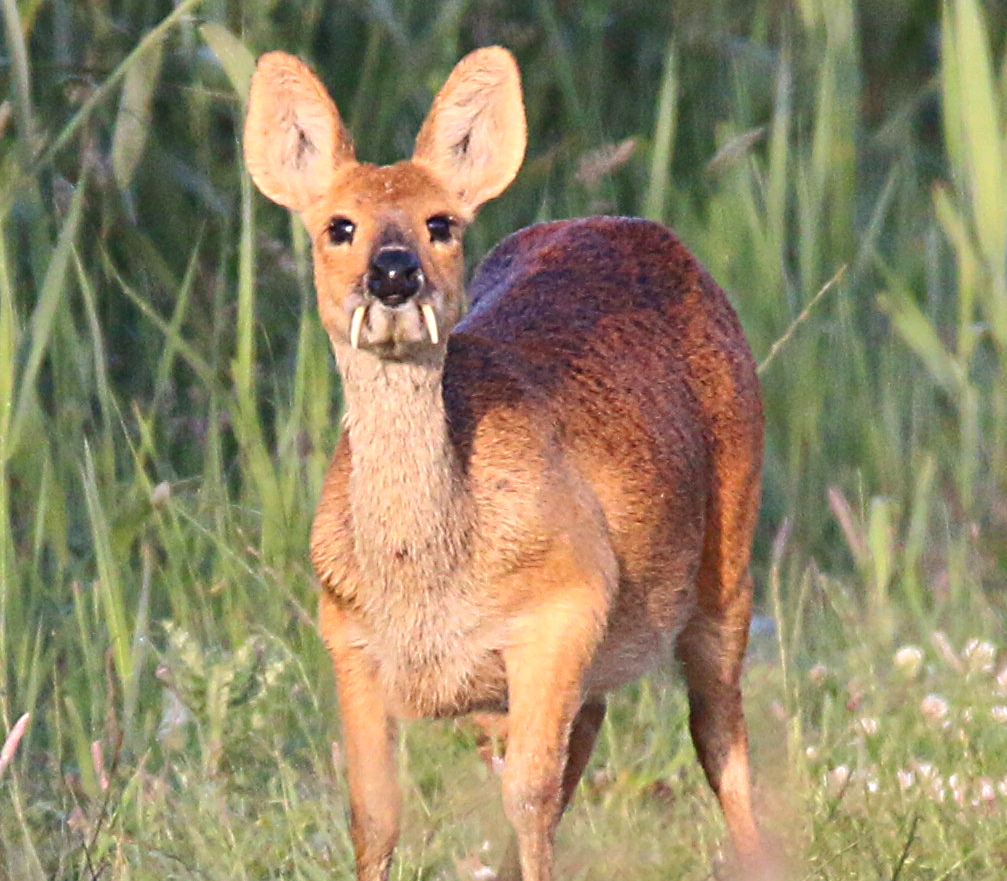
Native to China and Korea, water deer do not have antlers. Instead, males have long, sharp canine teeth that look like fangs.
Size And Adaptation Differences
Deer species vary greatly in size and how they survive in different environments. Here is a comparison of some of the largest and smallest deer:
| Species | Average Height (cm) | Average Weight (kg) | Habitat |
|---|---|---|---|
| Moose | 180-210 | 400-700 | Boreal Forests |
| Red Deer | 100-150 | 160-240 | Woodlands, Grasslands |
| White-tailed Deer | 80-100 | 50-120 | Forests, Fields |
| Pudu | 30-40 | 7-12 | Dense Forests |
This variety shows how deer have evolved to fit many types of environments.
Lesser-known Deer Species
Some deer are rarely seen and are not well-known. For example, the Bawean deer lives only on a small island in Indonesia. The Kashmir musk deer is famous for its scent glands, not antlers. Many lesser-known species are endangered due to habitat loss and hunting.
How Are Deer Species Classified?
Scientists classify deer based on physical features like antlers, teeth, and body shape. DNA studies now help experts find relationships between species. Sometimes, what was thought to be one species is split into two after new research. For example, the mule deer and black-tailed deer were once considered the same.
Here’s a simple breakdown of deer classification:
| Level | Example |
|---|---|
| Family | Cervidae |
| Subfamily | Cervinae (Old World) |
| Genus | Cervus |
| Species | Cervus elaphus (Red Deer) |
Conservation Status Of Deer Species
Not all deer species are thriving. Some, like the Père David’s deer, are extinct in the wild and only survive in captivity. Others, such as the Eld’s deer and Bawean deer, are critically endangered. Conservation groups work to protect their habitats and stop illegal hunting.
A common mistake people make is thinking all deer are abundant because some species are common. In reality, many species face high risks.
Surprising Insights About Deer Species
Many beginners think all deer grow antlers, but some, like the water deer, do not. Also, in most deer species, only males have antlers, but both sexes of reindeer do. Another insight: while most deer are shy, some like the urban white-tailed deer, have adapted to live close to humans.
Frequently Asked Questions
How Many Species Of Deer Are There In The World?
There are about 43 recognized deer species worldwide. This number may change as scientists learn more.
Which Is The Largest Deer Species?
The moose (Alces alces) is the largest, standing up to 210 cm tall and weighing up to 700 kg.
Are All Deer Species Endangered?
No, many are common, but some, like the Père David’s deer and Bawean deer, are endangered or extinct in the wild.
Do All Deer Have Antlers?
No, not all deer have antlers. For example, the water deer have tusks instead of antlers, and in most species, only males have antlers. However, both male and female reindeer have antlers.
Where Can I Learn More About Deer Species?
You can read more detailed information at the Wikipedia page on Deer.
Deer species are more diverse than most people realize. They live on almost every continent and adapt to many environments. Understanding these animals helps us appreciate the importance of protecting their unique habitats and the balance of nature.

