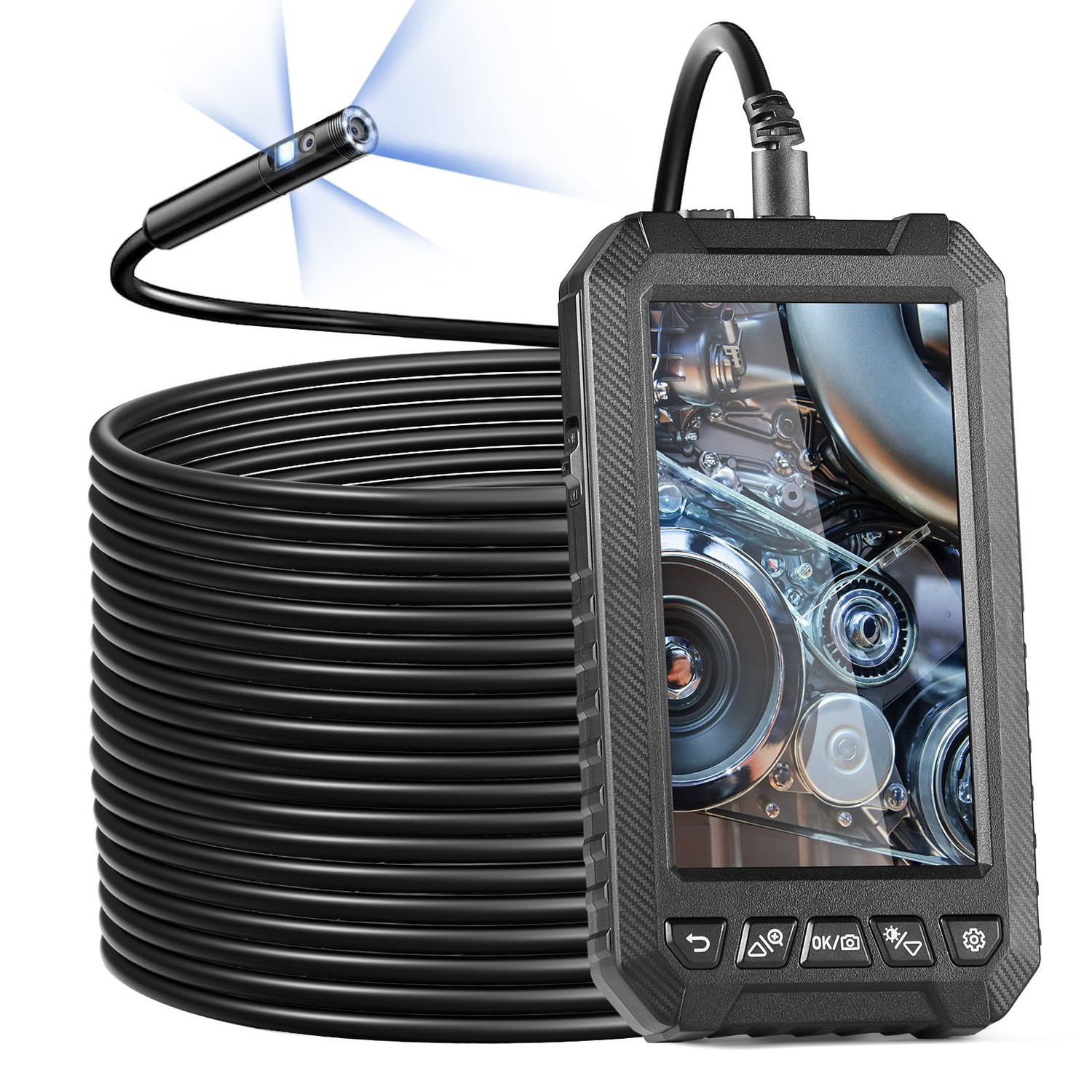
How Long Can A Borescope Cable Be?
Borescopes are essential tools for inspection in places where the human eye cannot reach. Whether you are a mechanic looking inside an engine or a plumber checking pipes, a borescope can save hours of time and guesswork. A common question for both beginners and experienced users is: How long can a borescope cable be? The answer is not simple. Cable length depends on the type of borescope, inspection needs, image quality, and more. Understanding these factors can help you choose the right tool for your work and avoid costly mistakes.
What Is A Borescope Cable?
A borescope cable is the flexible or rigid tube that connects the camera head to the viewing screen or eyepiece. The cable is not just a wire; it often contains electrical lines, fiber optics, or both. The quality and length of this cable directly affect what you can inspect and how clear the images will be.
There are three main types of borescope cables:
- Rigid cables – Used for straight-line inspections. Short lengths, usually under 50 cm.
- Flexible cables – Can bend and snake through curved spaces. Lengths vary from less than 1 meter to over 30 meters.
- Articulating cables – Can be controlled to bend at the tip, making them useful for complex paths. Usually shorter due to mechanical limits.
Knowing the differences helps you understand the possibilities and limits of cable length.
Standard Cable Lengths For Borescopes
Most commercial borescopes offer standard cable lengths that fit common inspection tasks. Here’s a summary:
| Borescope Type | Common Lengths | Typical Uses |
|---|---|---|
| Rigid Borescopes | 10 cm – 50 cm | Engine inspection, gun barrels |
| Flexible Borescopes | 1 m – 10 m | HVAC, wall cavities, pipes |
| Video Borescopes (with screen) | 1 m – 30 m | Sewers, industrial machinery |
| Articulating Borescopes | 1 m – 3 m | Aerospace, turbines |
Most users find that a 3 to 5 meter cable meets their needs, but certain jobs—like sewer inspections—may require cables of 20 meters or more.
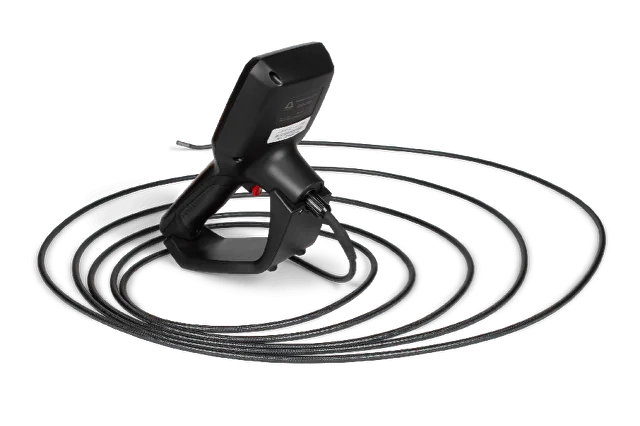
Maximum Practical Lengths: What’s Possible?
Some borescope cables can be very long, but there are practical limits. Let’s look at what is possible and what becomes difficult as the cable gets longer.
Physical Limits
- Flexible borescopes can reach up to 30 meters, but most are between 1 and 10 meters.
- Sewer cameras (a type of large borescope) can reach 50 meters or even 100 meters, but these are specialized tools.
- Articulating borescopes rarely go beyond 3 meters because the mechanism to bend the tip becomes unreliable with extra length.
Why Not Longer?
- Image signal loss increases with cable length, especially for analog systems and fiber optics.
- Power delivery to the camera becomes harder with longer cables.
- Handling difficulties—long cables are heavy, harder to push, and may tangle or kink.
- Cost rises sharply for longer, high-quality cables.
Most manufacturers list a maximum recommended cable length for each model. Exceeding this can cause blurry images or even device failure.
How Cable Length Affects Image Quality
One of the most important things to understand is that cable length affects image quality. Here’s why:
Analog Vs Digital Transmission
- Analog borescopes use fiber optics to send images. As length increases, the image gets dimmer and less sharp. Fiber optic cables over 2 meters often show visible quality loss.
- Digital video borescopes send video data through wires. Standard USB or HDMI cables can carry clear signals up to 5 meters. Some special cables go further with signal boosters.
Real-world Example
A 1-meter digital borescope might show HD video with no delay. A 15-meter model may have slightly more lag or lower resolution. At 30 meters, you may see lower frame rates or need extra power adapters.
Table: Image Quality Vs. Cable Length
| Cable Length | Analog/Fiber Optic Quality | Digital Quality |
|---|---|---|
| 1 m | Excellent | Excellent |
| 5 m | Good | Excellent |
| 10 m | Poor | Good |
| 20 m | Very poor | Fair (may need boosters) |
| 30 m | Unusable | Fair (lag, low resolution) |
The takeaway: For best image quality, choose the shortest cable that reaches your target.
Factors To Consider When Choosing Cable Length
It’s tempting to buy the longest borescope cable you can afford, but this is not always the smartest choice. Here are the main things you should think about:
1. Inspection Path
Measure the exact distance you need to inspect. If you only need to reach 2 meters, a 10-meter cable adds weight and complexity without benefit.
2. Cable Thickness And Flexibility
Longer cables are usually thicker to prevent bending and breaking. Thicker cables can’t turn tight corners and might not fit through small openings.
3. Type Of Work
- Mechanics need short, slim cables for engines.
- Plumbers need longer, durable cables for pipes.
- Aerospace work often uses short, high-precision articulating cables.
4. Storage And Handling
Long cables are harder to coil and store. They can also wear out faster if not handled properly.
5. Price Vs. Value
Extra length costs more. Only pay for the length you will actually use.
6. Power And Signal Support
For very long cables, check if your borescope supports signal boosters or extra power adapters. Some professional systems include these, but most consumer models do not.
Common Mistakes When Selecting Borescope Cable Length
Many first-time buyers make the same errors. Here are the most common:
- Choosing the longest cable “just in case” – This can lead to poor image quality and hard handling.
- Ignoring cable diameter – A longer cable is useless if it can’t fit where you need to inspect.
- Not checking device compatibility – Some screens or recorders only work with certain cable lengths.
- Underestimating storage needs – A 20-meter cable is bulky and may not fit in your toolbox.
- Forgetting about future needs – Buying the shortest cable saves money now, but may limit you later.

Cable Extension Options: Can You Make It Longer?
Some users wonder if they can just add extensions to their borescope. The answer is mixed:
- Analog borescopes cannot be extended easily. Every join reduces image quality.
- Digital borescopes sometimes support extension cables (like USB repeaters), but every added meter increases the chance of lag or power loss.
- Wireless adapters can send video to a phone or tablet, but only work well for short distances.
If you need very long reach, it is better to buy a professional sewer camera or an industrial inspection system designed for long runs.
Real-world Examples: How Long Is Long Enough?
Let’s look at a few examples:
- Car engine inspection: Most engines can be checked with a 30-50 cm rigid or flexible borescope.
- Home plumbing: Pipes in walls or under floors may need 2-5 meters.
- Sewer line inspection: Professional plumbers use 15-30 meter cables; city inspectors may use 60 meters or more.
- Aircraft turbine inspection: Usually requires short, articulating cables under 2 meters for tight spaces.
Choosing the right length is all about matching the tool to the job.
Advanced Considerations: Industrial And Custom Solutions
In factories, ships, and oil refineries, standard borescopes may not be enough. Industrial systems often have:
- Cables over 50 meters with special signal amplifiers.
- Waterproof and oil-resistant sheaths for harsh environments.
- Integrated lighting systems to improve visibility in long pipes.
These systems can cost thousands of dollars and require special training. For most home and field users, cables under 10 meters are both affordable and practical.
Borescope Cable Length Vs. Diameter
Cable length is not the only important feature. Cable diameter affects what you can inspect. Thicker cables are stronger and can be longer, but thin cables fit into smaller holes.
| Cable Diameter | Max Practical Length | Best For |
|---|---|---|
| 2-4 mm | 2-5 m | Engines, electronics |
| 5-8 mm | 5-20 m | Pipes, walls |
| 9-20 mm | 20-100 m | Sewers, industrial ducts |
If you want to inspect both small and long spaces, consider a borescope with interchangeable cables.
Non-obvious Insights For Beginners
- Longer is not always better. A long cable can make precise inspection harder, especially when pushing through bends or narrow spaces. You may lose sense of direction.
- Cable flexibility changes with length. Short cables are more flexible and easier to maneuver. Long cables can feel stiff, even if they are made from soft materials.
- Lighting power matters. As the cable gets longer, built-in LEDs at the camera tip may not be bright enough for clear pictures far from the entry point. Consider borescopes with adjustable light levels.
- Check for waterproof rating. Not all long cables are waterproof. Using a non-waterproof borescope in wet pipes can destroy it.
When Do You Need An Extra-long Cable?
You should only consider cables over 10 meters if:
- You regularly inspect long pipes, sewer lines, or industrial tanks.
- You have a way to handle, clean, and store the cable properly.
- Your borescope system is designed for long-distance video transmission.
Otherwise, a shorter, high-quality cable will usually give better images and last longer.
Where To Learn More
If you want to read about borescope cable technology and the science behind signal transmission, check out the article from Wikipedia.
Frequently Asked Questions
How Long Can A Borescope Cable Be Before Losing Image Quality?
Most consumer borescope cables are up to 10 meters. Beyond this, image quality—especially for analog or fiber optic systems—starts to drop. Digital systems with signal boosters can reach 20-30 meters, but may show some lag or reduced clarity.
Can I Connect Two Borescope Cables To Make A Longer One?
In most cases, no. Connecting cables introduces signal loss and increases the chance of blurry images or total failure. Only some high-end digital models support extension cables, and even then, you should follow the manufacturer’s limits.
Do Longer Borescope Cables Need More Lighting?
Yes. As the cable gets longer, the light from the camera tip may not be enough, especially in large or dark spaces. Choose a borescope with strong, adjustable LED lighting if you need to see far from the entry point.
What Is The Longest Borescope Cable Available For Home Use?
Some sewer inspection cameras for homeowners offer cables up to 30 meters. Most hand-held borescopes, however, come with cables between 1 and 5 meters. Longer cables are usually found in professional equipment.
Is A Thicker Cable Always Better For Long Inspections?
Not always. Thicker cables are stronger and can be longer without bending, but they may not fit into small spaces. Always balance cable thickness with the size of the area you need to inspect.
A smart choice of borescope cable length can save you time, money, and frustration. By understanding your needs and the technology, you can pick the right tool and get clear results every time.