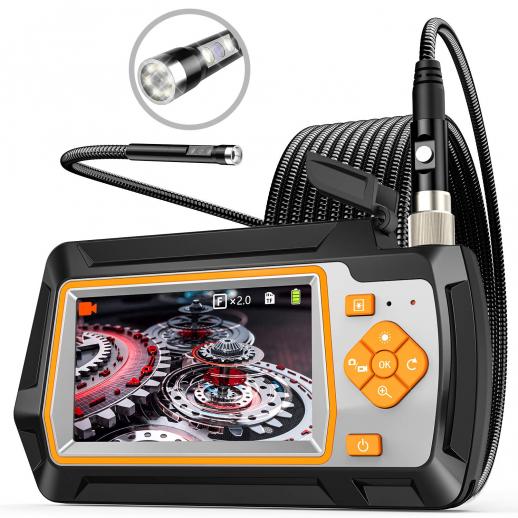
Industrial borescopes are essential in industries where you cannot see with the naked eye—think engines, turbines, pipes, and heavy machinery. These devices let inspectors look inside tight spaces without taking equipment apart. But here’s a question many companies and technicians ask before investing: How durable are industrial borescopes? This is not just about whether a device can survive a drop. It’s about withstanding harsh environments, chemicals, heat, and years of daily use. Let’s take a deep, practical look at what makes a borescope truly durable, what you should expect from quality devices, and what can shorten their life span.
What Makes An Industrial Borescope Durable?
The word durable means more than “hard to break.” In the world of industrial tools, it means the device can resist:
- Physical shocks (drops, bumps)
- Extreme temperatures
- Water, oil, and chemical exposure
- Repeated bending and flexing
- Dust and fine particles
The durability of an industrial borescope depends on its construction, materials, design features, and quality of manufacturing. Let’s break down the main factors that decide whether your borescope can survive in tough environments.
Materials Used
High-quality borescopes use stainless steel, tungsten braid, or even polyurethane coatings on their insertion tubes. These materials offer flexibility but also resist scratches, crushing, and corrosion. Cheaper models may use plastic, which is lighter but less resistant to heat, chemicals, and sharp objects.
Sealing And Waterproofing
Many industrial settings involve fluids. Good borescopes are rated IP67 or higher, meaning they can be submerged in water and won’t let in dust. Seals around the camera head and joints must be tight, or moisture will get inside and ruin electronics.
Camera Head Protection
The tip of a borescope is the most vulnerable part. Premium models protect the camera with sapphire glass or hardened lenses, and the housing is often reinforced with steel. This prevents scratches and cracks even if the tip hits metal.
Cable Flexibility And Strength
The insertion tube (the long, flexible part) gets bent, twisted, and pushed through tight spaces. Industrial-grade borescopes use multi-layer braiding and sometimes add Kevlar reinforcement so the cable can bend thousands of times without breaking.
Control Unit And Housing
The part you hold—often called the control unit—should have a shock-resistant and ergonomic design. Rubberized grips, strong plastics, and reinforced corners keep it safe if dropped.
Real-world Testing: How Durable Are They?
Manufacturers test borescopes in several ways. Here are some common durability benchmarks you might see:
- Bend cycles: Insertion tubes are bent back and forth thousands of times (e.g., 10,000 cycles) to test flexibility and break resistance.
- Drop tests: Devices are dropped from 1–2 meters onto hard surfaces.
- Submersion tests: Camera heads are submerged in water or oil for hours.
- Temperature cycling: Borescopes are exposed to rapid hot/cold changes (like moving from a freezer to a hot engine).
Here’s a comparison of typical durability features in industrial borescopes:
| Feature | Entry-Level Borescopes | Industrial Borescopes |
|---|---|---|
| Insertion Tube Material | Plastic or basic rubber | Tungsten braid, stainless steel |
| Waterproof Rating | IP55–IP67 | IP67–IP68 |
| Temperature Range | 0°C–50°C | -20°C–80°C |
| Camera Head Protection | Basic glass | Sapphire lens, steel housing |
| Bend Cycle Test | 1,000 cycles | 10,000+ cycles |
Key insight: Many beginners focus only on image quality, but durability features like material and sealing are just as critical for long-term performance.

Common Threats To Borescope Durability
Even the toughest borescope can fail if used incorrectly or exposed to extreme conditions for too long. Here are some threats that often shorten their life:
- Chemical exposure: Strong acids or solvents can eat through cable coatings and seals.
- Repeated sharp bends: Forcing the tube around tight corners can cause inner wires or fibers to break.
- Excessive heat: Regular use in engines or boilers above the rated temperature can damage electronics and cable materials.
- Physical impacts: Dropping the control unit or smashing the camera head against metal will eventually cause cracks or lens scratches.
- Improper cleaning: Using the wrong cleaning solutions or abrasive wipes can damage seals and lenses.
A simple example: A borescope with a tungsten-braided cable may survive 10,000 bends, but if the operator twists it too sharply every time, it might fail after just 1,000 uses.
How Long Do Industrial Borescopes Last?
You might expect a quality industrial borescope to last between 3 to 7 years with regular use. Some heavy-duty models can go up to 10 years if maintained well. Here’s what affects the lifespan:
- Usage frequency: Daily use wears out cables and joints faster than occasional inspection.
- Environment: High heat, strong chemicals, or lots of dust can shorten life.
- Maintenance: Regular cleaning and careful storage make a big difference.
- Operator skill: Trained users avoid common mistakes that cause early failure.
Here’s a helpful table comparing expected lifespan based on usage and environment:
| Usage | Harsh Environment | Normal Environment |
|---|---|---|
| Daily Use | 2–4 years | 4–7 years |
| Weekly Use | 4–6 years | 6–10 years |
| Occasional Use | 5–7 years | 7–10+ years |
Non-obvious tip: Storage is often overlooked. Keeping a borescope coiled tightly, exposed to sunlight, or near chemicals can age it faster—even if you’re not using it!
Maintenance For Long-lasting Durability
Proper care extends the lifespan of any industrial tool. For borescopes, some maintenance steps are simple but critical:
- Clean after every use: Wipe the insertion tube and camera head with a soft, damp cloth. Use only approved cleaning solutions.
- Inspect for damage: Check the tube for kinks or cuts, and the camera lens for scratches.
- Store correctly: Coil the tube gently, avoid tight bends, and keep in a dry, padded case.
- Avoid over-bending: Never force the tube around sharp corners or twist it.
- Charge and update: For digital borescopes, keep batteries charged and update software/firmware as recommended.
If a borescope is used in a particularly dirty or oily setting, extra cleaning and inspection are needed. Neglecting simple cleaning is a top reason devices fail early.
When Should You Replace Your Borescope?
Even if a borescope seems to work, there are signs it’s time for a new one:
- Image quality drops: If images are blurry, dark, or show dead pixels, the camera or lens is likely damaged.
- Cable stiffness or cracks: A tube that won’t flex or shows visible cracks can break inside machinery—a big risk.
- Water or dust inside: Fogging in the lens or visible dust means seals have failed.
- Unreliable controls: If buttons, dials, or articulation are sticky or non-responsive, the control unit may be failing.
Using a worn-out borescope can lead to missed problems inside machines or even cause damage if a broken tip gets stuck.

How To Choose A Durable Industrial Borescope
Selecting a durable borescope means looking beyond the spec sheet. Here’s what to focus on:
- Insertion tube material: Prefer tungsten or stainless steel braiding.
- Waterproof and dustproof rating: At least IP67 for most industrial settings.
- Camera head protection: Sapphire glass and steel housing last much longer.
- Temperature resistance: Check both minimum and maximum operating temperatures.
- Articulation mechanism: Mechanical articulation should use metal parts, not plastic.
- Warranty and support: Good brands offer 2–3 years warranty and have spare parts available.
- Real-world reviews: Look for feedback from users in similar industries.
Pro insight: Some manufacturers offer replaceable insertion tubes or camera heads. This can save money and reduce downtime if only one part wears out.
Industry Examples: Durability In Action
Different industries need different durability levels. Here are a few real-world examples:
- Aviation maintenance: Aircraft engines are hot, oily, and tight. Borescopes need high heat resistance, flexible cables, and strong waterproofing.
- Petrochemical plants: Inspectors deal with acids and solvents. Chemical-resistant coatings and secure seals are essential.
- Automotive repair: Borescopes are often dropped or bent in awkward positions. Shock-proof housings and reinforced cables are a must.
- Power generation: Boilers and turbines involve high heat and pressure. Only the most robust, high-temperature-rated borescopes survive.
A borescope that works for a plumber might not last a week in a refinery. Always match the device to your environment.
Cost Vs. Durability: Is It Worth Paying More?
It’s tempting to buy the cheapest option, but in industrial settings, low-cost borescopes often mean less durable materials and shorter life. Spending more upfront for a robust device usually saves money over time.
Here’s a quick cost comparison:
| Type | Typical Price | Average Lifespan | Cost per Year |
|---|---|---|---|
| Low-end (consumer) | $100–$300 | 1–2 years | $100–$200 |
| Industrial grade | $1,000–$6,000 | 5–8 years | $125–$800 |
You’ll notice that the long-term yearly cost is often similar—or even lower—for industrial models, with better performance and fewer interruptions.
Frequently Asked Questions
How Can I Tell If My Borescope Is Truly Waterproof?
Look for the IP rating on your device or in the manual. IP67 means it can be submerged in water up to 1 meter for 30 minutes. Test by gently submerging just the camera head (not the control unit) and checking for any leaks or fogging.
What Is The Most Common Point Of Failure In Industrial Borescopes?
The insertion tube is usually the first part to fail. Bending, twisting, and exposure to chemicals can wear it out faster than the camera or control unit. Always inspect for cracks and stiffness.
Do All Borescopes Resist Chemicals?
No, only some industrial borescopes have chemical-resistant coatings. If you work with acids, oils, or solvents, check the manufacturer’s data sheet or ask about compatibility.
Can I Repair A Broken Borescope Cable?
Sometimes. Some brands let you replace the insertion tube or camera head. However, if the damage is near the control unit or inside the cable, repairs can be difficult and may not restore full durability.
Where Can I Find Real-world Durability Test Results?
Many manufacturers publish test results on their official websites, and third-party reviews sometimes share independent testing. For more details on durability standards, you can check resources like Wikipedia’s IP rating page.
A durable industrial borescope is a smart investment for anyone inspecting machinery, engines, or confined spaces. By understanding what makes a borescope tough, how to care for it, and what to look for when buying, you can make sure your tool lasts for years—even in the harshest conditions.
Choose wisely, treat your borescope well, and it will keep your operations running safely and smoothly.