
How Do Elk Sleep?
Sleep is a basic need for all animals, but the way they sleep can be very different. When people think about elk, many imagine these large animals roaming forests, meadows, and mountain slopes. But have you ever wondered, “How do elk sleep?” Understanding the sleep habits of elk can help us learn more about their survival, daily life, and behavior. Elk are not like humans, and their sleeping patterns are shaped by the dangers and challenges of living in the wild.
Let’s take a closer look at how elk sleep, where they rest, what affects their sleep, and some surprising facts that most people miss. This guide is perfect for anyone curious about wildlife, whether you’re a student, a nature lover, or just someone who wants to know more about these amazing animals.
Elk Sleep Patterns: Not Like Humans
Unlike people, elk do not sleep for long hours in one stretch. They have a unique way of resting that fits their needs in the wild. Elk are prey animals, which means they are always at risk from predators like wolves, bears, and mountain lions. Because of this, they must stay alert, even while resting.
Polyphasic Sleep
Elk practice polyphasic sleep, meaning they sleep in several short periods throughout the day and night. Instead of one long sleep, they take many naps. Each nap usually lasts between 15 to 30 minutes. These short rests add up to about 2 to 3 hours of sleep per 24 hours. This pattern helps elk stay safe from predators, since they never become too deeply asleep to notice danger.
Light And Deep Sleep
Most of the time, elk are in a state called light sleep. During this phase, their ears and eyes stay active, and they can wake up quickly. Rarely, elk enter deep sleep (also called slow-wave sleep), but only for a few minutes at a time. Deep sleep is important for brain health, but it also makes them more vulnerable. Elk balance these two sleep states carefully, always ready to jump up if something threatens them.
Where Do Elk Sleep?
The choice of a sleeping spot is very important for elk. They do not build nests or dens, but they do look for safe, comfortable places to rest.
Bedding Sites
Elk sleep on the ground in places called bedding sites. These are usually areas with:
- Good visibility, so they can see predators coming
- Cover, like shrubs or trees, to hide from view
- Soft ground, such as grass or leaves, for comfort
Sometimes elk use the same bedding site for several nights, but they often change locations to avoid being found by predators.
| Habitat Type | Common Bedding Site Features |
|---|---|
| Forest | Dense cover, shade, nearby escape routes |
| Meadow | Open view, tall grass, near water |
| Mountain | Rocky ledges, hidden slopes, wind protection |
Group Sleeping
Elk are social animals and often sleep in groups called herds. Sleeping in a group increases their safety. While some elk nap, others stay awake to keep watch. This “sentinel” system helps the whole herd stay alert.

How Elk Sleep: Body Position And Behaviors
If you see elk resting, you might notice several different sleep positions and behaviors. These positions help them stay comfortable and ready to react.
Common Sleeping Positions
1. Lying Down With Legs Folded
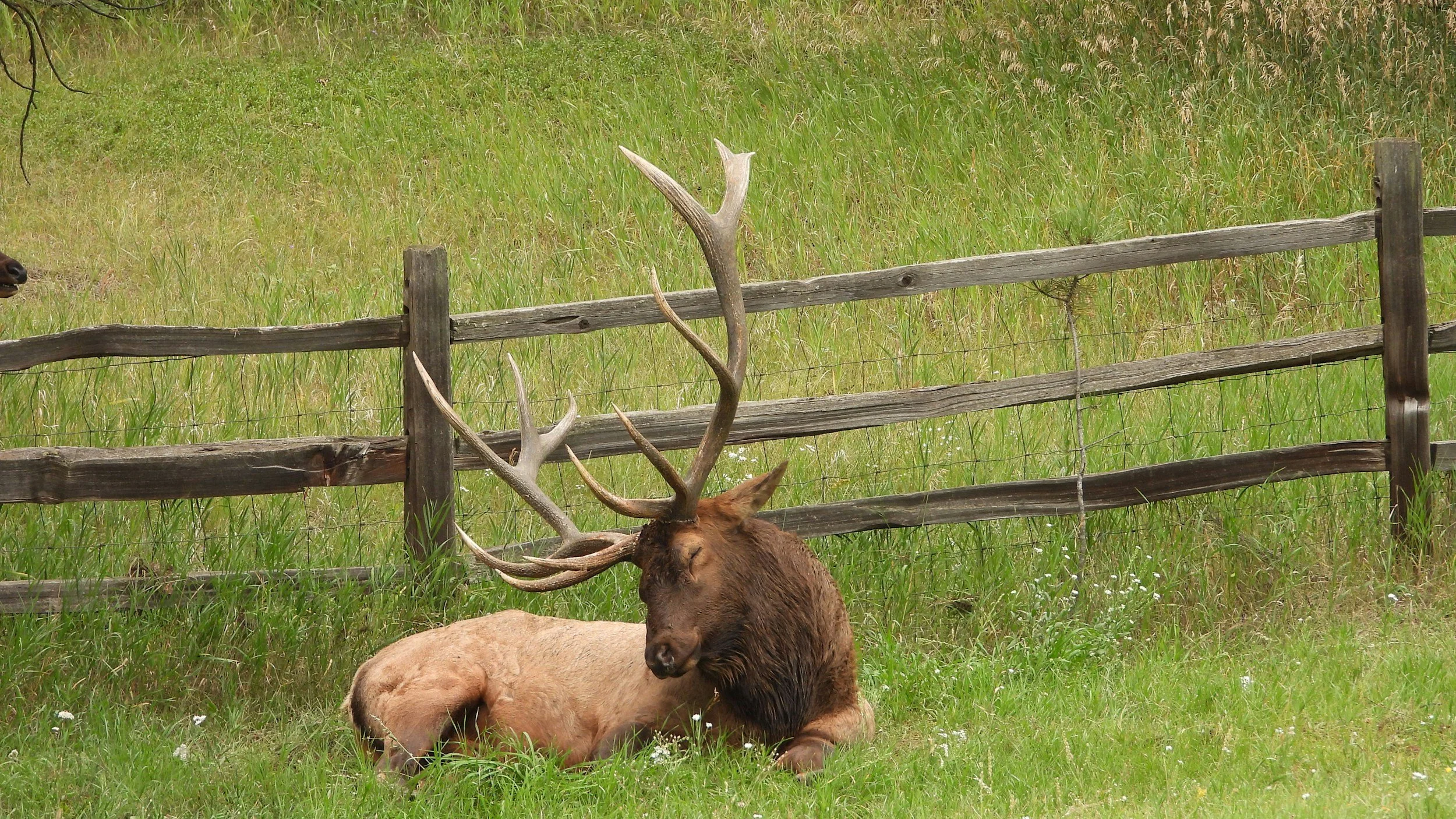
This is the most common position. The elk tucks its legs under its body, keeping its head up. In this position, it can stand up quickly if needed.
2. Resting Head On The Ground
In deeper sleep, an elk may lower its head to the ground and close its eyes. This is less common, as it makes the elk more vulnerable.
3. Standing Rest
Sometimes elk doze while standing, especially if the ground is wet or cold. This is not true sleep but a light doze, similar to how horses rest on their feet.
Body Language During Sleep
While resting, elk may:
- Flick their ears to listen for sounds
- Open their eyes briefly to scan the area
- Chew cud (regurgitated food), which they do while relaxing
Watching these behaviors can help you tell if an elk is truly asleep or just resting.
What Affects Elk Sleep?
Many things can affect how and when elk sleep. Their environment, health, and even the season all play a part.
Predators
The biggest reason for short, light sleep is the risk of predators. Elk always need to be ready to run. If they sense danger, their sleep becomes even lighter, or they may stay awake for longer.
Weather
Bad weather can affect where and how elk sleep. In heavy snow or rain, elk look for sheltered spots, such as under trees. Cold weather may make them sleep closer together for warmth, while hot weather encourages them to find shade.
Season
Elk change their sleep patterns with the seasons:
- Winter: Elk spend more time bedded down to save energy and keep warm.
- Spring/Summer: With more daylight, elk feed more and sleep less during the day, often napping at night or in the shade.
- Fall (Rutting Season): During mating season, males (bulls) sleep even less as they compete for females.
Human Activity
In areas with humans, elk may change their sleep habits. If people or vehicles are nearby, elk may avoid sleeping in open areas, choosing hidden spots instead. Sometimes, they sleep more during the day to avoid humans at night.

Why Elk Sleep The Way They Do
Elk’s sleep patterns are shaped by their need to survive. Some people think animals like elk can just sleep anywhere, but it’s not that simple.
Staying Alert
Because elk are prey, they have evolved to sleep lightly and for short periods. This means they are almost always ready to escape. Their light sleep is a trade-off: they get enough rest to stay healthy but never let their guard down completely.
Energy Conservation
Sleeping in short bursts also helps elk manage their energy. Digestion and chewing cud can happen while resting. In winter, when food is hard to find, longer bedding times help elk save precious calories.
Herd Safety
Sleeping in groups is a smart way for elk to stay safe. Sentinels (elk that stay awake) give warnings of danger, allowing others to sleep more deeply for a few minutes at a time. This teamwork is one reason elk herds can survive in tough environments.
Elk Sleep Compared To Other Animals
Elk are not the only animals with unique sleep habits. Here’s how they compare to other common animals:
| Animal | Total Sleep (per 24 hrs) | Sleep Pattern |
|---|---|---|
| Elk | 2–3 hours | Polyphasic (short naps) |
| Deer | 3–4 hours | Polyphasic (short naps) |
| Cow | 4 hours | Polyphasic (longer naps) |
| Human | 7–8 hours | Monophasic (one long sleep) |
| Wolf | 12–14 hours | Polyphasic (day and night) |
This shows that elk sleep much less than humans and even less than some other large mammals. Their sleep needs are closely tied to their environment and risk of danger.
Little-known Insights About Elk Sleep
Most people do not realize that elk never truly relax while sleeping. Even during deep sleep, their bodies are ready to react. Studies have also shown that elk can recover from sleep loss quickly. For example, if a herd is disturbed by predators and cannot sleep for a night, they may make up for it the next day with more frequent naps.
Another insight: not all elk in a herd sleep at the same time. There is often a rotation, with some elk awake and others asleep. This system is not coordinated like a schedule but happens naturally as individuals become tired or alert.
How Researchers Study Elk Sleep
It’s hard to study sleep in wild elk, but scientists use several methods:
- Observation: Watching elk from a distance to record sleep positions and behaviors
- Tracking collars: These can show when elk are moving or resting
- Infrared cameras: These record elk at night without disturbing them
Research on elk sleep helps us understand not just elk, but also the balance of nature in forests and grasslands. For more on animal sleep habits, check out this Wikipedia article.
Frequently Asked Questions
How Many Hours Do Elk Sleep Each Day?
Elk sleep about 2 to 3 hours per 24 hours, but this is divided into short naps, not one long sleep.
Do Elk Sleep Standing Up?
Elk may rest while standing, but true sleep happens when they lie down. Standing rest is usually just a light doze.
Where Is The Safest Place For Elk To Sleep?
Elk pick bedding sites with good visibility and cover, like grassy clearings near trees or sheltered mountain slopes.
How Does Season Affect Elk Sleep?
In winter, elk sleep more to conserve energy. In summer and during the mating season, they sleep less and are more active.
Can Elk Dream?
Scientists believe most mammals experience some form of REM sleep (the stage linked to dreaming). However, for elk, REM sleep is very short, so if they dream, it is likely brief.
Elk sleeping habits are a clever balance between rest and survival. The next time you see elk in the wild, you’ll know just how much is happening, even when they seem peaceful and still. Understanding their sleep gives us a deeper respect for how they manage life in the wild.

