Every forest has its own sounds. If you walk quietly, you might hear leaves crackle, birds sing, and sometimes, the gentle or sharp calls of deer. Many people think of deer as silent animals. But in truth, deer make a range of sounds for different reasons.
Have you ever wondered how deer make these sounds? Or what they mean? Understanding deer vocalizations can give you a deeper look into their world. Let’s explore how deer use their bodies to communicate, what kinds of sounds they make, and why these noises matter for their survival.
How Deer Produce Sounds
Deer do not have vocal cords like humans, but they do have a larynx (voice box). The larynx contains folds that vibrate when air passes through, creating sound. When a deer wants to make a noise, it pushes air from its lungs through the larynx. The shape and tension of the folds change the pitch and loudness of the sound.
Deer can control their sounds by:
- Tightening or relaxing the muscles around the larynx
- Opening their mouths wider for louder calls
- Using their nostrils for softer noises
The nasal passages also play a role, especially for grunts and snorts. These passages help amplify or soften the sound. Each species of deer has a slightly different larynx and nasal structure, which creates unique sounds.
Common Types Of Deer Sounds
Deer use different sounds for specific situations. Here are the most common types of deer vocalizations:
1. Grunts
Grunts are short, low sounds. Bucks (male deer) often grunt during the breeding season, called the rut. This grunt can attract females or warn other males. Does (female deer) also grunt softly to call their fawns.
2. Bleats
Bleats are high-pitched, drawn-out sounds. Fawns (young deer) make bleats when they are hungry or scared. Does may answer with a soft bleat to reassure them. Bleats are especially common in spring and early summer.
3. Snorts
A snort is a sharp, forceful exhale through the nose. Deer snort when they sense danger. It warns other deer nearby to be alert. Snorts are often followed by stomping the ground.
4. Bawls
Bawls are loud, desperate calls. A fawn separated from its mother may bawl to get attention. Adults rarely use this sound unless injured or very stressed.
5. Wheezes
Wheezes are made by bucks during the rut. This sound is a long, raspy breath through the nostrils and mouth. It warns other bucks to stay away and shows dominance.
6. Clicking Or Clacking
Sometimes deer make a clicking or clacking noise with their jaws. It is usually a sign of agitation or nervousness.

Why Deer Make Sounds
Deer are prey animals, so they avoid making unnecessary noise. But sounds are important for:
- Communication with other deer
- Warning of danger
- Locating family, especially fawns and mothers
- Mating—attracting partners or showing dominance
Many deer calls are subtle, so predators don’t notice them easily. For example, a doe may grunt softly to her fawn, but snort loudly if there’s a threat.
Differences Between Deer Species
Not all deer sound the same. Whitetail deer, mule deer, red deer, and fallow deer each have unique calls. Let’s compare some differences:
| Deer Species | Main Sound | Pitch | Common Use |
|---|---|---|---|
| Whitetail Deer | Grunt/Snort | Low | Warning, mating |
| Mule Deer | Bleat | Medium | Mother-fawn contact |
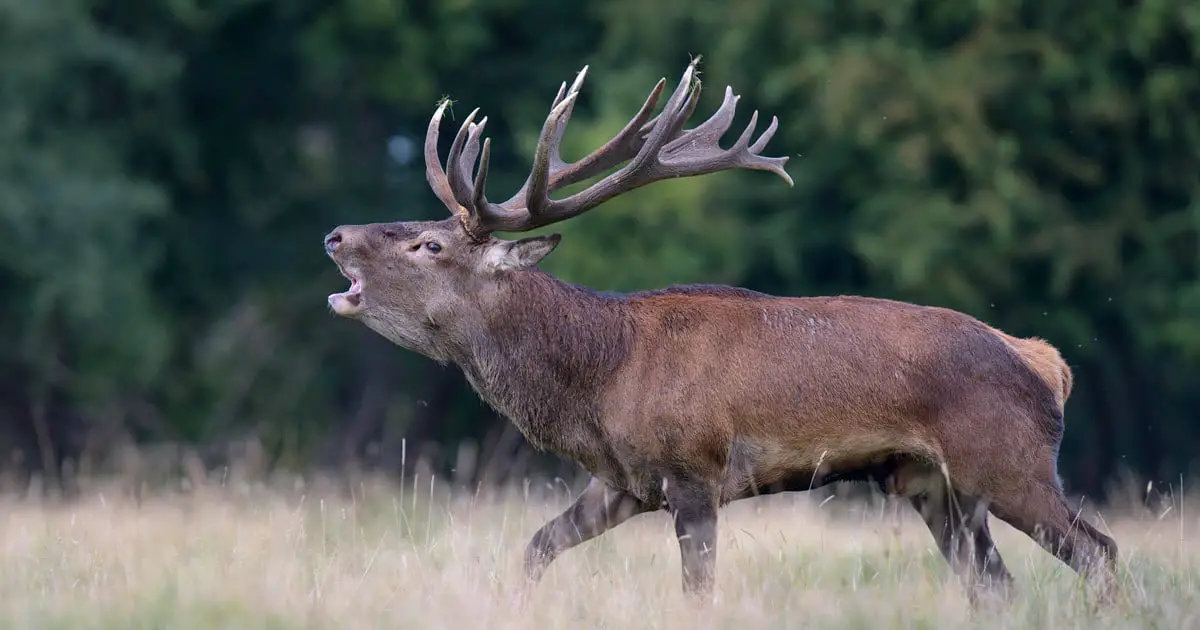
| Red Deer | Roar | Very Low | Mating, dominance |
| Fallow Deer | Groan | Low | Mating |
Whitetail and mule deer are common in North America, while red and fallow deer live mostly in Europe and Asia. The red deer’s roar is especially loud, reaching up to 90 decibels—about as loud as a motorcycle.
How Deer Sounds Compare To Other Animals
Deer sounds might seem simple, but they have a wide range. Here’s how some deer sounds compare to noises from other animals:
| Animal | Sound | Purpose |
|---|---|---|
| Deer | Grunt, Bleat, Snort | Warning, communication, mating |
| Rabbit | Squeal | Distress |
| Fox | Bark, Scream | Territory, mating |
| Elk | Bugle | Mating, dominance |
This comparison shows that while deer are quieter than some other animals, their calls are just as important for survival.
Non-obvious Insights About Deer Sounds
Many beginners think deer only make noise when in danger. But some of the most important sounds happen during peaceful times. For example, the social grunts exchanged between a doe and her fawn help build trust and teach the young deer about safety. Also, fawns can recognize their mother’s unique call, even in a group with many deer. This helps them stay safe and find each other quickly.
Another insight: deer sometimes use body language along with sound. A snort may be paired with a stomp or raised tail. This combination is a stronger warning to both deer and predators.
How To Listen For Deer In The Wild
If you want to hear deer sounds, go to the woods in early morning or evening, when deer are most active. Walk slowly and listen for:
- Short grunts (often bucks)
- High bleats (usually fawns)
- Sudden snorts (danger nearby)
Stay quiet and still. Deer have sharp hearing, so even a small noise from you can scare them away.
Hunters often use deer calls—devices that mimic deer sounds. These can attract deer by copying grunts or bleats. But using these calls in the wrong season or area may scare deer instead of attracting them.
The Science Behind Deer Vocalizations
Research shows that deer sounds are more than just random noises. Each call has a specific frequency and pattern. For example, a fawn’s distress bleat is about 1,000 to 3,000 Hz, which is easy for a doe to hear but hard for some predators to detect.
Scientists record and analyze deer calls to learn more about their behavior. This research helps with deer conservation and understanding animal communication. For more on this science, see this Wikipedia page on deer behavior.

Frequently Asked Questions
What Is The Loudest Sound A Deer Can Make?
The red deer roar is one of the loudest, reaching up to 90 decibels. Most deer sounds are much quieter, especially the soft grunts and bleats.
Do All Deer Make The Same Sounds?
No, different species have different vocal ranges and calls. Even within a species, individual deer have unique voices.
Can Deer Sounds Attract Predators?
Yes. While many deer sounds are quiet, distress calls or loud snorts can attract predators. That’s why deer are usually cautious about making noise.
How Far Can Deer Sounds Travel?
Soft sounds like grunts may only travel a few meters, while loud calls like snorts can be heard up to 100 meters away in open areas.
Do Deer Respond To Recorded Calls?
Sometimes. Hunters use recorded calls to attract deer, but deer can sometimes tell the difference between real and fake sounds, especially if the call is too repetitive or unnatural.
Deer may seem quiet, but their world is full of communication. Understanding how and why deer make sounds can help you spot them in the wild and appreciate their complex behavior. Next time you hear a strange noise in the forest, listen closely—it might just be a deer talking to its family.

